SPACE
The Art of Sacred Spaces
“When one creates a space of emptiness,
the infinite enters there.”
— Laozi
The Philosophy of Space
In East Asian traditions, space is not simply the absence of objects. Instead, space is an active presence that shapes how people move, think, and feel.
In Daoist and Zen philosophy, emptiness allows life to breathe. A room filled with objects becomes rigid, while a room with space invites calm awareness.
Because of this, traditional architecture, gardens, and tea rooms are designed with restraint — allowing silence, balance, and natural rhythm to emerge.
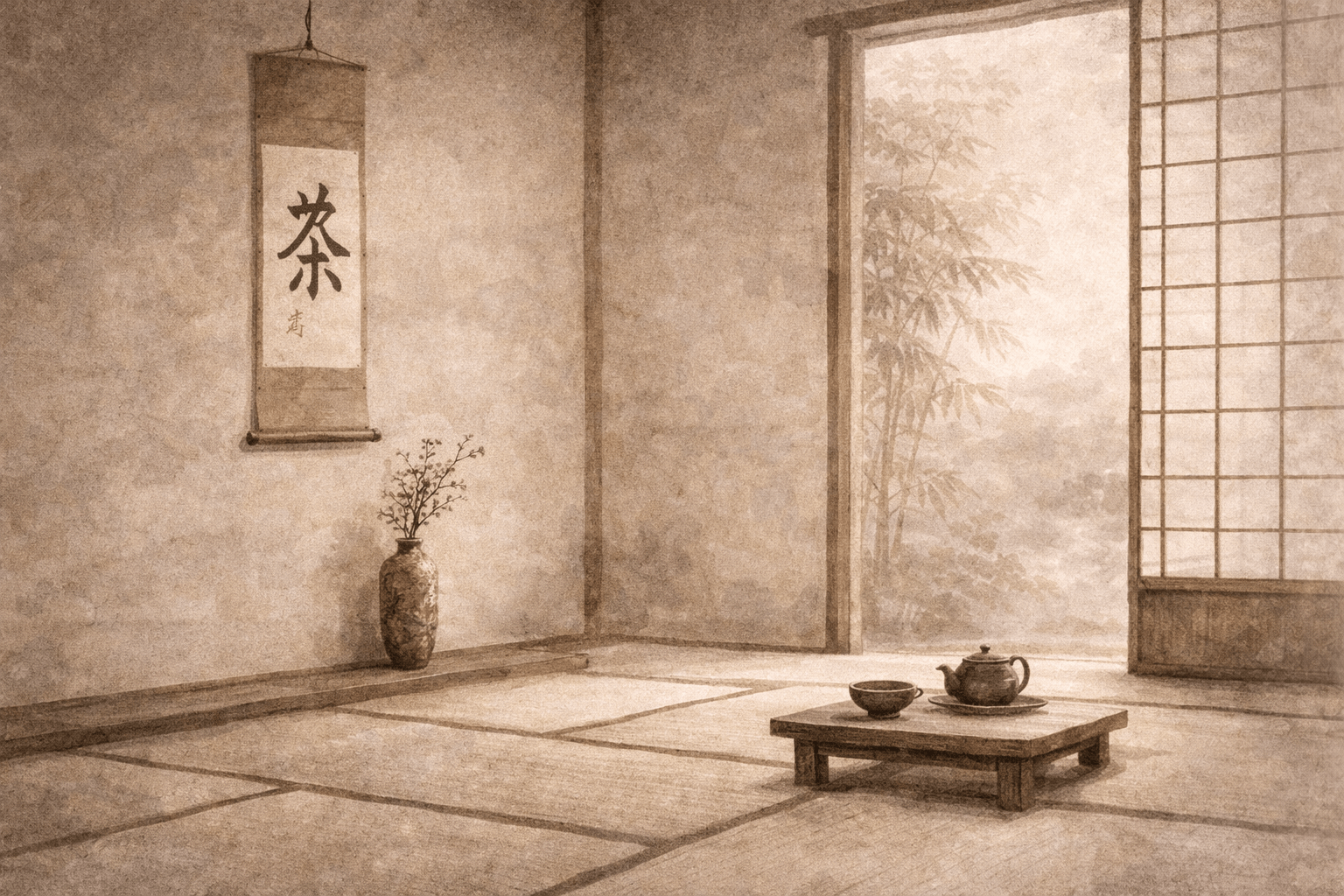
Emptiness (Ma)
In Japanese and East Asian aesthetics, the concept of Ma (間) refers to meaningful empty space. Ma is not emptiness as a void. It is the pause between moments, the silence between sounds, and the openness that allows things to exist in harmony.
A carefully designed space does not overwhelm the senses. Instead, it provides room for stillness and contemplation.
Designed Silence
Space that is deliberately cleared to invite quiet awareness and deep reflection.
Intentional Simplicity
Removing excess and clutter so that the essential forms of life can appear clearly.
Feng Shui — The Flow of Energy
Feng Shui is the ancient practice of harmonizing human environments with natural forces. Rooted in Daoist cosmology, it views space as a living system shaped by the movement of Qi (气) — the vital energy that flows through all things.
By arranging buildings, gardens, and interiors in harmony with natural patterns, Feng Shui seeks to create a profound balance between humans and the surrounding world.
Yin & Yang
The dynamic balance between opposing yet complementary spatial forces.
Five Elements
Harmonizing Wood, Fire, Earth, Metal, and Water within an environment.
The Bagua
An ancient spatial map used to guide energy flow, harmony, and balance.
The Zen Garden
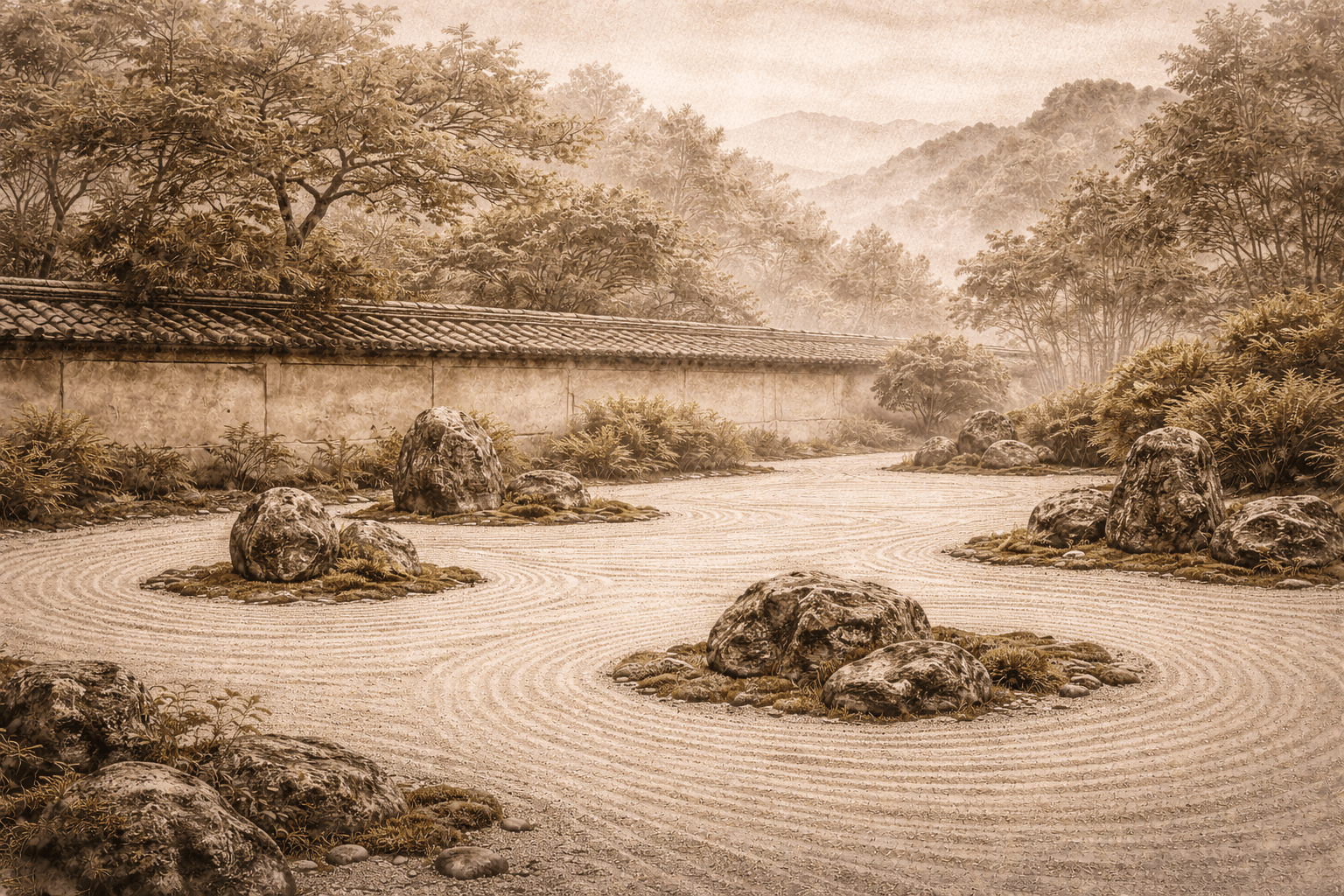
Zen gardens are designed as spaces for pure contemplation. Raked gravel suggests the movement of water, while carefully placed stones represent mountains. These gardens are not meant for decoration, but for meditation. Their absolute simplicity allows the mind to slow down and observe subtle patterns.
Living with Space
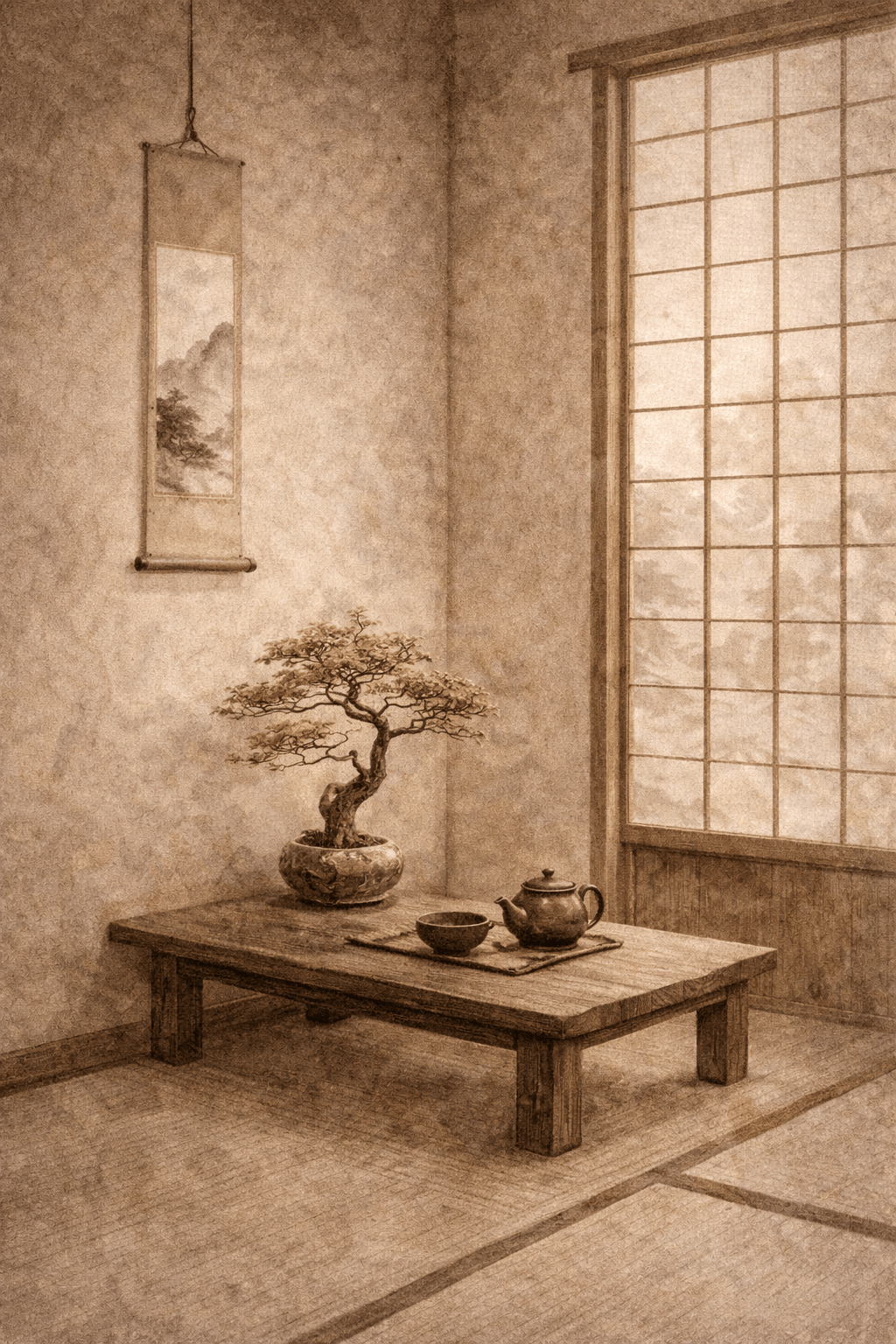
Space is not only found in ancient temples and vast gardens. It can also exist within the intimate scale of everyday living environments.
A small tea corner, a single scroll hanging on a bare wall, or a quiet window view can instantly create a sense of profound calm.
When objects are chosen with ultimate care and placed with intention, even the most ordinary rooms can become sacred places of quiet reflection.
Explore Sacred Spaces
Deepen your practice through specific paths of study.
Latest Articles
Explore writings on architecture, energy flow, and the art of emptiness.
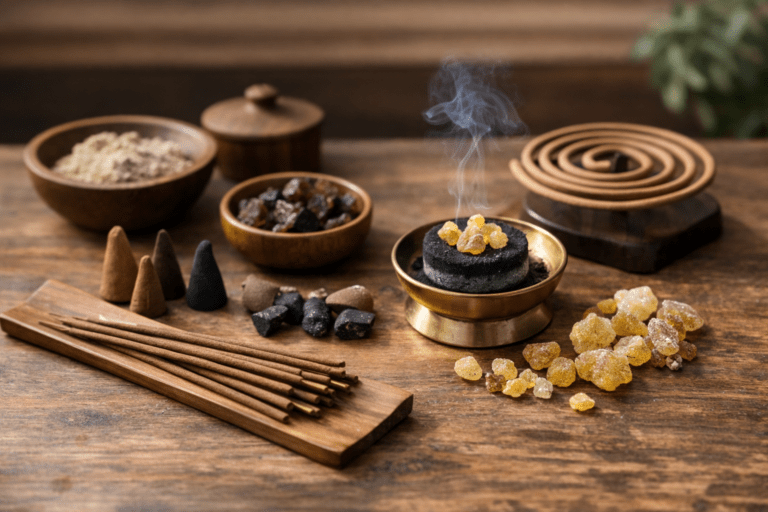
Objects for Sacred Spaces · Curated to support stillness.
Traditional objects used in tea, incense, and meditation practices do not merely fill a room; they help shape the atmosphere of the space.
Rather than accumulating clutter, these tools are chosen carefully to anchor the mind, guide the senses, and restore natural balance.
“A room is not defined by its walls, but by the space it allows.”


