Tea is a natural agricultural product, and like many natural foods, it can change over time. Proper storage plays an important role in preserving the aroma, flavor, and quality of tea leaves.
Many people focus on buying good tea but overlook how it should be stored. Even high-quality tea can lose its fragrance and freshness if it is exposed to the wrong conditions.
Chinese tea masters often emphasize that tea must be protected from several environmental factors. When tea is stored correctly, it can maintain its character for months or even years. In some cases, such as pu-erh tea, controlled aging can even improve the tea over time.
Understanding how to store tea properly helps ensure that every cup retains the flavor and aroma that the tea was meant to deliver.
In this guide, we will explore the most important principles of tea storage, common mistakes that people make, and the best containers for keeping tea fresh.
Why Proper Tea Storage Matters
Tea leaves contain delicate aromatic compounds that give each tea its unique character. These compounds are sensitive to environmental conditions such as air, moisture, light, and temperature.
When tea is exposed to these elements for long periods, its aroma gradually fades and the flavor becomes dull.
Poor storage conditions may cause tea to taste flat, stale, or even slightly sour. This is especially noticeable with delicate teas such as green tea and white tea.
Proper storage helps preserve the natural oils and aromas in the tea leaves. By protecting tea from harmful environmental factors, you can maintain its quality much longer.
The Five Enemies of Tea
In traditional Chinese tea knowledge, there are five major factors that can damage tea during storage.
Understanding these factors is the first step toward storing tea properly.
Air
Oxygen slowly breaks down the aromatic compounds inside tea leaves. When tea is exposed to air for long periods, it gradually loses its fragrance.
For this reason, tea should always be stored in containers that seal tightly.
Moisture
Tea leaves easily absorb moisture from the air. When tea becomes damp, it may lose flavor or even develop mold.
Dry environments are essential for storing most types of tea.
Light
Sunlight and strong artificial light can damage tea leaves by breaking down sensitive compounds.
Tea is best stored in opaque containers that block light.
Heat
High temperatures accelerate chemical changes in tea leaves. This can cause tea to age more quickly and lose freshness.
Tea should be stored in a cool environment away from direct heat sources.
Strong Odors
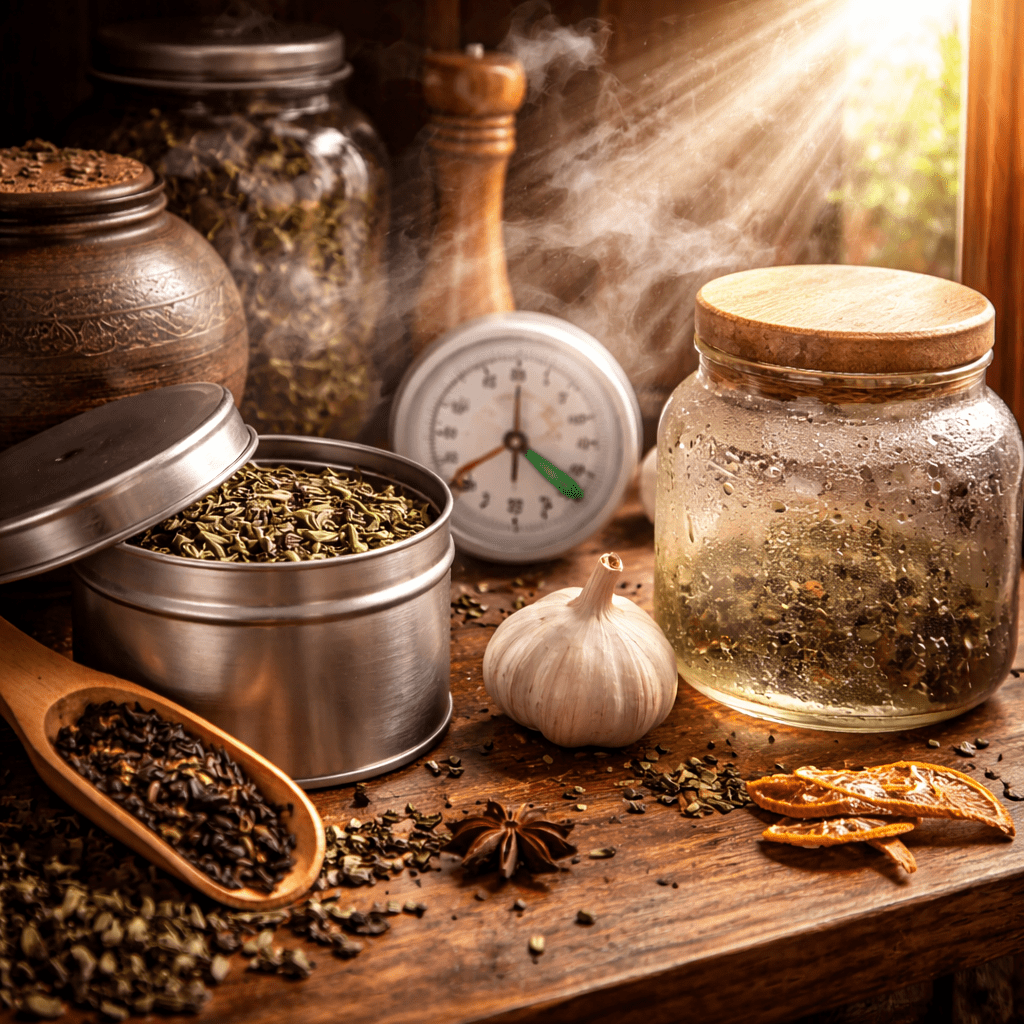
Tea easily absorbs surrounding smells. If stored near spices, coffee, or perfume, tea may take on unwanted aromas.
Keeping tea away from strong odors is essential for preserving its natural fragrance.
The Best Containers for Storing Tea
Choosing the right container can make a significant difference in preserving tea quality.
Several types of containers are commonly used in tea storage.
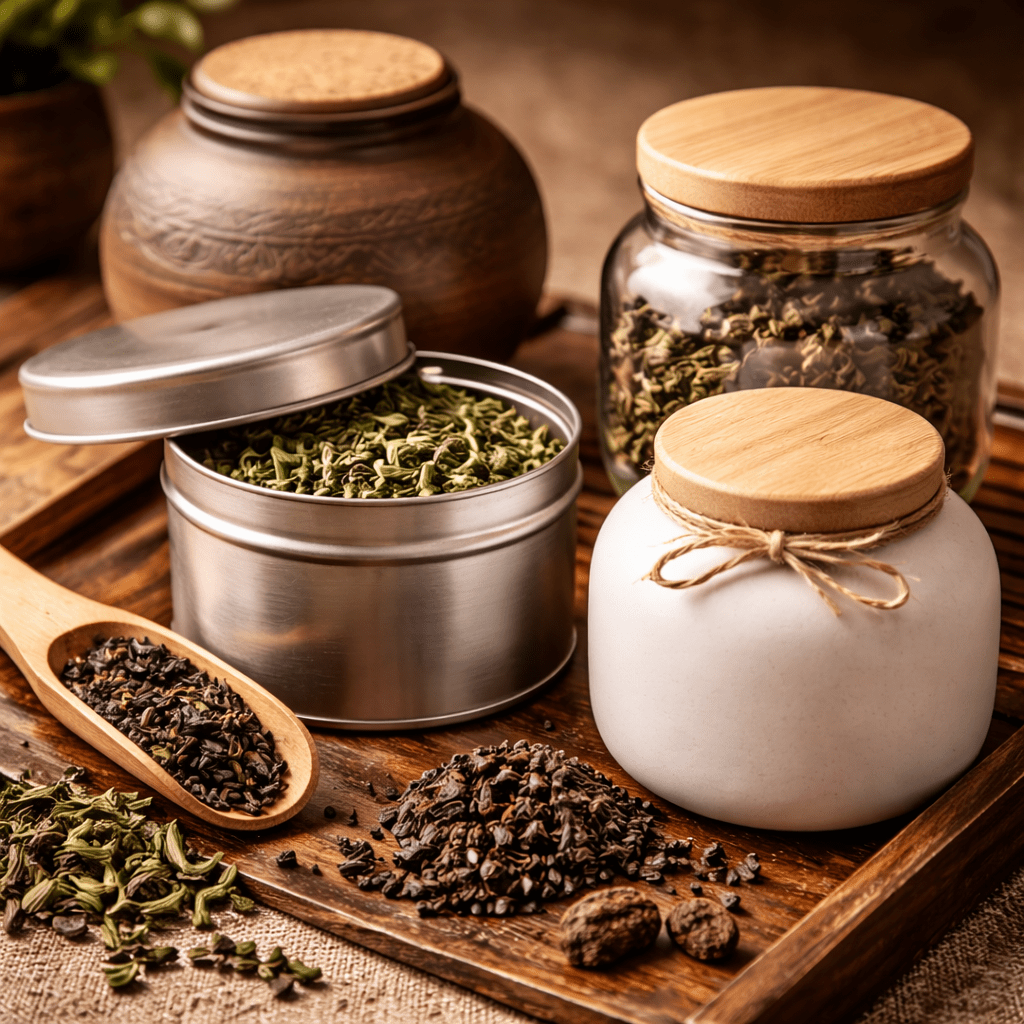
Tea Tins
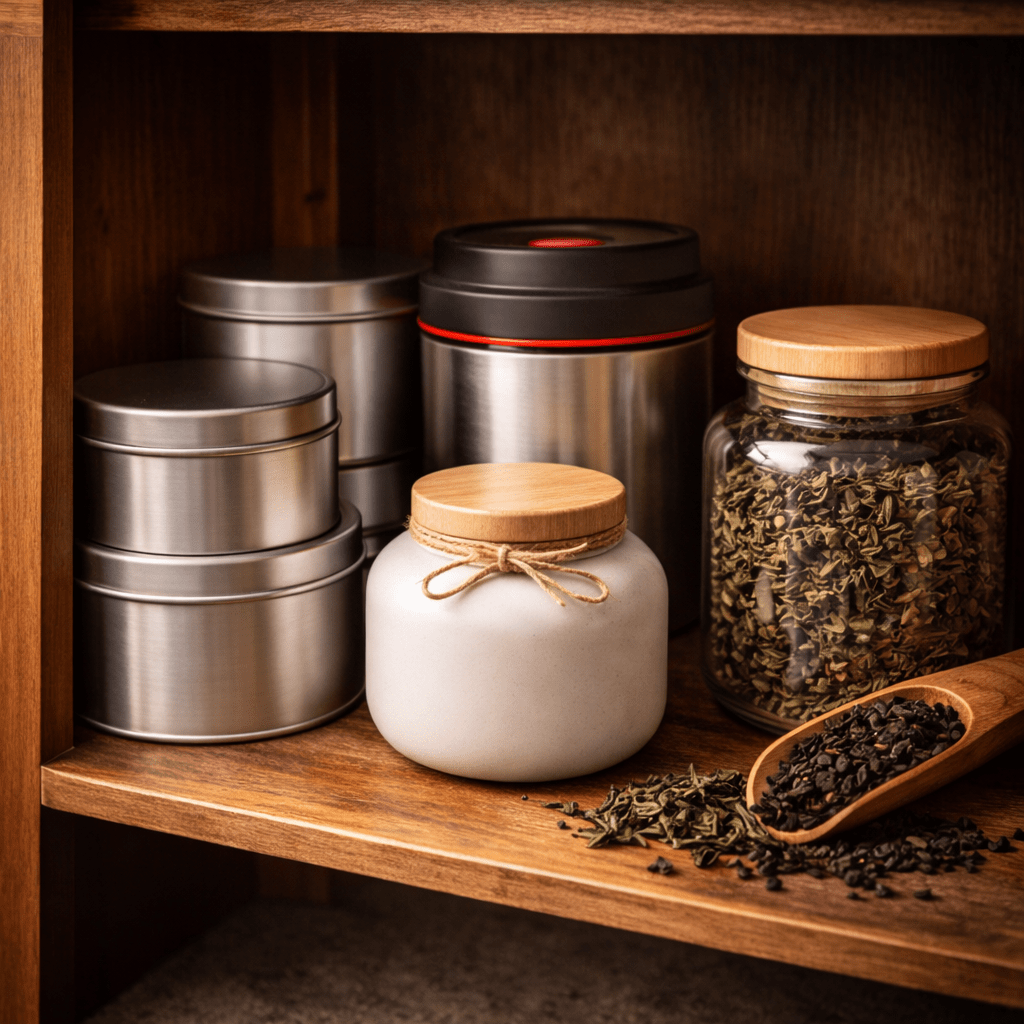
Metal tea tins are widely used because they block light and seal tightly.
High-quality tea tins often include double lids that help keep air out.
Ceramic Containers
Ceramic jars are popular in traditional tea storage. They are stable and help maintain a consistent environment for tea.
Many tea enthusiasts use ceramic jars for storing loose leaf tea at home.
Glass Containers
Glass containers are sometimes used for tea storage, but they should only be used if kept in dark cabinets.
Transparent containers exposed to light may damage tea over time.
Vacuum Containers
Some modern tea drinkers use vacuum-sealed containers to reduce oxygen exposure.
These containers can help extend the freshness of certain delicate teas.
How to Store Different Types of Tea
Different teas have different storage needs.
Some teas should remain fresh, while others benefit from aging.
Green Tea
Green tea is one of the most delicate teas.
It is best consumed within several months after production. Storing green tea in airtight containers and cool environments helps preserve its fresh flavor.
Some tea drinkers even store green tea in refrigerators, though it must be carefully sealed to prevent moisture.
White Tea
White tea is more stable than green tea and can be stored for longer periods.
Over time, white tea may develop deeper sweetness and complexity.
Oolong Tea
Oolong tea varies depending on its oxidation and roasting level.
Light oolongs should be stored similarly to green tea, while roasted oolongs are more stable.
Black Tea
Black tea is relatively stable and easy to store.
As long as it is kept in a sealed container away from light and moisture, it can maintain quality for long periods.
Pu-erh Tea
Pu-erh tea is unique because it is traditionally aged.
Unlike most teas, pu-erh benefits from controlled exposure to air. It is often stored in breathable paper wrappers rather than airtight containers.
This allows the tea to slowly develop deeper flavors over time.
Common Tea Storage Mistakes
Many people unknowingly make simple mistakes when storing tea.
Some of the most common include:
Storing tea in clear jars exposed to sunlight
Keeping tea near cooking spices
Using containers that are not airtight
Storing tea in warm kitchens
Avoiding these mistakes can greatly improve the longevity of your tea.
Building a Simple Tea Storage System
For most people, tea storage does not need to be complicated.
A simple system might include:
A few airtight tea tins
A cool cabinet away from sunlight
Separate containers for different teas
This setup is enough to keep most teas fresh for daily enjoyment.
Final Thoughts
Proper tea storage is an often overlooked but essential part of enjoying good tea.
By protecting tea from air, moisture, light, heat, and strong odors, you can preserve the natural aroma and flavor of the leaves.
Whether you are storing green tea for freshness or aging pu-erh for complexity, understanding these basic principles ensures that every cup of tea remains as enjoyable as possible.
With careful storage, even a small collection of tea can provide many memorable tea experiences.