Introduction
When people first begin exploring Chinese tea, they often hear about green tea, black tea, oolong tea, and white tea. Yet there is another important category that remains less familiar outside China: dark tea.
Dark tea, known in Chinese as hei cha, represents one of the six traditional tea categories of China. Unlike green tea or black tea, which rely mainly on oxidation, dark tea undergoes microbial fermentation, a slow transformation that changes the flavor, aroma, and character of the tea over time.
This process gives dark tea its distinctive earthy aroma, deep color, and smooth taste. Some varieties of dark tea can even improve with age, much like fine wine.
In this guide, we will explore:
- What dark tea is
- How dark tea is made
- The history of fermented tea traditions
- Famous types of Chinese dark tea
- The difference between dark tea and Pu-erh
- How to brew dark tea correctly
Understanding dark tea opens the door to one of the most fascinating traditions in Chinese tea culture.
What Is Chinese Dark Tea?
Chinese dark tea refers to a group of teas that undergo post-fermentation, meaning that microbial activity continues after the initial processing of the leaves.
This fermentation process involves naturally occurring microorganisms that interact with the tea leaves over time. As the tea ages, its chemical composition gradually changes.
The results include:
- darker leaf color
- deeper, richer aroma
- smoother taste
- reduced bitterness
Dark tea is therefore often described as aged tea or fermented tea.
While many people associate dark tea only with Pu-erh, Pu-erh is actually just one member of the broader dark tea family.
Other famous dark teas come from regions such as Hunan, Sichuan, and Guangxi.
The History of Dark Tea
The origins of dark tea are closely connected to ancient trade routes.
Centuries ago, compressed teas were produced for transportation along long caravan routes such as the Tea Horse Road. These teas were traded from China to Tibet, Mongolia, and Central Asia.
During these long journeys, something remarkable happened.
The tea continued to ferment naturally during storage and transport. Over time, people discovered that the flavor became smoother and more complex.
This accidental discovery eventually developed into a deliberate tea-making tradition.
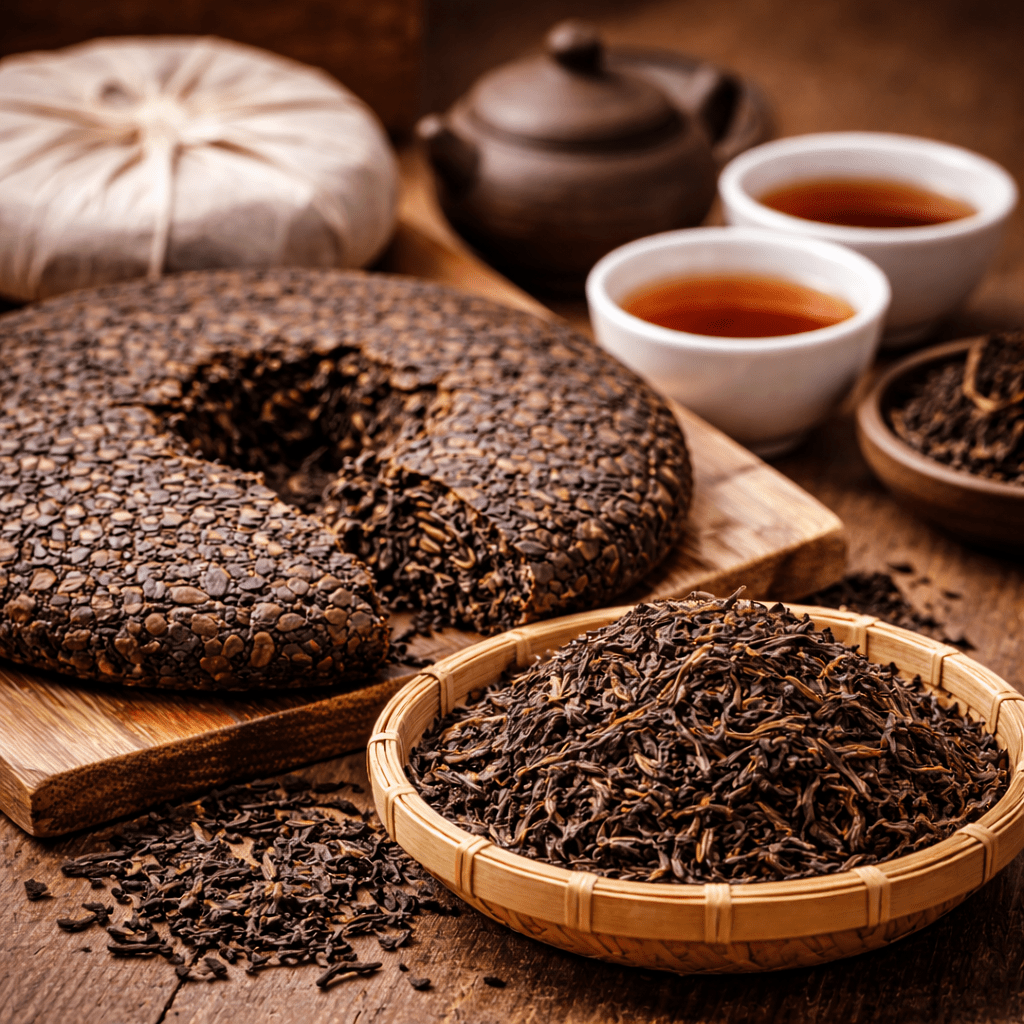
Many dark teas were historically pressed into shapes such as:
- tea bricks
- tea cakes
- tea logs
These compressed forms made the tea easier to transport over long distances.
Today, this aging tradition remains one of the defining characteristics of dark tea.
How Dark Tea Is Made
Although different dark teas have unique techniques, the general production process includes several key steps.
Harvesting
Tea leaves are picked from the Camellia sinensis plant, often using mature leaves rather than the young buds used for delicate teas.
Fixing
The leaves are heated to stop natural oxidation, similar to other tea categories.
Rolling
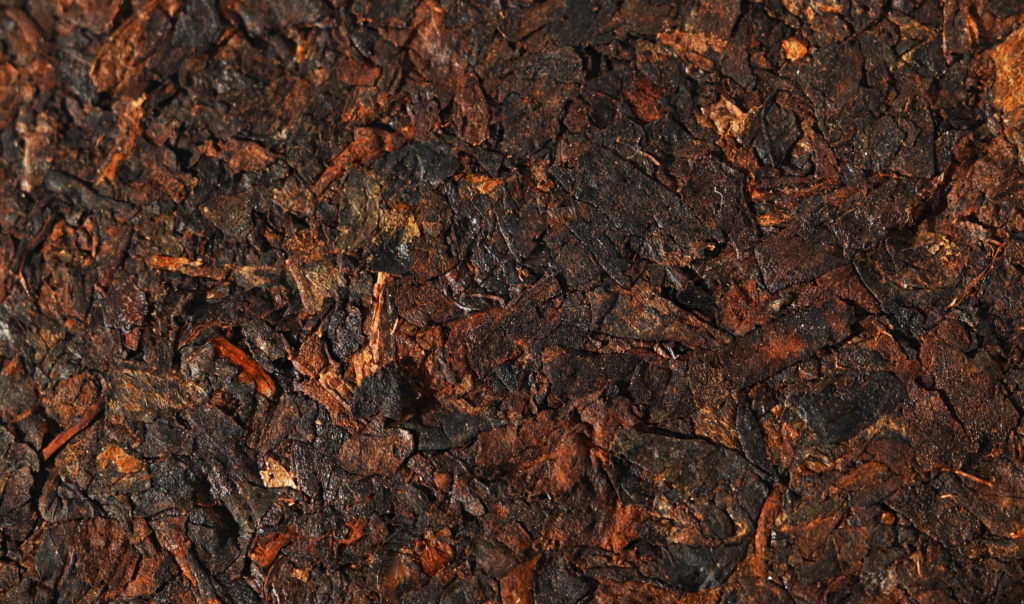
Rolling breaks the cell walls of the leaves and shapes them into strands or flakes.
Microbial Fermentation
This is the defining step.
The leaves are stored in warm, humid conditions where microorganisms slowly transform the tea.
Over time:
- aromas deepen
- bitterness softens
- complex earthy notes develop
Aging
Some dark teas are aged for months or years.
During aging, the flavor continues to evolve and become smoother.
Famous Types of Chinese Dark Tea
Several regional dark teas are well known within China.
Pu-erh Tea
Pu-erh tea from Yunnan province is the most famous dark tea internationally.
It exists in two main forms:
- Sheng Pu-erh (raw)
- Shou Pu-erh (ripe)
These teas can age for many years.
Anhua Dark Tea
Produced in Hunan province, Anhua dark tea is known for its distinctive microbial fermentation process.
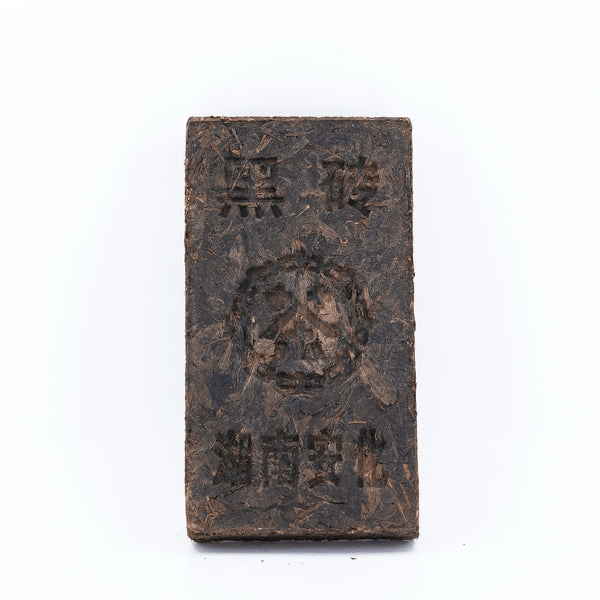
It often appears in brick or compressed forms.
Liubao Tea
Originating from Guangxi province, Liubao tea has long been popular in southern China and Southeast Asia.
Its flavor is mellow, earthy, and slightly woody.
Flavor Profile of Dark Tea
Dark tea is very different from the fresh and grassy flavors of green tea.
Typical tasting notes include:
- earthy aromas
- woody notes
- dried fruit sweetness
- smooth, mellow body
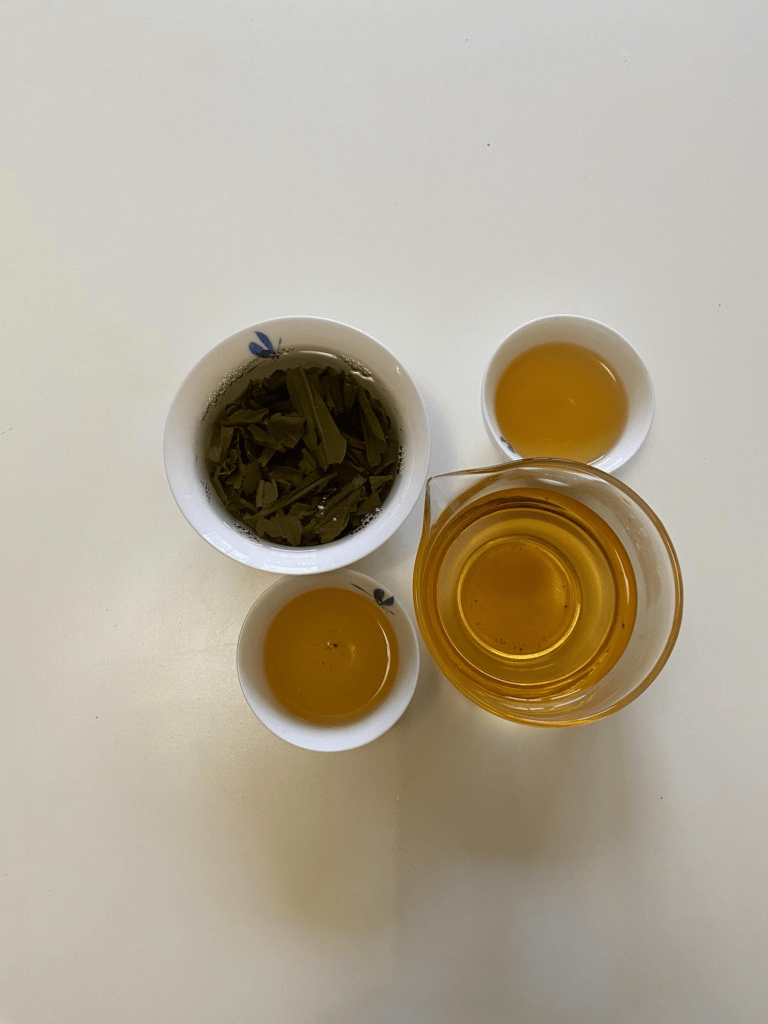
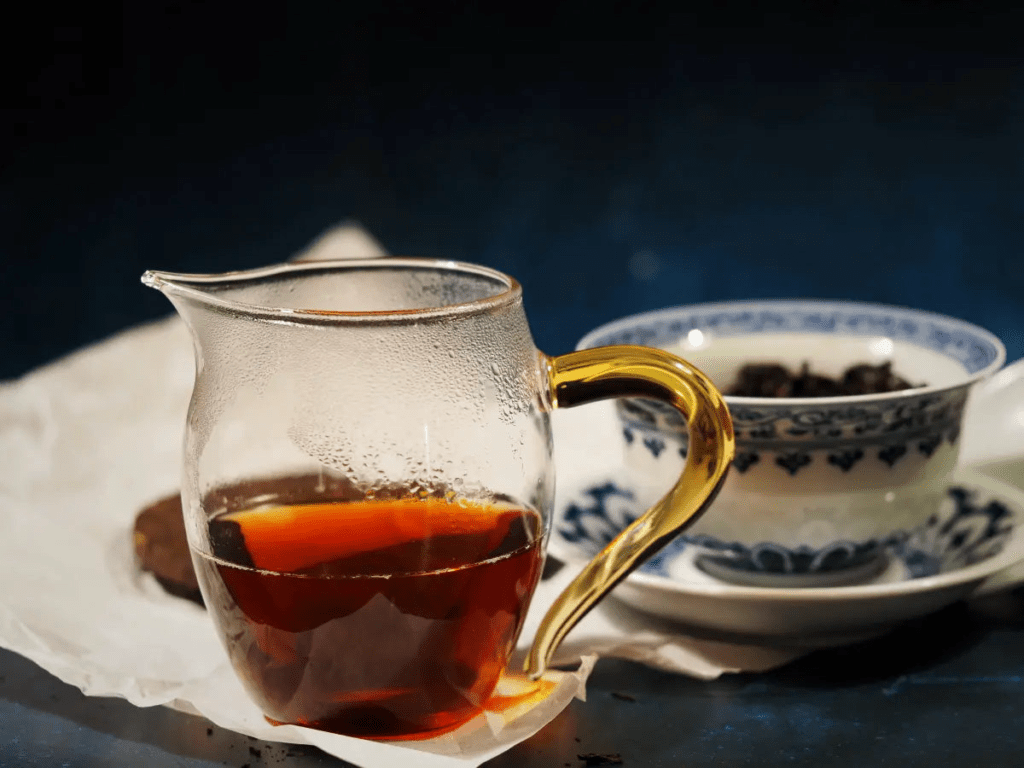
The liquor is usually deep amber or dark reddish brown.
Many tea drinkers appreciate dark tea because it is low in bitterness and easy to drink, even when brewed strongly.
Aged dark teas can develop extremely complex flavors over time.
Health Benefits of Dark Tea
Dark tea contains many of the natural compounds found in other teas, including polyphenols and antioxidants.
In addition, the fermentation process creates new compounds that may influence digestion and metabolism.
Potential benefits often associated with dark tea include:
- digestive support after meals
- antioxidant activity
- gentle caffeine stimulation
- microbial fermentation compounds
Because of these qualities, dark tea has traditionally been consumed after heavy meals in certain regions.
However, tea should always be viewed as part of a balanced lifestyle rather than a medical treatment.
How to Brew Dark Tea
Dark tea is generally forgiving when brewed, making it suitable for both beginners and experienced tea drinkers.
Water Temperature
Use near-boiling water:
95°C – 100°C
(203°F – 212°F)
Tea Quantity
Use about:
5 grams of tea for 150 ml of water.
Rinse the Tea
Compressed dark teas are often rinsed briefly with hot water before brewing.
This step helps awaken the leaves.
Steeping Time
First infusion:
10–20 seconds for gongfu brewing.
Later infusions can gradually increase in time.
High-quality dark tea can often be brewed many times, sometimes over ten infusions.
Dark Tea vs Pu-erh Tea
Many people believe that dark tea and Pu-erh tea are the same.
In reality:
Pu-erh is one type of dark tea, but not all dark teas are Pu-erh.
The main difference lies in geographic origin and production style.
Pu-erh is produced only in Yunnan province, while other dark teas come from different regions of China.
Understanding this distinction helps clarify the diversity of fermented tea traditions.
Conclusion
Chinese dark tea represents one of the most unique traditions in the world of tea. Through microbial fermentation and aging, these teas develop rich flavors and smooth textures that are very different from fresh teas such as green tea.
From Pu-erh to Anhua dark tea and Liubao tea, each variety offers its own character shaped by region, climate, and traditional craftsmanship.
For tea drinkers who enjoy deep, mellow flavors and the idea of tea that improves with time, dark tea offers a fascinating journey into the historical and cultural depth of Chinese tea.
Exploring dark tea also reveals how diverse and complex the world of tea truly is.

#file[Blog_Comment.dat\n
What I in fact think most about is wellbeing ideas. On my own, I subscribe to magazines that concerns this subject matter, and I
hold enlightened about the latest wellness studies. In what way is this important?
I feel there’s no more critical focus for my energy.
Furthermore, this web log seems as if it’s worthy of my time to read.
I dig through hundreds or more of sites every week.
Honestly, my rear generally is painful and I desire
a different pursuit. lol Anyhow, I think if everyone had written about their place in life,
and did it cogently, we’d have a much more cool planet.
For being a specialist connected with women’s
massage, I am truly frequently requested to answer strategies about how expecting folks can assist themselves to enjoy a healthier pregnancy.
It’s my job to point to the newest investigation, which specifically reveals that physical
activity, education, not to mention preparedness are probably the most crucial things that one does to
assist themselves have a relatively significantly more
favorable pregnancy which includes a good childbirth outcome.
This help and advice will be relevant to anybody, including
the suggestion to acquire %original _anchor_text% (or conceivably therapeutic massage).
First of all, many thanks for the information, and
your perception. I can value this blog and most importantly this content.
At this point, I feel I fritter away much too much time on the net, studying junk,
mainly. This is a refreshing differ from that experience.
Still, I believe browsing other’s good ideas is a very
important investment of at least some of my regular allotment of amount of time in my routine.
It’s the same as looking into the chaff to find
the treasure. Or, whatever analogy performs best for you.
Still, sitting in front of the home pc is probably as
harmful to you as smoking cigarettes and deep-fried chips.
Whenever I am scannnig cyberspace, oftentimes I like
to examine articles I find. Often, I am able to discover fresh facts, or even a different tool for taking a look
at problems that I had not contemplated earlier. When this occurs, I am definitely appreciative.
Due to the fact I haven’t got a chance to go browsing a
lot, stemming from my job as an massage at home therapist, I aim to take
advantage of my experiences on-line.
I just appreciate your offering these details for people trying to get more info
about matters like this. Your blog was well-written and well investigated, that is certainly significantly valued.
I actually am always searching for new weblogs to follow and browse on a regular basis.
I am constantly looking for new details about this essential theme,
and was specifically stoked once I locate websites that
are well-written and well-researched. Thanks for providing this kind of
superb information, and I glimpse onward to reading more
from your blog page in the near future.
People can pretty much all make use of finding out even more about themselves and our
overall health and wellness. Specified actions and activity levels can currently have great benefit to
us, and all of us need to study more about them. Your weblog seems to have given beneficial info which will be
useful to various societies and individuals, and I love the showing your experience in this manner.
massage during pregnancy is precisely what my entire life is regarding.
I’m definitely trying to understand a great deal more, and there is forever a
tad bit more to understand! I choose to provide the most effective help to currently pregnant adult females which I am able.
I frequently check back and punch my own self as I figured
out a little something which I could possibly have applied to a past affected individual, however I did
not understand the application at that point.
I live life simply by this specific, even: Most people could typically gain knowledge of some more
with reference to anything. Now I am not really stating
that individuals will be able to totally modify their particular feelings on the subject of a topic, and yet equipped with
some other details, any kind of tolerant individual may.
Your site has certainly furnished me with only the info that I actually required.
I just have been carrying out exploration upon this kind of
subject for a short time, and it seems to have taken a very long while to discover a blog page that
provides all of the details i will need. I just take a look toward examining more blogs authored
by you in the foreseeable future, and might take a look here first when I just have another fact-finding
project.
I actually enjoy your offering this info
for folks hoping to find out more on topics like this.
Your blog page was well written and very well researched, and that is very much valued.
I am often looking for new blogs to follow and browse regularly.
I am definitely looking for brand spanking new information upon this kind of significant issue, and am specifically stoked once I discover sites which might be well-written and well-researched.
Thanks for featuring this kind of good data, and i also look ahead to reading more from the weblog in the long term future.
When I’m scannnig the internet, frequently I like to browse through writings I
uncover. Generally, I’m able to discover cutting edge data,
or maybe a contemporary manner of analyzing issues that I had not acknowledged in the past.
During these moments, I am frequently appreciative.
Considering that I don’t have the chance to use
the internet that much, stemming from my job as an at home massage therapist, I seek to take benefit from my experiences on the web.
I am often seeking for brand spanking new details about this important subject, and
am specifically delighted when ever I actually find sites that are well-written and well-researched.
Thanks for providing this kind of excellent info, and I
glimpse forward to read more from the weblog in the long run.
#file[Blog_Comment.dat\n
This is simply not the first moment in time I have discovered a
blog site that was worthy of writing comments on. This distinctive blog post is alluring
to me personally. I basically live a life of plenty of modes; that is to say that my work
activities are very different. I perform Postnatal Massage Therapy.
On top of that, I buy and sell antiques. I’m discovering Direct Admin. And, that’s really a few activities I do.
Anyhow, my idea is, each one of us all considers a niche from a exclusive perspective.
Just about every encounter all of us have shapes us and
our own viewpoint of our own selves and the planet around us.
I believe tracking down some variety of increased view of real truth is just where everything all of us talk
about leads to. That being said, exactly how do individuals afterward communicate?
Is it actually possible? I suppose each of our unique contributions to
the Web Commons alters a great number of individuals, most likely.
Hence reflect on that, bloggers and commenters.
Your current remark can potentially benefit another person. Or perhaps, commentary
can certainly accomplish the antipode. Not to mention, everyone, meaning,
you, me, in reality will want to care to try to benefit others to
mature and in no way wither. Thanks a lot for this blog site; I actually am logging
this post with my other incredibly good websites
I’ve found that I perhaps even troubled to leave feedback on. Continue to keep creating!
Keep articulating!
I can’t believe that everything we challenge ourselves with in our lives
matters. Continuously spent thinking about the numerous things that people face each and
every working day is going to be really important, as
no other man will face your life for us. I feel that folk have to be even more mentally stable.
Science is excellent, however, a lot of whatever
you think about is indeed abstract. Having a cup of coffee
is a zen process that takes one back to the present second.
We need to become more in the here and today, without being overcome by life
and the dilemmas we deal with each day.
Men or women at the moment need to know further in relation to these types of subject areas,
despite the fact that there seems to under no circumstances end up being enough available free time.
After time for friends and family, and of course holding a job,
exactly what time frame is remaining to dedicate to mastering
these vital theories? As an individual applying perinatal masage therapy, as well as conceptualizing
webpages and supervising numerous machines, free
time is above all a commodity i don’t ever have adequate amounts of.
Almost certainly, I am able to find the energy important to review this really important area of interest more exhaustively.
Thanks to you for creating this unique very helpful reference or resource.
I am usually searching for new information on this kind of significant subject, and am specifically ecstatic
when I locate websites which have been well-written and well-researched.
Thank you for providing this wonderful info,
and i also search ahead to read more right from the
blog page in the long run.
I actually felt your blog was relevant and timely, either) and living free, living life with appreciation for Nature,
helps people feel grounded. Philosophizing about important topics is likewise some other sort
of experience that can aid us know ourselves.
Your site has definitely offered me with simply the
data that I actually needed. I actually currently have been doing homework on this subject matter for a little bit, and it has taken a long time to discover a
website that gives all the information which i want.
I just look forward to examining more weblogs authored by you later on, and will definitely seek right here 1st the very
next time I actually currently have a fact-finding
project.
I just can’t believe that all the things we get worried about in our lives matters.
All the time squandered thinking about the numerous things that people face just
about every working day is certainly really important, as no other woman is
going to confront your life for any of us. Personally I think that citizens have to be more grounded.
Knowledge is great, however, a lot of what we should might know about is indeed abstract.
Having a cup of kava is a zen process that takes one back
to the present second. We have to be more in the here and today, without being
confused by our lifestyle and the crises we experience
each day.
Being prejudiced will never be great. When I exclaim I am a Massage Therapist, truly does the fact control insights on how people today
start to see my lifestyle? I know it could possibly. Think about should I assert I work as
a prenatal massage? Really does that re-define your primary concept
of me and my peers? With each single brand new reality that you
come across, your entire impression would probably update.
Along with, there exists certainly not just about any “closing word” with regards to those things you
know; most of us can easily definitely figure
out even more on the subject of a loved one as well as a thing.
Think about that. It seriously isn’t “being wishy-washy” the moment people
change some of our thought processes by using new realities.
(When an individual has never ever seen a prenatal massage Consultant, it’s a LOGICAL clinical modality currently offered to
pregnant persons.)
As a specialist associated with prenatal massage contraindications, I am really all too often questioned the simplest way
expectant persons can help them selves to enjoy a more comfortable gestation. I point to present-day researching, which generally found that
exercise, education, plus preparedness would be the key important
things that a person may do to aid themselves experience a significantly more enjoyable pregnant
state that has a really good birth and labor outcome.
This professional advice could also be appropriate to everybody, along with the
proposition to receive %original _anchor_text% (or simply
massage therapy).
This valuable blog is high quality. Blogposts just like
this are consistently brushed aside, if simple fact be discussed.
Frequently the finest of the Net isn’t actually the very most publicly publicized subject matter, yet instead almost
everything else, the forgotten wider public with blogs and forums that are in actual fact significantly superior as compared to the ones of critical legendary people.
This is such a website. My partner and I will certainly offer
information, perhaps when not persuaded to do so. First of all is,
keep on composing. Second is, keep crafting on a regular
basis. Third is, make use of your blog site to develop your particular
style. I am possibly not a blogger per se; I am really a Postpartum Massage Therapist.
I carry out Perinatal Massage Therapy, assisting women of all ages to get well
following having a infant. It’s rewarding work. That is precisely what I commit most of my hours accomplishing,
but I have of course cherished creating from the time I was little.
I am a well-read human being and every single year I read through a heap far taller as compared with
myself. hahaha In the up coming calendar year, maybe I should get really serious concerning operating a blog.
The issue is, it can’t simply just a good idea; the
efforts of penning and posting habitually would make a blog
page get bigger over time.
This is definitely not the very first moment in time
I unearthed a blog site that was deserving of
writing comments on. This exact short article is useful to me.
I simply live a daily life of several settings; that is to say that my
employment routines range the gamut. I carry out Postpartum Massage
Therapy. Furthermore, I trade in antiques. I’m figuring out
Linux. And, that’s merely a couple of activities I do. In any event, my idea is, each of us approaches a subject matter from a
distinct perception. Just about every single encounter all of us have forms us and our own view of ourselves
and the universe around us. I consider trying to find some greater feeling of real truth is
where every little thing all of us chat regarding leads to.
So, how will people in that case relate? Is it even possible?
I think that our own personal contributions to the Cyberspace
Commons changes countless people today, possibly.
Consequently consider that, bloggers and commenters.
Your ideas can benefit another person. Or even, feedback can accomplish the opposite.
And, everyone, meaning, you, me, in fact should care to try to assist other individuals to mature
and certainly not decline. Thanks for this blog; I actually am filing this post along with
my various other high-quality weblogs I’ve uncovered that I
actually troubled to comment on. Always keep writing!
Keep articulating!