Introduction
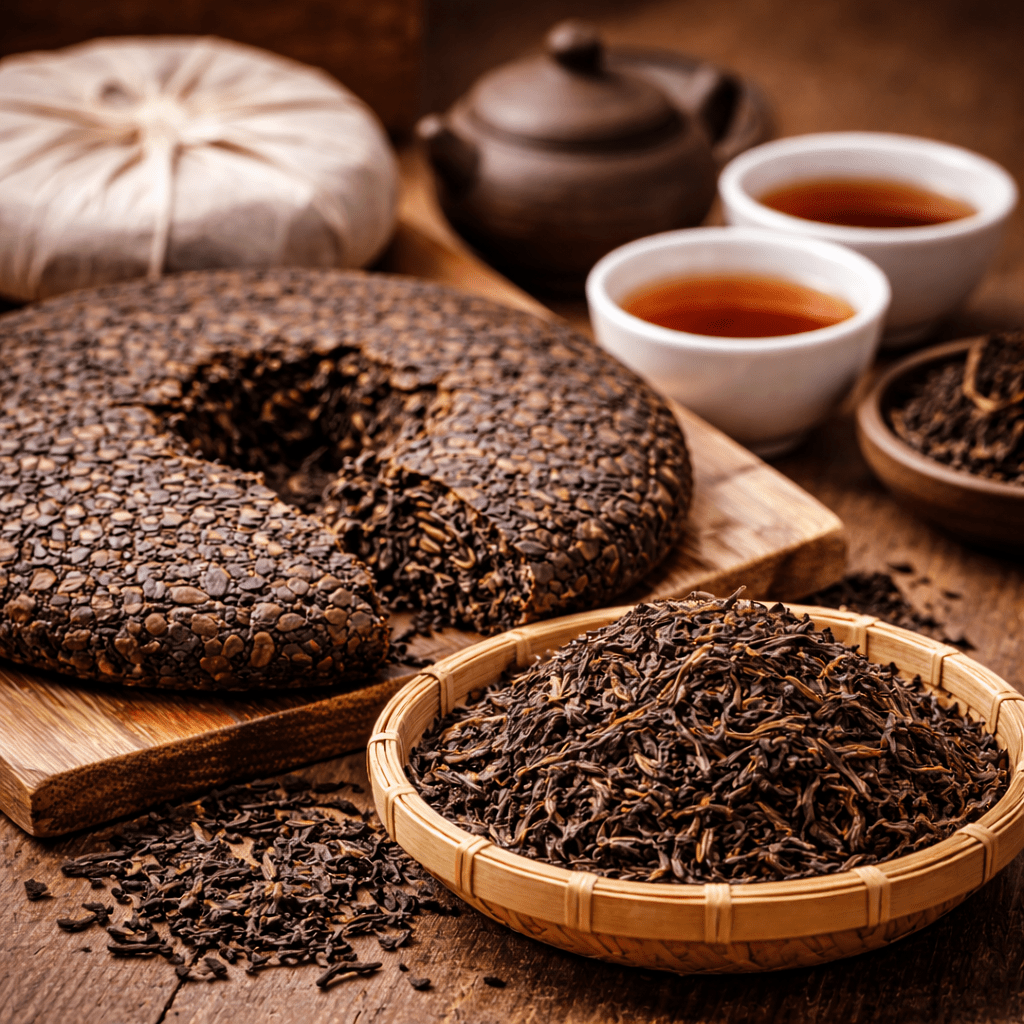
Pu-erh tea is one of the most fascinating teas in the world. Unlike most other teas, Pu-erh can age for years or even decades, developing deeper and more complex flavors over time.
However, many people who first encounter Pu-erh quickly discover that there are two very different types:
Raw Pu-erh and Ripe Pu-erh.
These two styles are often referred to by their Chinese names:
- Sheng Pu-erh (raw Pu-erh)
- Shou Pu-erh (ripe Pu-erh)
Although both come from the same region and the same tea plant, their flavors, processing methods, and aging characteristics are very different.
Understanding the difference between raw and ripe Pu-erh is essential for anyone exploring the world of Chinese dark tea.
In this guide we will explain:
- What raw Pu-erh is
- What ripe Pu-erh is
- How each type is produced
- The flavor differences between them
- Which one is better for beginners
By the end, you will be able to recognize and appreciate both styles of this unique tea.
What Is Raw Pu-erh (Sheng Pu-erh)?
Raw Pu-erh is the traditional form of Pu-erh tea.
Its production method dates back hundreds of years and was originally developed in Yunnan province in southwestern China.
Raw Pu-erh is made through a relatively simple process:
- Tea leaves are harvested from the Camellia sinensis plant.
- The leaves are heated to stop oxidation.
- The leaves are rolled and dried.
- The tea is often compressed into cakes or bricks.
At this stage, the tea is technically finished, but the most interesting part happens afterward.
Raw Pu-erh continues to age naturally over time.
During storage, slow microbial activity and oxidation gradually transform the tea’s flavor.
Young raw Pu-erh often tastes:
- bright
- floral
- slightly bitter
- grassy or vegetal
As the tea ages, it becomes:
- smoother
- deeper
- sweeter
- more complex
Some aged raw Pu-erh teas are highly valued by collectors and tea enthusiasts.
What Is Ripe Pu-erh (Shou Pu-erh)?
Ripe Pu-erh is a modern invention developed in the 1970s.
Tea producers wanted to recreate the flavor of aged Pu-erh more quickly, without waiting many years.
To achieve this, they developed a process called wet piling fermentation, known in Chinese as wo dui.
During this process:
- tea leaves are piled together
- moisture and heat are carefully controlled
- microbial fermentation is accelerated
This method transforms the tea within weeks rather than decades.
The result is ripe Pu-erh.
Compared to raw Pu-erh, ripe Pu-erh usually has:
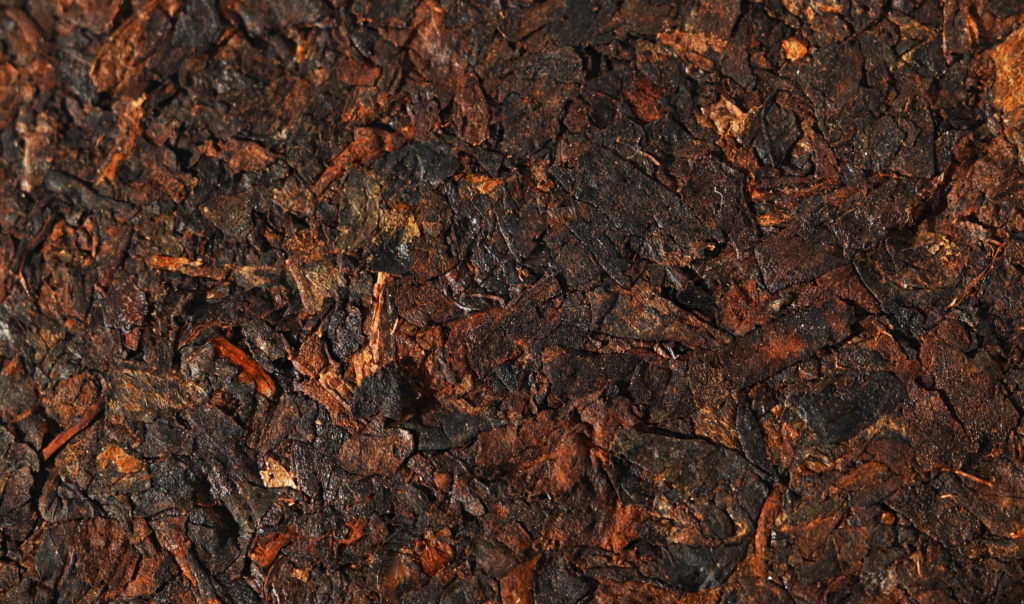
- dark leaves
- deep reddish liquor
- earthy aroma
- smooth and mellow taste
Ripe Pu-erh is often considered easier for beginners because it has less bitterness.
Processing Differences
Although both teas come from the same region, their processing methods create major differences.
Raw Pu-erh Processing
Raw Pu-erh follows traditional tea processing and then ages slowly over time.
The aging process may take years or decades.
This natural transformation gradually softens the tea.
Ripe Pu-erh Processing
Ripe Pu-erh undergoes accelerated fermentation.
The wet piling technique encourages microbial activity, producing a darker tea with a mature flavor almost immediately.
This difference in fermentation is the main reason the two teas taste so different.
Flavor Differences
One of the easiest ways to distinguish raw and ripe Pu-erh is by flavor.
Raw Pu-erh Flavor
Young raw Pu-erh often tastes:
- fresh
- slightly bitter
- floral
- fruity
With age, raw Pu-erh becomes:
- smoother
- sweeter
- more complex
Aged raw Pu-erh may develop notes of honey, dried fruit, or wood.
Ripe Pu-erh Flavor
Ripe Pu-erh is usually:
- earthy
- smooth
- mellow
- rich
Some people describe the taste as resembling dark chocolate, wet soil, or forest floor.
Although the description may sound unusual, many tea drinkers find ripe Pu-erh deeply comforting and satisfying.
Appearance and Liquor Color
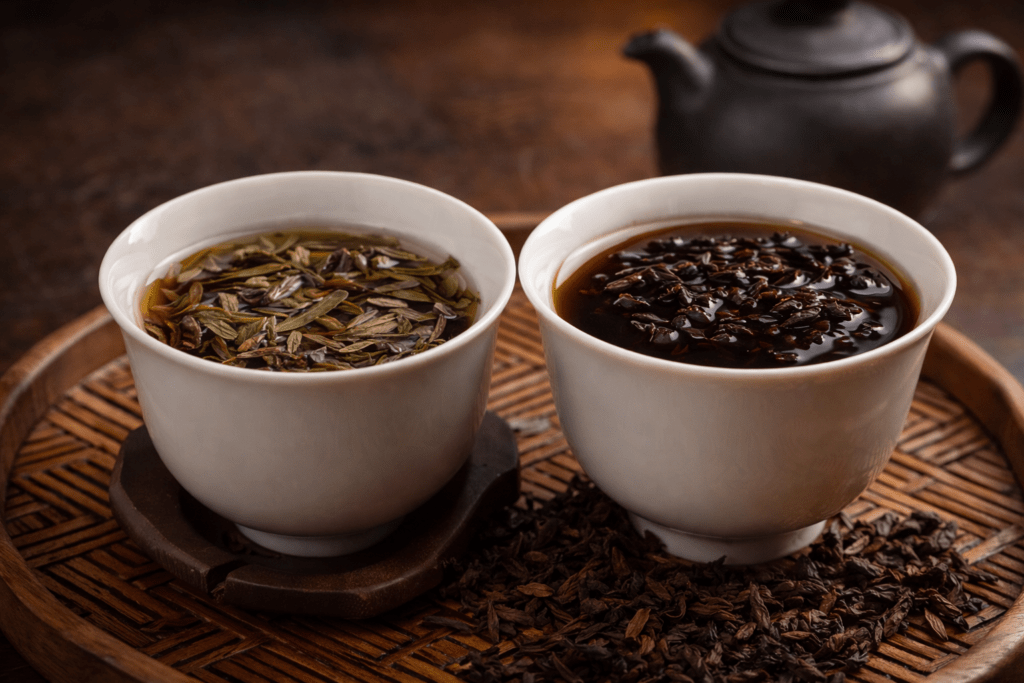
Raw and ripe Pu-erh also look different when brewed.
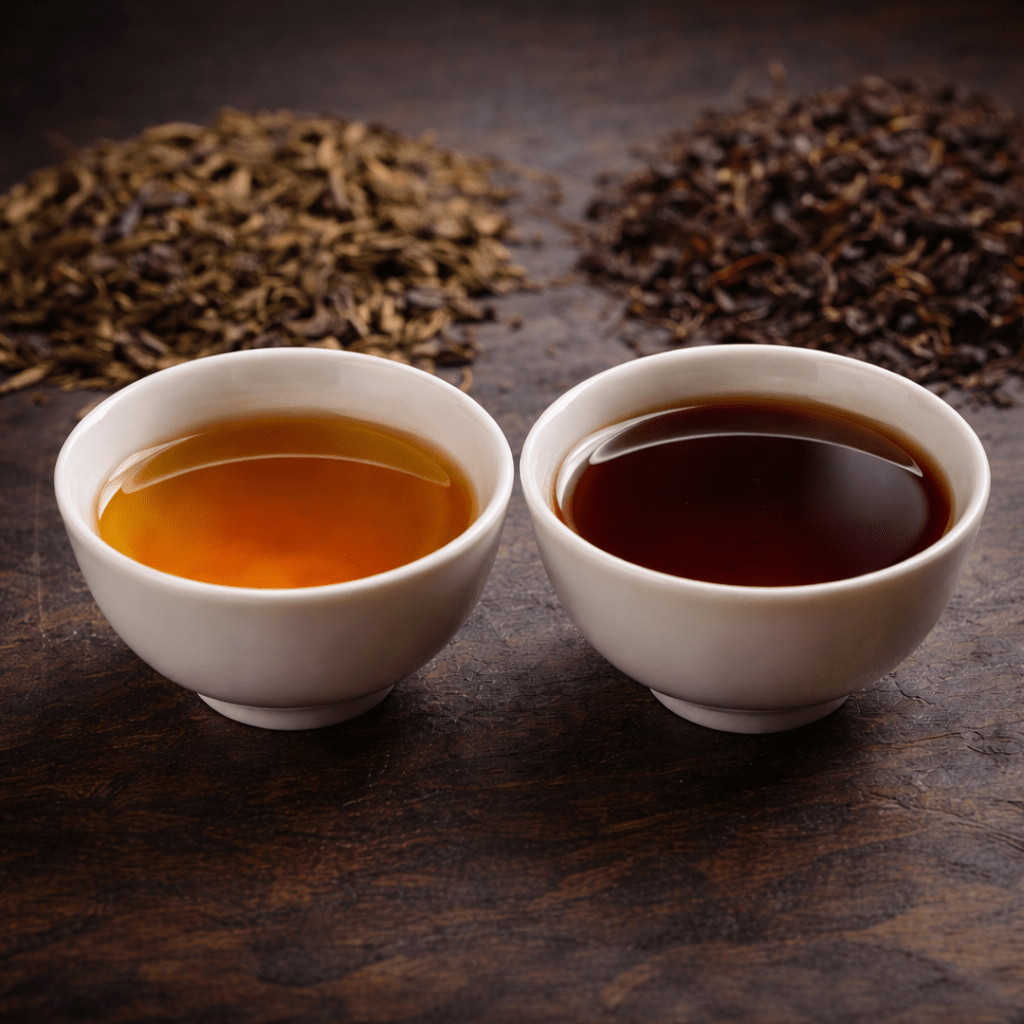
Raw Pu-erh typically produces a liquor that ranges from:
- pale gold
- amber
- light orange
Ripe Pu-erh produces a darker infusion:
- deep red
- reddish brown
- almost black in strong brews
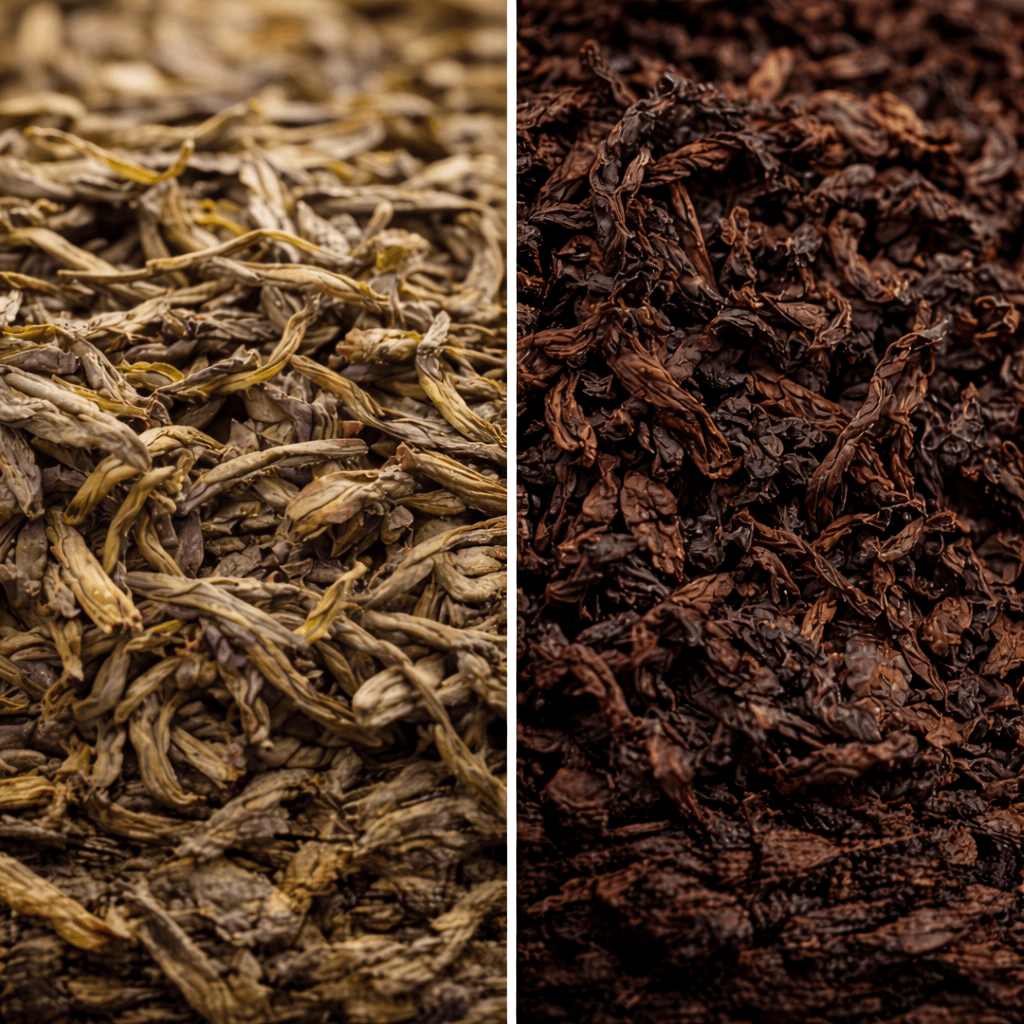
The leaves themselves also differ in color.
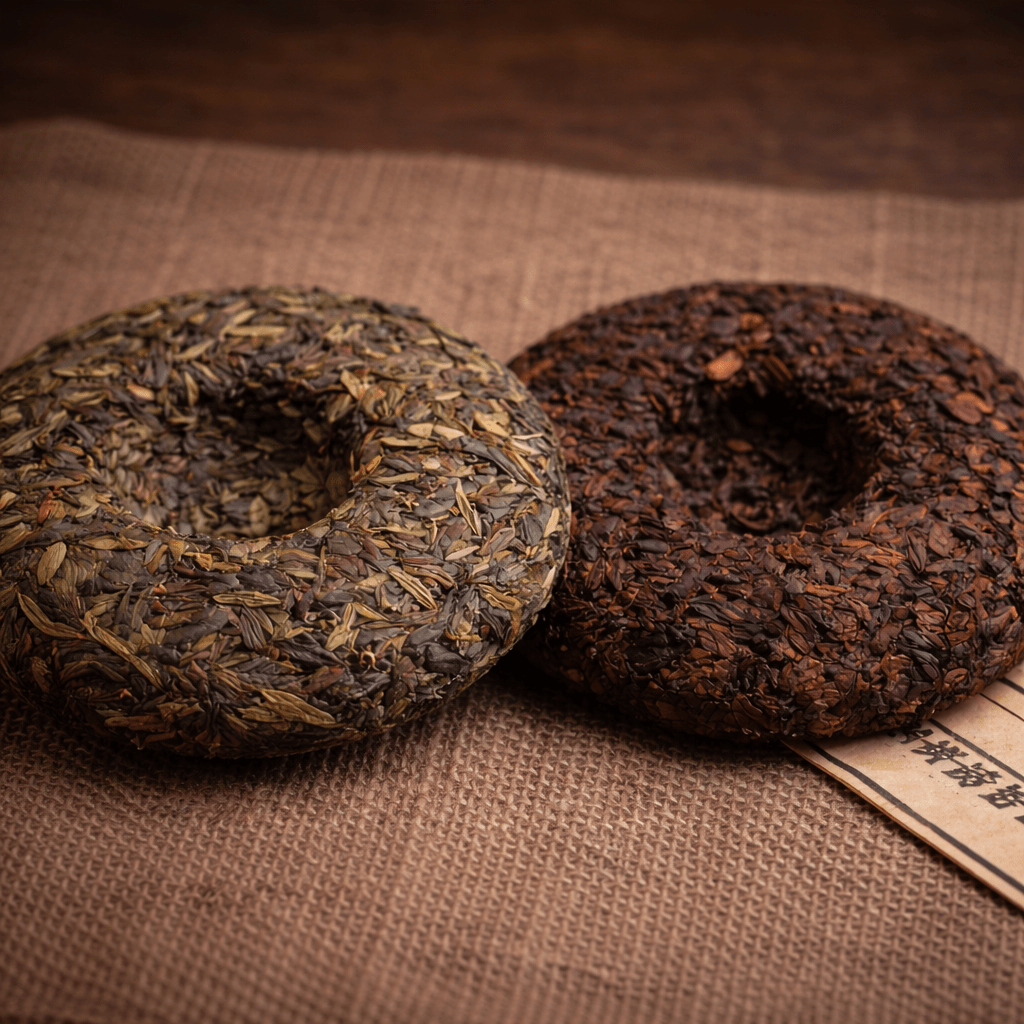
Raw Pu-erh leaves are usually greenish brown, while ripe Pu-erh leaves are much darker due to fermentation.
Which Pu-erh Is Better for Beginners?
Both types of Pu-erh have their own appeal, but beginners often prefer ripe Pu-erh.
Ripe Pu-erh tends to be:
- smoother
- less bitter
- easier to brew
Raw Pu-erh can sometimes be quite strong when young, though aged versions are incredibly complex and rewarding.
For someone new to Pu-erh, trying both styles is the best way to understand their differences.
Many tea drinkers eventually develop a preference for one or the other.
How to Brew Raw and Ripe Pu-erh
Both raw and ripe Pu-erh are well suited to the gongfu brewing method.
Water Temperature
Use boiling water:
95–100°C
(203–212°F)
Tea Amount
Use about:
5 grams of tea for 100–150 ml of water.
Rinse the Tea
Pu-erh tea is usually rinsed briefly with hot water before the first infusion.
This helps open the compressed leaves.
Infusions
High quality Pu-erh tea can often be brewed 8 to 12 times or more.
Each infusion reveals new layers of flavor.
Conclusion
Raw and ripe Pu-erh represent two different expressions of the same tea tradition.
Raw Pu-erh follows the ancient method of slow natural aging, gradually transforming over many years.
Ripe Pu-erh uses modern fermentation techniques to produce a smooth and mature flavor more quickly.
Both styles offer unique experiences for tea drinkers, and exploring the differences between them is one of the most rewarding parts of learning about Chinese tea.
Whether you prefer the bright complexity of raw Pu-erh or the deep richness of ripe Pu-erh, both teas reflect the remarkable diversity of Yunnan’s tea culture.