Pu-erh tea is one of the most unique teas in the world. Originating from Yunnan Province in China, Pu-erh is known for its rich flavor, deep history, and unusual fermentation process. Unlike most teas that are best enjoyed fresh, Pu-erh tea can age for years or even decades, developing deeper complexity over time.
Because Pu-erh tea undergoes microbial fermentation and aging, the brewing method differs significantly from that of green tea, white tea, or even black tea. Proper temperature, rinsing techniques, and infusion timing all play a crucial role in revealing the tea’s full flavor.
This guide explains how to brew Pu-erh tea properly, including temperature, tea-to-water ratio, rinsing methods, and both traditional and modern brewing techniques.
Understanding Pu-erh Tea Before Brewing
Before brewing Pu-erh tea, it is helpful to understand what makes it unique.
Pu-erh tea belongs to the category of dark tea (hei cha) and is traditionally produced in Yunnan, China. The tea leaves come from large-leaf tea trees and undergo a fermentation process that changes their flavor and character over time.
There are two main types of Pu-erh tea:
Raw Pu-erh (Sheng Pu-erh)
Raw Pu-erh is naturally aged. Fresh raw Pu-erh tastes bright, vegetal, and sometimes astringent. Over time, it develops deeper flavors such as honey, dried fruit, and forest notes.
Ripe Pu-erh (Shou Pu-erh)
Ripe Pu-erh undergoes accelerated fermentation. It has a smooth, earthy flavor with notes of wood, cocoa, and damp forest soil.
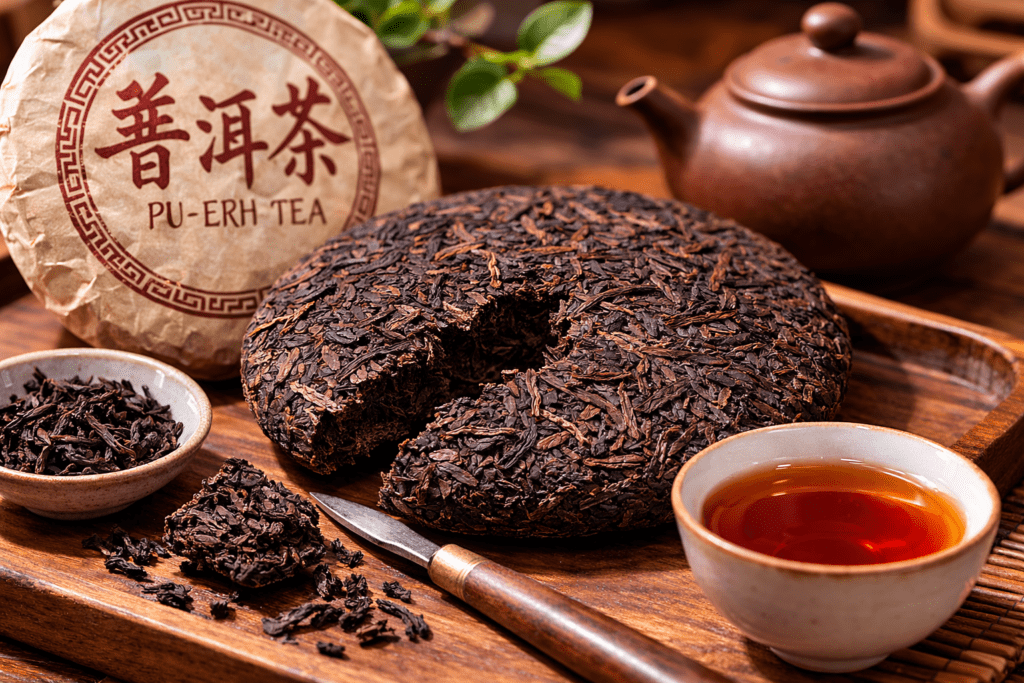
Because of this fermentation, Pu-erh tea often benefits from a quick rinse before brewing, which helps awaken the leaves and remove dust from compressed tea cakes.
Choosing the Right Pu-erh Tea
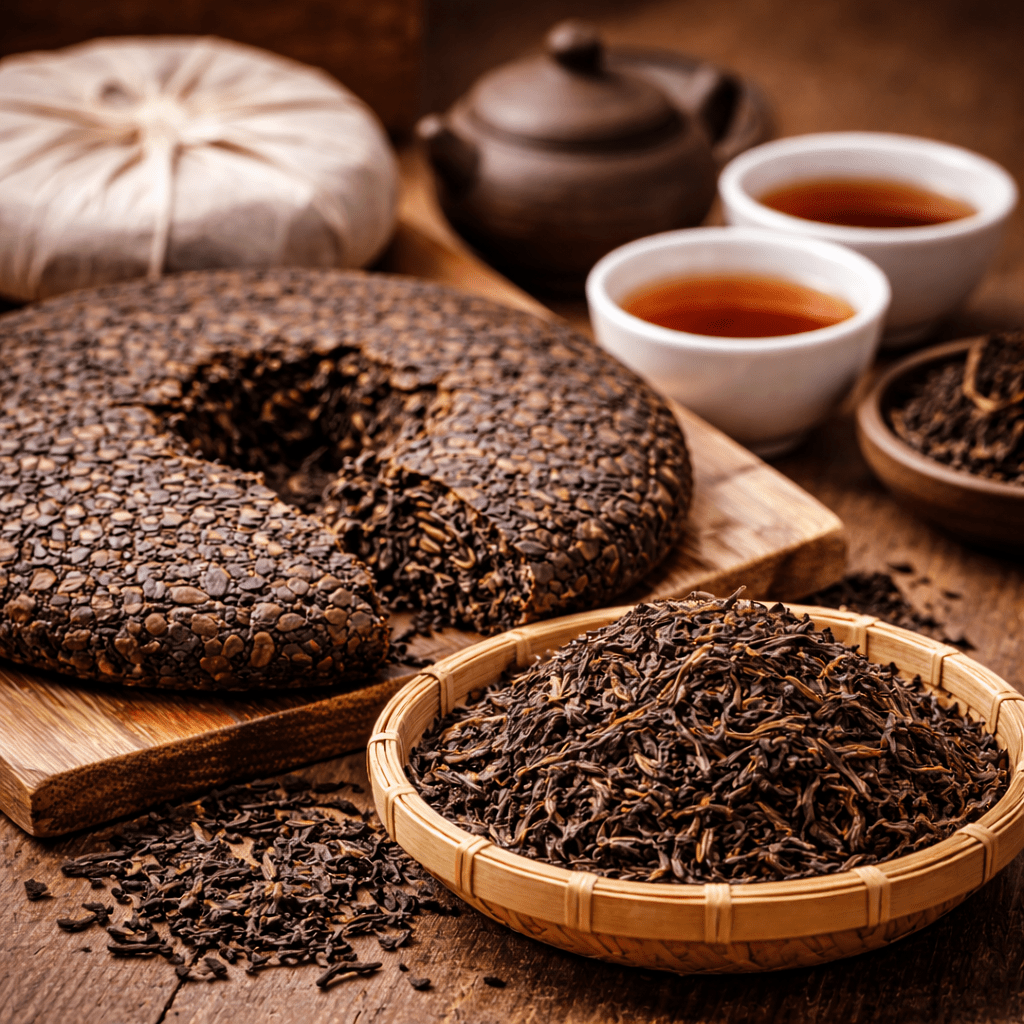
Pu-erh tea is commonly sold in compressed forms, including:
- Tea cakes (bing cha)
- Tea bricks (zhuan cha)
- Tea bowls (tuo cha)
- Loose leaf Pu-erh
Compressed tea must be gently separated before brewing.
Use a Pu-erh tea knife or pick to loosen the leaves. Avoid breaking the leaves into small fragments, because intact leaves produce a smoother infusion.
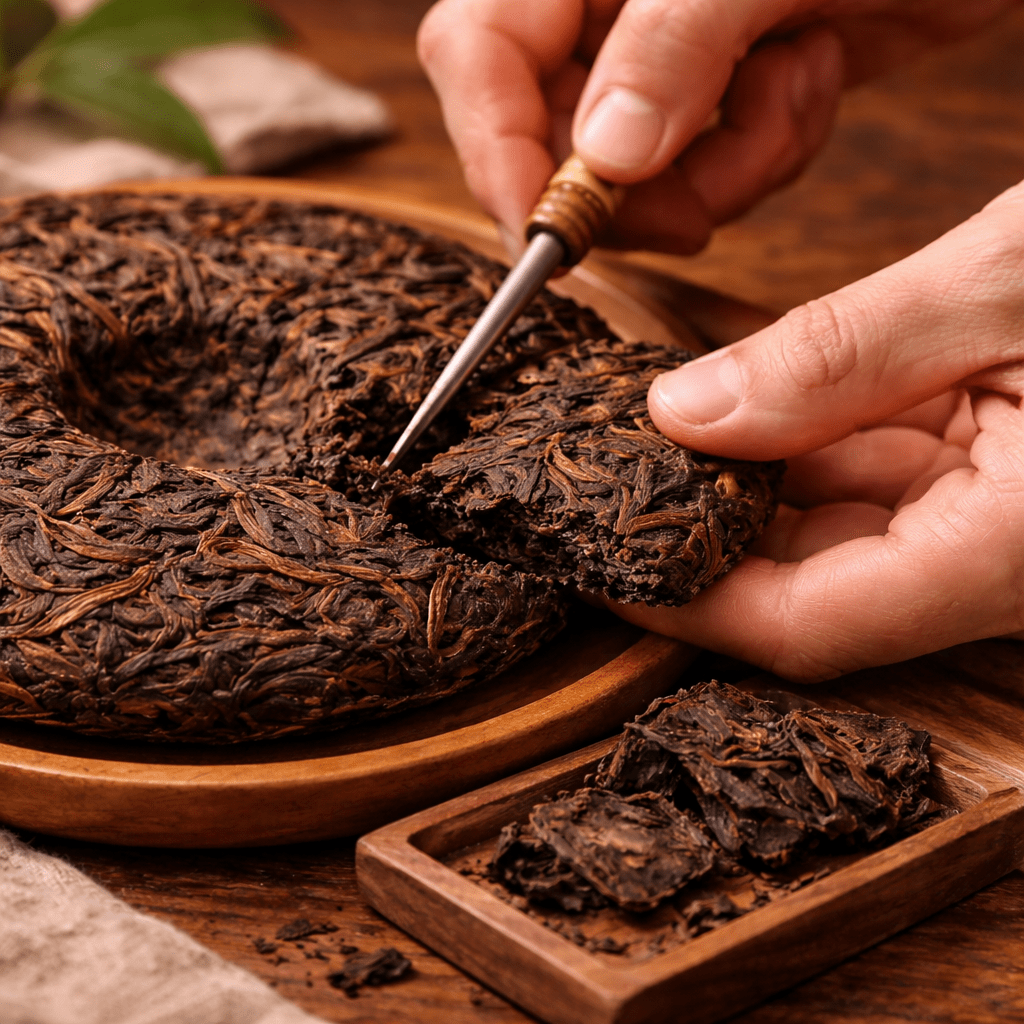
Try to keep leaf chunks intact when possible. Large leaf pieces produce a more balanced and aromatic brew.
Ideal Water Temperature for Pu-erh Tea
Unlike green tea or white tea, Pu-erh tea requires very hot water.
The ideal temperature is:
95–100°C
(203–212°F)
Boiling water helps fully extract the flavors of fermented tea leaves.
Lower temperatures may produce a weak or flat taste.
Pu-erh leaves are thick and durable, so they can handle high heat without becoming overly bitter.
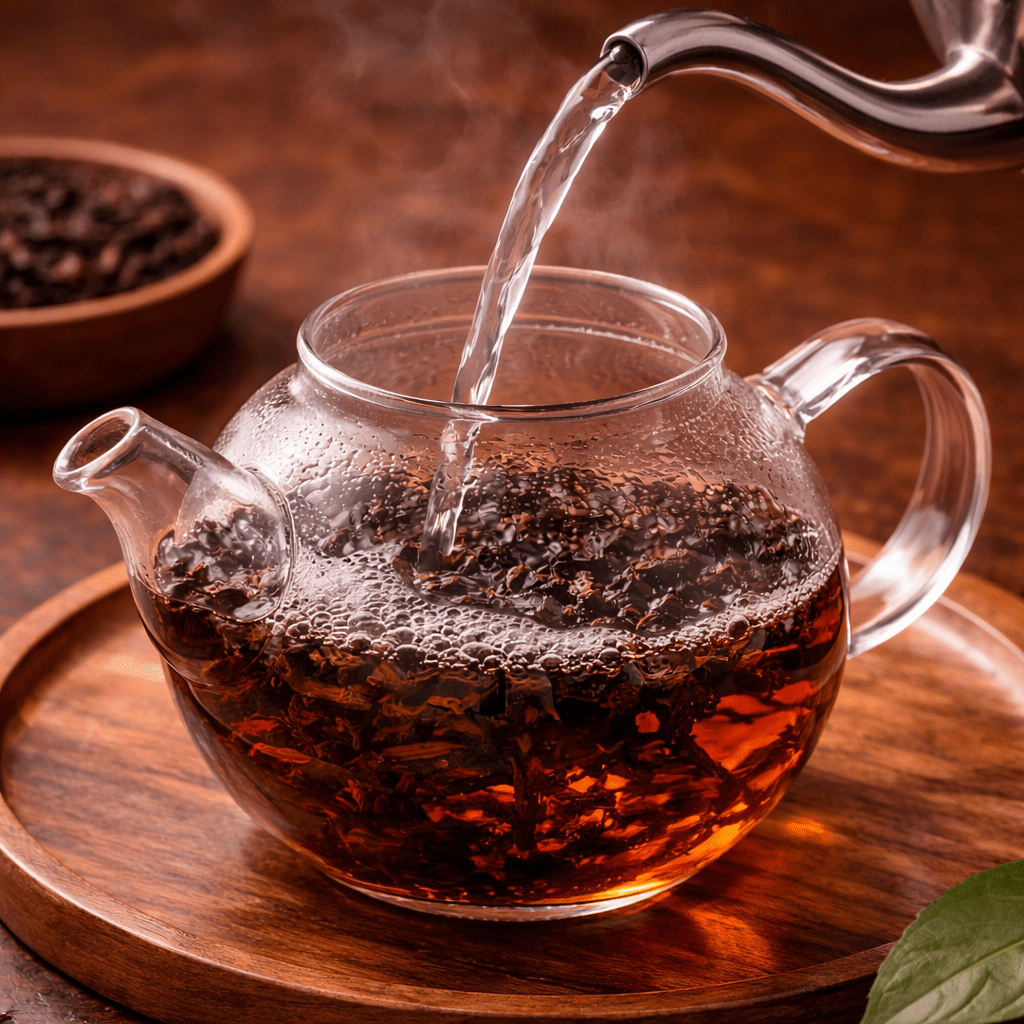
In fact, many traditional tea drinkers prefer to use water directly after boiling.
Why Pu-erh Tea Should Be Rinsed
One important step in brewing Pu-erh tea is rinsing the leaves.
This step is sometimes called:
Awakening the teaTo rinse Pu-erh tea:
- Add leaves to your teapot or gaiwan.
- Pour hot water over the leaves.
- Immediately discard the water.
This rinse lasts only 5–10 seconds.
The purpose of rinsing is:
- Remove dust from compressed tea
- Open the leaves
- Warm the teaware
- Activate aromas
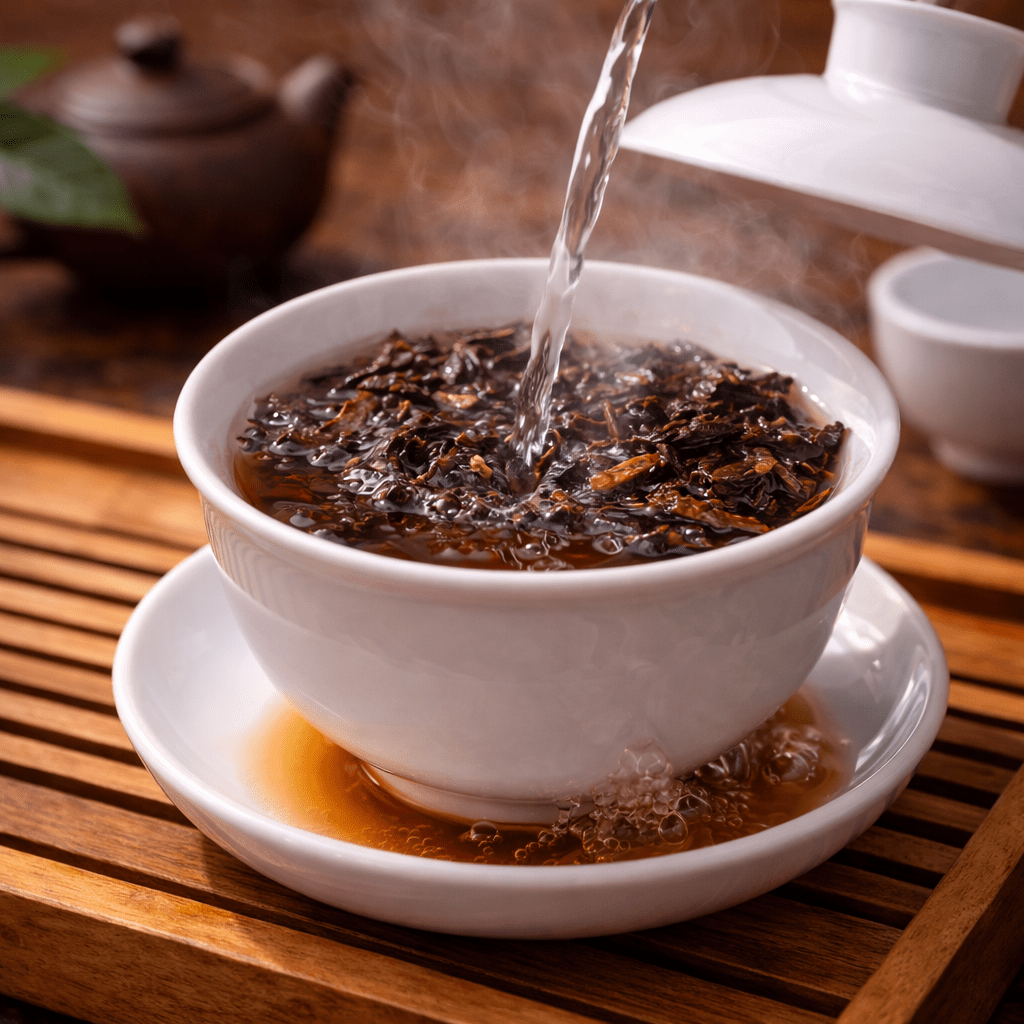
After rinsing, the tea leaves will begin to expand and release fragrance.
Tea-to-Water Ratio for Pu-erh Tea
Pu-erh tea is often brewed stronger than other teas.
A typical ratio is:
5–7 grams tea
100–150 ml water
This ratio works well for gongfu brewing, which uses multiple short infusions.
If brewing in a larger teapot or mug, you can adjust to:
3–5 grams
250 ml water
Using too little tea may produce a weak infusion.
Using too much tea can make the brew overly strong.
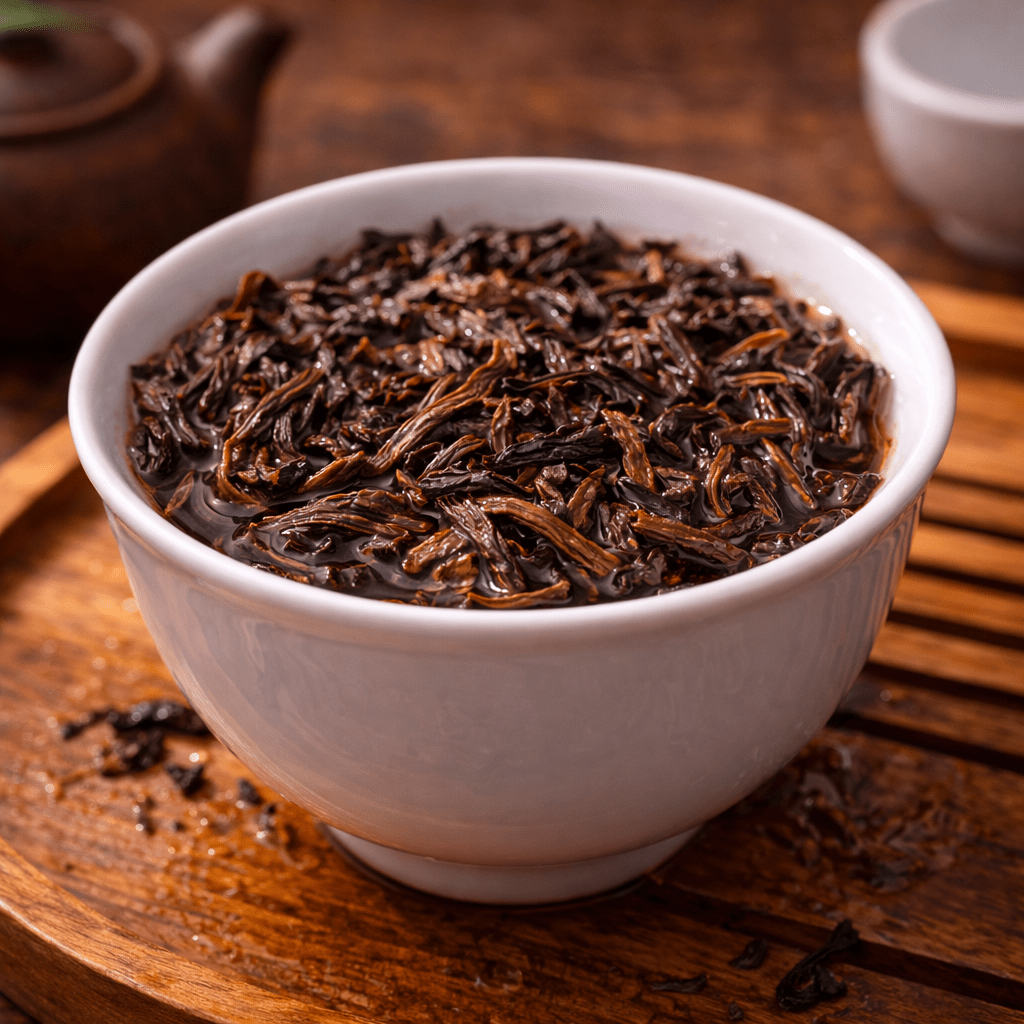
Finding the right ratio is one of the keys to brewing great Pu-erh tea.
Gongfu Brewing Method for Pu-erh
The most traditional way to brew Pu-erh tea is the gongfu method.
This method uses:
- Small teapot or gaiwan
- High leaf-to-water ratio
- Multiple short infusions
Typical gongfu brewing process:
- Warm the teaware with hot water.
- Add tea leaves.
- Rinse the tea quickly.
- Brew the first infusion for about 10–15 seconds.
- Increase time gradually for later infusions.
Pu-erh tea can often produce:
8–15 infusionsEach infusion reveals different flavors.
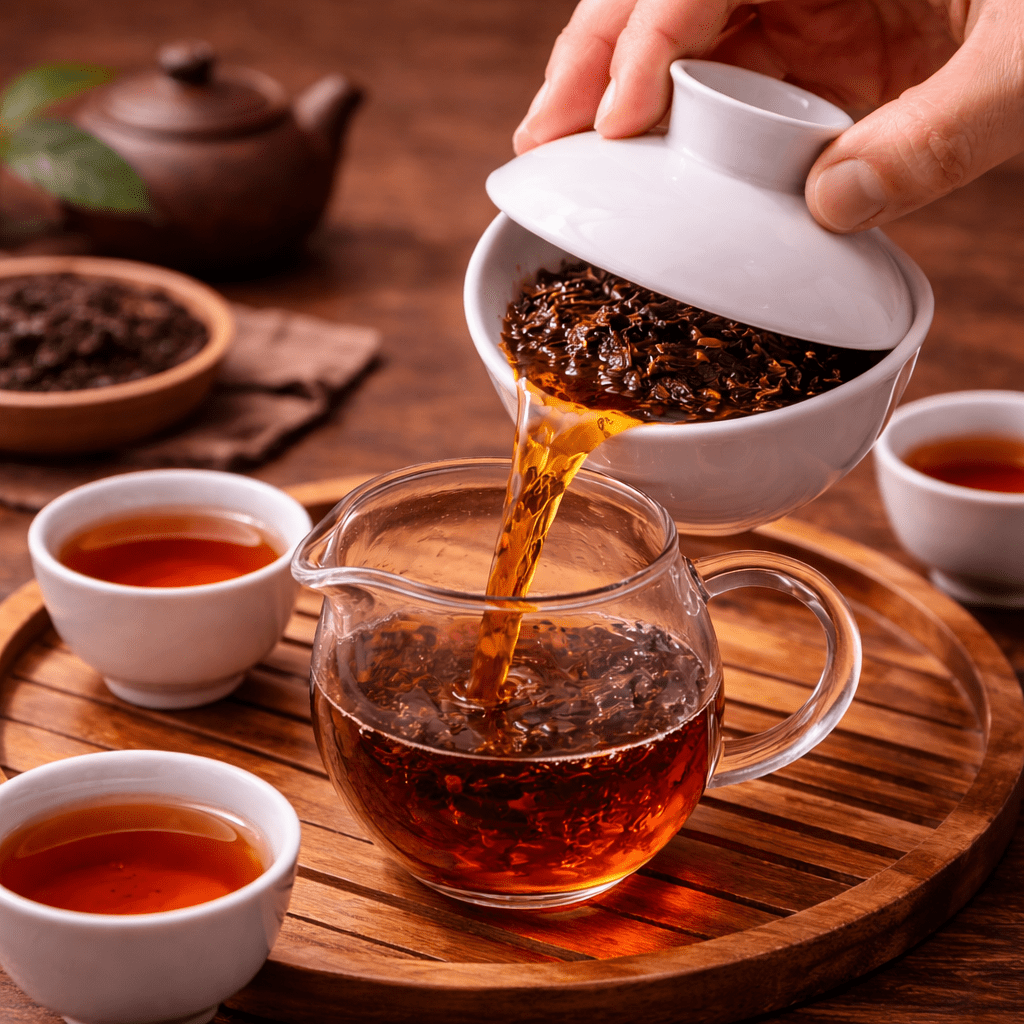
Early infusions tend to be lighter and more aromatic, while later infusions become deeper and smoother.
Western Brewing Method
Pu-erh tea can also be brewed using a Western-style teapot.
This method uses:
- Larger teapot
- Lower leaf ratio
- Longer steep time
Typical parameters:
3–5 grams tea
250 ml water
3–4 minutes steep time
This method produces a stronger, fuller cup but fewer infusions.
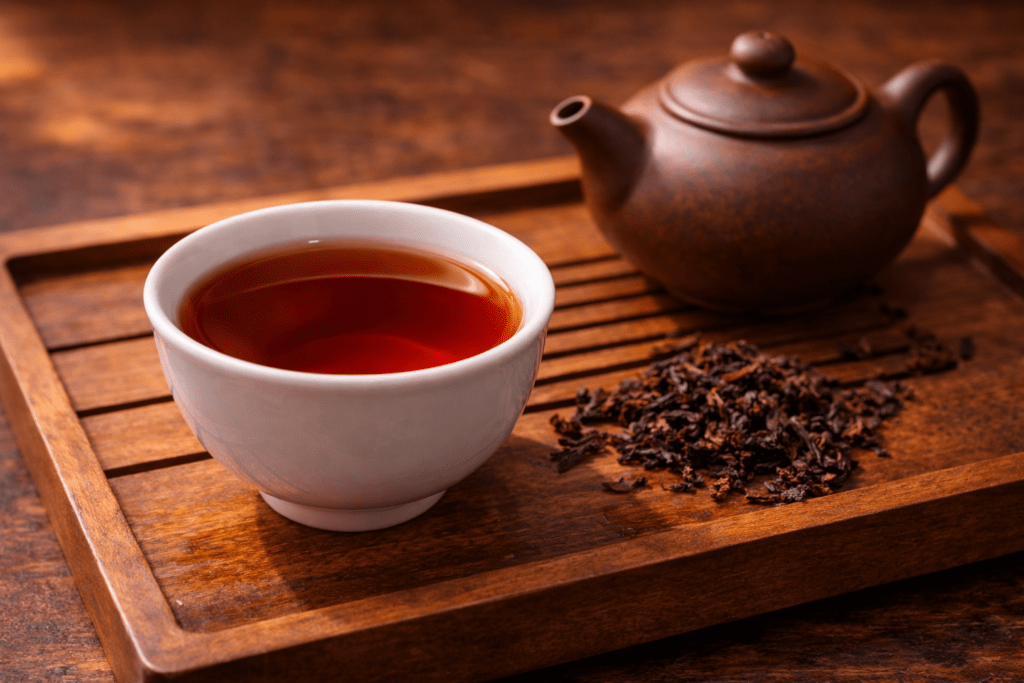
Many beginners prefer this method because it is simpler.
Flavor Profile of Properly Brewed Pu-erh
When brewed correctly, Pu-erh tea has a complex and satisfying flavor.
Raw Pu-erh may include notes such as:
- Honey
- Wild herbs
- Dried fruit
- Floral hints
Ripe Pu-erh often features:
- Earth
- Wood
- Cocoa
- Dark caramel
The tea liquor color ranges from:
- Golden amber (young raw Pu-erh)
- Deep red-brown (aged or ripe Pu-erh)
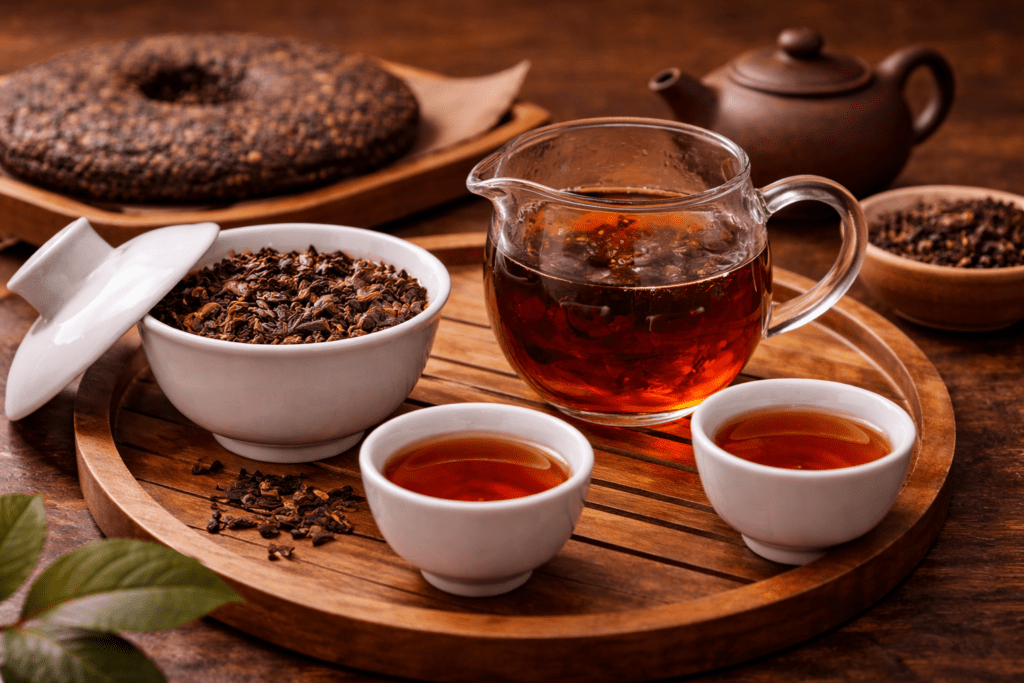
The texture is usually smooth and thick.
Common Mistakes When Brewing Pu-erh Tea
Many beginners struggle with Pu-erh tea because of a few common mistakes.
Using water that is not hot enough
Pu-erh requires near-boiling water. Lower temperatures will produce weak tea.
Skipping the rinse
Rinsing helps awaken compressed tea leaves.
Breaking the leaves too much
Small broken leaves release bitterness.
Brewing too long
Especially with gongfu brewing, short infusions work best.
How Many Times Can Pu-erh Tea Be Brewed?
Pu-erh tea is famous for its ability to produce many infusions.
Typical ranges:
Gongfu brewing: 8–15 infusions
Western brewing: 2–4 infusions
High-quality aged Pu-erh may produce even more.
With each infusion, the flavor evolves and changes.
This is part of the charm of Pu-erh tea.
Final Thoughts
Pu-erh tea is unlike any other tea in the world. Its fermentation process, aging potential, and rich flavor make it a fascinating drink for tea lovers.
Brewing Pu-erh properly requires attention to temperature, rinsing, and infusion timing. With the right method, Pu-erh tea can produce many flavorful cups and reveal layers of aroma and texture over time.
Whether you prefer the traditional gongfu method or a simple teapot brew, mastering Pu-erh brewing will deepen your appreciation for one of China’s most treasured teas.

Nice article, learned something new today.
Awesome article, keep posting!
This is really helpful information, thanks a lot.