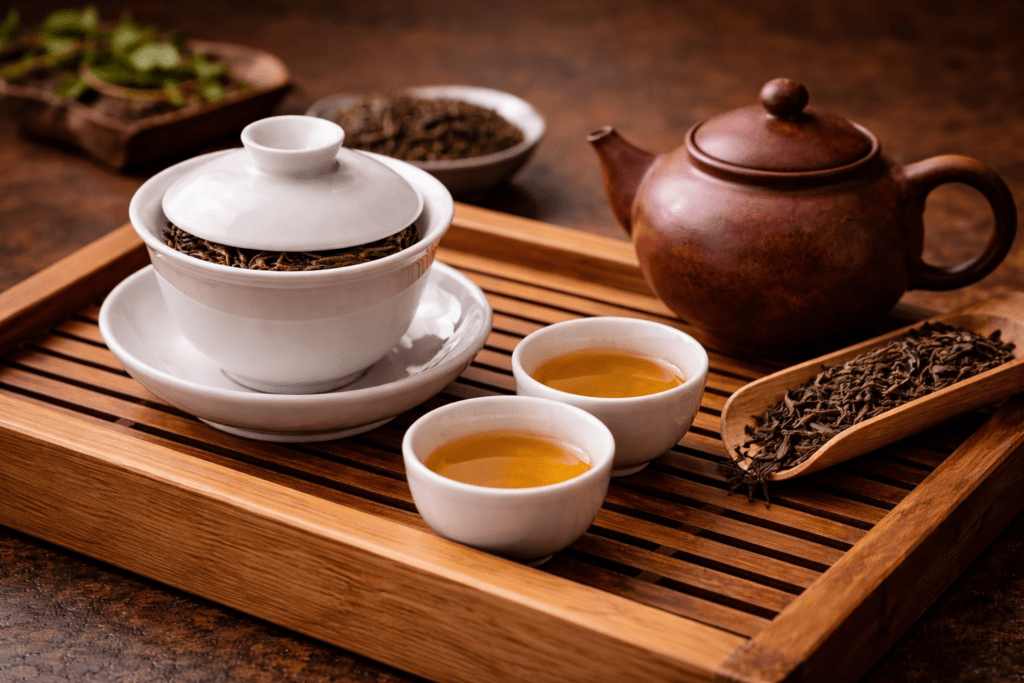
Chinese tea culture includes a wide variety of brewing tools, but two of the most commonly used vessels are the gaiwan and the teapot.
Both are deeply rooted in traditional Chinese tea culture and have been used for centuries to brew tea in different ways. While they may appear similar in purpose, they offer very different brewing experiences.
Some tea drinkers prefer the precision and control of a gaiwan, while others appreciate the convenience and character of a teapot.
If you are new to Chinese tea, you may wonder:
- Should you start with a gaiwan?
- Is a teapot easier to use?
- Which one produces better flavor?
This guide will explore the differences between gaiwan and teapot brewing, including their history, advantages, disadvantages, and when to use each one.
By the end, you will understand which brewing vessel is best for your tea style.
What Is a Gaiwan?
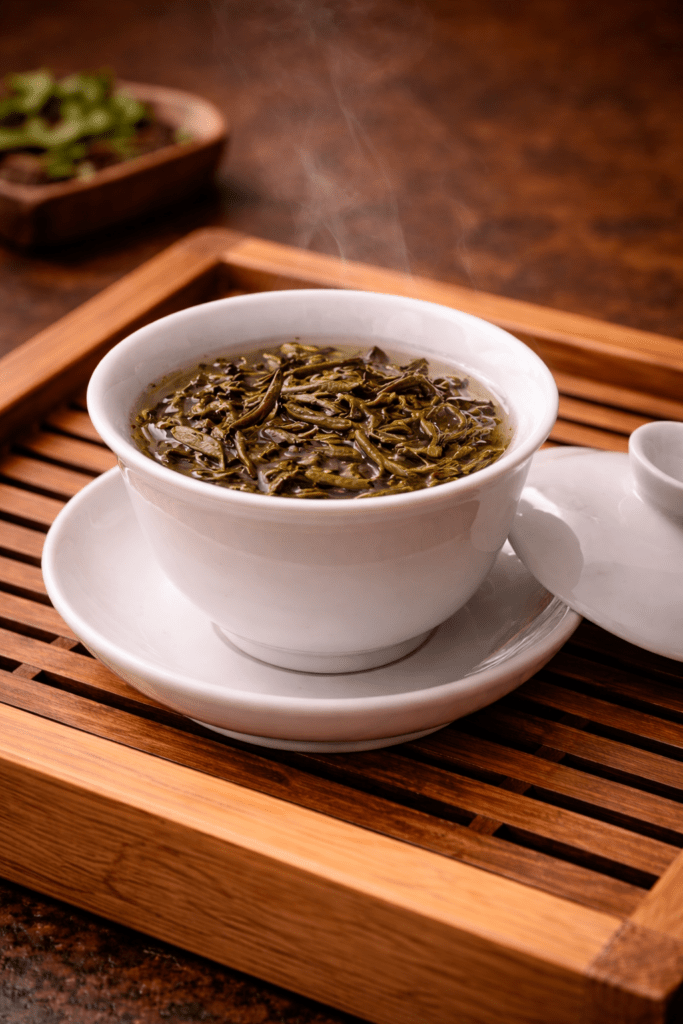
A gaiwan is a traditional Chinese tea brewing vessel consisting of three parts:
- A bowl
- A lid
- A saucer
The word gaiwan literally means “lidded bowl.”
It originated during the Ming Dynasty, when loose-leaf tea became the dominant form of tea consumption after compressed tea cakes fell out of favor.
The design of the gaiwan is simple but incredibly versatile. It allows the tea drinker to:
- Observe the leaves while brewing
- Control the infusion precisely
- Pour tea smoothly using the lid
Unlike teapots, gaiwans are usually made from porcelain, which does not absorb flavor.
This makes them ideal for tasting different teas without affecting the aroma.
What Is a Teapot?
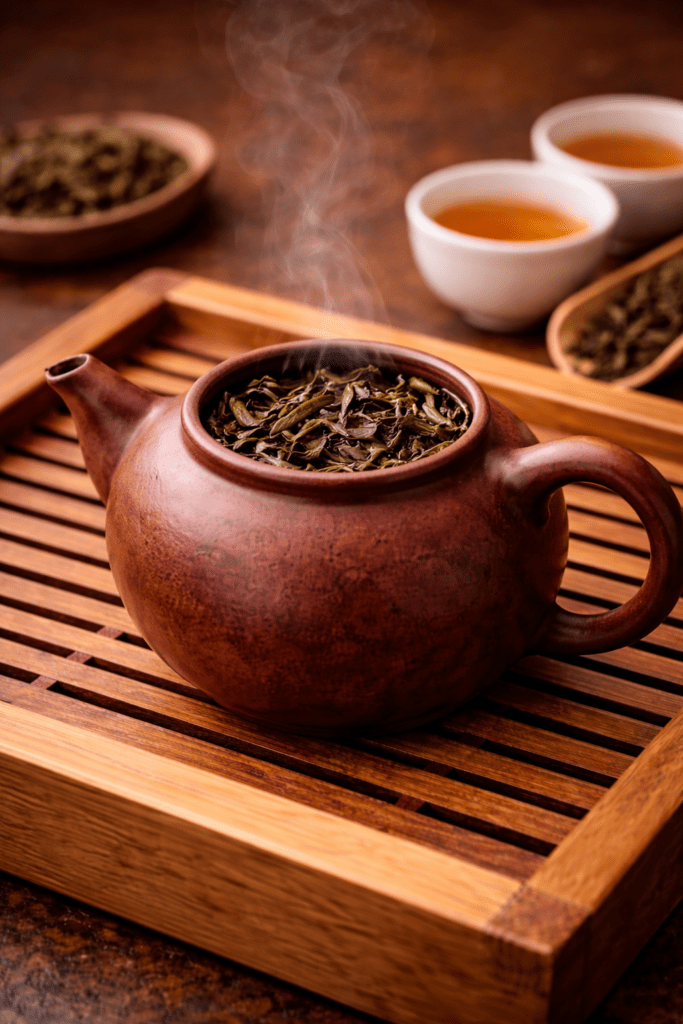
A teapot is another classic vessel used to brew tea. Unlike a gaiwan, it typically includes:
- A handle
- A spout
- A lid
- An enclosed chamber
Teapots can be made from many materials, including:
- porcelain
- glass
- ceramic
- Yixing clay
Among these, Yixing clay teapots are especially famous in Chinese tea culture.
Yixing teapots are unique because their porous clay slowly absorbs the flavor of the tea over time, gradually improving the taste of future brews.
For this reason, many tea enthusiasts dedicate a single Yixing teapot to one type of tea.
Key Differences Between Gaiwan and Teapot
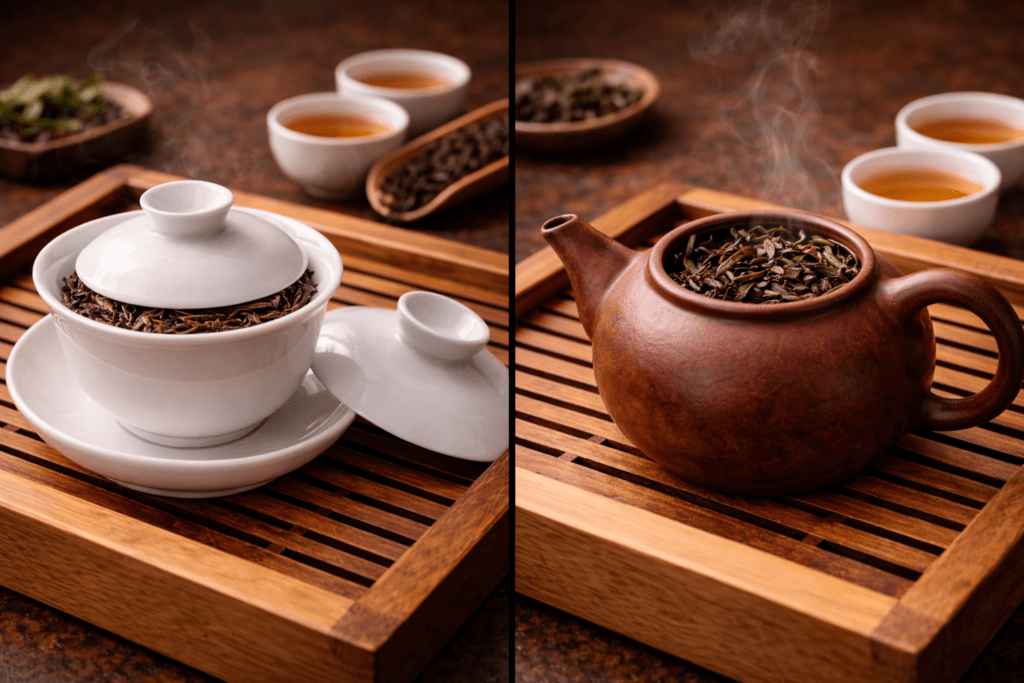
Although both tools brew tea, they function very differently.
Here are the main differences.
1. Brewing Control
A gaiwan gives the brewer maximum control.
Because the lid is slightly open during pouring, you can control:
- steeping time
- water flow
- leaf expansion
This level of precision is especially useful when brewing delicate teas such as:
- green tea
- white tea
- high mountain oolong
Teapots, on the other hand, are less flexible. Once the tea is inside, the leaves remain in the chamber until pouring stops the infusion.
2. Heat Retention
Teapots generally retain heat better.
This is particularly true for Yixing clay teapots, which hold temperature extremely well.
That makes them ideal for teas that require high heat, including:
- dark oolong
- black tea
- Pu-erh tea
Gaiwans lose heat slightly faster because porcelain is thinner.
However, this can actually be beneficial for delicate teas that should not be overheated.
3. Flavor Neutrality
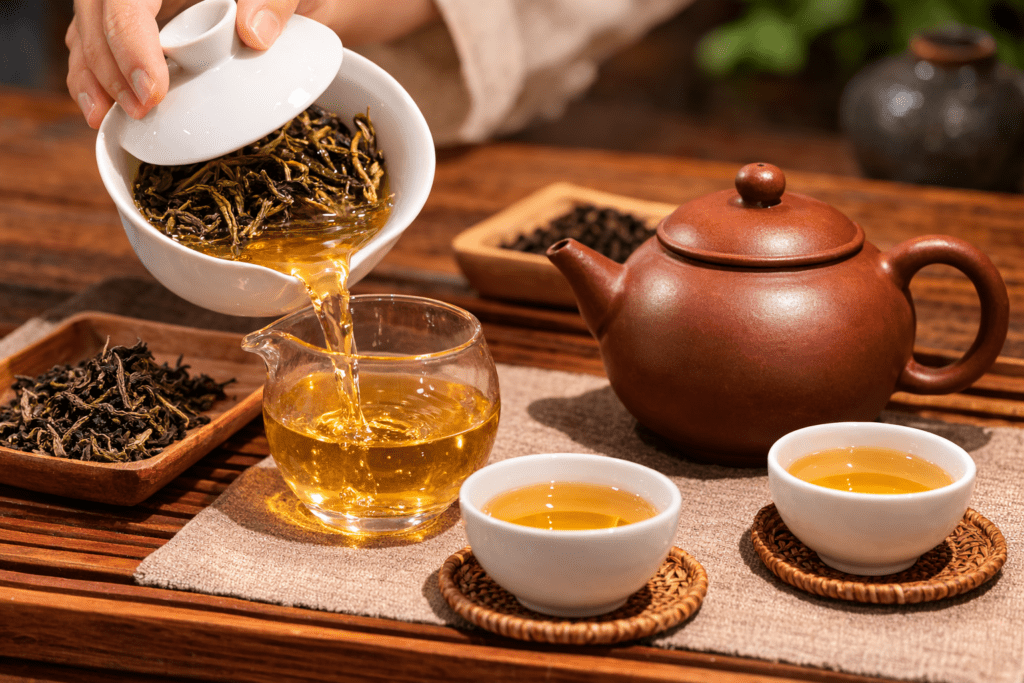
A porcelain gaiwan is completely neutral.
It does not absorb aroma or flavor, which means every tea tastes exactly as it should.
This makes it perfect for:
- tea tasting
- comparing teas
- professional tea evaluation
Yixing teapots, however, gradually absorb tea oils.
This creates a seasoned teapot that enhances the flavor of the same tea over time.
But it also means you should not mix different teas in the same Yixing pot.
4. Ease of Use
For beginners, teapots are usually easier.
They are familiar and simple:
- Add tea
- Pour water
- Pour tea
A gaiwan requires slightly more skill because the lid must be held while pouring.
At first, beginners may worry about burning their fingers or spilling tea.
But with a little practice, using a gaiwan becomes very natural.
Which Teas Are Best for Gaiwan Brewing?
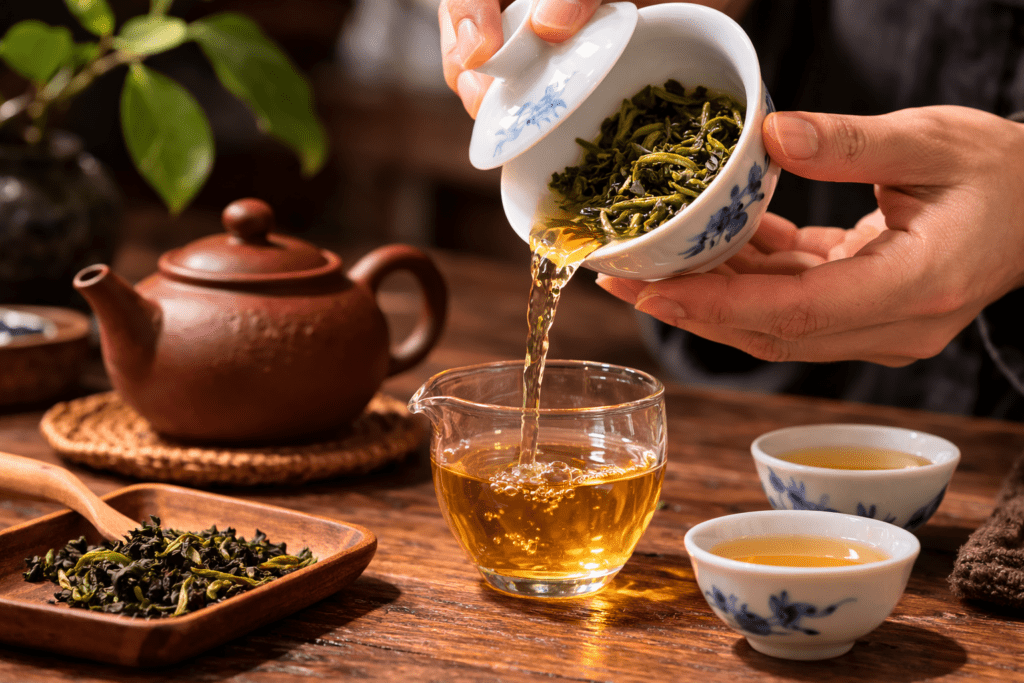
Gaiwans are excellent for teas that benefit from careful control.
These include:
Green Tea
Green tea can become bitter if brewed too long.
A gaiwan allows you to pour quickly and control steeping time.
White Tea
White tea leaves expand slowly and release subtle flavors.
The open structure of the gaiwan allows the leaves to move freely.
High Mountain Oolong
Oolong tea reveals complex aromas across multiple infusions.
A gaiwan allows each infusion to be adjusted precisely.
Which Teas Are Best for Teapot Brewing?
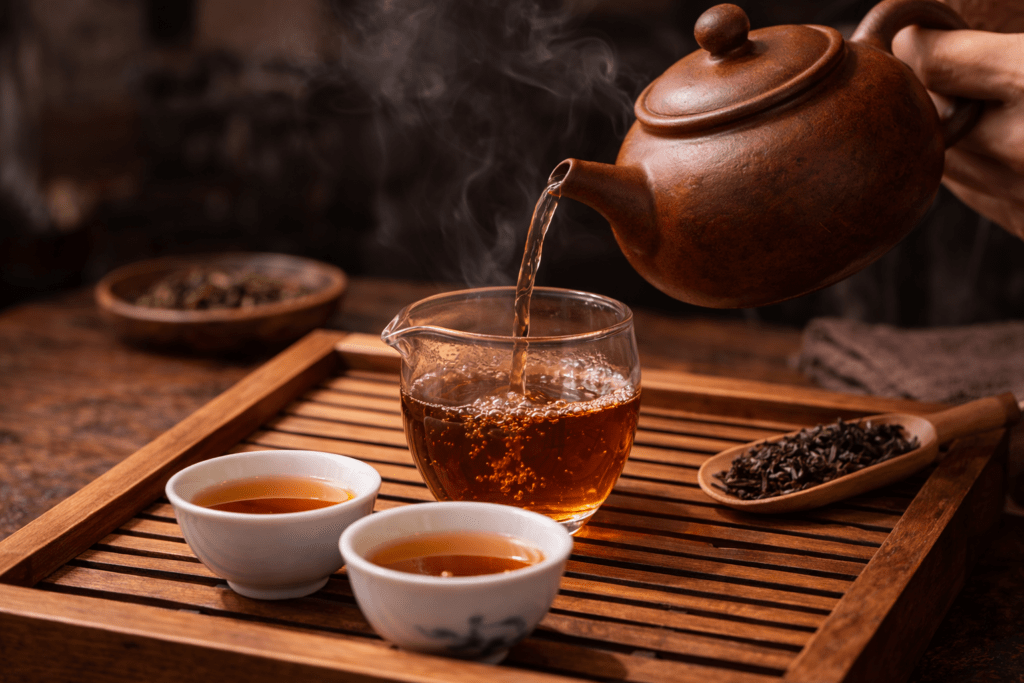
Teapots work particularly well with teas that require strong heat and repeated infusions.
Black Tea
Black tea benefits from the heat retention of a teapot.
This produces a deeper and fuller flavor.
Pu-erh Tea
Pu-erh tea requires boiling water and multiple infusions.
Yixing teapots enhance the earthy character of the tea.
Dark Oolong
Roasted oolong teas often taste richer when brewed in clay teapots.
Gongfu Tea Brewing and These Two Tools
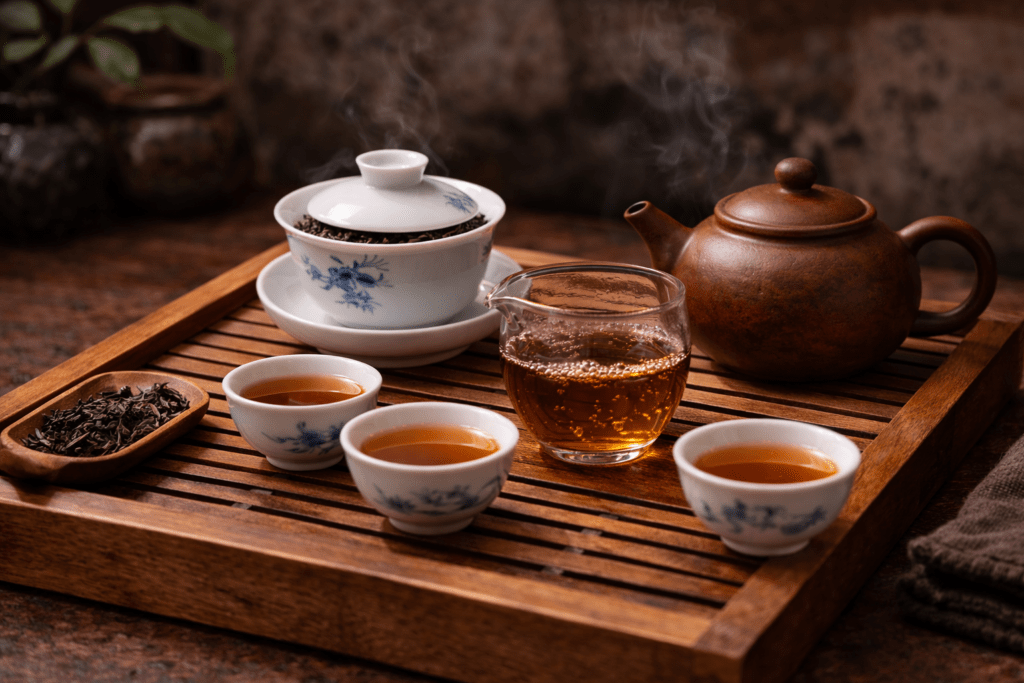
In Gongfu tea brewing, both gaiwans and teapots are used.
The process typically includes:
- tea tray
- gaiwan or Yixing teapot
- fairness pitcher
- small tasting cups
Many tea masters prefer a gaiwan for tasting new teas because it reveals the true character of the leaves.
However, experienced tea drinkers often switch to a Yixing teapot once they find a tea they drink regularly.
Pros and Cons of Gaiwan vs Teapot
Gaiwan Pros
- Maximum brewing control
- Neutral flavor
- Ideal for tasting many teas
- Easy to clean
Gaiwan Cons
- Requires practice
- Can be hot to hold
Teapot Pros
- Easier to use
- Excellent heat retention
- Beautiful traditional craftsmanship
Teapot Cons
- Less brewing control
- Yixing teapots absorb flavor
Which One Should Beginners Choose?
For beginners, the best choice often depends on your goal.
If you want to learn tea deeply, start with a gaiwan.
It allows you to explore how different teas behave during brewing.
If you want simple everyday brewing, a teapot may feel more comfortable.
Many tea enthusiasts eventually use both tools.
Final Thoughts
Both gaiwans and teapots are essential tools in Chinese tea culture.
Rather than choosing one over the other, many tea drinkers enjoy using each tool for different purposes.
A gaiwan offers precision and clarity.
A teapot offers warmth and tradition.
Understanding the strengths of both allows you to experience tea in a deeper and more meaningful way.
