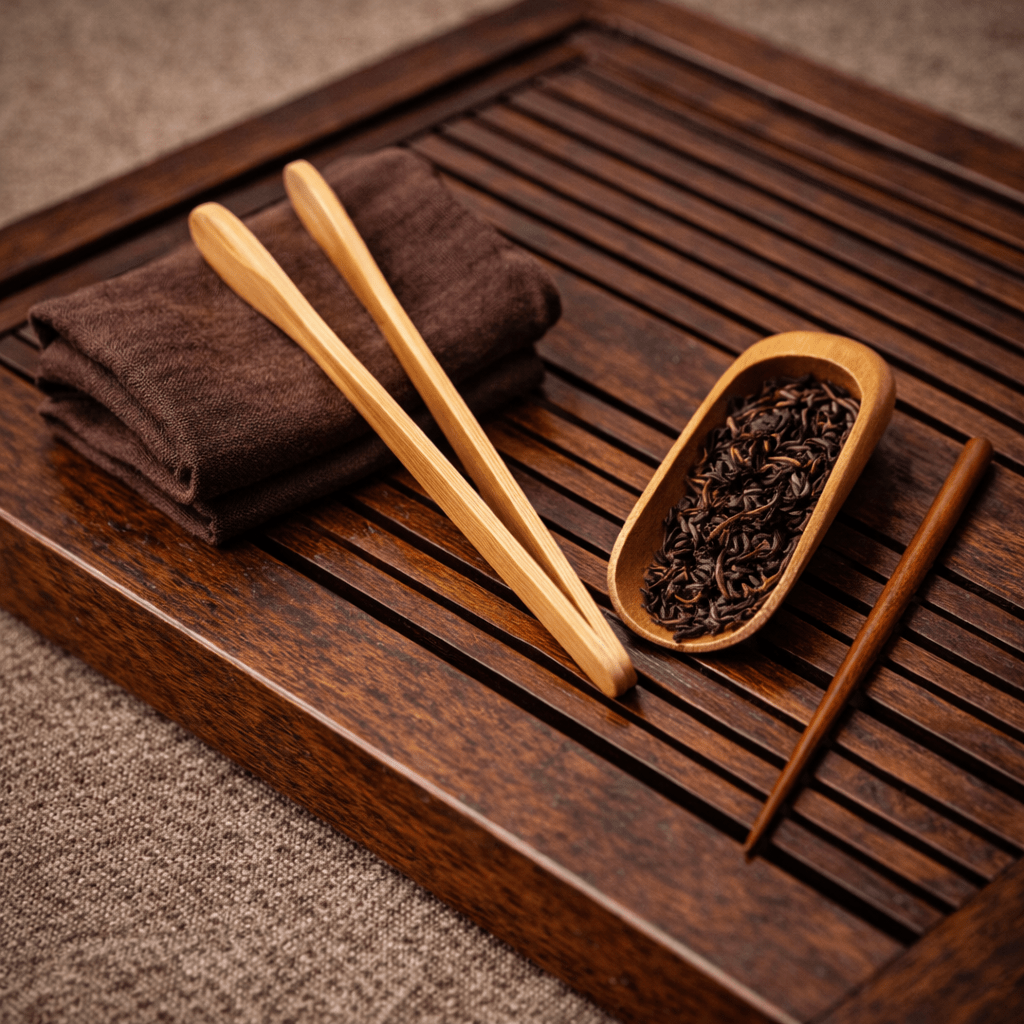
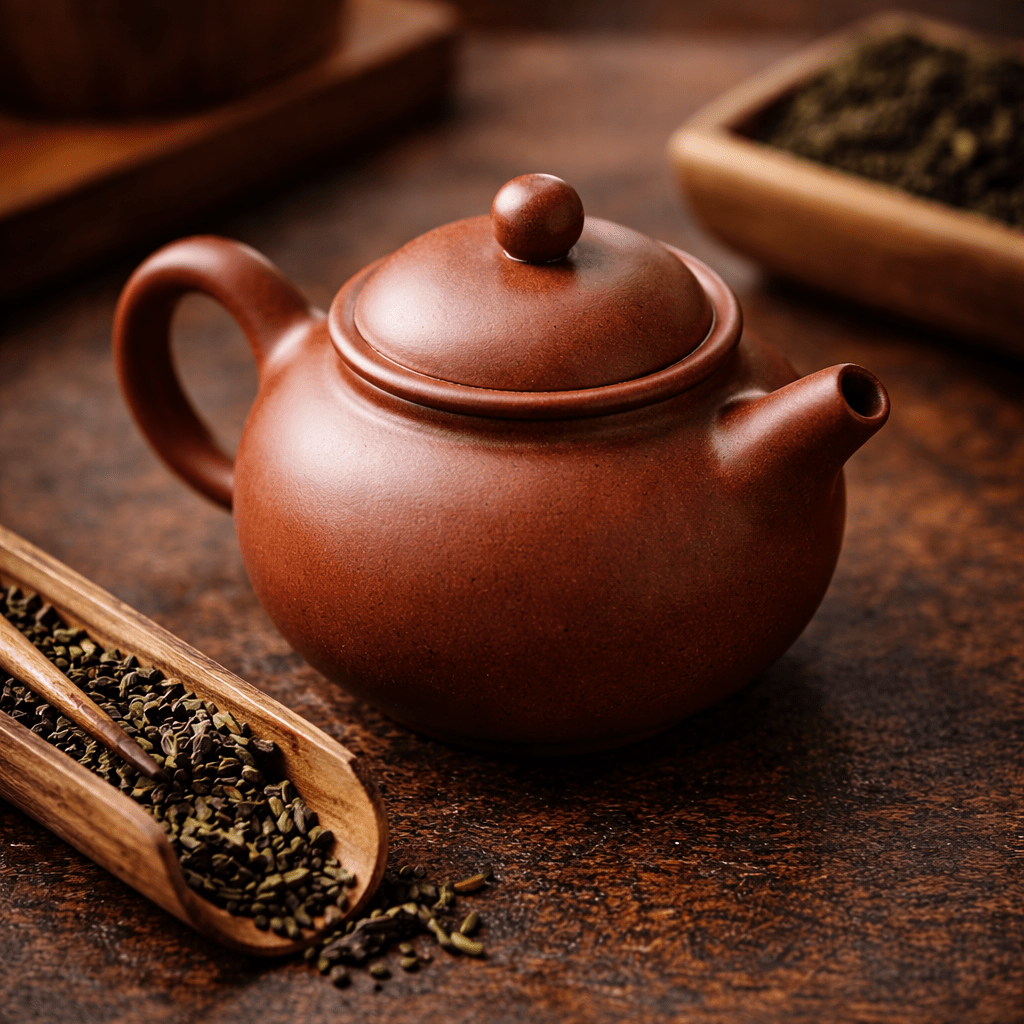
In traditional Chinese tea culture, the tools used to prepare tea are just as important as the tea itself. Among these tools, the tea tray plays a central role in creating a smooth and elegant tea brewing experience.
A tea tray is not simply a decorative piece of furniture. It is a functional platform designed to support gongfu tea brewing, allowing water to drain away while maintaining a clean tea table.
During a traditional tea session, several actions involve pouring water:
- rinsing tea leaves
- washing teaware
- pouring tea from gaiwan or teapot
- warming cups
Without a proper tray, these actions would quickly create a messy tea table.
The tea tray solves this problem by collecting excess water and creating an organized space for tea brewing.
In this guide, you will learn:
- What a tea tray is and why it is important
- How tea trays are used in gongfu tea brewing
- The different types of tea trays
- Materials used to make tea trays
- How to choose the best tea tray for your tea setup
By the end of this guide, you will understand why a tea tray is considered one of the essential tools in Chinese tea culture.
What Is a Tea Tray?
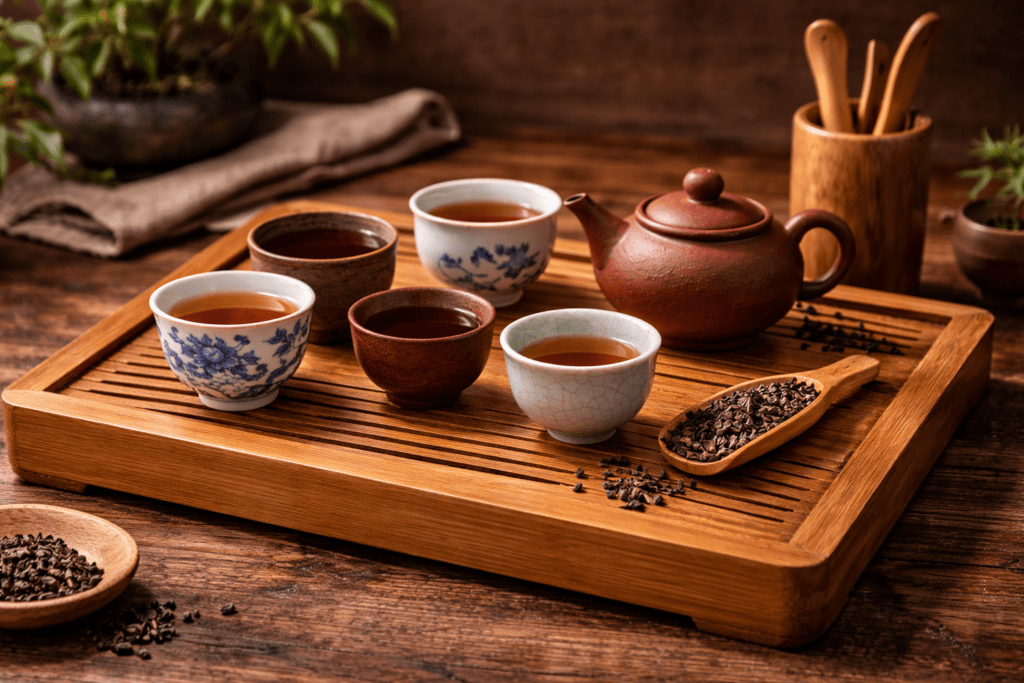
A tea tray is a flat platform designed to hold teaware while brewing tea.
Its main function is to collect water that spills during the brewing process.
In gongfu tea brewing, water is often poured over teapots or gaiwans to warm them. Excess tea and rinse water may also be poured directly onto the tray.
A tea tray typically has two layers:
Upper Layer
The top surface contains small slats or holes that allow water to drain through.
Lower Water Reservoir
The bottom layer collects water and prevents it from spilling onto the table.
This design allows tea brewing to remain clean and organized even during multiple infusions.
Why Tea Trays Are Important in Gongfu Tea
Gongfu tea brewing involves many steps that produce excess water.
These include:
- rinsing tea leaves
- warming cups and teapots
- pouring rinse water
- washing teaware between infusions
Without a tea tray, the table would quickly become wet.
A tea tray provides several advantages.
Clean Tea Table
Water drains away instead of pooling on the surface.
Organized Brewing Space
All teaware can be arranged neatly on one platform.
Traditional Aesthetic
A tea tray creates a beautiful visual foundation for the tea ceremony.
Because of these benefits, tea trays are used in nearly every traditional tea setup.
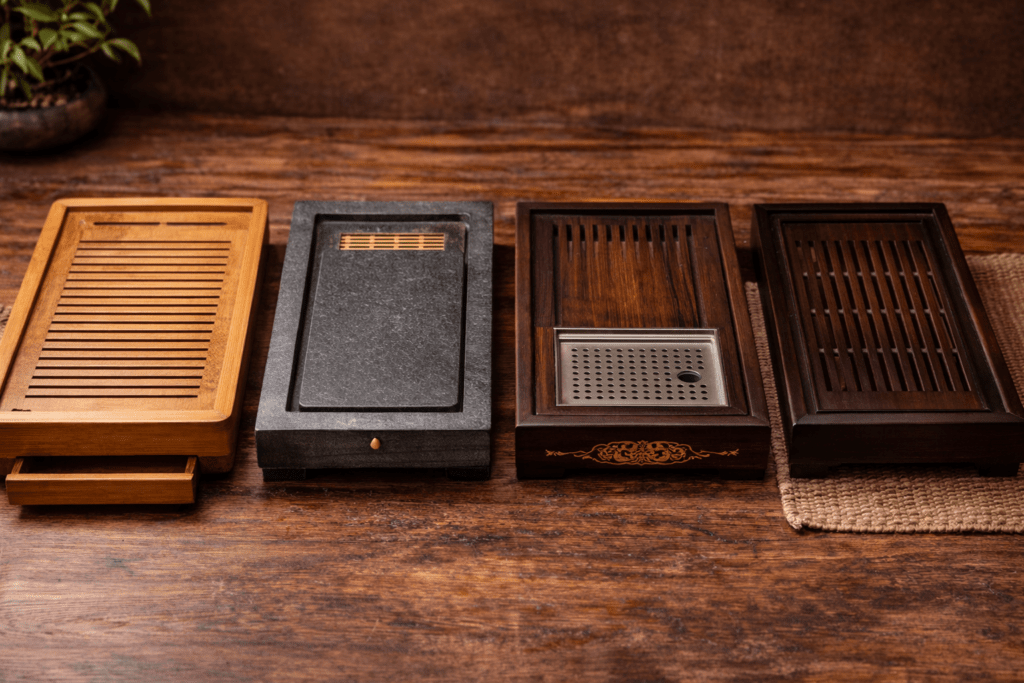
Types of Tea Trays
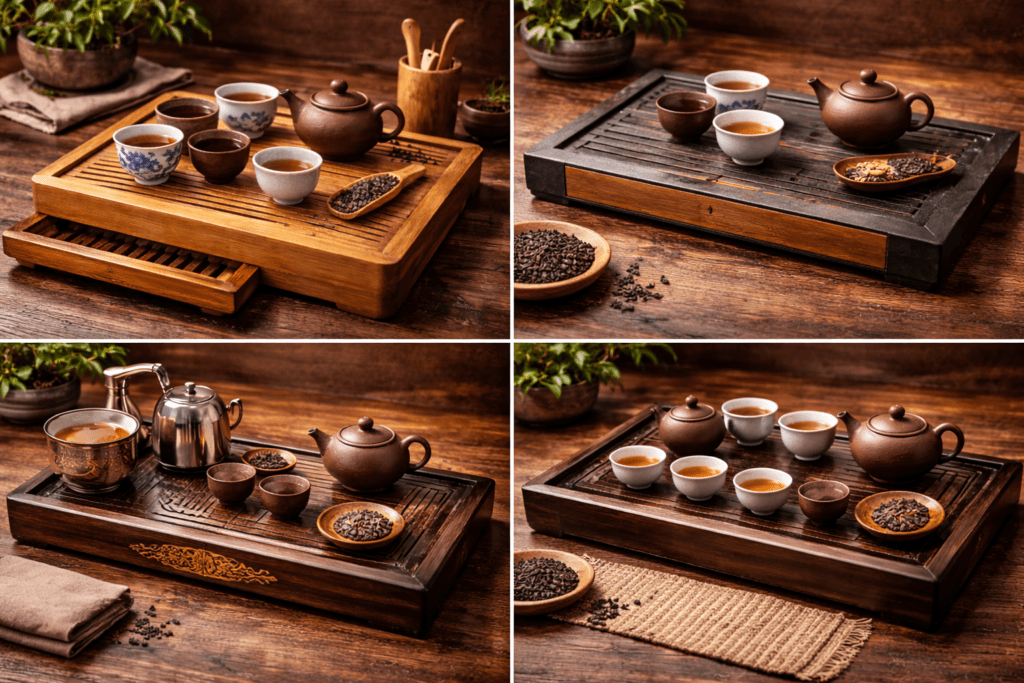
Tea trays come in several different styles depending on design and functionality.
Traditional Gongfu Tea Trays
These trays are designed specifically for gongfu tea brewing.
Features include:
- slatted or perforated surface
- hidden water reservoir
- rectangular or oval shape
They are often used with:
- gaiwans
- Yixing teapots
- fairness pitchers
- tea cups
Traditional trays are the most common type used by tea enthusiasts.
Tea Boats
Tea boats are smaller trays designed to hold a single teapot.
They are typically used when brewing tea in a Yixing teapot.
A tea boat allows hot water to be poured over the teapot while collecting the excess water underneath.
This technique is often used in gongfu tea to maintain teapot temperature.
Tea boats are smaller than full tea trays but serve a similar purpose.
Modern Minimalist Tea Trays
Modern tea trays often focus on minimal design.
These trays may feature:
- smooth surfaces
- hidden drainage systems
- sleek contemporary materials
They are popular among people who prefer a modern aesthetic while still enjoying traditional tea brewing.
Materials Used for Tea Trays
Tea trays are made from several different materials.
Each material has unique characteristics.
Bamboo Tea Trays
Bamboo is the most traditional material used for tea trays.
Advantages include:
- lightweight
- natural appearance
- durable structure
Bamboo trays are commonly used in traditional tea settings.
They complement the natural aesthetic of tea culture.
Wooden Tea Trays
Wooden trays are heavier and often more decorative.
Common woods include:
- rosewood
- walnut
- teak
Wood trays often feature carved designs and elegant craftsmanship.
They are popular among tea collectors.
Stone Tea Trays
Stone trays are modern and minimalist.
They are usually made from:
- slate
- granite
- ceramic stone
Stone trays are durable and easy to clean.
However, they are heavier than bamboo or wood trays.
How to Choose the Right Tea Tray
Choosing a tea tray depends on your brewing style and available space.
Consider the following factors.
Size
A tray should be large enough to hold:
- teapot or gaiwan
- fairness pitcher
- tea cups
Drainage System
Some trays include removable water reservoirs for easy cleaning.
Material
Choose a material that matches your tea set aesthetic.
Portability
If you plan to travel with your tea set, a lighter bamboo tray may be better.
How to Use a Tea Tray
Using a tea tray is simple but requires a few basic practices.
During tea brewing:
- place all teaware on the tray
- pour rinse water directly onto the tray
- empty the reservoir when full
Some advanced tea trays include a drain hose system that automatically removes water.
This is common in professional tea rooms.
Caring for a Tea Tray
Proper maintenance helps tea trays last longer.
Follow these simple steps:
- empty water reservoir after use
- wipe the surface dry
- avoid leaving standing water for long periods
Wood and bamboo trays should be dried carefully to prevent mold or warping.
Stone trays are usually easier to maintain.
Final Thoughts
The tea tray may appear simple, but it plays an essential role in traditional Chinese tea brewing.
By providing a clean and organized surface, it allows tea drinkers to focus on the art of tea without worrying about spills or clutter.
Whether you choose a bamboo tray, wooden tray, or modern stone tray, the right tea tray can greatly enhance your tea experience.
In gongfu tea culture, every tool contributes to the overall harmony of the tea session.
And the tea tray is the quiet foundation that supports the entire ceremony.