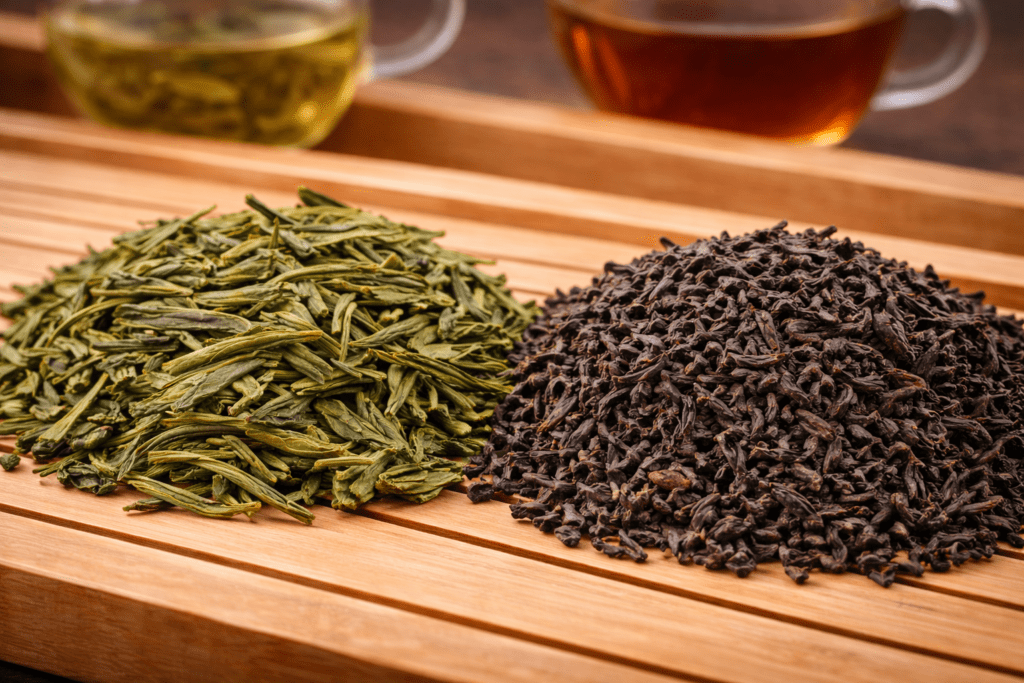
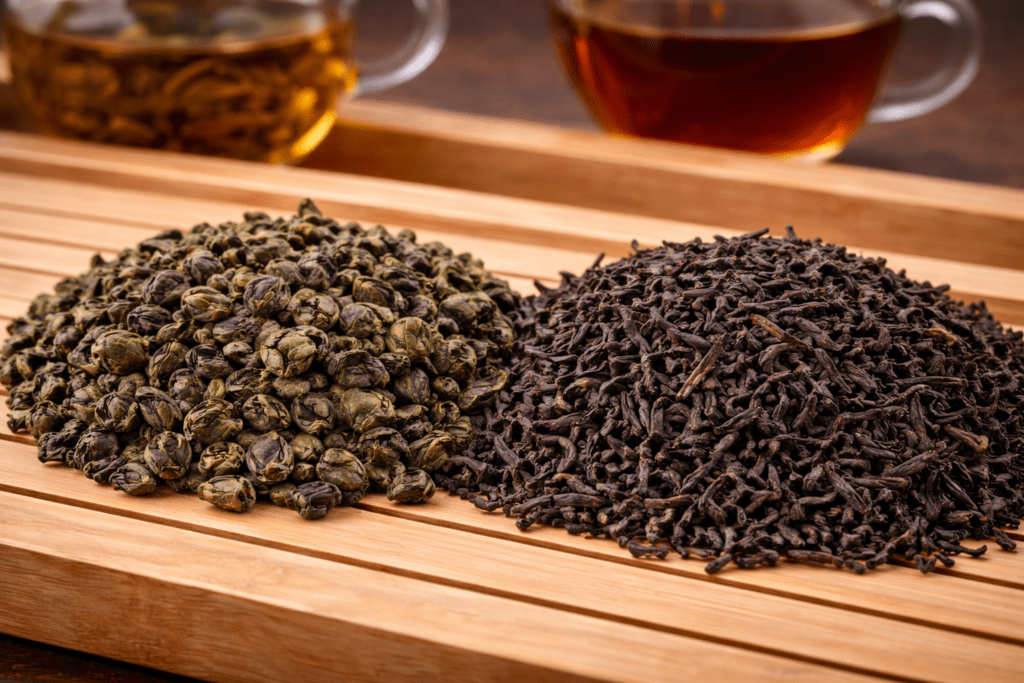
Green tea and oolong tea are two of the most famous traditional teas in the world. Both originate from the same plant, Camellia sinensis, yet they taste completely different and provide unique drinking experiences.
Many people who are new to tea often ask:
- Is green tea healthier than oolong tea?
- Which tea has more caffeine?
- Which tea tastes better?
- Which tea is easier for beginners?
The truth is that green tea and oolong tea are produced using very different processing techniques, which dramatically change their flavor, aroma, and chemical composition.
In this guide, you will learn:
- The key differences between green tea and oolong tea
- How processing affects flavor and aroma
- Which tea has more caffeine
- Which tea is better for beginners
- How to brew each tea properly
By the end of this article, you will clearly understand which tea may suit your taste and lifestyle better.
What Is Green Tea?
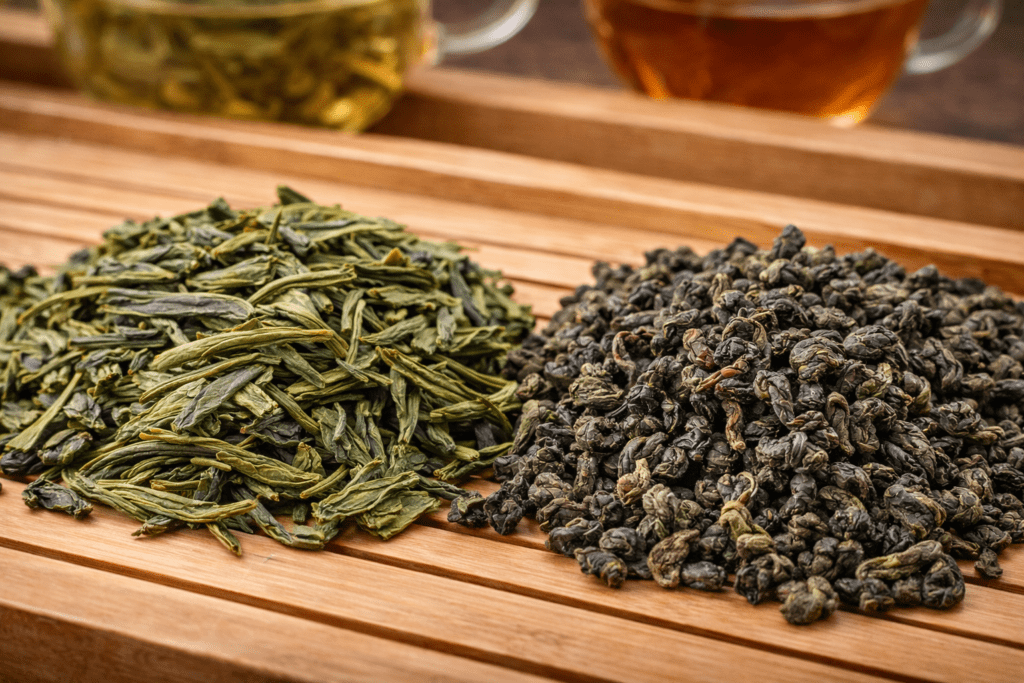
Green tea is one of the oldest forms of tea in China and Japan. It is known for its fresh, grassy, and vegetal flavor profile.
Unlike other teas, green tea undergoes minimal oxidation during processing. After harvesting, tea leaves are quickly heated to stop oxidation. This preserves their natural green color and delicate flavor.
Common green tea processing steps
- Harvesting young leaves
- Fixing (pan firing or steaming)
- Rolling
- Drying
Because oxidation is stopped early, green tea maintains high levels of:
- catechins
- antioxidants
- natural plant compounds
This is why green tea is often associated with health benefits.
Some of the most famous green teas include:
- Longjing (Dragon Well)
- Biluochun
- Sencha
- Gyokuro
- Matcha
What Is Oolong Tea?
Oolong tea is a partially oxidized tea that falls between green tea and black tea.
This means its oxidation level usually ranges from 10% to 80%, depending on the style.
Because of this wide oxidation range, oolong tea has one of the most diverse flavor profiles in the tea world.
Oolong teas can taste:
- floral
- creamy
- fruity
- roasted
- mineral
The production of oolong tea is also much more complex than green tea.
Typical oolong processing
- Harvesting
- Sun withering
- Tossing / bruising leaves
- Partial oxidation
- Fixing
- Rolling
- Roasting
These additional steps create deeper aromas and more layered flavors.
Famous oolong teas include:
- Tieguanyin
- Da Hong Pao
- Dong Ding
- Phoenix Dan Cong
- High Mountain Oolong
Green Tea vs Oolong Tea: Key Differences
Although both teas come from the same plant, they differ in several important ways.
| Feature | Green Tea | Oolong Tea |
|---|---|---|
| Oxidation | Minimal | Partial |
| Flavor | Fresh, grassy | Floral, roasted, complex |
| Color | Light green | Golden to amber |
| Aroma | Vegetal, fresh | Floral, fruity |
| Brewing | Lower temperature | Higher temperature |
| Complexity | Simple and refreshing | Deep and layered |
Green tea is usually lighter and more refreshing, while oolong tea offers greater complexity and depth.
Flavor Comparison
The most noticeable difference between green tea and oolong tea is flavor.
Green tea flavor
Green tea is typically described as:
- grassy
- vegetal
- nutty
- sweet
- fresh
Chinese green teas often have a chestnut aroma, while Japanese green teas tend to be more umami and seaweed-like.
Oolong tea flavor
Oolong tea is much more diverse.
Light oolong teas may taste:
- floral
- creamy
- sweet
Dark oolong teas may taste:
- roasted
- caramel-like
- mineral
- woody
Because of this complexity, many experienced tea drinkers prefer oolong tea for tasting sessions.
Caffeine Content
Both green tea and oolong tea contain caffeine, but the amount varies.
| Tea Type | Average Caffeine |
|---|---|
| Green Tea | 20–40 mg |
| Oolong Tea | 30–60 mg |
However, caffeine content depends on:
- leaf age
- brewing time
- water temperature
- tea variety
In general:
- green tea has slightly less caffeine
- oolong tea tends to be stronger
Health Benefits Comparison
Both teas contain beneficial plant compounds, especially polyphenols and antioxidants.
Green tea benefits
Green tea is often associated with:
- antioxidant activity
- heart health support
- metabolism support
- mental focus
Green tea contains high levels of catechins, especially EGCG.
Oolong tea benefits
Oolong tea contains both:
- catechins
- oxidized polyphenols
Because of its partial oxidation, oolong tea offers a balanced profile between green and black tea compounds.
Studies suggest it may support:
- metabolism
- digestion
- blood sugar balance
Brewing Differences
Green tea and oolong tea require different brewing approaches.
Green tea brewing
Water temperature:
70–80°CSteeping time:
1–2 minutesGreen tea is delicate and can easily become bitter if brewed with boiling water.
Oolong tea brewing
Water temperature:
90–100°CSteeping time:
30 seconds – 2 minutesOolong tea leaves are thicker and often tightly rolled, so they require hotter water.
Which Tea Is Better for Beginners?
Both teas are excellent, but beginners may prefer different options depending on taste.
Choose green tea if you like
- lighter flavor
- refreshing taste
- simple brewing
- lower caffeine
Choose oolong tea if you like
- aromatic tea
- complex flavors
- multiple infusions
- deeper tea experience
Many tea enthusiasts eventually enjoy both.
Final Thoughts
Green tea and oolong tea represent two important styles in traditional tea culture.
Green tea highlights freshness and purity, while oolong tea emphasizes complexity and craftsmanship.
Instead of choosing one over the other, many tea drinkers enjoy both depending on the situation:
- green tea for everyday drinking
- oolong tea for deeper tasting sessions
Exploring both styles is one of the best ways to understand the diversity of the tea world.