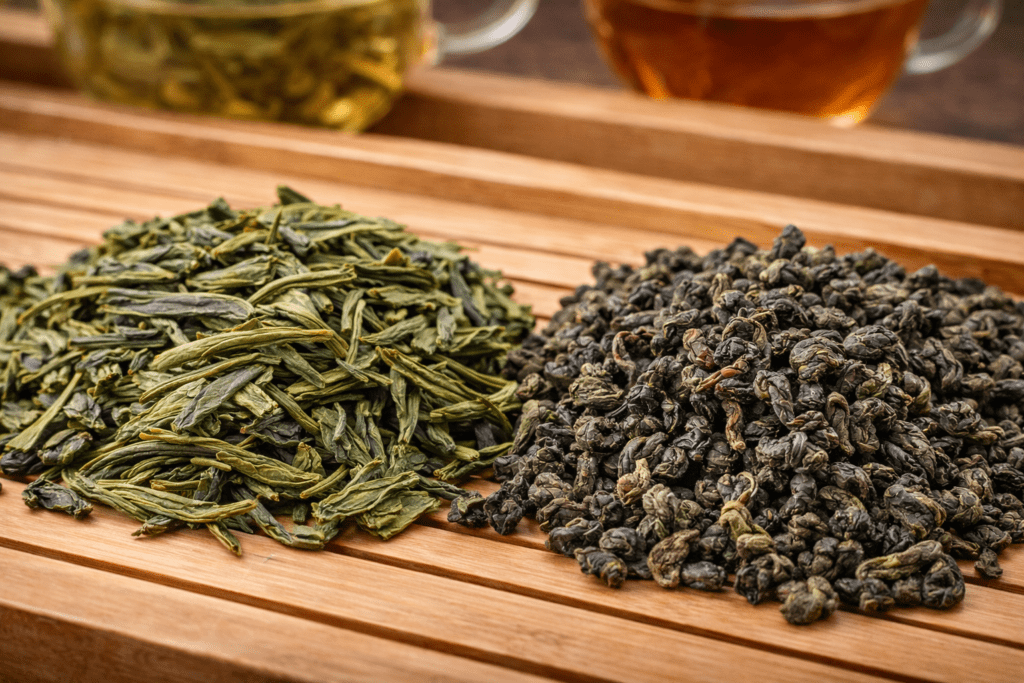
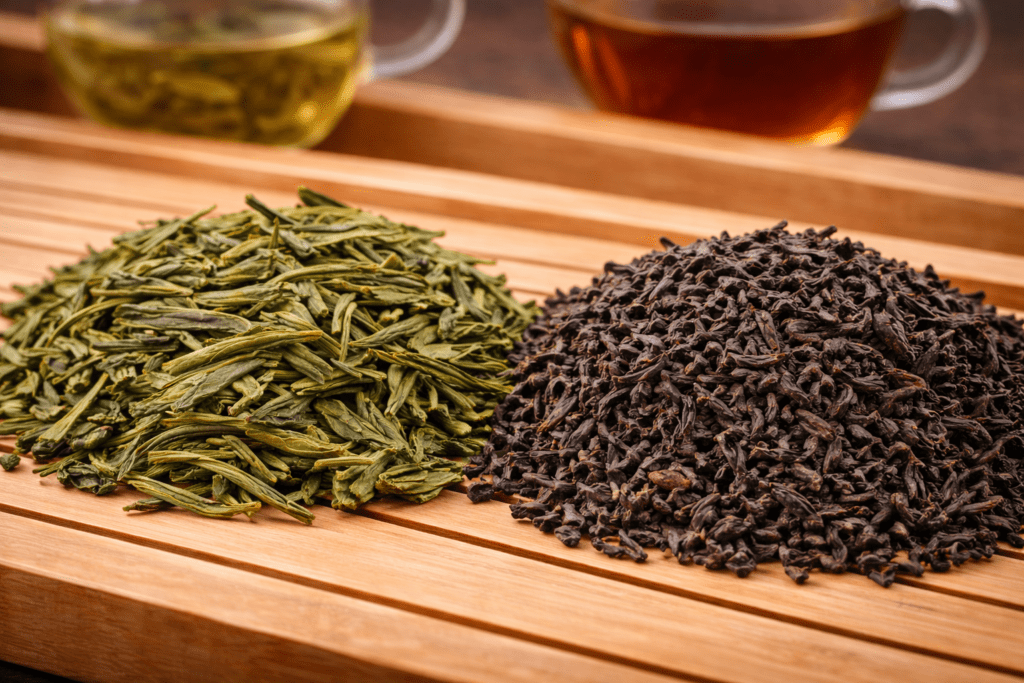
Matcha and green tea are often mentioned together, and many people assume they are completely different drinks.
In reality, matcha is actually a special form of green tea.
However, the way matcha is grown, processed, and consumed makes it very different from regular green tea.
People often ask questions such as:
- Is matcha the same as green tea?
- Which one is healthier?
- Does matcha contain more caffeine?
- Which tea is better for beginners?
Although both drinks come from the same tea plant, they provide very different experiences in flavor, preparation, and nutritional content.
In this guide, we will explore the key differences between matcha and traditional green tea so you can understand which one may be better for you.
What Is Green Tea?
Green tea is one of the most traditional types of tea and has been consumed for thousands of years.
It is produced by harvesting tea leaves and quickly heating them to prevent oxidation.
This process preserves the leaves’ natural green color and delicate flavor.
Green tea leaves are usually steeped in hot water, and the leaves are then removed before drinking.
Common types of green tea include:
- Longjing (Dragon Well)
- Sencha
- Biluochun
- Gyokuro
Green tea is known for its light and refreshing flavor.
Typical tasting notes include:
- grassy
- vegetal
- slightly sweet
- fresh
What Is Matcha?
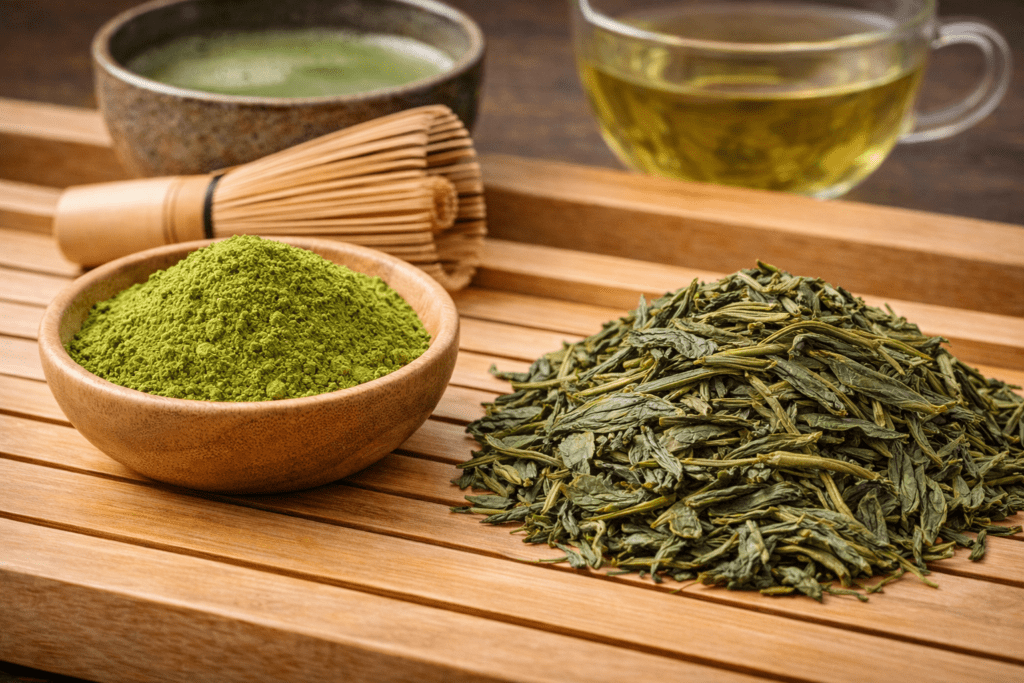
Matcha is a powdered form of green tea made from specially grown tea leaves.
Unlike regular green tea, matcha leaves are shade-grown for several weeks before harvest. This process increases chlorophyll levels and enhances amino acids in the leaves.
After harvesting, the leaves are:
- steamed
- dried
- ground into a fine powder
Instead of steeping the leaves, matcha powder is whisked directly into water, meaning you drink the entire leaf.
This makes matcha much more concentrated than regular green tea.
Matcha is a central part of the Japanese tea ceremony, known as chanoyu.
Matcha vs Green Tea: Key Differences
Although both drinks come from the same plant, their preparation and consumption methods create significant differences.
| Feature | Matcha | Green Tea |
|---|---|---|
| Form | Powder | Loose leaf |
| Preparation | Whisked into water | Steeped |
| Leaf consumption | Entire leaf consumed | Leaves removed |
| Flavor | Rich and creamy | Light and fresh |
| Nutrient content | Higher | Moderate |
Because matcha is consumed as a powder, it delivers more nutrients and caffeine per serving.
Flavor Comparison
The taste of matcha and green tea differs significantly.
Green tea flavor
Green tea usually tastes:
- light
- refreshing
- slightly grassy
- mildly sweet
The flavor is delicate and subtle.
Matcha flavor
Matcha has a much stronger taste.
It is often described as:
- creamy
- rich
- vegetal
- umami
High-quality ceremonial matcha is smooth and slightly sweet, while lower-quality matcha may taste more bitter.
Caffeine Comparison
Matcha generally contains more caffeine than regular green tea.
| Drink | Average Caffeine |
|---|---|
| Green Tea | 20–40 mg |
| Matcha | 60–80 mg |
The higher caffeine content comes from consuming the entire powdered tea leaf.
However, matcha also contains L-theanine, which can produce a calmer and more stable energy effect.
Health Benefits Comparison
Both matcha and green tea contain powerful antioxidants, particularly catechins.
Green tea benefits
Green tea may support:
- heart health
- metabolism
- brain function
- antioxidant protection
Matcha benefits
Because matcha uses the entire leaf, it often contains:
- higher antioxidant levels
- more chlorophyll
- more amino acids
This makes matcha particularly popular among people seeking a concentrated tea experience.
Which One Should You Choose?
Both drinks offer unique benefits.
Choose green tea if you prefer:
- lighter flavor
- lower caffeine
- simple brewing
- everyday drinking
Choose matcha if you prefer:
- stronger flavor
- higher caffeine
- creamy texture
- traditional tea ceremony experience
Many tea lovers enjoy both depending on their mood or time of day.
Final Thoughts
Matcha and green tea share the same origin but offer very different drinking experiences.
Green tea highlights lightness and refreshment, while matcha provides intensity and concentration.
Exploring both allows tea drinkers to experience the diversity of green tea in two unique forms.
Whether you prefer a delicate cup of brewed green tea or a rich bowl of whisked matcha, both drinks offer a wonderful way to enjoy tea culture.