Green tea is often praised for its potential health benefits, and one of the main reasons behind this reputation is the presence of catechins.
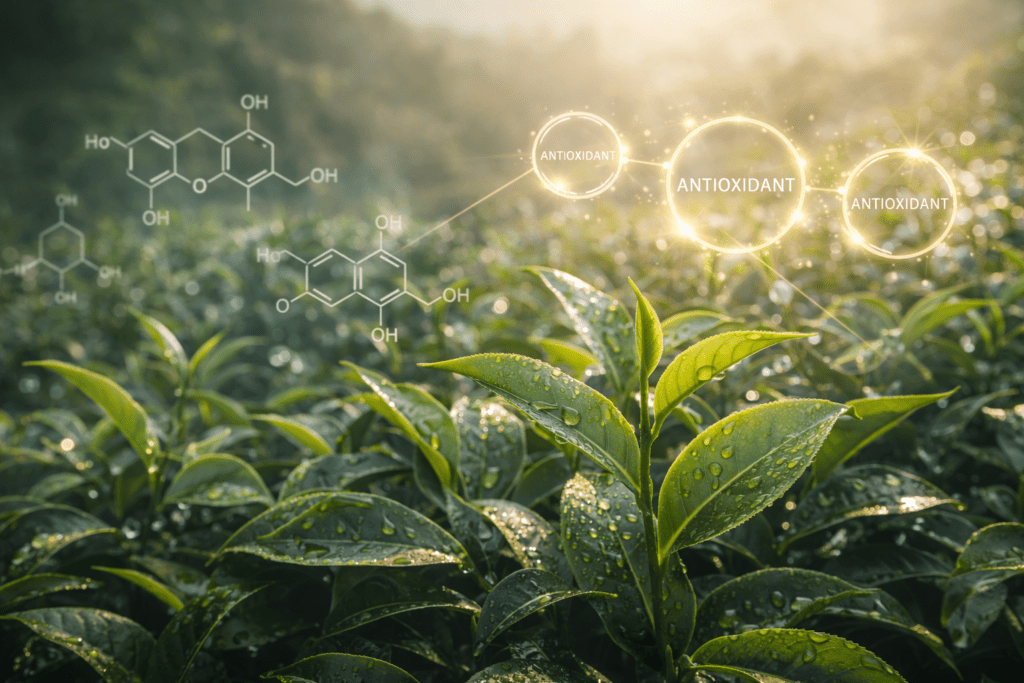
Catechins are a type of natural antioxidant belonging to a larger group of compounds known as polyphenols. These molecules help protect cells from oxidative stress and play an important role in many of the biological effects associated with tea.
Among all tea varieties, green tea contains some of the highest levels of catechins because the leaves are minimally processed and experience very little oxidation.
This preservation of natural compounds gives green tea its distinctive flavor, color, and chemical composition.
Understanding catechins helps explain why green tea has attracted so much scientific interest around the world.
What Are Catechins?
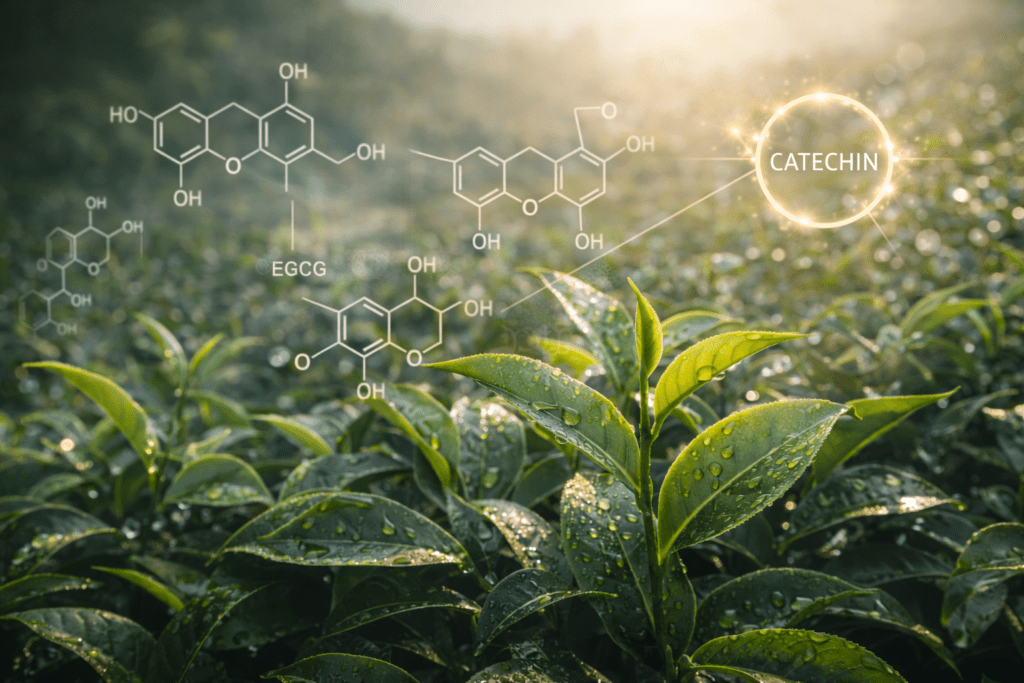
Catechins are a group of plant-based antioxidants found naturally in tea leaves.
They belong to the flavonoid family and are responsible for many of the protective properties found in plants.
In tea, catechins contribute to:
- antioxidant activity
- bitterness and astringency
- freshness of flavor
- chemical stability of tea leaves
When tea is brewed, these compounds dissolve into the water and become part of the tea infusion.
Because green tea undergoes minimal processing, it retains a large portion of these compounds.
The Main Catechins Found in Green Tea
Green tea contains several important catechin molecules.
The most well-known catechins include:
EGCG (Epigallocatechin Gallate)
EGCG is the most abundant catechin in green tea and has been widely studied.
It is often associated with many of the biological effects linked to green tea.
EGC (Epigallocatechin)
This compound contributes to antioxidant properties and is present in significant amounts.
ECG (Epicatechin Gallate)
ECG supports the complex chemical profile of green tea.
EC (Epicatechin)
Although present in smaller amounts, EC still contributes to the overall polyphenol composition.
Together, these catechins make up a large portion of green tea’s polyphenol content.
Why Green Tea Contains More Catechins
The processing of tea leaves greatly influences the amount of catechins preserved in the final tea.
Green tea is produced using methods that quickly stop oxidation after harvesting.
This is usually done by:
- steaming
- pan-firing
- heating the leaves
By preventing oxidation, tea makers preserve the natural catechins present in fresh tea leaves.
In contrast, when tea leaves oxidize to produce black tea, many catechins are converted into other compounds such as:
- theaflavins
- thearubigins
This transformation changes both the flavor and chemical profile of the tea.
Catechins and Tea Flavor
Catechins also influence the sensory experience of drinking green tea.
These compounds contribute to several taste characteristics.
Bitterness
Catechins can create a mild bitterness, especially when tea is over-brewed.
Astringency
Astringency produces the slightly dry sensation sometimes felt when drinking strong tea.
Freshness
Catechins also help produce the bright and lively flavor associated with high-quality green tea.
When brewed correctly, these elements create a balanced and refreshing taste.
Factors That Affect Catechin Levels
The amount of catechins in green tea can vary depending on several factors.
Tea variety
Different tea cultivars naturally produce different levels of catechins.
Growing conditions
Climate, soil, and altitude can influence the chemical composition of tea leaves.
Harvest season
Spring harvest teas often contain different concentrations of compounds compared with summer harvests.
Processing methods
Minimal oxidation and careful handling help preserve catechin content.
Because of these factors, catechin levels can vary widely between different green teas.
Brewing and Catechin Extraction
Brewing temperature and steeping time can influence how many catechins dissolve into the tea.
Higher temperatures generally extract more catechins, but they can also increase bitterness.
For many green teas, recommended brewing conditions include:
- water temperature between 70–80°C (158–176°F)
- steeping time of 1–3 minutes
These conditions help balance flavor while allowing beneficial compounds to be extracted.
Catechins in Different Types of Tea
Although green tea is known for high catechin content, other teas also contain polyphenols.
However, oxidation alters the catechin composition.
| Tea Type | Catechin Level |
|---|---|
| Green Tea | Very high |
| White Tea | High |
| Oolong Tea | Moderate |
| Black Tea | Lower |
During oxidation, catechins transform into other polyphenols that produce darker color and stronger flavor.
Final Thoughts
Catechins are one of the most important natural compounds found in green tea. They contribute to the tea’s flavor, chemical structure, and antioxidant properties.
Because green tea undergoes minimal processing, it retains higher levels of these compounds compared with many other tea types.
Understanding catechins helps reveal the complex chemistry behind green tea and why it continues to be studied and appreciated around the world.