Tea is widely appreciated for its gentle energy and balanced stimulation. One of the main reasons people drink tea is because it contains caffeine, a natural stimulant that can improve alertness and concentration.
However, many people are surprised to learn that not all teas contain the same amount of caffeine.
The caffeine level in tea depends on several factors, including:
- the type of tea
- how the tea leaves are processed
- brewing temperature
- steeping time
- leaf quantity
Compared with coffee, tea generally contains less caffeine, which is why many people find tea to be a smoother source of energy.
Understanding how caffeine works in tea can help you choose the right tea for different times of the day.
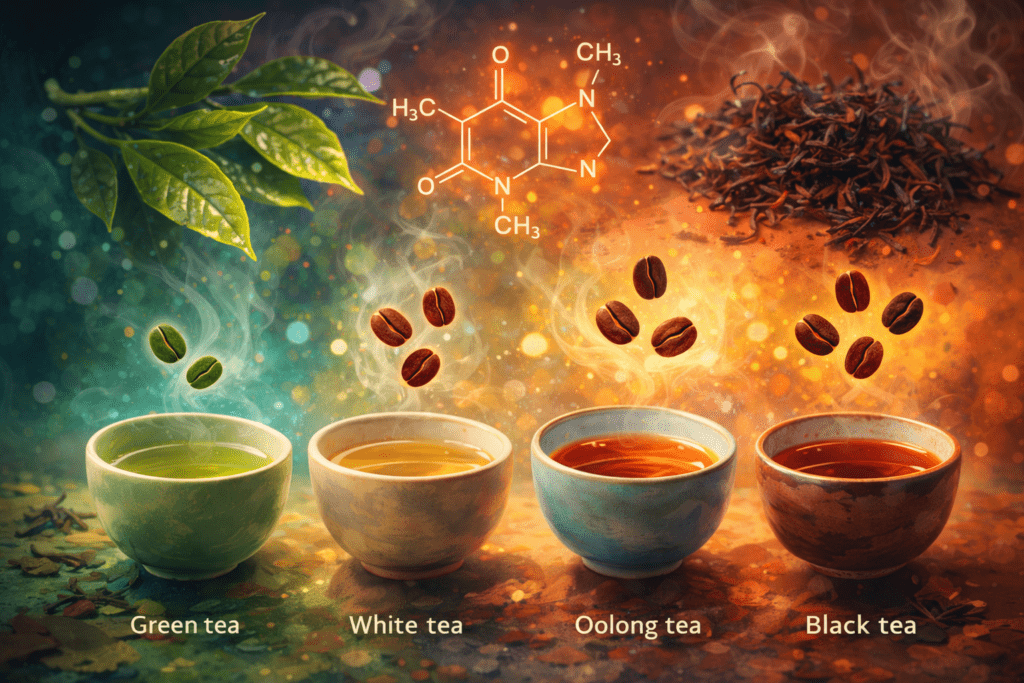
What Is Caffeine?
Caffeine is a naturally occurring compound found in several plants.
These include:
- tea plants
- coffee beans
- cacao
- guarana
In tea plants, caffeine acts as a natural defense mechanism that protects the leaves from insects.
When consumed by humans, caffeine stimulates the central nervous system and may produce effects such as:
- increased alertness
- reduced fatigue
- improved focus
However, caffeine can also cause side effects if consumed in large amounts.
These may include:
- jitteriness
- rapid heartbeat
- sleep disruption
Tea provides caffeine in a milder form compared with many other beverages.
Why Tea Feels Different From Coffee
Although tea contains caffeine, the experience of drinking tea often feels very different from drinking coffee.
This difference is largely due to another compound found in tea called L-theanine.
L-theanine works together with caffeine to create a calmer and more balanced form of stimulation.
Because of this combination, tea tends to produce:
- smoother energy
- longer-lasting focus
- fewer sudden spikes in alertness
Coffee, which lacks L-theanine, often produces a stronger but shorter burst of energy.
Average Caffeine Levels in Tea
Different types of tea contain different amounts of caffeine.
Here is a general comparison of caffeine levels per cup.
| Tea Type | Average Caffeine |
|---|---|
| White Tea | 15–30 mg |
| Green Tea | 20–40 mg |
| Oolong Tea | 30–50 mg |
| Black Tea | 40–70 mg |
| Matcha | 60–80 mg |
These values are approximate and can vary depending on how the tea is grown and brewed.
Matcha typically contains the most caffeine among teas because the powdered leaves are fully consumed.
Factors That Affect Caffeine in Tea
Several factors influence how much caffeine ends up in your cup.
Tea leaf age
Young tea buds often contain more caffeine than mature leaves.
Tea variety
Different cultivars of the tea plant naturally produce different caffeine levels.
Brewing time
Longer steeping times extract more caffeine from the leaves.
Water temperature
Hotter water extracts caffeine more efficiently.
Because of these variables, caffeine content can vary significantly between different teas.
Does Tea Always Contain Less Caffeine Than Coffee?
In most cases, tea contains less caffeine than coffee.
A typical cup of coffee contains:
80–120 mg caffeineThis is usually about twice as much caffeine as black tea.
However, certain teas—especially matcha or strong black teas—can contain caffeine levels closer to coffee.
Despite this, tea often feels less intense because caffeine is absorbed more gradually.
Which Tea Has the Most Caffeine?
If you are looking for a tea with higher caffeine content, some types tend to contain more than others.
Teas with relatively higher caffeine include:
- matcha
- strong black teas
- some oolong teas
Matcha is particularly high in caffeine because the entire powdered leaf is consumed.
On the other hand, teas such as white tea or lightly brewed green tea usually contain lower caffeine levels.
Choosing Tea Based on Caffeine Levels
Different teas can be suitable for different times of the day.
For example:
Morning:
- black tea
- matcha
Afternoon:
- oolong tea
- green tea
Evening:
- light green tea
- white tea
Choosing the right tea can help balance energy and relaxation throughout the day.
Final Thoughts
Caffeine is an important component of tea that contributes to its stimulating effects.
However, tea provides caffeine in a unique way because it also contains compounds like L-theanine that create a calmer form of energy.
Different tea types contain varying caffeine levels, making it possible to choose teas that match your energy needs.
By understanding caffeine in tea, tea drinkers can better select the right tea for different moments throughout the day.