Most people drink tea.
Very few people actually taste it.
And once you learn how to taste tea properly…
👉 Everything changes
- You notice details
- You understand quality
- You enjoy tea on a completely different level
What Does “Tasting Tea” Actually Mean?
It’s not complicated.
Tea tasting is about:
- Observing
- Comparing
- Understanding
👉 Not judging
👉 Not being perfect
The 4 Steps of Professional Tea Tasting
1. Look (Appearance)
Before drinking anything:
Observe:
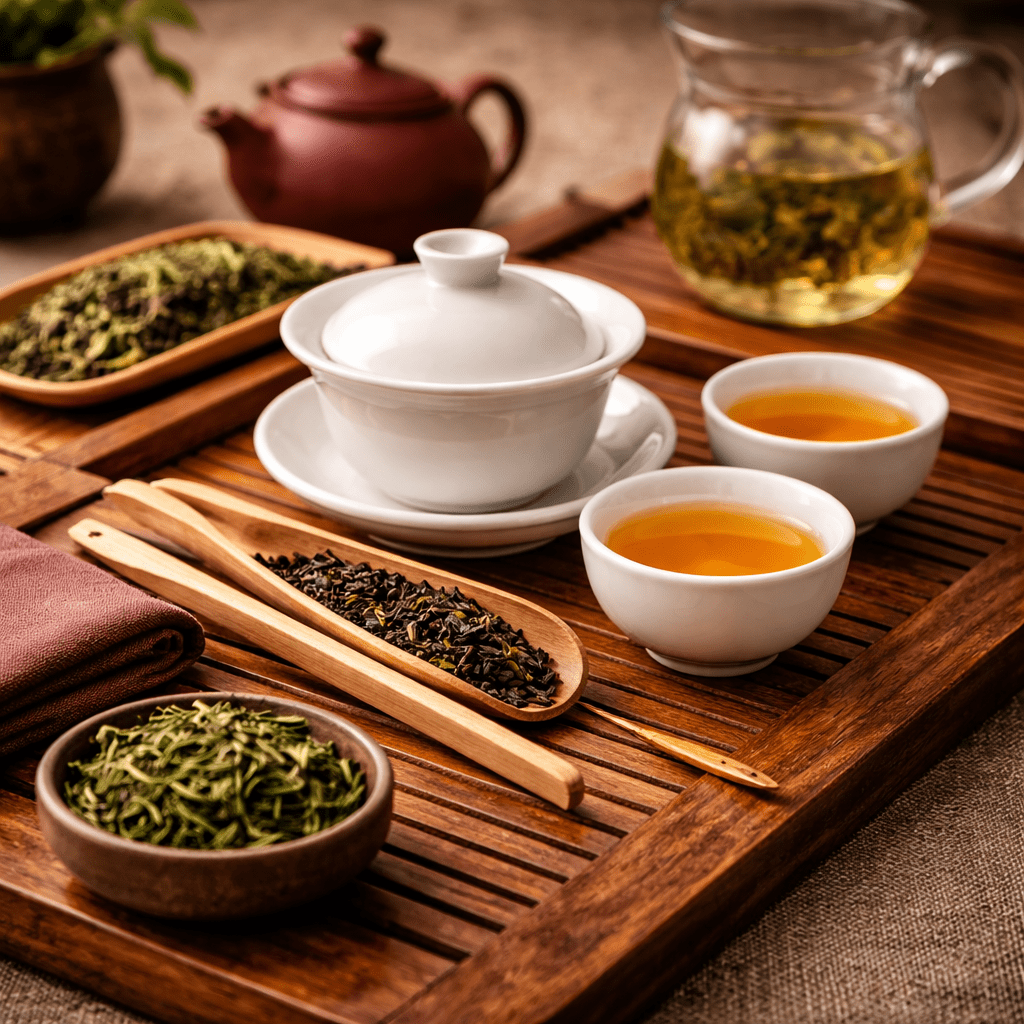
- Dry leaves
- Wet leaves
- Tea liquor color
What to notice:
- Whole vs broken leaves
- Color consistency
- Clarity of tea
👉 Good tea usually looks alive, not dull
2. Smell (Aroma)
This is where flavor begins.
Smell:
- Dry leaves
- After rinsing
- After brewing
Common aroma types:
- Floral
- Fruity
- Nutty
- Roasted
👉 Smell deeply—it matters more than taste
3. Taste (Flavor)
Now you drink.
But not casually.
Take a small sip:
Let it move across your mouth.
Notice:
- Sweetness
- Bitterness
- Balance
👉 Good tea = balanced, not extreme
4. Feel (Mouthfeel & Aftertaste)
This is what beginners miss.
Pay attention to:
- Texture (light / thick)
- Astringency (drying)
- Aftertaste (how long it stays)
👉 Great tea lingers
How Professionals Taste Tea (Real Insight)
They don’t rush.
They:
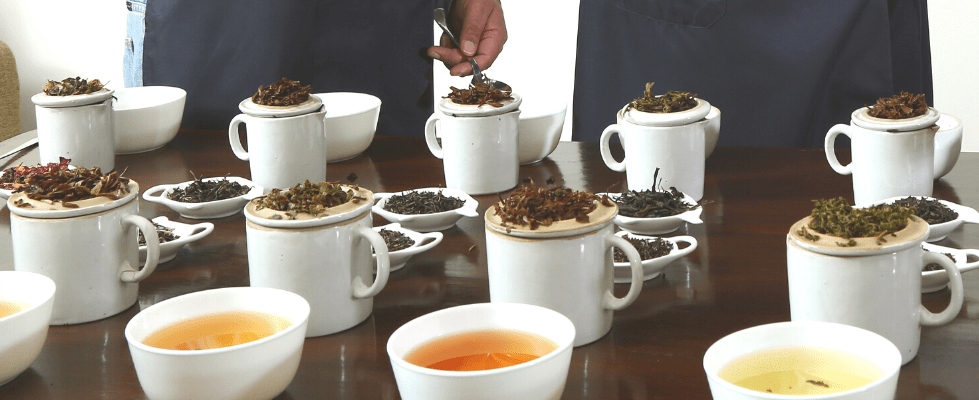
- Taste multiple times
- Compare side by side
- Focus on differences
👉 Tasting = awareness
Key Flavor Dimensions (Simple System)
Use this easy model:
1. Aroma
What you smell
2. Taste
Sweet, bitter, balanced
3. Body
Light or thick
4. Aftertaste
Short or long
👉 That’s enough for 90% of people
Beginner Practice Method
Step 1:
Choose 2 teas
Step 2:
Brew them the same way
Step 3:
Compare:
- Which is smoother?
- Which is stronger?
- Which you prefer?
👉 Comparison builds skill fast
Common Mistakes
❌ Overthinking
You don’t need fancy vocabulary
❌ Trying to be “correct”
Taste is personal
❌ Drinking too fast
You miss everything
How to Improve Your Tea Taste
1. Drink Slowly
This is the biggest upgrade
2. Pay Attention
Even 10% more awareness changes everything
3. Compare Different Teas
This is how you learn
4. Repeat
Taste develops over time
What Makes “Good Tea”
Not just flavor
Good tea has:
- Balance
- Clean taste
- Pleasant aftertaste
👉 It feels complete
Pro Tip
Don’t try to describe tea like an expert.
Instead, ask:
👉 Do I enjoy this?
👉 Does it feel clean?
👉 Does it last?
👉 That’s enough
Final Thoughts
Tea tasting is not about becoming an expert.
It’s about:
👉 paying attention
And once you do:
Tea stops being just a drink.
👉 It becomes an experience