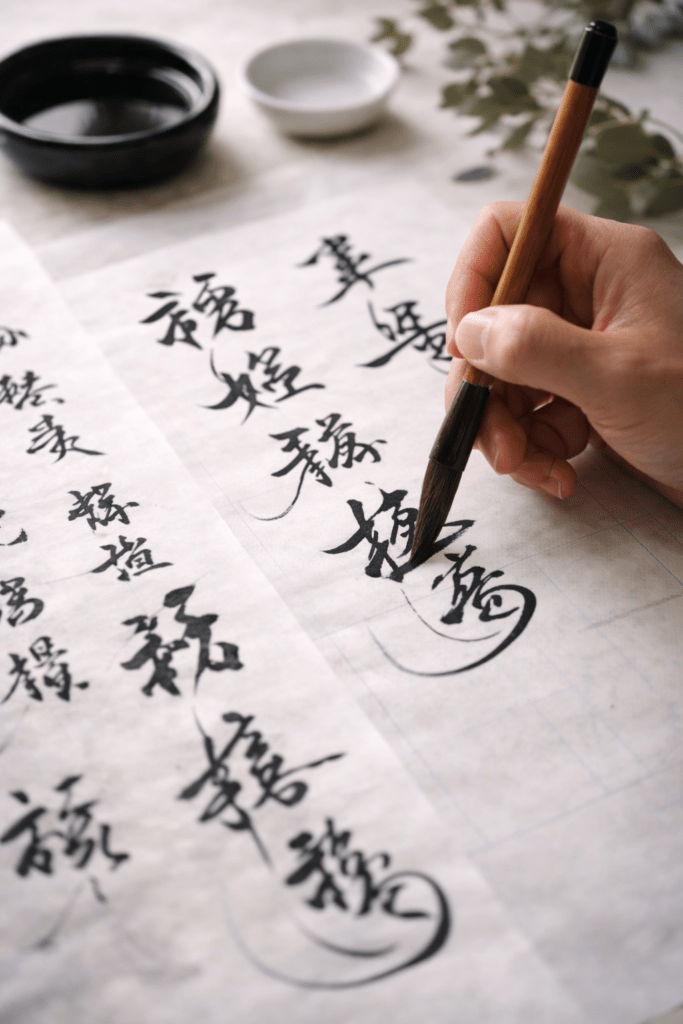
Why Masterpieces Matter
In calligraphy, practice is essential.
But practice without direction leads to slow progress.
👉 masterpieces give you direction
They are not just famous works.
They are the highest level of:
technique
structure
expression
Each masterpiece represents:
a complete understanding of a style
👉 studying masterpieces is the fastest way to improve
Because they show what “correct” and “refined” really look like.
What Defines a Calligraphy Masterpiece
A true masterpiece is not just beautiful.
It has:
consistent stroke quality
balanced structure
clear style identity
controlled movement
It also reflects:
the personality of the calligrapher
the spirit of the time
👉 a masterpiece combines technique and expression
It is both disciplined and alive.
Kaishu Masterpieces: Precision and Structure
Kaishu masterpieces are known for:
clarity
balance
discipline
Famous examples include works associated with:
Ouyang Xun
Yan Zhenqing
Zhao Mengfu
These works demonstrate:
perfect stroke beginnings and endings
stable character structure
strong vertical alignment
👉 what they teach
how to control the brush
how to build structure
how to maintain consistency
Kaishu masterpieces are essential for beginners.
They provide the clearest model of correctness.
Xingshu Masterpieces: Flow and Natural Movement
Xingshu masterpieces are known for:
smooth transitions
balanced flow
natural rhythm
The most famous example is:
Preface to the Orchid Pavilion (Lantingji Xu)
This work shows:
fluid stroke connections
variation in speed
controlled freedom
👉 what it teaches
how to connect strokes
how to maintain structure within movement
how to write naturally
Xingshu masterpieces bridge control and expression.
Caoshu Masterpieces: Energy and Expression
Caoshu masterpieces are known for:
dynamic movement
continuous strokes
strong emotional expression
Famous works include those associated with:
Zhang Xu
Huai Su
These works demonstrate:
extreme speed variation
abstract structure
powerful brush energy
👉 what they teach
how to express movement
how to simplify structure
how to control energy
Caoshu masterpieces are advanced.
They require deep understanding.
Lishu Masterpieces: Rhythm and Contrast
Lishu masterpieces are known for:
horizontal emphasis
distinct stroke endings
balanced spacing
These works show:
strong contrast between strokes
clear rhythm
structured variation
👉 what they teach
how to create rhythm
how to control width and spacing
how to emphasize stroke endings
Lishu helps develop structural awareness.
Zhuanshu Masterpieces: Harmony and Consistency
Zhuanshu masterpieces are known for:
uniform lines
smooth curves
symmetry
These works demonstrate:
consistent stroke thickness
balanced composition
refined structure
👉 what they teach
how to maintain line consistency
how to create symmetry
how to control form
Zhuanshu builds patience and precision.
Comparing Masterpieces Across Styles
Each style’s masterpieces emphasize different qualities.
Structure
Kaishu: strongest
Lishu: wide and grounded
Zhuanshu: symmetrical
Movement
Xingshu: flowing
Caoshu: dynamic
Expression
Kaishu: restrained
Xingshu: balanced
Caoshu: intense
👉 masterpieces highlight what each style values most
Understanding this helps you choose what to study.
How to Study Masterpieces Effectively
Do Not Just Look
Observe carefully.
Break down strokes.
Identify structure.
Copy Slowly
Do not rush.
Focus on accuracy.
Repeat Sections
Practice small parts repeatedly.
Analyze Differences
Compare multiple works.
👉 active study leads to deeper understanding
What Beginners Should Focus On
Start with:
Kaishu masterpieces
They provide:
clear structure
manageable complexity
Avoid starting with:
Caoshu
It is too abstract for beginners.
👉 build foundation first
Common Mistakes
Choosing Complex Works Too Early
Leads to confusion.
Copying Without Understanding
Reduces effectiveness.
Switching Between Styles Too Often
Creates inconsistency.
Ignoring Structure
Focusing only on appearance.
👉 awareness improves learning quality
What Studying Masterpieces Feels Like
At first:
they look difficult
details are unclear
With practice:
structure becomes visible
stroke behavior becomes understandable
Eventually:
you recognize quality instantly
👉 your eye improves
This is a key part of learning.
How Masterpieces Shape Your Skill
They help you:
develop accuracy
improve consistency
understand style deeply
👉 they set a standard
Without them, it is hard to know what “good” looks like.
FAQ
What are calligraphy masterpieces?
They are high-level works that represent the best examples of each style.
Why should I study them?
They provide models of correct technique and structure.
Which masterpieces should beginners study?
Kaishu works are the best starting point.
Can I learn without studying masterpieces?
Progress will be slower and less accurate.
How often should I practice them?
Regular repetition improves understanding.
Final Thought
A masterpiece is not just something to admire.
It is something to learn from.
Each stroke carries intention.
Each structure reflects understanding.
Each movement shows control.
When you study masterpieces—
you are not copying.
You are learning how mastery looks.
How discipline becomes natural.
How structure becomes expression.
And over time—
your writing begins to reflect that influence.
Not by imitation—
but by internalization.
One work at a time.