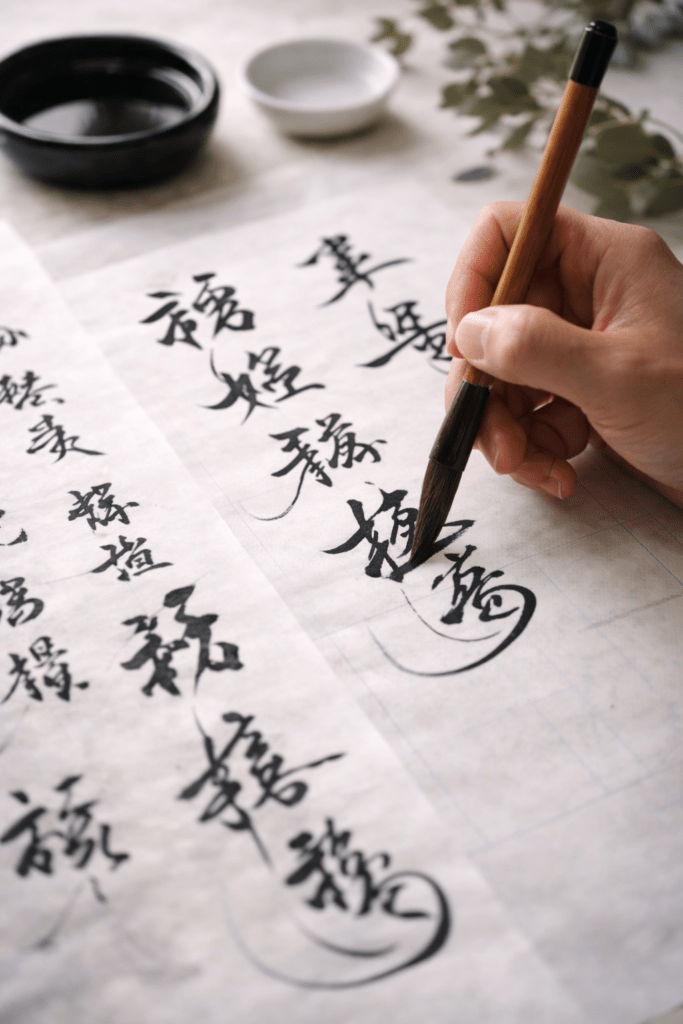
Why Energy Is the Core of Calligraphy
You can copy a character perfectly.
Correct strokes.
Correct structure.
Correct proportions.
But something may still feel missing.
That missing element is:
👉 energy
In Chinese calligraphy, this is often described as:
qi (气)
It is not something you draw.
It is something that flows through your movement.
👉 energy is what makes writing feel alive
Without it, writing looks correct—
but feels empty.
What “Style Energy” Really Means
Energy in calligraphy is not physical strength.
It is the combination of:
movement
pressure
speed
intention
It appears in:
stroke tension
direction changes
rhythm
👉 energy is visible in how a stroke lives
Not just how it looks.
A stroke with energy:
has direction
has weight
has continuity
A stroke without energy:
feels flat
feels weak
feels disconnected
The Energy Spectrum Across Styles
Each calligraphy style expresses energy differently.
Zhuanshu → Lishu → Kaishu → Xingshu → Caoshu
This progression shows how energy evolves:
contained → structured → controlled → flowing → explosive
👉 styles differ in how energy is expressed
Understanding this helps you adjust your writing.
Zhuanshu: Contained and Even Energy
Energy in Zhuanshu is:
steady
uniform
internal
There are:
no sharp changes
no sudden pressure shifts
👉 energy is calm and continuous
The brush moves with consistency.
There is no visible tension.
This creates:
harmony
balance
stillness
Zhuanshu teaches:
control without variation
Lishu: Rhythmic and Grounded Energy
Energy in Lishu is:
controlled but varied
You see:
strong horizontal emphasis
distinct stroke endings
👉 energy appears in contrast
There is:
expansion
compression
release
This creates rhythm.
Lishu teaches:
how to express energy within structure
Kaishu: Controlled and Directed Energy
Energy in Kaishu is:
precise
focused
intentional
Each stroke has:
a clear beginning
a controlled movement
a defined ending
👉 energy is directed, not random
You can feel:
pressure changes
turning points
stability
Kaishu teaches:
how to control energy
This is where most learning happens.
Xingshu: Flowing and Continuous Energy
Energy in Xingshu is:
smooth
connected
natural
Strokes begin to:
flow into each other
reduce pauses
👉 energy moves across the character
It is no longer isolated per stroke.
Instead:
movement connects everything
Xingshu teaches:
how to sustain energy
This creates:
continuity
fluid rhythm
Caoshu: Explosive and Expressive Energy
Energy in Caoshu is:
dynamic
fast
unrestricted
Strokes:
merge
accelerate
change direction rapidly
👉 energy becomes visible
You can feel:
speed
force
emotion
But this is not chaos.
It is:
controlled intensity
Caoshu teaches:
how to release energy
But only after mastering control.
The Key Principle: Energy Must Flow
In all styles, one rule applies:
👉 energy must not break
If energy stops:
strokes feel disconnected
writing feels stiff
If energy flows:
strokes feel alive
writing feels natural
Even in structured styles like Kaishu:
energy moves from start to finish
This continuity is essential.
How to Develop Energy in Writing
Use Your Whole Arm
Do not write only with fingers.
Movement should come from:
wrist
arm
shoulder
👉 larger movement creates better flow
Control Pressure
Energy is visible through pressure.
Practice:
pressing
lifting
transitioning
Avoid stiffness.
Adjust Speed
Energy depends on timing.
Too slow:
energy dies
Too fast:
control is lost
👉 find natural rhythm
Focus on Continuity
Do not stop abruptly.
Let each stroke:
enter
move
exit
👉 smooth transitions maintain energy
Common Mistakes
Writing Too Carefully
Over-control removes energy.
Pressing Too Hard
Creates heavy, lifeless strokes.
Ignoring Movement
Focusing only on shape.
Breaking Stroke Flow
Stopping mid-stroke.
👉 awareness improves energy
What Good Energy Feels Like
When energy is correct:
strokes feel connected
movement feels natural
writing feels alive
You do not force the brush.
You guide it.
There is:
momentum
continuity
balance
👉 writing becomes fluid
This is the goal.
How Energy Develops Over Time
At first:
strokes feel stiff
With practice:
movement improves
Eventually:
energy flows naturally
👉 this takes consistent practice
It cannot be rushed.
Energy grows from:
control
experience
awareness
How Energy Connects to Expression
Energy determines:
how strong a stroke feels
how dynamic a character appears
Different energy creates different effects:
calm
balanced
powerful
expressive
👉 energy defines personality
It is what makes writing unique.
FAQ
What is energy in calligraphy?
It is the flow and force behind each stroke.
Why is energy important?
It makes writing feel alive and connected.
Which style has the strongest energy?
Caoshu shows the most visible energy.
How do I improve energy?
Practice movement, pressure control, and flow.
Can beginners develop energy?
Yes, by focusing on consistent movement.
Final Thought
A stroke is not just a line.
It is movement.
It carries direction.
It carries intention.
It carries energy.
Each style shapes that energy differently.
Some contain it.
Some control it.
Some release it.
But all depend on it.
Without energy—
writing is empty.
With energy—
writing becomes alive.
Not just correct.
Not just structured.
But expressive.
One stroke at a time.