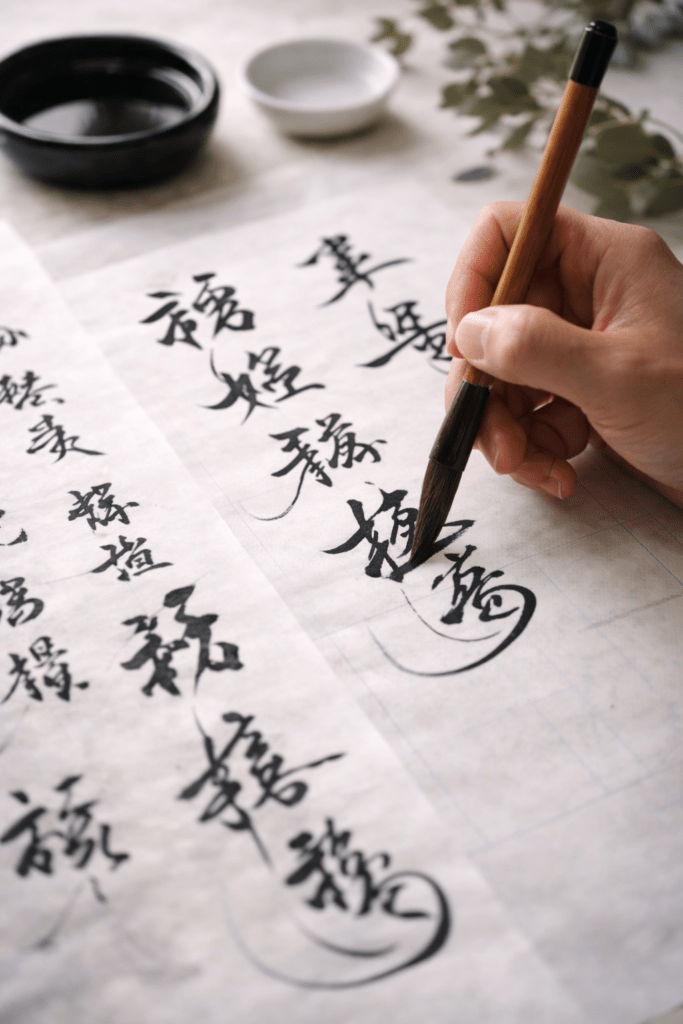
Why You Need a Training Plan
Many learners practice calligraphy without structure.
They write when they feel like it.
They switch styles randomly.
They repeat characters without clear goals.
This leads to:
slow progress
inconsistent results
lack of direction
👉 effort without structure produces weak results
A training plan solves this.
It gives you:
clear stages
focused practice
measurable improvement
👉 a system turns practice into progress
What a “Style Training Plan” Really Means
A training plan is not just a schedule.
It is a structured system that defines:
what to practice
how to practice
when to progress
👉 it aligns your practice with skill development
Instead of guessing what to do next—
you follow a clear path.
The Three Core Phases of Training
Every effective calligraphy training plan follows three phases:
foundation
development
expression
👉 each phase builds on the previous one
Skipping phases leads to instability.
Phase 1: Foundation (Kaishu Focus)
This phase builds:
control
structure
discipline
Focus on:
basic strokes
stroke order
character structure
Daily Practice
stroke repetition
simple characters
grid-based writing
Goals
consistent stroke quality
stable structure
clear proportions
👉 this is the most important phase
Do not rush.
Duration
Several weeks to months depending on consistency.
Phase 2: Development (Xingshu Introduction)
This phase builds:
flow
connection
movement
Focus on:
stroke transitions
partial connections
rhythm
Daily Practice
Kaishu review
Xingshu basic characters
connection exercises
Goals
smooth transitions
controlled speed
maintained structure
👉 flow must not destroy structure
Duration
Continue until movement feels natural.
Phase 3: Expression (Caoshu and Advanced Styles)
This phase builds:
expression
speed
energy
Focus on:
continuous movement
simplification
dynamic writing
Daily Practice
flow exercises
simplified characters
speed control drills
Goals
controlled freedom
consistent energy
clear rhythm
👉 expression must be supported by control
Duration
Ongoing long-term development.
Weekly Training Structure
A simple weekly plan:
Day 1–2
stroke and structure focus
Day 3–4
character practice
Day 5
flow and connection
Day 6
review and correction
Day 7
light practice or rest
👉 balance practice and recovery
Consistency is more important than intensity.
Daily Training Structure
A simple daily routine:
10 minutes stroke training
10 minutes structure practice
10 minutes flow practice
Optional:
5 minutes review
👉 short, focused sessions are effective
Avoid long, unfocused practice.
How to Progress Between Phases
Do not progress based on time.
Progress based on skill.
Move forward when:
strokes are consistent
structure is stable
movement is controlled
👉 skill determines progression
If you feel unstable—
return to the previous phase.
How to Track Progress
Look for:
consistent stroke thickness
balanced characters
smooth transitions
Compare your work regularly.
👉 visible improvement motivates practice
Do not rely on feeling alone.
Common Training Mistakes
Practicing Without Goals
Leads to random improvement.
Skipping Foundation
Creates weak structure.
Switching Styles Too Early
Causes confusion.
Practicing Too Fast
Reduces control.
👉 discipline improves results
How to Adjust Your Training Plan
If progress is slow:
reduce speed
focus on basics
If practice feels repetitive:
add variation
introduce new exercises
If mistakes persist:
isolate the problem
practice targeted drills
👉 flexibility improves efficiency
What Effective Training Feels Like
At first:
practice feels difficult
With consistency:
skills improve
movement becomes smoother
Eventually:
practice feels natural
👉 effort turns into habit
This is a key transition.
How Long It Takes to See Results
With consistent practice:
visible improvement in weeks
solid foundation in months
Mastery takes years.
👉 progress is gradual but steady
The key is consistency.
How This Plan Builds Long-Term Skill
This training plan develops:
technical control
structural understanding
expressive ability
👉 it builds complete skill
Not just surface-level improvement.
FAQ
What is the best training plan for calligraphy styles?
A three-phase system: foundation, development, expression.
How often should I train?
Daily practice is ideal.
Can I skip Kaishu?
No, it is essential for building foundation.
When should I learn Xingshu?
After achieving stable structure in Kaishu.
How do I know I am improving?
Look for consistency, balance, and smoother movement.
Final Thought
Calligraphy is not about random practice.
It is about structured effort.
Each phase builds something important.
Each session adds to your skill.
Each correction improves your control.
A training plan gives you direction.
It removes confusion.
It turns practice into progress.
And over time—
what once felt difficult—
becomes natural.
Not rushed.
Not forced.
But steady.
Balanced.
Controlled.
One step at a time.