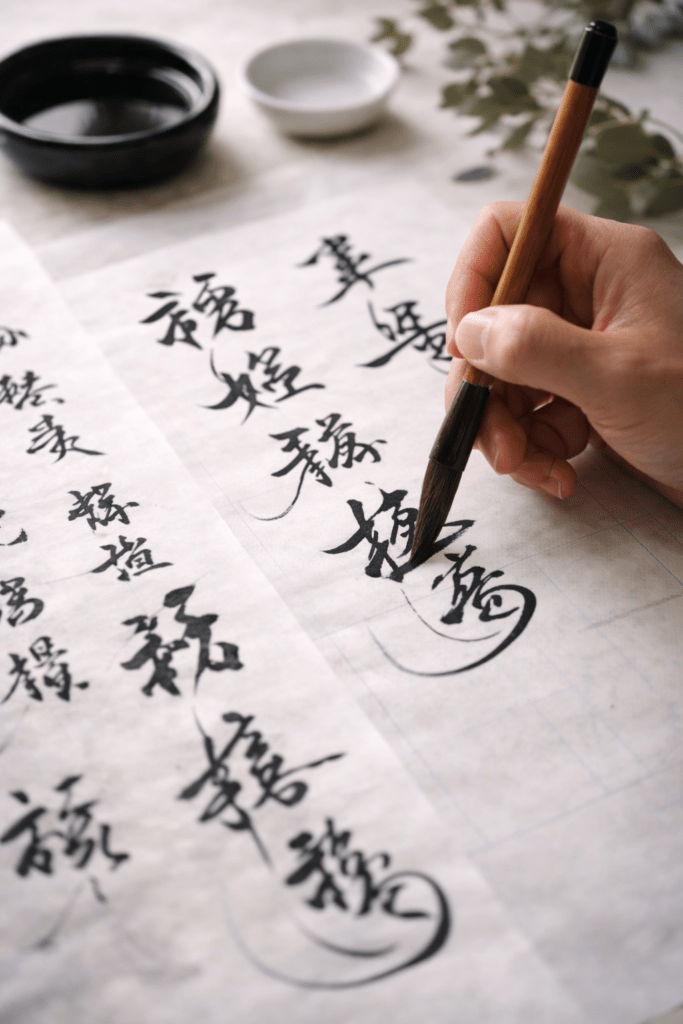
Style Deep Guide: A Complete In-Depth System for Understanding, Practicing, and Mastering Chinese Calligraphy Styles
Why You Need a Deep Guide
At a beginner level, calligraphy feels manageable.
You learn strokes.
You copy characters.
You follow examples.
But as you continue—
something changes.
Progress slows.
Mistakes repeat.
Styles feel harder to control.
Because surface knowledge is no longer enough.
👉 you need deeper understanding
A deep guide helps you:
see beyond appearance
understand underlying principles
practice with intention
👉 depth turns practice into mastery
What “Deep Understanding” Really Means
Deep understanding is not memorizing more information.
It is recognizing:
how strokes behave
how structure holds
how movement flows
how energy is controlled
👉 it is understanding why things work
Not just how they look.
When you reach this level:
you stop copying blindly
you start adjusting consciously
The Five Dimensions of Style
Every calligraphy style can be understood through five dimensions:
stroke
structure
flow
energy
intention
👉 these dimensions define style completely
If one is missing—
the style is incomplete.
Stroke: The Foundation of Form
Stroke defines:
how lines are created
Each style uses strokes differently.
Key factors
pressure
direction
entry and exit
Kaishu:
clear and defined
Xingshu:
connected and smooth
Caoshu:
continuous and expressive
👉 stroke is the smallest unit
But it carries the most information.
Structure: The Framework of the Character
Structure defines:
how strokes are arranged
It controls:
proportion
spacing
balance
Kaishu:
strict structure
Xingshu:
flexible structure
Caoshu:
abstract structure
👉 structure holds everything together
Without it, writing collapses.
Flow: The Continuity of Movement
Flow defines:
how strokes connect
It affects:
rhythm
speed
transition
Low flow:
Zhuanshu
Kaishu
High flow:
Xingshu
Caoshu
👉 flow creates movement
It connects individual strokes into a whole.
Energy: The Life Within the Stroke
Energy defines:
how strokes feel
It includes:
force
direction
momentum
Without energy:
writing feels flat
With energy:
writing feels alive
👉 energy is invisible but visible
You feel it in movement.
Intention: The Invisible Guide
Intention defines:
why a stroke is made
It shapes:
movement
timing
expression
Without intention:
writing becomes mechanical
With intention:
writing becomes meaningful
👉 intention guides everything
It is the highest level of awareness.
How These Dimensions Work Together
These five dimensions are not separate.
They interact constantly.
Stroke affects structure
Structure affects flow
Flow affects energy
Energy reflects intention
👉 this is a complete system
You cannot isolate one completely.
Understanding comes from seeing the whole.
Style Breakdown Through the Five Dimensions
Kaishu
Stroke: precise
Structure: strict
Flow: controlled
Energy: contained
Intention: disciplined
👉 foundation style
Xingshu
Stroke: connected
Structure: flexible
Flow: smooth
Energy: continuous
Intention: natural
👉 transitional style
Caoshu
Stroke: simplified
Structure: abstract
Flow: uninterrupted
Energy: dynamic
Intention: expressive
👉 advanced style
Lishu
Stroke: varied
Structure: wide
Flow: rhythmic
Energy: grounded
Intention: balanced
Zhuanshu
Stroke: uniform
Structure: symmetrical
Flow: internal
Energy: calm
Intention: stable
👉 each style emphasizes different dimensions
Why Beginners Struggle with Styles
Most beginners focus only on:
stroke shape
They ignore:
flow
energy
intention
👉 this creates shallow understanding
They can copy—
but not adapt.
Deep learning solves this.
How to Practice with Depth
Observe Before Writing
Study how strokes behave.
Break Down Characters
Analyze structure and spacing.
Practice Slowly
Feel each movement.
Focus on One Dimension
Train stroke, then structure, then flow.
👉 layered practice builds depth
Do not rush.
How to Move from Surface to Deep Skill
Step 1
Recognize shapes
Step 2
Understand structure
Step 3
Control movement
Step 4
Develop flow
Step 5
Express intention
👉 this is the path to mastery
Each step builds on the last.
Common Barriers to Deep Understanding
Impatience
Wanting quick results.
Copying Without Thinking
No analysis.
Ignoring Fundamentals
Weak foundation.
Over-focusing on Style Appearance
Ignoring movement.
👉 awareness removes barriers
What Deep Understanding Feels Like
At first:
everything feels mechanical
With practice:
patterns become clear
Eventually:
you feel the stroke before writing
👉 this is intuitive understanding
You no longer guess.
You know.
How Depth Changes Your Writing
Your writing becomes:
more consistent
more balanced
more expressive
You can:
adjust styles easily
correct mistakes quickly
👉 depth gives control
Without it, progress is limited.
How Long It Takes to Develop Depth
Depth develops slowly.
With consistent practice:
noticeable improvement in months
strong understanding in years
👉 depth cannot be rushed
It requires patience.
FAQ
What is deep understanding in calligraphy?
It is understanding stroke, structure, flow, energy, and intention together.
Why is depth important?
It allows you to control and adapt your writing.
How do I develop depth?
Through observation, slow practice, and focused training.
Can beginners learn deeply?
Yes, by practicing with awareness.
Is depth necessary for mastery?
Yes, it is essential.
Final Thought
Calligraphy is simple on the surface.
But deep beneath.
Each stroke carries:
movement
structure
energy
intention
When you begin—
you see lines.
When you progress—
you see patterns.
When you go deeper—
you feel movement.
And when you truly understand—
you no longer separate technique from expression.
They become one.
Not forced.
Not mechanical.
But natural.
One stroke at a time.