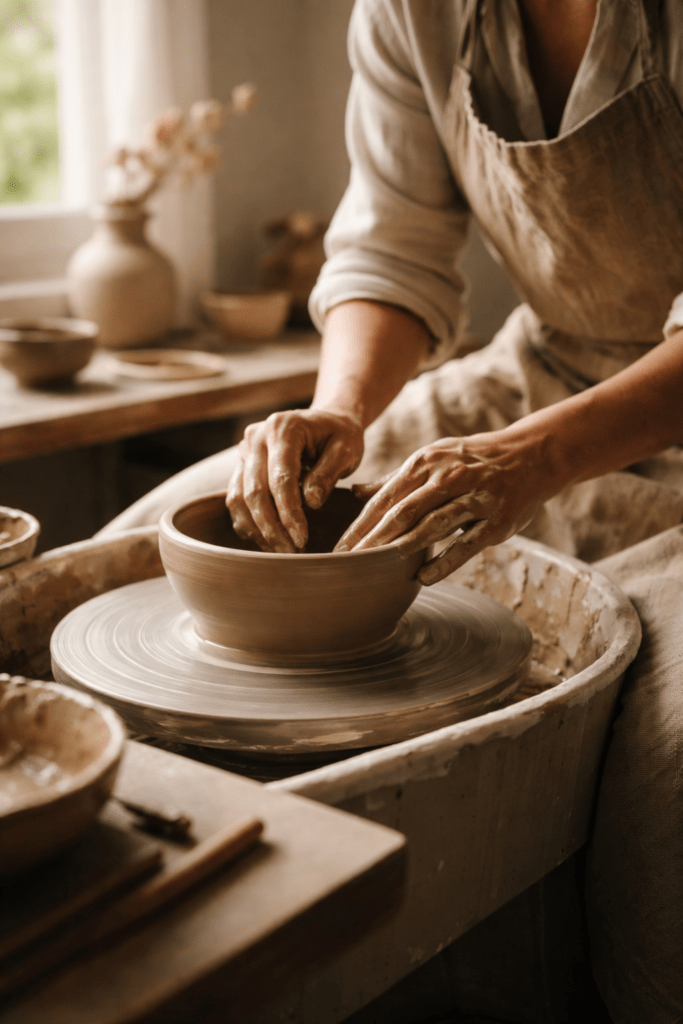
Why Materials Matter More Than You Think
When beginners start crafting, they often focus on tools.
What to buy.
What to use.
What looks professional.
But tools are only half of the process.
The other half—and often the more important one—is materials.
Because in craft:
👉 You are not just using tools
👉 You are working with materials
And materials have their own behavior.
They bend.
They resist.
They absorb.
They break.
Understanding materials changes everything.
It turns confusion into clarity.
And struggle into flow.
What Craft Materials Really Are
At the simplest level, craft materials are:
👉 The substances you shape, modify, and transform
They are what you work with.
Not what you use to work.
Examples include:
- Paper
- Wood
- Clay
- Fabric
- Resin
Each material has:
- Texture
- Strength
- Flexibility
- Limits
Learning these properties is the foundation of crafting.
The Most Important Rule About Materials
Before anything else, understand this:
👉 Start simple
You do not need many materials.
You do not need rare materials.
You only need:
- One material
- Basic understanding
- Willingness to explore
Too many materials create confusion.
Simple materials create focus.
The Main Types of Craft Materials
Most materials fall into a few core categories.
Understanding these categories helps you choose wisely.
Natural Materials
These come directly from nature.
Examples:
- Wood
- Clay
- Cotton
- Wool
They feel:
- Organic
- Grounded
- Unpredictable
Natural materials often change over time.
They require attention.
And they reward patience.
Processed Materials
These are modified from natural sources.
Examples:
- Paper
- Treated wood
- Fabric blends
They are more consistent than raw materials.
Easier to work with.
More predictable.
Synthetic Materials
These are man-made.
Examples:
- Plastic
- Resin
- Acrylic
They offer:
- Flexibility
- Control
- Durability
But they often feel less natural.
How Materials Behave (This Is Key)
Every material responds differently.
Understanding this is more important than memorizing types.
For example:
Paper is light and flexible
Wood is strong but rigid
Clay is soft but fragile before firing
Fabric moves and stretches
When you work with materials, you are not forcing them.
You are responding to them.
Good crafting is a dialogue.
Not control.
Choosing Your First Material
For beginners, the best material is not the “best” one.
It is the one that is:
- Easy to access
- Easy to handle
- Low pressure
Good beginner choices include:
- Paper
- Air-dry clay
- Basic fabric
These materials are forgiving.
They allow mistakes.
They support learning.
Quality vs Simplicity
Many beginners think they need high-quality materials.
This is not always true.
At the beginning:
Simple is better than perfect.
Low to mid-level materials are enough.
Why?
Because you are learning:
- How materials behave
- How to control your actions
- How to adjust your process
Expensive materials do not replace this learning.
They often add pressure.
How to Work With Materials Properly
Working with materials requires awareness.
Pay attention to:
How it feels
How it responds
How it changes
Move slowly.
Observe results.
Adjust your approach.
Do not rush.
Each material teaches you something.
If you pay attention.
Common Beginner Mistakes With Materials
Using too many materials at once
Choosing materials that are too complex
Expecting materials to behave perfectly
Ignoring material limitations
Switching materials too frequently
These mistakes create confusion.
The solution is always the same:
Simplify.
How Materials Affect Your Craft Experience
Different materials create different experiences.
Paper feels light and precise
Clay feels soft and grounding
Wood feels solid and controlled
Fabric feels fluid and rhythmic
Choosing a material is not just practical.
It is experiential.
It shapes how you feel while crafting.
Material and Skill Development
As your skill improves, your relationship with materials changes.
You begin to:
- Anticipate behavior
- Control outcomes
- Work more efficiently
At first, materials feel unpredictable.
Over time, they feel familiar.
This is a sign of progress.
When to Try New Materials
Do not rush into variety.
Stay with one material long enough to understand it.
Then explore others.
This creates:
- Depth before variety
- Skill before expansion
Trying too many materials too quickly slows learning.
How to Store and Care for Materials
Good material care improves your experience.
Basic practices include:
- Keeping materials clean
- Storing in dry, stable conditions
- Avoiding damage or contamination
Proper storage extends usability.
And reduces frustration.
The Relationship Between Material and Creativity
Materials influence creativity.
They suggest possibilities.
They create limitations.
They guide your process.
Sometimes, a material will lead you to an idea—
instead of the other way around.
This is part of the creative process.
Why Simple Materials Are Often Better
Complex materials can feel exciting.
But simple materials are powerful.
They allow you to:
- Focus
- Learn
- Improve
With fewer distractions.
Mastery often begins with simplicity.
FAQ
What are craft materials?
Craft materials are the substances used to create objects, such as paper, wood, clay, and fabric.
What is the best material for beginners?
Paper and air-dry clay are among the easiest materials to start with.
Do I need high-quality materials to start crafting?
No. Simple and affordable materials are sufficient for beginners.
How do I choose the right material?
Choose based on ease of use, availability, and your interest.
Why do materials behave differently?
Because each material has unique physical properties like flexibility, strength, and texture.
Final Reflection
Materials are not just things you use.
They are part of the process.
They shape your actions.
They guide your learning.
They influence your experience.
You don’t need many.
You don’t need perfect ones.
You only need to begin.
Choose one.
Work with it.
Pay attention.
And over time—
what once felt unfamiliar
will become natural.
And what once felt difficult
will become intuitive.