Why Beginners Get Confused About Tools
When you first look into crafting tools, everything feels overwhelming.
You see:
- Full tool kits
- Professional setups
- Endless recommendations
It feels like you need a lot to begin.
So beginners often do one of two things:
Buy too much
Or hesitate to start
But the truth is simple:
👉 You need far less than you think
The right tools are not about quantity.
They are about clarity.
What Beginner Tools Really Mean
Beginner tools are:
👉 The minimum set of tools that allow you to start and learn effectively
They are not advanced.
They are not specialized.
They are:
- Simple
- Versatile
- Easy to use
They support learning.
Not complexity.
The Most Important Rule: Start With Essentials Only
Before anything else, remember:
👉 Do not build a full toolkit at the beginning
Too many tools create:
- Distraction
- Confusion
- Unnecessary cost
Start with a small set.
Add more only when needed.
The Core Beginner Tool Set (Works for Most Crafts)
You don’t need different tools for every craft at the beginning.
A simple universal set is enough.
1. Cutting Tool
This is essential.
Examples:
- Scissors
- Craft knife
Used for:
- Cutting materials
- Shaping edges
Choose something:
- Comfortable
- Easy to control
2. Measuring Tool
Basic accuracy improves your work.
Examples:
- Ruler
- Measuring tape
Used for:
- Straight lines
- Proportions
Precision starts here.
3. Marking Tool
Helps guide your actions.
Examples:
- Pencil
- Simple marker
Used for:
- Planning
- Outlining
Keep it light and simple.
4. Joining Tool
Used to connect materials.
Examples:
- Glue
- Basic adhesive
Choose something:
- Easy to apply
- Not too strong for beginners
5. Basic Surface Protection
Not a tool, but important.
Use:
- A mat
- A protective layer
This protects both:
- Your table
- Your materials
Tools Based on Craft Type (Simple Additions)
Once you choose a craft, you can add a few specific tools.
Paper Craft
- Scissors
- Glue
- Ruler
Very simple.
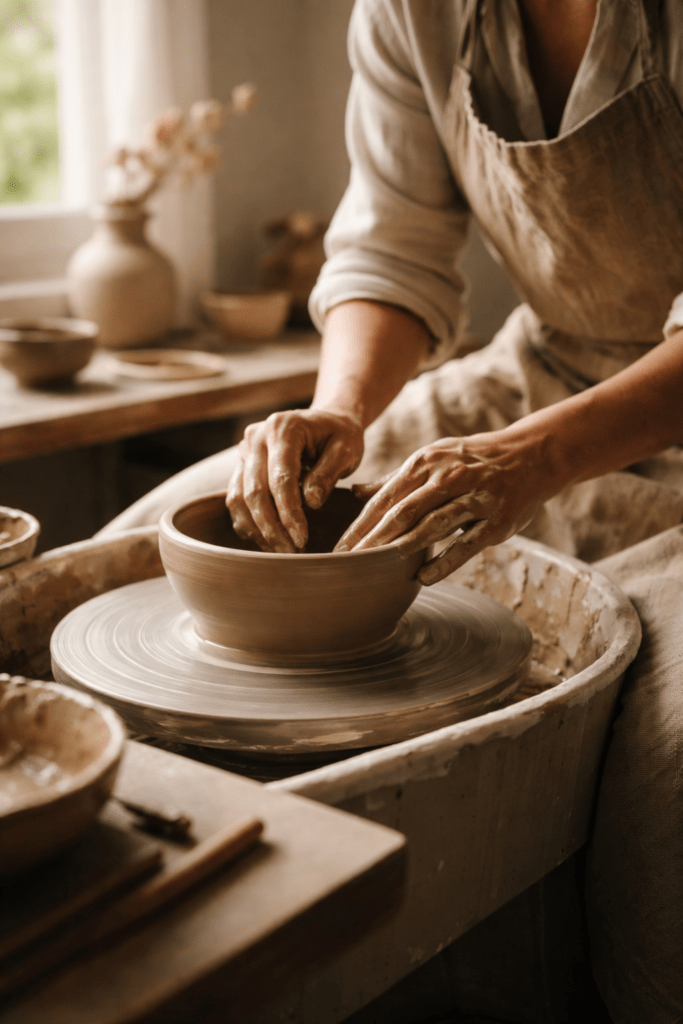
Clay Craft
- Hands (most important)
- Basic shaping tools
Minimal setup required.
Textile Craft
- Needle
- Thread
- Scissors
Focus on basic stitching.
Wood Craft (Beginner Level)
- Simple cutting tool
- Sanding tool
Start small.
Avoid heavy equipment early.
What You Should NOT Buy at the Beginning
Avoid these common mistakes:
Full Tool Kits
They often include:
- Unnecessary tools
- Tools you won’t use
Start with individual tools instead.
Advanced or Specialized Tools
These are:
- Difficult to use
- Not needed early
They add complexity.
Cheap Low-Quality Tools
Very cheap tools can:
- Break easily
- Reduce control
- Cause frustration
Choose simple but reliable tools.
How to Choose the Right Tools
When selecting tools, focus on:
Comfort
Control
Simplicity
Ask yourself:
Can I use this easily?
Do I actually need it?
If not, skip it.
How Tools Affect Your Learning
Tools should support your learning.
Not replace it.
Good tools help you:
- Move more accurately
- Reduce mistakes
- Stay comfortable
But skill comes from practice.
Not tools.
When to Add More Tools
Add new tools only when:
- You understand your craft
- You use your current tools regularly
- You feel limited
Each new tool should solve a problem.
Not create one.
Organizing Your Tools
Keep your setup simple.
Store tools:
- In one place
- Easy to reach
- Clean and ready
Avoid clutter.
Too many tools reduce focus.
Common Beginner Tool Mistakes
Buying too much too early
Choosing tools before choosing a craft
Ignoring comfort and control
Using tools incorrectly
Collecting instead of using
Stay focused.
Use what you have.
The Relationship Between Tools and Skill
Tools do not create skill.
Skill creates better use of tools.
A beginner with simple tools can improve steadily.
An advanced tool will not replace practice.
The Minimalist Tool Approach
Less is better.
Fewer tools mean:
- Less distraction
- More focus
- Faster learning
You don’t need everything.
You need what works.
FAQ
What tools do I need to start crafting?
Basic tools like scissors, a ruler, and glue are enough.
Should I buy a full tool kit?
No. Start with individual essential tools.
Are expensive tools better for beginners?
Not necessarily. Simple and reliable tools are enough.
How do I know which tools to choose?
Choose based on your craft and ease of use.
When should I upgrade my tools?
When your current tools limit your progress.
Final Reflection
You don’t need a lot to begin.
Just a few tools.
A small space.
And a simple start.
The rest will come—
as you practice
as you learn
as you improve
Tools are not the beginning.
They are just support.
The real start—
is you.