Benefits of Calligraphy: What This Practice Actually Changes Over Time
Why People Underestimate Calligraphy
At first glance, calligraphy looks simple.
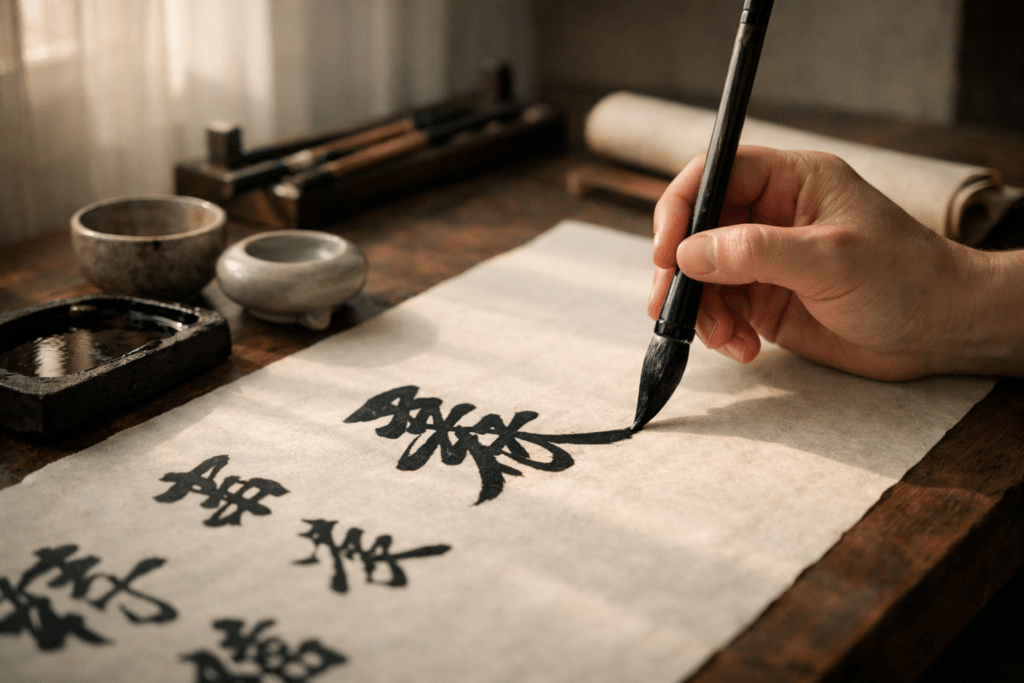
A brush.
Ink.
Paper.
And someone writing slowly.
It does not look powerful. It does not look efficient. It does not look like something that would significantly impact your life.
So people assume:
👉 it is just a hobby
Something decorative. Something optional.
But this assumption misses what calligraphy actually does.
Because the real benefits of calligraphy are not obvious at the beginning.
They appear gradually.
And when they do, they are not limited to writing.
Calligraphy Trains Focus Without Forcing It
One of the first changes people notice is improved focus.
But this is not the kind of focus that comes from effort or pressure.
It is not forcing yourself to concentrate.
It is the result of being engaged in something that requires attention.
When you write with a brush, your attention naturally aligns with your movement.
If your mind wanders, the stroke becomes unstable.
If you rush, the structure breaks.
The feedback is immediate.
So instead of trying to focus, you return to it.
Again and again.
Over time, this builds a steady form of attention.
Not intense. Not exhausting.
Just stable.
Calligraphy Slows Your Thinking Through Movement
Most people try to slow down by thinking differently.
But thinking rarely slows thinking.
Movement does.
Calligraphy changes your pace through physical action.
The brush requires controlled movement.
The ink responds to speed and pressure.
The structure demands precision.
All of this naturally slows you down.
You begin to move more deliberately.
And as your movement slows, your thinking follows.
This is why calligraphy feels calming.
Not because it removes thoughts.
But because it changes the rhythm behind them.
Improved Hand Control and Coordination
Calligraphy develops fine motor control in a very direct way.
Unlike writing with a pen, a brush requires continuous adjustment.
You are constantly balancing:
pressure
angle
speed
Each stroke becomes a small coordination exercise.
At first, this feels difficult.
Your hand may feel unstable. Your strokes may feel inconsistent.
But with repetition, control improves.
Your movements become more precise. Your transitions become smoother.
This improvement is not theoretical.
It is visible in every stroke.
And it extends beyond calligraphy.
Better control in one area often leads to better coordination in others.
Building Patience Through Practice
Calligraphy does not reward speed.
You cannot rush improvement.
You cannot skip steps.
You cannot force results.
This makes it frustrating at first.
But over time, something changes.
You stop expecting immediate progress.
You begin to accept gradual improvement.
You understand that repetition is part of the process.
This is where patience develops.
Not as a concept, but as an experience.
You see that consistent effort leads to change.
Even if that change is slow.
A Healthier Relationship With Mistakes
In many activities, mistakes are hidden or corrected quickly.
In calligraphy, mistakes are visible.
The brush records everything.
If your pressure is uneven, the line shows it.
If your movement is unstable, the structure reflects it.
This can feel uncomfortable.
But it is also useful.
Because you can see exactly what happened.
You begin to observe instead of judge.
Instead of thinking, “this is bad,” you ask:
What caused this?
What changed in my movement?
This shift changes how you learn.
Mistakes become information.
Not failure.
And this approach often carries into other areas of life.
Developing Consistency and Discipline
Calligraphy improves through regular practice.
Not long sessions.
Not intense effort.
But consistent repetition.
Even 15 to 30 minutes per day is enough.
What matters is continuity.
This builds a habit of showing up.
You learn to practice even when progress is not obvious.
You learn to continue even when results are imperfect.
This creates discipline.
Not through pressure, but through routine.
And once that routine is established, improvement becomes more stable.
A Sense of Calm Without Distraction
Many people turn to calligraphy for relaxation.
But it is not passive relaxation.
It is active calm.
You are doing something.
But that something does not overwhelm you.
There is no noise.
No urgency.
No external pressure.
Just a simple process:
movement
ink
paper
This creates space.
Not empty space, but quiet space.
And in that space, the mind settles.
Not because you forced it.
But because nothing is pulling it away.
Connecting With Tradition and Culture
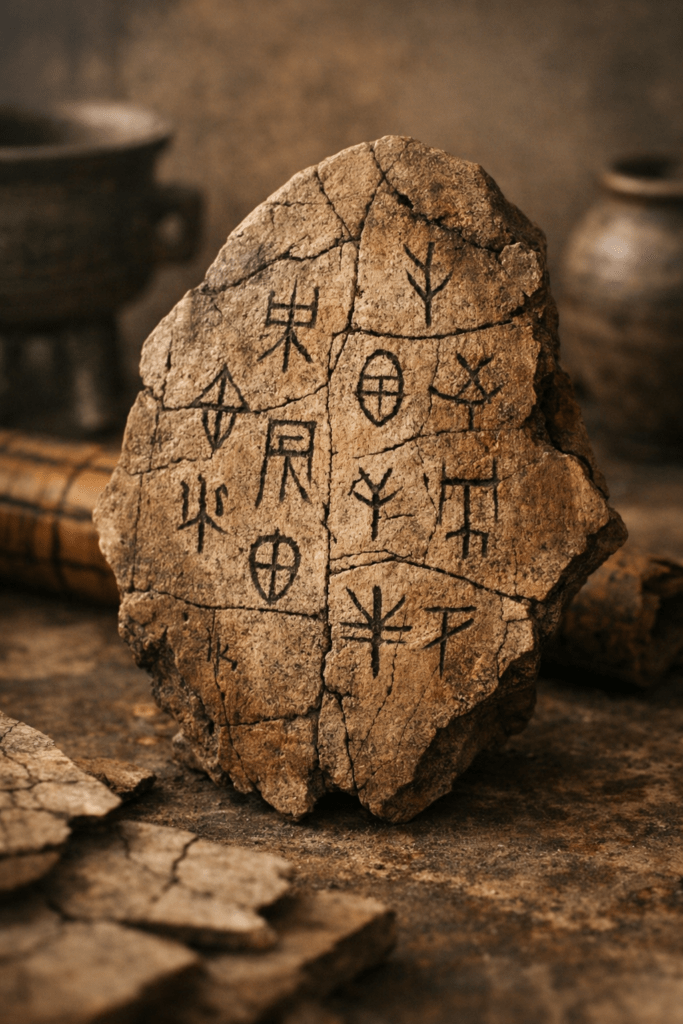
Calligraphy carries a long history.
The forms you practice, the structures you follow, and the techniques you learn have been developed over centuries.
When you practice calligraphy, you are not just learning a skill.
You are participating in a tradition.
This adds depth to the experience.
You are not experimenting randomly.
You are working within a system that has been refined over time.
For some people, this creates a sense of connection.
For others, it provides structure and meaning.
Either way, it adds another layer to the practice.
Expression Through Movement
Calligraphy allows for expression, but not in the usual sense.
You are not expressing ideas directly.
You are expressing movement.
The way you control the brush, the way you apply pressure, and the way you transition between strokes all create variation.
Even when writing the same character, no two results are identical.
Over time, your writing begins to reflect your habits.
Not your thoughts, but your tendencies.
This creates a subtle form of expression.
One that develops naturally, without forcing it.
Mental Clarity Through Simplicity
Calligraphy reduces complexity.
It limits your focus to a few elements:
the brush
the ink
the stroke
There are no distractions.
No multiple tasks.
No constant switching.
This simplicity creates clarity.
You know exactly what you are doing.
You know exactly what you need to improve.
And that clarity makes progress easier to understand.
Why These Benefits Take Time
None of these benefits appear instantly.
They develop through repetition.
Through consistency.
Through attention.
At the beginning, calligraphy feels awkward.
The brush feels difficult to control. The strokes feel unstable.
But if you continue, small changes begin to appear.
Your control improves. Your focus stabilizes. Your movement becomes more deliberate.
These changes are gradual, but they are reliable.
FAQ
What are the main benefits of calligraphy?
Improved focus, better hand control, increased patience, and a calmer state of mind.
Does calligraphy help with stress?
Yes, because it slows movement and reduces distractions, creating a calming effect.
Can calligraphy improve concentration?
Yes, it trains attention through continuous feedback and controlled movement.
Is calligraphy good for beginners?
Yes, it does not require prior experience and develops gradually through practice.
How often should I practice to see benefits?
Even 15 to 30 minutes daily can produce noticeable improvements over time.
Final Thought
Calligraphy does not change your life suddenly.
It changes it slowly.
Stroke by stroke.
Practice by practice.
You begin by learning how to control the brush.
But over time, you realize you are learning something else.
How to focus.
How to move with intention.
How to stay present with a simple task.
And those changes stay with you.
Long after the ink dries.