Calligraphy for Beginners: Complete Guide to Start Chinese Calligraphy the Right Way
Why Most Beginners Feel Lost at the Beginning
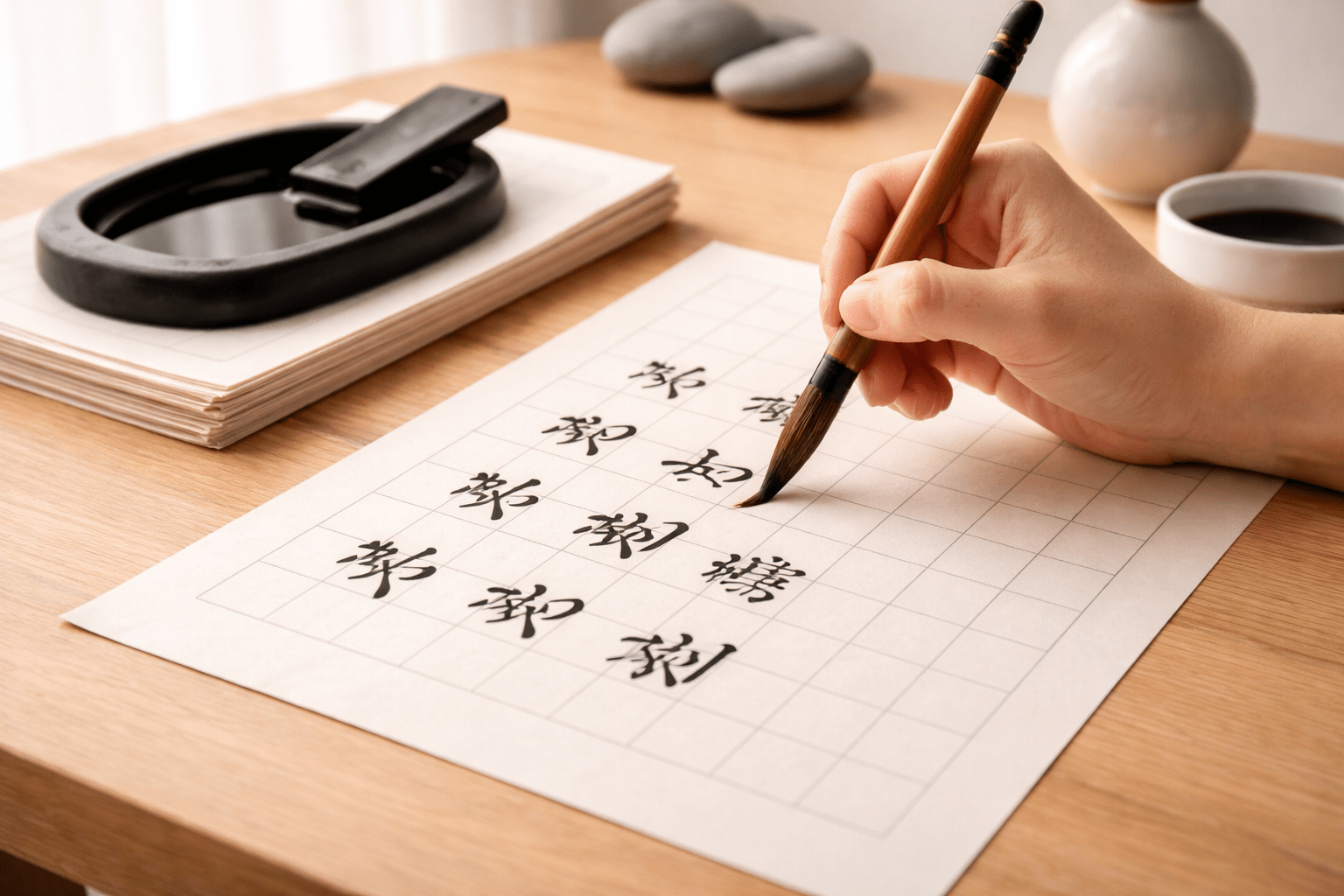
You sit down with a brush.
Ink. Paper. Silence.
Everything feels… simple.
And yet—
nothing works.
The strokes feel unstable.
The characters look wrong.
The brush doesn’t do what you expect.
And the question appears:
👉 “Why is this so difficult?”
Most beginners think the problem is:
- lack of talent
- lack of practice
- lack of understanding
But the real issue is simpler:
👉 You don’t have a clear starting path
Calligraphy is not something you “try.”
👉 It’s something you enter—step by step.
This guide will give you that path.
If you’re completely new, start here →
what is chinese calligraphy
What Is Chinese Calligraphy (Beginner Perspective)
Before learning how—
you need to understand what it is.
Calligraphy is not just writing.
It is:
- movement
- structure
- rhythm
- awareness
Each stroke reflects:
- your control
- your attention
- your state of mind
👉 That’s why calligraphy feels different from handwriting.
👉 Learn the foundation →
types of calligraphy styles
What You Need to Start (Simple Setup)
You don’t need much.
But you need the right things.
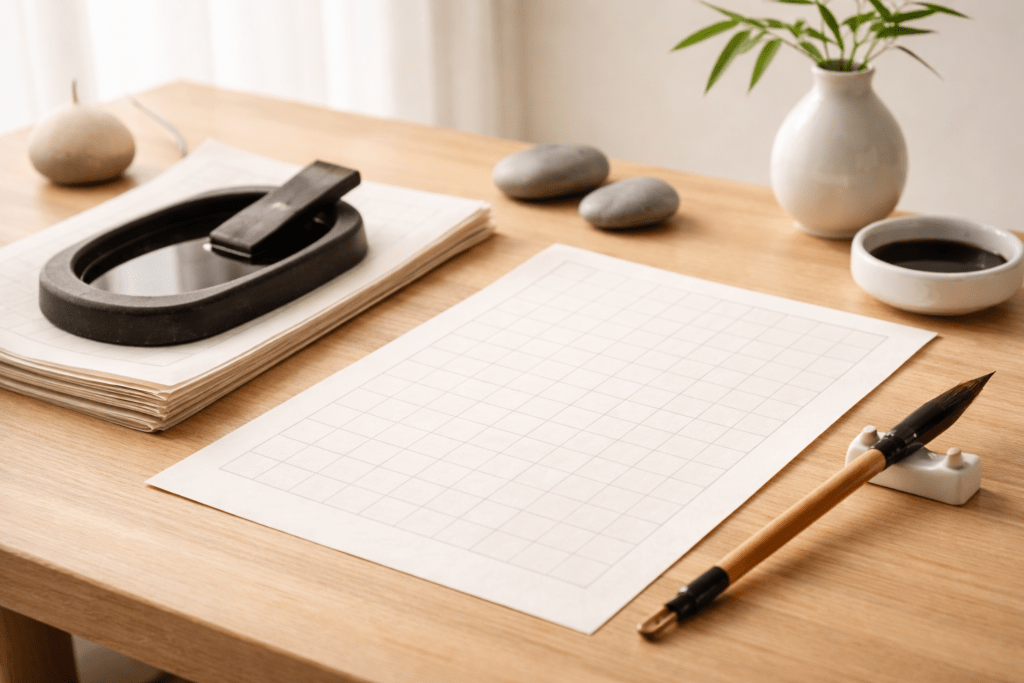
Basic Calligraphy Tools
- Brush (soft, medium size)
- Ink (liquid or ink stick)
- Paper (rice paper or practice sheets)
- Ink stone (or container)
👉 Full tool guide →
calligraphy tools explained
How to Hold the Brush (Critical Step)
This is where most beginners go wrong.
Correct Holding:
- hold upright
- relaxed grip
- use fingers, not just wrist
Why It Matters:
👉 Brush angle affects every stroke
👉 Detailed guide →
how to hold brush
Posture and Setup (Often Ignored)
Your body affects your writing.
Good Posture:
- sit upright
- shoulders relaxed
- stable arm movement
👉 Learn more →
calligraphy posture guide
Where to Start: The Right Learning Path
This is the most important section.
Step 1: Learn Basic Strokes
👉 basic brush strokes
Step 2: Practice Kaishu (Regular Script)
👉 kaishu explained
Step 3: Build Consistency
👉 daily calligraphy practice
Step 4: Move to Flow (Later)
👉 Xingshu → Caoshu
👉 Full path →
calligraphy learning path
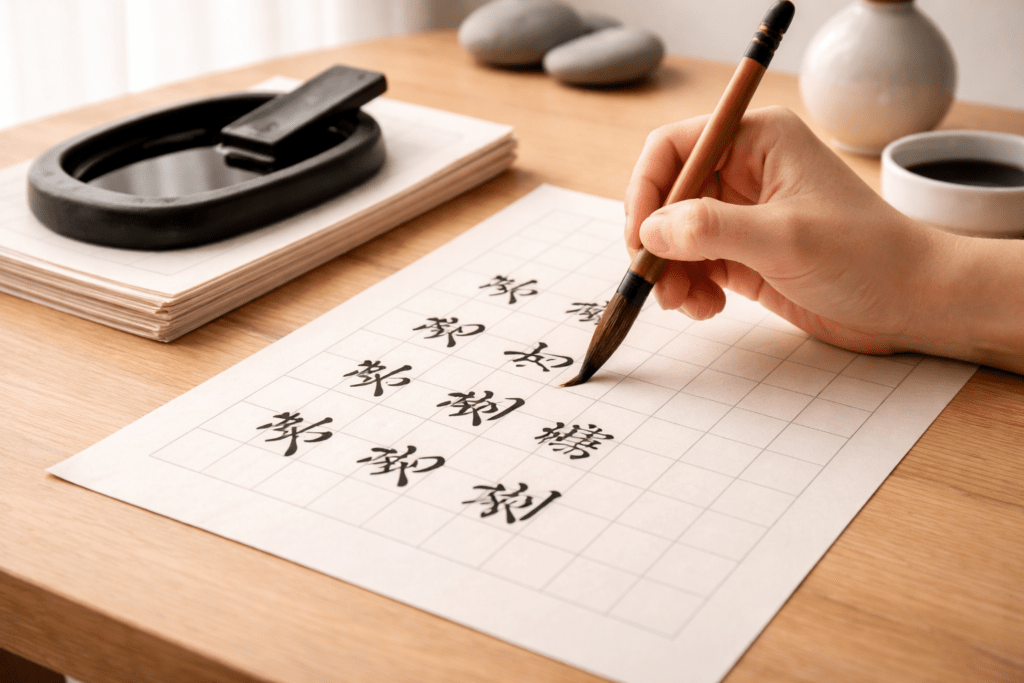
The First Thing You Should Practice
Not words.
Not sentences.
👉 Strokes
Core Strokes:
- horizontal
- vertical
- dot
- hook
👉 Why?
Because:
👉 characters are made of strokes
How to Practice (Beginner Method)
Method 1: Repetition
Write the same stroke or character many times.
Method 2: Copying (临摹)
Copy master examples.
Method 3: Slow Practice
Do not rush.
👉 Practice system →
calligraphy practice routine
Common Beginner Mistakes
❌ Starting with advanced styles
→ leads to confusion
❌ Practicing randomly
→ no progress
❌ Ignoring structure
→ unstable writing
❌ Giving up too early
👉 Avoid more →
common calligraphy mistakes
How Long Does It Take to Learn Calligraphy?
Honest answer:
- 1 week → basic feeling
- 1 month → visible improvement
- 3–6 months → stable foundation
- years → mastery
👉 Calligraphy is slow.
But that’s the point.
Calligraphy and Mindset
This is what changes everything.
At the beginning:
👉 you try to control the brush
Later:
👉 you learn to move with it
Calligraphy teaches:
- patience
- focus
- awareness
👉 Explore deeper →
calligraphy mindfulness
Why Calligraphy Feels Difficult (And Why That’s Good)
Because it exposes:
- lack of control
- lack of attention
- lack of patience
But that’s also why it works.
👉 Calligraphy is not just skill.
👉 It is training your mind.
Beginner Practice Plan (Simple)
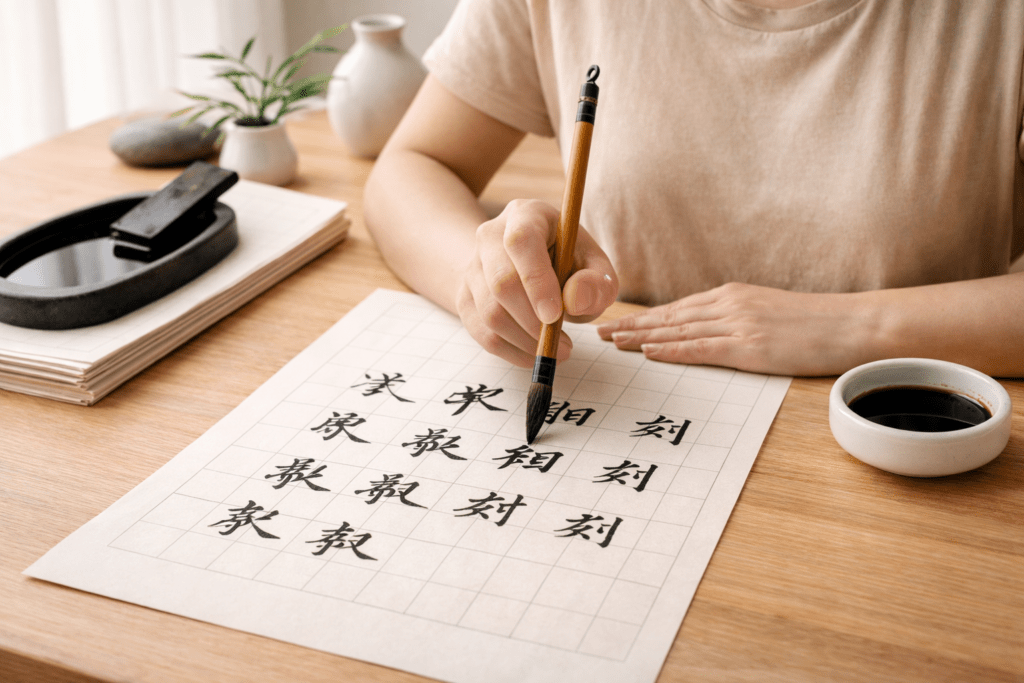
Daily (15–30 minutes):
- warm-up strokes
- practice one character
- repeat slowly
👉 Full plan →
30 day calligraphy plan
FAQ
How do beginners start calligraphy?
Start with basic strokes, learn brush holding, and practice Kaishu regularly.
What is the best calligraphy style for beginners?
Kaishu (Regular Script) is the best starting point.
What tools do I need for calligraphy?
Brush, ink, paper, and an ink stone or container.
How often should I practice calligraphy?
Daily practice (15–30 minutes) is ideal for steady progress.
Is calligraphy hard to learn?
It is challenging at first but becomes easier with consistent practice.
Final Reflection: Start Small, Stay Consistent
You don’t need to master everything.
You don’t need perfect strokes.
You don’t need talent.
You only need:
👉 consistency
One stroke.
One character.
One session at a time.
And slowly—
without forcing it—
you will begin to see:
👉 progress
👉 clarity
👉 control
Calligraphy is not about rushing forward.
It is about staying present—
long enough for something to grow.