Calligraphy Posture Guide: How to Sit, Hold, and Move for Better Control
Why Posture Matters More Than You Think
Most beginners focus on the brush.
They think the key to better calligraphy is:
a better tool
a better technique
more practice
But they overlook something fundamental:
👉 posture
If your posture is unstable, your strokes will be unstable.
If your body is tense, your lines will reflect that tension.
If your movement is restricted, your writing will feel stiff.
Posture is not separate from calligraphy.
It is the foundation that supports everything else.
Without it, improvement becomes difficult.
The Goal of Good Posture
Good posture is not about looking correct.
It is about creating the right conditions for movement.
A good posture allows:
- stable control
- smooth motion
- consistent pressure
It removes unnecessary tension.
It supports balance.
It gives your hand the freedom to move naturally.
The goal is simple:
👉 stability without stiffness
The Three Elements of Calligraphy Posture
Posture in calligraphy can be understood through three main elements:
body position
arm movement
hand and grip
Each one affects the others.
If one is off, the entire system is affected.
Body Position: The Base of Control
Your body position determines your overall stability.
If your body is unstable, your hand will compensate.
This creates tension.
Sitting vs Standing
Traditionally, calligraphy can be practiced both sitting and standing.
For beginners, sitting is easier.
It provides more support and reduces fatigue.
Standing is often used for larger writing, but it requires more control.
Start with sitting.
How to Sit Properly
Sit upright, but not rigid.
Your back should be straight, not leaning forward or slouching.
Your shoulders should be relaxed.
Your head should be slightly inclined toward the paper, not pushed forward.
Your feet should rest flat on the ground.
This creates a stable base.
Distance From the Table
Sit at a comfortable distance.
Not too close, not too far.
If you are too close, your movement becomes restricted.
If you are too far, you lose control.
Your forearms should be able to rest lightly on the table without pressure.
The Role of Relaxation
Tension is one of the biggest obstacles.
If your shoulders are tight or your back is stiff, your movement becomes limited.
Good posture is relaxed, not forced.
You should feel stable, but not strained.
Arm Movement: Where Control Comes From
Many beginners try to write using only their fingers.
This limits control and creates small, stiff movements.
In calligraphy, movement comes from larger areas.
The Three Levels of Movement
There are three main sources of movement:
fingers
wrist
arm
Fingers
Used for fine adjustments.
Too much reliance on fingers creates instability.
Wrist
Provides more range than fingers.
Still limited for larger strokes.
Arm
Provides the most control and stability.
This is where calligraphy movement should primarily come from.
Why Arm Movement Matters
Using your arm allows:
- smoother lines
- more consistent pressure
- better control of direction
It also reduces tension in the hand.
How to Practice Arm Movement
Keep your hand relaxed.
Allow your arm to guide the motion.
Do not grip tightly.
Let the brush move as part of a larger motion, not just finger movement.
At first, this feels unfamiliar.
But over time, it becomes natural.
Hand and Grip: The Connection to the Brush
How you hold the brush directly affects your control.
A poor grip creates tension and instability.
A good grip allows flexibility and responsiveness.
Basic Grip Principles
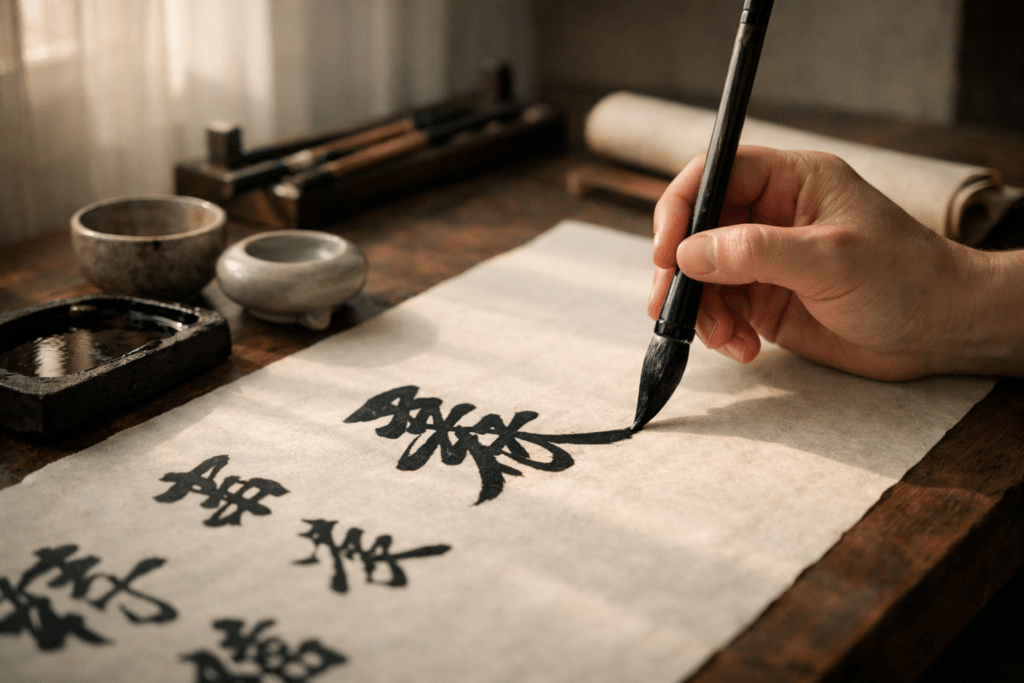
Hold the brush upright.
Not angled like a pen.
This vertical position allows full use of the brush tip.
Use your fingers to guide, not to squeeze.
The grip should be firm enough to control the brush, but loose enough to allow movement.
Common Grip Mistakes
Holding too tightly is the most common mistake.
This creates rigid strokes and uneven pressure.
Another mistake is holding the brush too low.
This reduces control and limits movement.
Finding the Right Balance
Your grip should feel:
stable but flexible
controlled but relaxed
If your hand feels tired quickly, you are likely holding too tightly.
The Relationship Between Posture and Stroke Quality
Every aspect of posture influences the stroke.
If your body is leaning forward, your movement becomes restricted.
If your shoulders are tense, your pressure becomes uneven.
If your grip is tight, your lines become stiff.
Good posture creates consistency.
Bad posture creates variation that is not intentional.
This is why posture is so important.
It affects every stroke you make.
Common Beginner Mistakes
Many posture problems come from habits formed in handwriting.
Leaning Too Close
This limits arm movement and creates tension.
Writing Only With Fingers
This reduces control and creates uneven lines.
Holding the Brush Like a Pen
This prevents proper use of the brush tip.
Tension in Shoulders and Neck
This restricts movement and reduces flow.
These mistakes are natural, but they need to be corrected early.
How to Adjust Your Posture Step by Step
Start with your body.
Sit upright and relax your shoulders.
Adjust your distance from the table.
Make sure your arms can move freely.
Then focus on your arm.
Practice moving from the arm instead of the fingers.
Keep your movement smooth and controlled.
Finally, adjust your grip.
Hold the brush upright.
Reduce tension in your fingers.
Allow flexibility.
Make small adjustments until everything feels balanced.
How Long It Takes to Feel Natural
At first, good posture feels uncomfortable.
This is normal.
Your body is used to different habits.
With practice, the new posture becomes more natural.
Your movement becomes smoother.
Your control improves.
This process takes time, but it is consistent.
Why Posture Is Often Ignored
Posture does not produce immediate results.
You do not see instant improvement.
This makes it easy to ignore.
But over time, posture determines your progress.
It is not something you fix later.
It is something you build from the beginning.
FAQ
Why is posture important in calligraphy?
Because it affects stability, control, and stroke quality.
Should I sit or stand when practicing?
Beginners should start with sitting for better stability.
Why shouldn’t I write with just my fingers?
Because it limits control and creates unstable strokes.
How should I hold the brush?
Hold it upright with a relaxed but controlled grip.
Why does my hand feel tired quickly?
You are likely holding the brush too tightly or creating unnecessary tension.
Final Thought
Calligraphy begins before the brush touches the paper.
It begins with how you sit.
How you hold.
How you move.
Posture is not something extra.
It is part of the practice.
If your posture is stable, your strokes become stable.
If your body is relaxed, your movement becomes fluid.
And when everything is aligned, writing becomes easier.
Not because it is simple.
But because nothing is working against you.