Ancient vs Modern Styles: Understanding the Evolution, Differences, and Practical Use of Chinese Calligraphy Today
Why This Comparison Matters
When people look at Chinese calligraphy, they often feel a contrast.
Some works look ancient, formal, and symbolic.
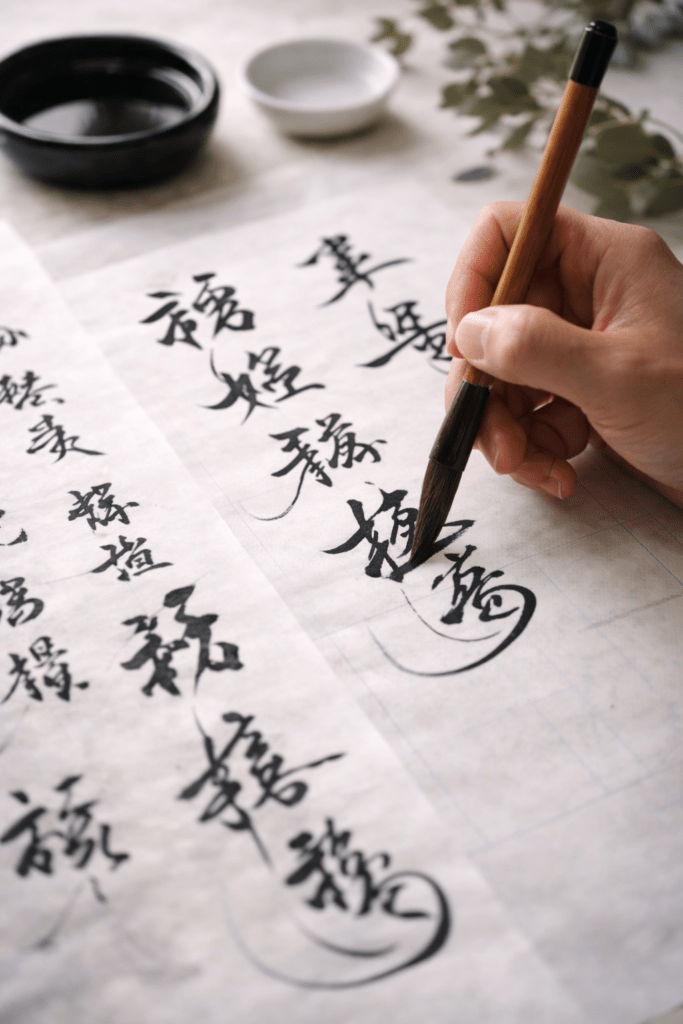
Others feel fluid, expressive, and personal.
This leads to a natural question:
What is the difference between ancient and modern calligraphy styles?
But this is not just about time.
👉 it is about purpose, function, and expression
Ancient styles were shaped by necessity and structure.
Modern styles are shaped by expression and individuality.
Understanding this difference helps you:
see calligraphy more clearly
choose what to practice
understand how styles evolved
👉 it connects history with your current learning
What Are “Ancient” Calligraphy Styles
Ancient styles refer to early forms of Chinese writing developed before standardization.
The main ancient styles include:
Zhuanshu (Seal Script)
Lishu (Clerical Script)
These styles were used in:
official inscriptions
government records
ceremonial writing
👉 their purpose was clarity, authority, and permanence
They emphasize:
form
structure
consistency
What Defines Ancient Styles
Ancient calligraphy is defined by:
strong structural rules
uniform stroke behavior
careful composition
Strokes are:
deliberate
controlled
less expressive
Characters often appear:
symmetrical
balanced
formal
👉 writing is about stability and order
There is little room for personal variation.
What Are “Modern” Calligraphy Styles
Modern styles refer to later developments that emphasize flexibility and expression.
The main modern styles include:
Kaishu (Regular Script)
Xingshu (Running Script)
Caoshu (Cursive Script)
These styles are used in:
daily writing
artistic expression
personal practice
👉 their purpose is communication and expression
They emphasize:
movement
flow
individual style
What Defines Modern Styles
Modern calligraphy is defined by:
flexible structure
varied stroke behavior
personal interpretation
Strokes can be:
connected
simplified
dynamic
Characters may appear:
fluid
rhythmic
expressive
👉 writing becomes movement and expression
There is more freedom.
Core Differences Between Ancient and Modern Styles
Purpose
Ancient styles:
used for formal communication
focused on clarity and authority
Modern styles:
used for both communication and art
focused on expression and individuality
Structure
Ancient styles:
highly structured
symmetrical
strict
Modern styles:
flexible
adaptive
less rigid
Stroke Behavior
Ancient styles:
uniform lines
minimal variation
Modern styles:
varied pressure
dynamic movement
Speed
Ancient styles:
slow
deliberate
Modern styles:
faster
more natural
Expression
Ancient styles:
limited expression
focused on form
Modern styles:
high expression
focus on rhythm and energy
👉 the shift is from form to expression
Why This Evolution Happened
Calligraphy evolved because of changing needs.
Ancient Times
Writing needed to be:
clear
official
permanent
This required:
structure
consistency
control
Later Periods
Writing became:
more frequent
more personal
This required:
efficiency
speed
flexibility
👉 function drove evolution
As writing became part of daily life, styles adapted.
How Ancient Styles Influence Modern Practice
Even though modern styles are more expressive, they still depend on ancient foundations.
Zhuanshu influences:
structure
symmetry
form awareness
Lishu influences:
stroke shape
horizontal balance
👉 ancient styles provide the foundation
Modern styles build on them.
Without understanding the past, modern expression becomes shallow.
How Modern Styles Extend Ancient Principles
Modern styles do not replace ancient ones.
They extend them.
Kaishu refines structure.
Xingshu introduces flow.
Caoshu explores freedom.
👉 they expand what calligraphy can do
This creates a full system.
Which Should You Learn First
For beginners:
start with Kaishu
It provides:
clear structure
strong foundation
Then:
study Lishu or Zhuanshu to understand origins
move to Xingshu for flow
explore Caoshu for expression
👉 learning should follow evolution
This creates stability.
Common Misunderstandings
Ancient Styles Are “Outdated”
They are not.
They are foundational.
Modern Styles Are “Better”
They are different, not better.
Each has its purpose.
Expression Means Lack of Structure
True expression requires strong structure.
👉 freedom is built on control
What This Comparison Teaches You
Calligraphy is not divided into old and new.
It is a continuous system.
Ancient styles teach:
form
discipline
structure
Modern styles teach:
flow
rhythm
expression
👉 both are necessary
Understanding both gives you depth.
FAQ
What are ancient calligraphy styles?
Zhuanshu and Lishu are the main ancient styles.
What are modern calligraphy styles?
Kaishu, Xingshu, and Caoshu.
Which is better to learn?
Start with Kaishu, then explore others.
Are ancient styles still used?
Yes, especially in art and design.
Why are modern styles more expressive?
Because they allow flexibility and movement.
Final Thought
Calligraphy did not jump from past to present.
It evolved.
From structure.
To clarity.
To flow.
To expression.
Ancient styles give you roots.
Modern styles give you movement.
You do not choose one over the other.
You learn both.
You understand both.
And over time, your writing reflects both.
Stable.
Controlled.
And alive.
Carrying the past forward—
into your own expression.
One stroke at a time.