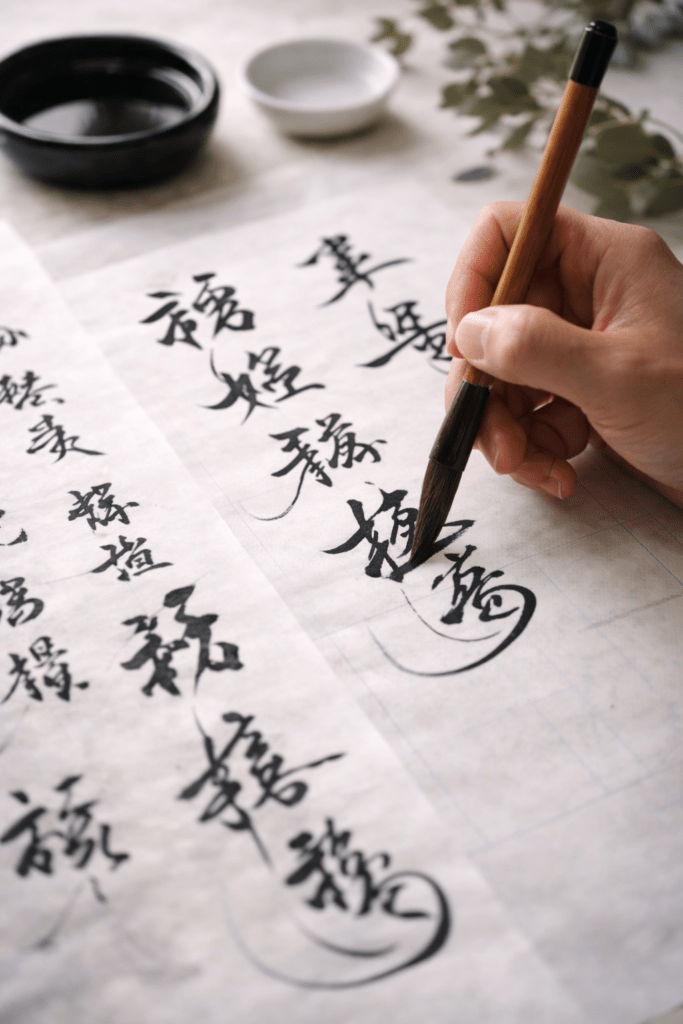
Style Aesthetic Differences: How Each Chinese Calligraphy Style Creates a Unique Visual Feeling and Artistic Experience
Why Aesthetic Differences Matter
When people first encounter calligraphy, they often react emotionally.
Some styles feel:
calm
balanced
ancient
Others feel:
dynamic
free
alive
This reaction is not random.
👉 it comes from aesthetic differences between styles
Each calligraphy style is not just a technical system.
It creates a distinct visual atmosphere.
Understanding these differences helps you:
recognize styles instantly
develop artistic sensitivity
choose styles that match your intention
👉 you begin to see calligraphy as visual language
What “Aesthetic Difference” Really Means
Aesthetic difference is how a style feels visually and emotionally.
It is created by:
structure
stroke behavior
movement
rhythm
These elements combine to produce:
visual weight
balance
energy
👉 aesthetics are the result of technique
They are not separate from structure.
They emerge from it.
The Aesthetic Spectrum of Calligraphy Styles
All major styles can be placed on a spectrum:
Zhuanshu → Lishu → Kaishu → Xingshu → Caoshu
This spectrum moves from:
formal → structured → balanced → flowing → expressive
👉 aesthetics evolve with movement and freedom
Understanding this spectrum helps you see relationships between styles.
Zhuanshu (Seal Script): Calm and Timeless
Zhuanshu creates a feeling of:
stillness
symmetry
formality
Its aesthetic comes from:
uniform lines
balanced structure
smooth curves
Characters appear:
quiet
refined
stable
👉 the beauty is in its harmony
There is no urgency.
No tension.
It feels timeless.
Lishu (Clerical Script): Grounded and Rhythmic
Lishu creates a feeling of:
weight
stability
rhythmic variation
Its aesthetic comes from:
wide structure
strong horizontal strokes
distinct endings
Characters appear:
firm
rooted
slightly decorative
👉 the beauty is in contrast and structure
There is movement within control.
Kaishu (Regular Script): Balanced and Clear
Kaishu creates a feeling of:
clarity
order
precision
Its aesthetic comes from:
balanced proportions
clean strokes
clear structure
Characters appear:
upright
stable
easy to read
👉 the beauty is in correctness
It feels disciplined and reliable.
Xingshu (Running Script): Flowing and Natural
Xingshu creates a feeling of:
movement
continuity
natural rhythm
Its aesthetic comes from:
connected strokes
smooth transitions
flexible structure
Characters appear:
fluid
lively
balanced
👉 the beauty is in flow
It feels like writing in motion.
Caoshu (Cursive Script): Expressive and Dynamic
Caoshu creates a feeling of:
energy
freedom
intensity
Its aesthetic comes from:
simplification
continuous motion
dynamic variation
Characters appear:
abstract
fast
powerful
👉 the beauty is in expression
It feels alive and spontaneous.
Comparing Aesthetic Qualities Across Styles
Stability
Zhuanshu: very stable
Lishu: grounded
Kaishu: balanced
Xingshu: flexible
Caoshu: dynamic
Movement
Zhuanshu: minimal
Lishu: controlled
Kaishu: moderate
Xingshu: flowing
Caoshu: intense
Expression
Zhuanshu: minimal
Lishu: subtle
Kaishu: restrained
Xingshu: moderate
Caoshu: strong
Visual Complexity
Zhuanshu: simple but refined
Lishu: structured with variation
Kaishu: clear and detailed
Xingshu: fluid and adaptive
Caoshu: abstract and complex
👉 aesthetics shift from calm to expressive
This progression defines the artistic experience.
Why These Aesthetic Differences Exist
Each style developed with a purpose.
Zhuanshu:
formal and symbolic
Lishu:
practical and structured
Kaishu:
standardized and clear
Xingshu:
efficient and natural
Caoshu:
expressive and artistic
👉 function shapes aesthetic
As purpose changes, appearance changes.
How to Use Aesthetic Differences in Practice
Choose Based on Intention
Ask yourself:
Do you want clarity?
Or expression?
Different styles serve different goals.
Observe Before Practicing
Study how each style looks and feels.
Notice differences.
Practice With Awareness
Adjust:
speed
pressure
movement
To match the style.
Do Not Mix Aesthetics
Each style has its own identity.
Mixing them reduces clarity.
👉 consistency creates stronger visual impact
Common Mistakes
Focusing Only on Technique
Ignoring how the style feels.
Mixing Aesthetic Elements
Using expressive strokes in structured styles.
Chasing Expression Too Early
Without structure, expression becomes chaotic.
Ignoring Visual Balance
Aesthetic quality depends on balance.
👉 awareness improves artistic quality
What Understanding Aesthetics Feels Like
When you understand aesthetic differences:
you recognize styles instantly
your writing becomes more intentional
your practice becomes more refined
You begin to feel:
how a style should look
how it should move
This is important.
Because calligraphy is both technical and artistic.
How Aesthetic Awareness Improves Skill
Understanding aesthetics helps you:
write more consistently
avoid stylistic confusion
develop personal style
👉 it connects technique with expression
Without it, writing remains mechanical.
FAQ
What are aesthetic differences in calligraphy?
They are the visual and emotional qualities of each style.
Why do styles feel different?
Because of differences in structure, stroke behavior, and movement.
Which style is most expressive?
Caoshu is the most expressive.
Which style is most stable?
Zhuanshu and Kaishu are the most stable.
How do I learn aesthetics?
By observing, practicing, and comparing styles.
Final Thought
Each calligraphy style has a voice.
Some are quiet.
Some are structured.
Some are flowing.
Some are free.
You do not just learn how to write them.
You learn how to feel them.
To see their differences.
To understand their character.
And over time, your writing reflects that awareness.
Not just correct—
but expressive.
Not just structured—
but alive.
One style at a time.