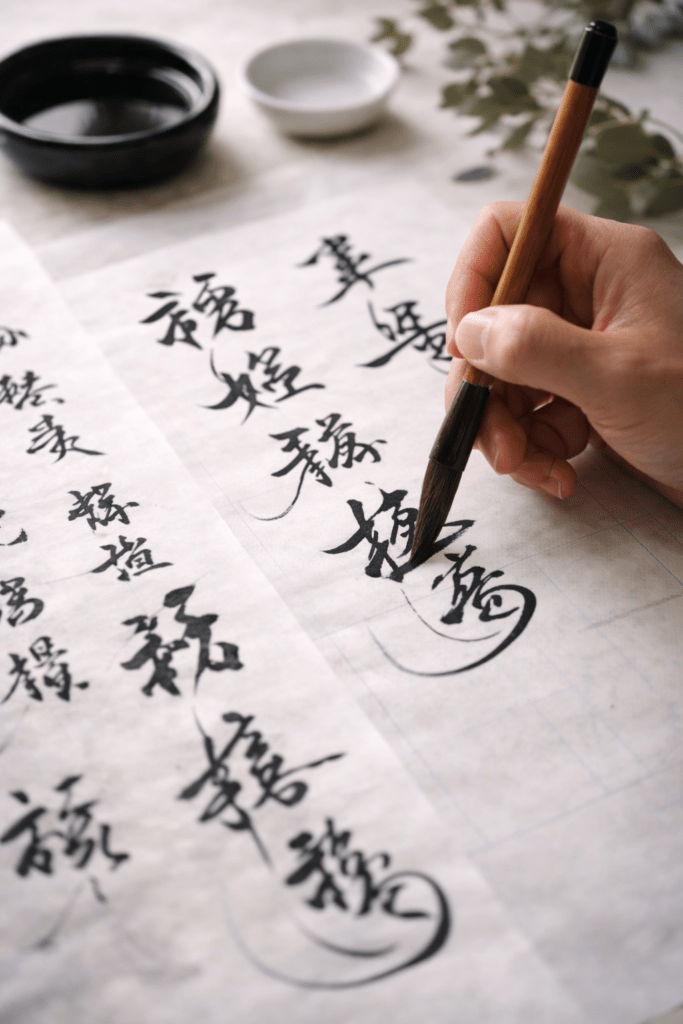
Style Characteristics: A Complete Guide to Understanding the Unique Traits of Each Chinese Calligraphy Style
Why Style Characteristics Matter
When learning calligraphy, many beginners focus on copying shapes.
They try to imitate how characters look.
But without understanding characteristics, this leads to confusion.
Because each calligraphy style is not just a visual form.
👉 it is a system of rules, behaviors, and intentions
Style characteristics define:
how strokes are written
how characters are structured
how movement is expressed
Understanding these characteristics allows you to:
recognize styles instantly
practice more accurately
develop deeper control
👉 you stop copying and start understanding
What “Style Characteristics” Really Means
A calligraphy style is defined by consistent traits across:
structure
stroke behavior
movement
rhythm
These traits create a recognizable identity.
For example:
some styles are structured and stable
others are fluid and expressive
👉 characteristics are the DNA of a style
Without them, styles lose their meaning.
The Five Core Styles and Their Characteristics
Each major calligraphy style has distinct characteristics.
Understanding them is essential.
Zhuanshu (Seal Script)
Structure:
symmetrical
balanced
geometric
Stroke Behavior:
uniform thickness
rounded lines
smooth transitions
Movement:
slow
steady
continuous
Rhythm:
even
calm
👉 Zhuanshu emphasizes form and harmony
It is precise and controlled.
Lishu (Clerical Script)
Structure:
wide and flat
horizontal emphasis
Stroke Behavior:
flattened strokes
distinctive flared endings
Movement:
deliberate
measured
Rhythm:
steady
grounded
👉 Lishu emphasizes structure and stroke shape
It introduces stylistic variation.
Kaishu (Regular Script)
Structure:
balanced
proportional
clear
Stroke Behavior:
defined beginnings and endings
controlled pressure
Movement:
slow to moderate
precise
Rhythm:
consistent
disciplined
👉 Kaishu emphasizes clarity and control
It is the foundation of all styles.
Xingshu (Running Script)
Structure:
flexible
adaptive
Stroke Behavior:
connected strokes
reduced separation
Movement:
continuous
flowing
Rhythm:
dynamic
natural
👉 Xingshu emphasizes flow and connection
It balances structure and freedom.
Caoshu (Cursive Script)
Structure:
implicit
highly flexible
Stroke Behavior:
merged strokes
extreme simplification
Movement:
fast
continuous
Rhythm:
intense
expressive
👉 Caoshu emphasizes expression and energy
It is the most dynamic style.
Comparing Key Characteristics Across Styles
Structure
Zhuanshu: highly structured
Lishu: structured but stylized
Kaishu: strictly structured
Xingshu: flexible
Caoshu: minimal visible structure
Stroke Behavior
Zhuanshu: uniform
Lishu: flat with endings
Kaishu: controlled variation
Xingshu: connected
Caoshu: merged
Movement
Zhuanshu: slow
Lishu: steady
Kaishu: controlled
Xingshu: flowing
Caoshu: rapid
Rhythm
Zhuanshu: calm
Lishu: grounded
Kaishu: consistent
Xingshu: dynamic
Caoshu: expressive
👉 characteristics shift from stability to freedom
This progression defines calligraphy.
Why These Characteristics Exist
Each style developed to solve a problem.
Zhuanshu:
visual clarity and symmetry
Lishu:
writing efficiency
Kaishu:
standardization
Xingshu:
natural movement
Caoshu:
expressive freedom
👉 characteristics are functional, not random
Understanding this gives deeper insight.
How to Use Style Characteristics in Practice
Identify Before You Practice
Know the characteristics of the style.
Do not mix them.
Focus on One Style at a Time
Each style requires different behavior.
Switching too often creates confusion.
Practice According to Characteristics
Adjust:
speed
pressure
movement
Based on the style.
Observe and Compare
Study examples.
Notice how characteristics appear in real writing.
👉 awareness improves accuracy
Common Mistakes
Mixing Styles
Using Kaishu structure with Xingshu movement.
This creates inconsistency.
Ignoring Stroke Behavior
Writing strokes incorrectly for the style.
Focusing Only on Appearance
Copying shapes without understanding movement.
Rushing Practice
Not adapting to the style’s rhythm.
👉 each style requires its own mindset
What Mastery of Characteristics Feels Like
When you understand style characteristics:
you recognize styles instantly
your writing becomes consistent
your practice becomes focused
There is clarity.
There is direction.
Your writing reflects the style correctly.
This is essential.
Because calligraphy is not random expression.
It is structured expression.
FAQ
What are calligraphy style characteristics?
They are the defining traits of each style, including structure, stroke behavior, and movement.
Why are characteristics important?
They help you understand and practice styles correctly.
How many main styles are there?
Five: Zhuanshu, Lishu, Kaishu, Xingshu, and Caoshu.
Can styles be mixed?
Not at the beginner level. Learn them separately first.
How do I learn characteristics?
Study examples and practice with awareness.
Final Thought
Each calligraphy style has its own identity.
Its own rules.
Its own movement.
Its own rhythm.
You do not approach them the same way.
You adapt.
You observe.
You understand.
And over time, your writing reflects that understanding.
Not confused.
Not mixed.
But clear.
Intentional.
True to the style.
One stroke at a time.