Xingshu Explained: Complete Guide to Running Script (Flow, Structure, and Practice)
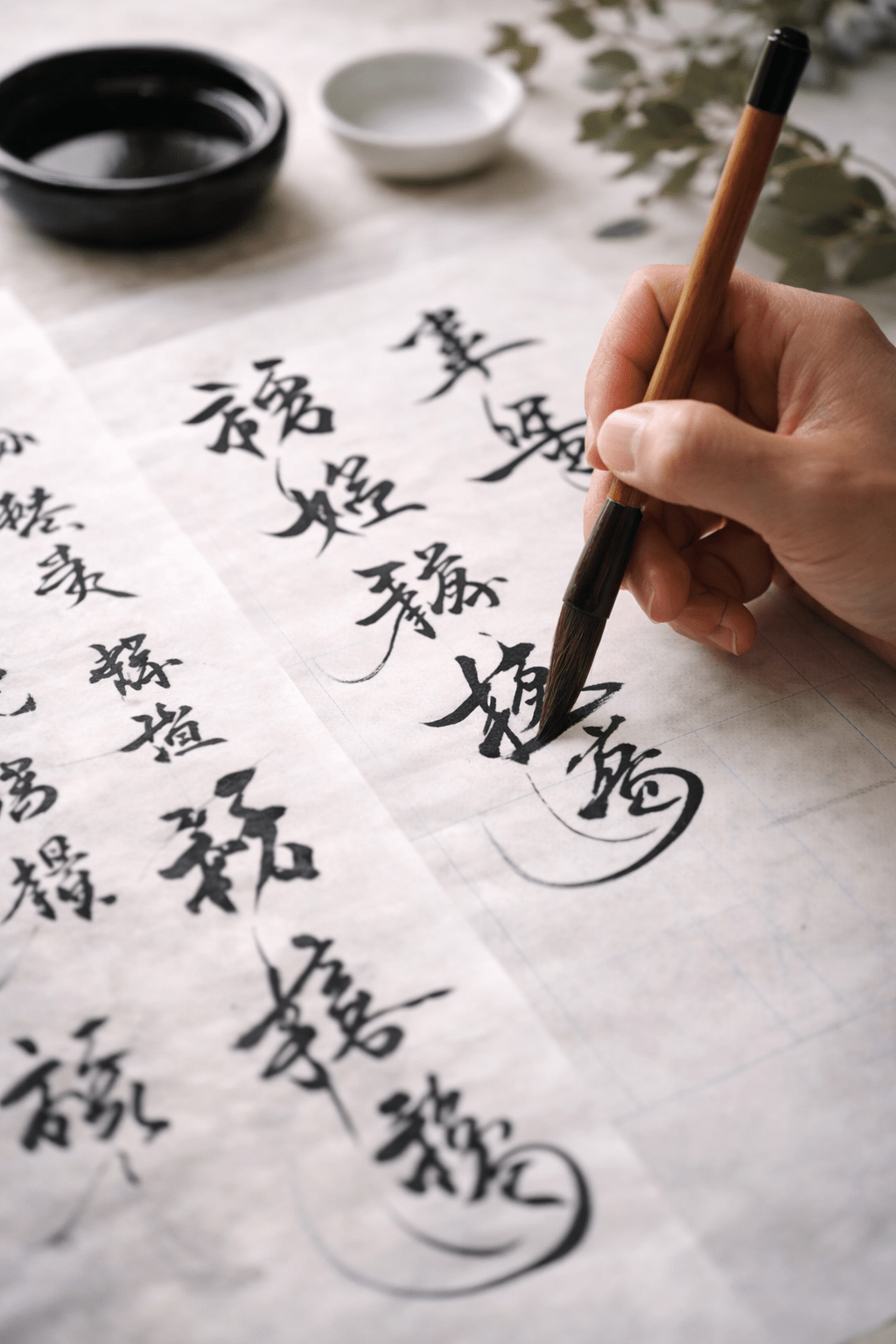
When Calligraphy Starts to Move
At some point in practice—
something changes.
Your strokes become less rigid.
Your hand moves more naturally.
You stop thinking about every line—
and start feeling it.
This is where Xingshu begins.
Not in theory.
Not in rules.
But in movement.
Xingshu (行书), or Running Script, is where calligraphy transitions from:
👉 structure → flow
If Kaishu teaches you how to write—
👉 Xingshu teaches you how to move.
If you’re starting from the foundation, read first →
kaishu explained
What Is Xingshu (Running Script)?
Xingshu is a semi-cursive style of Chinese calligraphy.
It sits between:
- Kaishu (structured)
- Caoshu (free)
In simple terms:
👉 Xingshu is controlled freedom
It allows:
- smoother transitions
- connected strokes
- natural rhythm
While still maintaining:
- readability
- structure
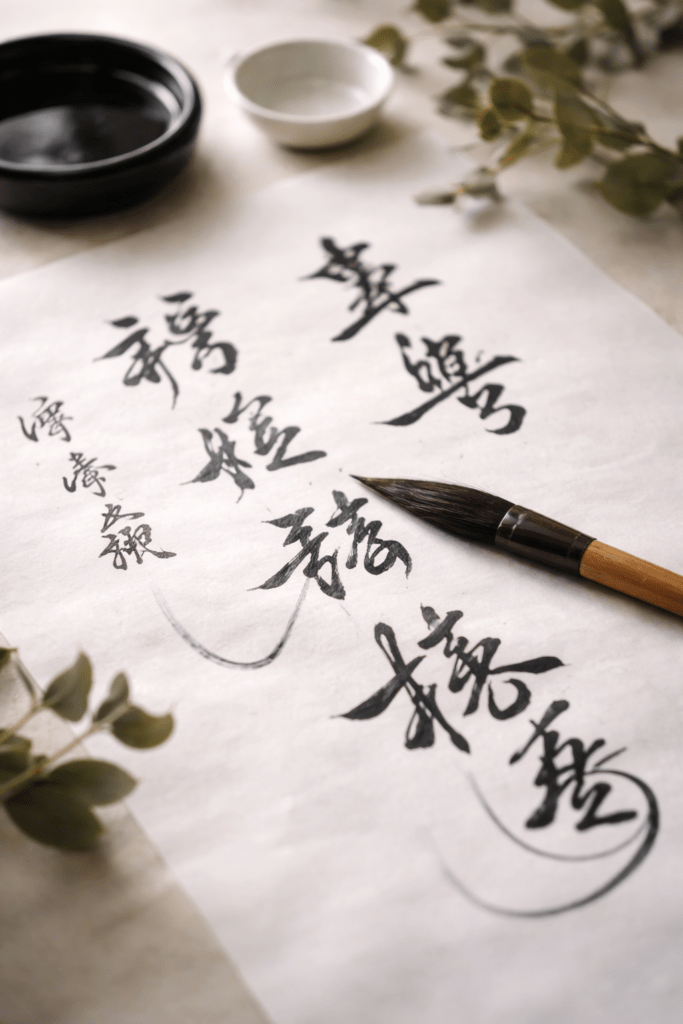
Why Xingshu Feels So Natural
Unlike Kaishu—
which requires strict control—
Xingshu allows:
👉 your hand to follow momentum
What changes:
- strokes begin to connect
- movements become continuous
- rhythm becomes visible
Instead of:
👉 writing stroke by stroke
You begin:
👉 writing as a flow
Key Characteristics of Xingshu
To understand Xingshu—
you need to see what defines it.
1. Connected Strokes
Some strokes merge together.
This creates:
- speed
- continuity
2. Simplified Forms
Certain strokes are shortened or combined.
3. Natural Rhythm
Writing becomes:
- less mechanical
- more expressive
4. Balance Between Control and Freedom
👉 Not too rigid
👉 Not too loose
👉 Learn structure first →
kaishu foundation
Xingshu vs Kaishu (Important Comparison)
Kaishu:
- clear
- slow
- structured
Xingshu:
- smooth
- faster
- flowing
👉 If Kaishu is walking—
👉 Xingshu is gliding
Xingshu vs Caoshu
Xingshu:
- readable
- controlled
Caoshu:
- abstract
- expressive
👉 Xingshu is the bridge between them
Why You Should Learn Xingshu
Many people stop at Kaishu.
But that’s only half the journey.
Xingshu gives you:
- fluidity
- personal style
- expressive movement
It transforms:
👉 writing → expression
How to Practice Xingshu (Step-by-Step)
Step 1: Strong Kaishu Foundation
👉 kaishu explained
Step 2: Study Stroke Connections
Observe how strokes link together.
Step 3: Copy Master Works
This is essential.
It trains:
- rhythm
- spacing
- flow
Step 4: Practice Slowly
Even though it’s “running script”—
👉 don’t rush
Step 5: Build Daily Flow Practice
👉 calligraphy practice routine
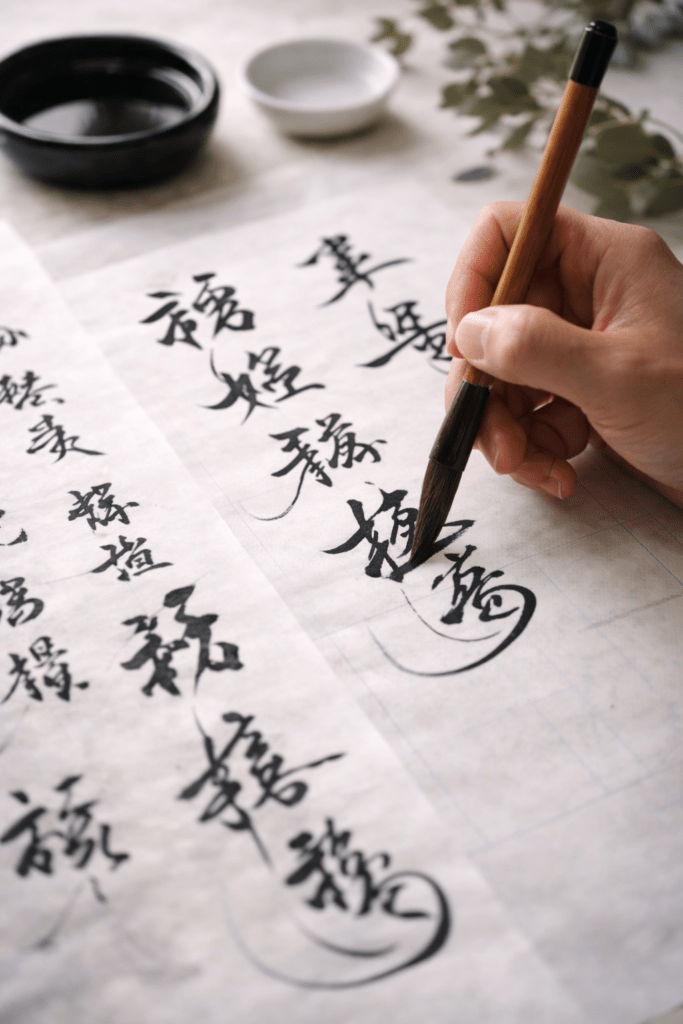
Common Xingshu Mistakes
❌ Writing Too Fast
Flow is not speed.
❌ Losing Structure
Without structure → chaos
❌ Over-connecting Strokes
Too much connection reduces clarity
❌ Skipping Kaishu
This is the biggest mistake
👉 Avoid mistakes →
common calligraphy mistakes
Famous Xingshu Masters
Wang Xizhi (王羲之)
👉 The greatest master of running script
- natural flow
- elegant movement
Zhao Mengfu (赵孟頫)
- smooth
- refined
- balanced
👉 Explore more →
calligraphy masters
The Feeling of Xingshu (What Makes It Special)
This is what most guides don’t explain.
Xingshu is not just a style.
It is a feeling.
When done well:
- strokes feel continuous
- movement feels effortless
- writing feels alive
You are no longer:
👉 controlling the brush
You are:
👉 moving with it
Xingshu and Mindfulness
Something subtle happens here.
Your attention shifts from:
👉 “getting it right”
to:
👉 “feeling the movement”
This is why Xingshu connects deeply with
mindfulness practice
How Long Does It Take to Learn Xingshu?
- 2–4 weeks → basic understanding
- 2–3 months → visible flow
- 6+ months → natural rhythm
👉 But only if your Kaishu is solid
FAQ
What is Xingshu in Chinese calligraphy?
Xingshu is a semi-cursive style that balances structure and flow.
Is Xingshu hard to learn?
It is easier than cursive but requires a strong foundation in Kaishu.
Can beginners start with Xingshu?
Not recommended. Start with Kaishu first.
Why does Xingshu look smoother?
Because strokes are connected and written with continuous movement.
What is the difference between Xingshu and Caoshu?
Xingshu is readable and controlled, while Caoshu is highly abstract and expressive.
Final Reflection: When Writing Becomes Movement
At the beginning—
you learn to control every stroke.
To follow rules.
To build structure.
But eventually—
something softens.
Your hand stops resisting.
Your strokes begin to connect.
Your writing begins to flow.
That’s Xingshu.
Not forced.
Not rigid.
But natural.
It’s the moment where calligraphy becomes movement.
And once you feel it—
you don’t go back.
