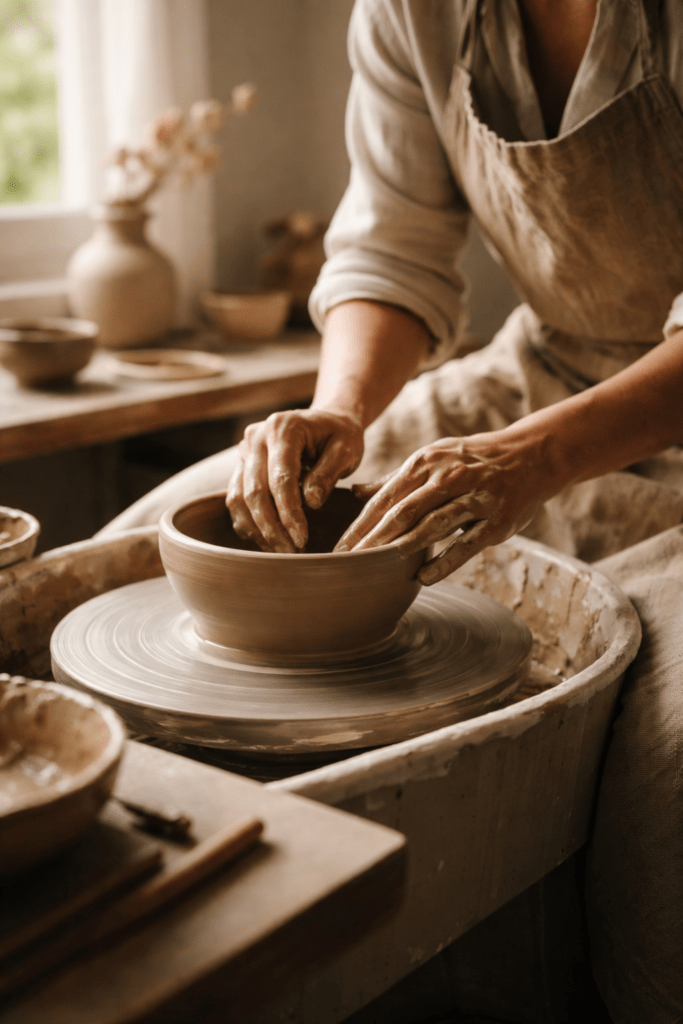
Benefits of Crafting: How Making Things by Hand Improves Your Mind, Focus, and Daily Life
Why Crafting Feels Good — Even If You Don’t Understand Why
You don’t need to be skilled to feel it.
Even the first time you sit down and make something—
cutting paper, shaping clay, or working with simple materials—
something changes.
Your breathing slows.
Your thoughts soften.
Your attention settles.
It’s subtle.
But noticeable.
And that’s when people begin to ask:
Why does crafting feel so good?
What exactly does it do?
The answer is deeper than most expect.
Because crafting doesn’t just produce objects.
It produces internal change.
Crafting Reduces Mental Noise
One of the most immediate benefits of crafting is this:
It quiets the mind.
Modern thinking is often fast and repetitive.
Thoughts loop.
Attention jumps.
Craft interrupts that pattern.
When your hands are engaged:
- Your focus narrows
- Your mind stops jumping
- Your thoughts slow down
You don’t have to force calm.
It happens naturally.
Crafting Improves Focus and Attention
Crafting trains attention in a very specific way.
Instead of switching between multiple things, you focus on one:
- One movement
- One material
- One step
This strengthens your ability to concentrate.
Over time, this carries into other areas of life.
You become more:
- Patient
- Attentive
- Present
Focus becomes easier.
Crafting Reduces Stress and Anxiety
Many people turn to crafting during stressful periods.
Not because it solves external problems—
but because it changes internal state.
The combination of:
- Physical movement
- Repetition
- Attention
helps regulate the nervous system.
You feel:
- Less tense
- Less overwhelmed
- More grounded
Craft becomes a quiet way to reset.
Crafting Encourages Mindfulness Without Effort
Mindfulness is often described as “being present.”
But for many people, sitting still and focusing on breathing feels difficult.
Craft offers another path.
When you are fully engaged in making something:
- You are not thinking about the past
- You are not worrying about the future
You are simply:
doing
This is mindfulness in action.
Not forced.
Not structured.
Natural.
Crafting Builds Patience
In crafting, nothing happens instantly.
Every result comes from:
- Time
- Repetition
- Adjustment
This builds patience.
You learn to:
- Accept slow progress
- Stay with the process
- Continue without rushing
Over time, this changes how you approach challenges.
You become more steady.
Less reactive.
Crafting Develops Problem-Solving Skills
Every craft involves small decisions:
- How to shape something
- How to fix mistakes
- How to improve results
These decisions develop problem-solving ability.
But in a different way than abstract thinking.
It is practical.
Hands-on.
You learn by doing.
And this builds confidence in your ability to handle uncertainty.
Crafting Creates a Sense of Accomplishment
Even a small finished piece creates satisfaction.
Because you can see it.
Hold it.
Recognize your effort.
This is different from many modern tasks, where results are:
- Invisible
- Temporary
- Abstract
Craft provides a clear sense of completion.
And that feels good.
Crafting Strengthens Emotional Balance
Craft can help regulate emotions.
When you are overwhelmed, anxious, or restless—
working with your hands creates stability.
It gives your mind something steady to return to.
Instead of reacting to emotions, you:
- Observe
- Engage
- Continue
This creates emotional balance over time.
Crafting Supports Creativity Without Pressure
Creativity in craft is not about producing something extraordinary.
It is about exploring.
Trying.
Adjusting.
You are free to:
- Experiment
- Make mistakes
- Change direction
This removes pressure.
And allows creativity to emerge naturally.
Crafting Improves Hand-Eye Coordination
On a physical level, crafting improves coordination.
You learn to:
- Control movement
- Adjust pressure
- Refine precision
These small improvements accumulate.
And enhance overall motor skills.
Crafting Creates a Healthy Routine
Craft can become a daily practice.
Not something intense—
but something consistent.
Even 10–20 minutes a day can create:
- Stability
- Rhythm
- Structure
This helps balance a chaotic or busy lifestyle.
Crafting Helps You Disconnect From Screens
Modern life involves constant screen use.
Craft provides an alternative.
A space where:
- There are no notifications
- No scrolling
- No digital noise
This break is important.
It allows your mind to reset.
And your attention to recover.
Crafting Builds Long-Term Satisfaction
Unlike quick entertainment, crafting creates lasting satisfaction.
Because:
- It requires effort
- It involves progress
- It produces something real
This creates a deeper sense of fulfillment.
Not instant—
but meaningful.
Crafting Connects You to the Present Moment
At its core, crafting is about presence.
You cannot rush it.
You cannot fully automate it.
You must be there.
With your hands.
With your attention.
And in that moment—
everything else becomes quieter.
Common Misunderstandings About Crafting Benefits
Some people think crafting is just a hobby.
But it offers real mental and emotional benefits.
Others believe it requires talent.
But benefits come from practice, not skill level.
Some assume crafting is not productive.
But it produces both tangible results and internal change.
Understanding these points helps you approach crafting differently.
How to Experience These Benefits Yourself
You don’t need to analyze everything.
You only need to start.
Choose a simple craft.
Set aside a small amount of time.
Focus on the process.
Let the experience unfold.
The benefits will become clear through practice.
FAQ
What are the benefits of crafting?
Crafting improves focus, reduces stress, builds patience, and creates a sense of accomplishment.
Is crafting good for mental health?
Yes, crafting can help reduce anxiety, improve mood, and support emotional balance.
How often should I craft to see benefits?
Even short daily sessions of 10–20 minutes can produce noticeable benefits over time.
Can beginners experience these benefits?
Yes, benefits begin from the very first experience, regardless of skill level.
Why does crafting help with stress?
Because it engages attention, creates rhythm, and reduces mental overload.
Final Reflection
The benefits of crafting are not loud.
They are quiet.
A calmer mind.
A steadier focus.
A slower rhythm.
These changes do not happen instantly.
But they happen naturally.
Without force.
Without pressure.
You don’t need to master anything.
You only need to begin.
And allow your hands—
to guide your attention
back to the present.
