Craft for Beginners: A Complete Guide to Start Crafting with Confidence and Calm
Why Starting Craft Feels Harder Than It Should
At first, crafting seems simple.
You see someone making something by hand—
a small object, a quiet process—and it feels approachable.
You think:
“I can try that.”
But when you actually begin—
something changes.
You don’t know what to choose.
You don’t know what tools to use.
You don’t know where to start.
And slowly, excitement turns into hesitation.
This is where most beginners stop.
Not because crafting is difficult—
but because the starting point is unclear.
Craft is simple.
But starting is not always simple.
This guide is here to remove that friction.
To help you begin—clearly, calmly, and without confusion.
What Craft Means for a Beginner
As a beginner, it’s important to understand one thing clearly:
Craft is not about making something perfect.
It is about:
- Using your hands
- Working with materials
- Paying attention to the process
You are not trying to create something impressive.
You are learning how to:
- Focus
- Repeat
- Improve
Craft is a practice.
Not a performance.
The Biggest Mistake Beginners Make
Most beginners approach craft the wrong way.
They focus on results.
They want:
- A perfect outcome
- A fast result
- A beautiful object
But this creates pressure.
And pressure leads to frustration.
The correct approach is different.
You focus on the process.
You allow mistakes.
You learn by doing.
This shift changes everything.
How to Choose Your First Craft
Choosing your first craft is not about what is “best.”
It is about what is simple enough to start.
Ask yourself three questions:
Do I want something easy?
Do I want something calming?
Do I want something creative?
Based on that, you can choose:
Paper craft if you want something simple and accessible
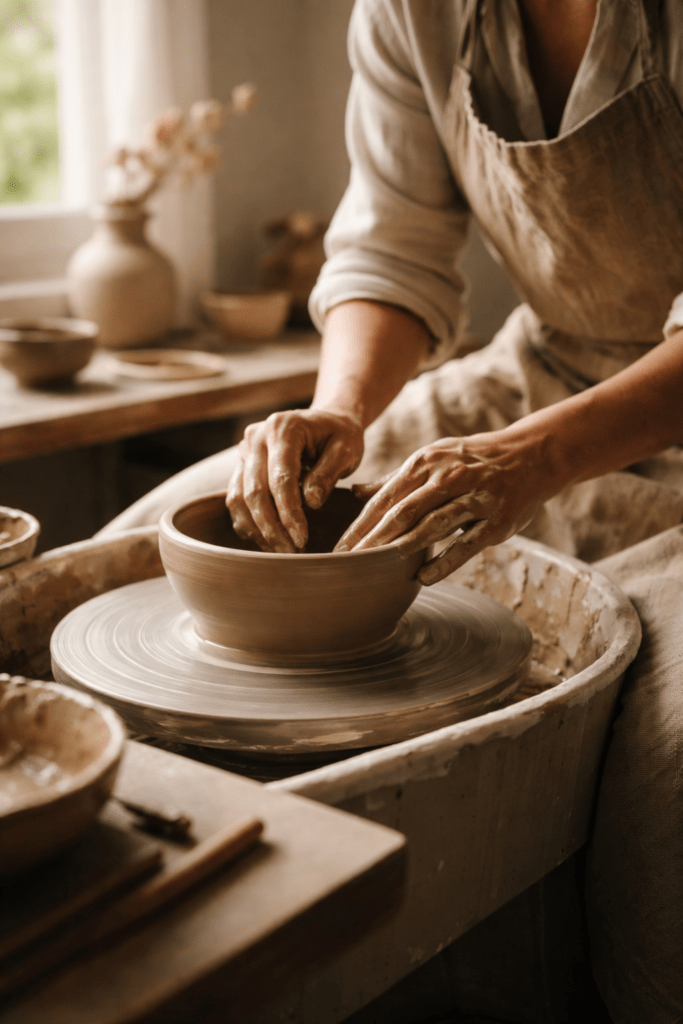
Clay craft if you want something physical and grounding
Textile craft if you want something repetitive and calming
DIY craft if you want something flexible and creative
The goal is not to choose perfectly.
The goal is to begin.
Start Small (This Matters More Than You Think)
Beginners often start too big.
They try complex projects.
They buy too many tools.
They expect too much.
This leads to overwhelm.
Instead, start small.
Very small.
One material.
One simple action.
For example:
- Folding paper
- Shaping clay
- Making a simple object
Small beginnings build confidence.
And confidence keeps you going.
Basic Tools You Actually Need
You do not need a full setup.
You do not need expensive tools.
You only need the basics.
For most beginner crafts, this includes:
- A simple working surface
- Basic tools (scissors, knife, or hands)
- One type of material
That’s enough.
More tools do not make you better.
Practice does.
Creating a Simple Craft Space
Your environment matters.
Not because it needs to be perfect—
but because it affects your attention.
A good beginner setup is:
- Clean
- Quiet
- Comfortable
- Well-lit
You don’t need a studio.
A small table is enough.
The goal is to create a space where your mind can settle.
The Right Way to Practice Craft
Practice is not about repeating perfectly.
It is about repeating attentively.
When you craft:
Pay attention to your hands
Notice how the material responds
Move slowly
Do not rush.
Do not multitask.
Do not distract yourself.
Craft works best when your attention is fully present.
What You Should Expect in the Beginning
Your first attempts will not be good.
This is normal.
You may feel:
- Frustrated
- Slow
- Unsure
But this is part of the process.
Skill develops gradually.
Every small action builds familiarity.
Every repetition builds confidence.
You are not failing.
You are learning.
How Craft Helps Your Mind (Even as a Beginner)
One of the most surprising things beginners notice is this:
Craft changes how they feel.
When you focus on making something:
- Your thoughts slow down
- Your breathing becomes steady
- Your attention stabilizes
This is why many people use craft to:
- Reduce stress
- Calm anxiety
- Improve focus
You are not just learning a skill.
You are training your attention.
Common Beginner Mistakes to Avoid
Trying to be perfect
Starting with complex projects
Buying too many tools
Comparing yourself to others
Giving up too quickly
All of these come from the same issue:
Expecting too much, too soon.
Instead:
Keep it simple.
Stay consistent.
Allow yourself to improve gradually.
How to Stay Consistent
Consistency is more important than intensity.
You don’t need long sessions.
You need regular ones.
Start with:
10–20 minutes per day
At the same time
In the same space
This creates a rhythm.
Over time, crafting becomes natural.
Not something you force—
but something you return to.
When to Move to the Next Level
Many beginners ask:
“When should I try something harder?”
The answer is simple:
When the current level feels comfortable.
Not perfect.
Comfortable.
You should feel:
- Familiar with the material
- Confident with basic actions
- Curious to explore more
That’s the right moment to grow.
The Deeper Value of Craft for Beginners
Craft is not just about making things.
It is about changing how you engage with the world.
You move from:
- Consuming → Creating
- Rushing → Slowing down
- Thinking → Doing
This shift is subtle.
But powerful.
A Simple Beginner Routine
If you want a clear starting point, follow this:
Choose one craft
Set up a small space
Work for 10–20 minutes
Focus on the process
Repeat daily
That’s enough.
No complexity needed.
FAQ
What is the best craft for beginners?
Paper craft is often the easiest because it requires minimal tools and materials.
Do I need talent to start crafting?
No. Craft is learned through practice, not talent.
How long does it take to get good at crafting?
It depends on consistency, but improvement can be seen within weeks of regular practice.
Is crafting expensive?
It can be very low-cost if you start with simple materials and basic tools.
Why does crafting feel relaxing?
Because it focuses your attention and reduces mental noise.
Final Reflection
You don’t need to be ready.
You don’t need to be skilled.
You don’t need the perfect setup.
You only need to begin.
One small action.
One quiet moment.
And your hands will learn.
Your mind will follow.
And slowly—
what once felt difficult
becomes natural.
Craft does not ask you to be perfect.
It only asks you to show up.
And start.
