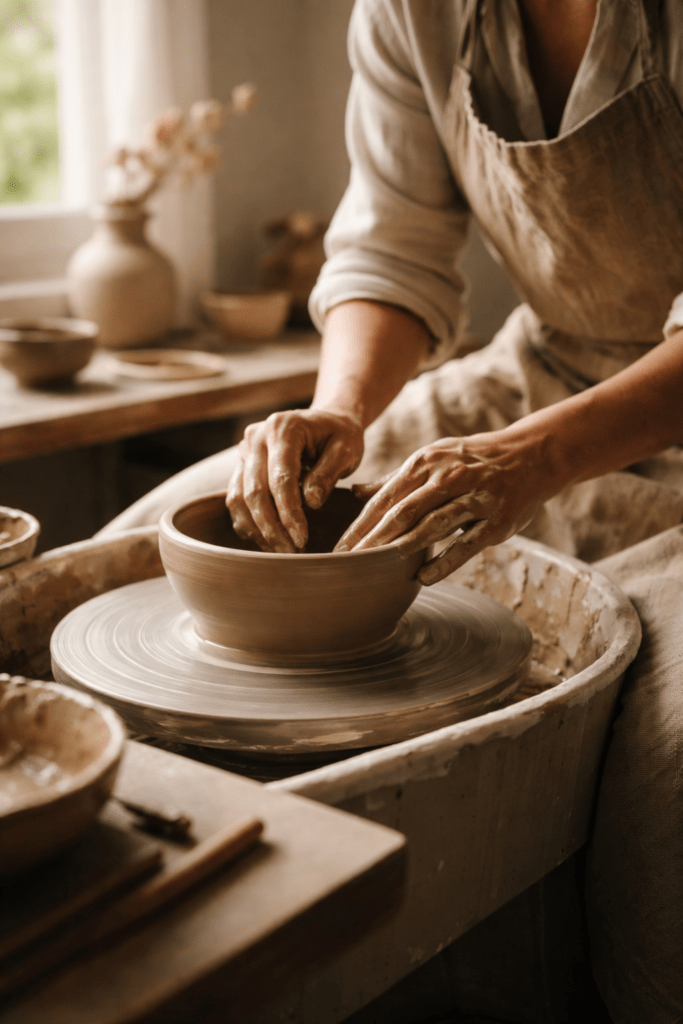
Craft Culture: Understanding the Meaning, Traditions, and Modern Evolution of Craft
Why Craft Is More Than Just Making Things
At first glance, craft seems simple.
You use your hands.
You create something.
But if you look deeper, you begin to notice something else.
Craft is not just about making.
It’s about:
- How people live
- How they express meaning
- How they connect to materials, time, and place
Every handmade object carries something invisible.
A rhythm.
A habit.
A way of seeing the world.
That is craft culture.
What Craft Culture Really Means
Craft culture is:
👉 The values, traditions, and practices behind making things by hand
It includes:
- Techniques passed through generations
- Ways of working with materials
- Ideas about beauty and function
- The relationship between maker and object
Craft is not isolated.
It exists inside culture.
And it reflects it.
The Origins of Craft Culture
Before machines, everything was crafted.
Clothing.
Tools.
Homes.
Daily objects.
Craft was not a hobby.
It was life.
People learned by:
- Watching
- Practicing
- Repeating
Knowledge was passed directly.
From hand to hand.
From generation to generation.
This created deep traditions.
Craft as Tradition
In many cultures, craft is still tied to tradition.
Not just as technique—
but as identity.
For example:
Certain patterns represent regions
Certain methods define communities
Certain materials reflect local environments
Craft becomes a way of preserving history.
Not through words—
but through practice.
The Role of the Craftsperson
In traditional craft culture, the maker is not separate from the work.
There is no distance.
The craftsperson:
- Understands the material deeply
- Works with patience
- Develops skill over time
The goal is not speed.
It is mastery.
And mastery comes slowly.
Craft and Time
One of the defining features of craft culture is time.
Craft is slow.
Not because it has to be—
but because it allows:
- Precision
- Attention
- Presence
Time is not something to reduce.
It is something to work with.
This is very different from modern production.
The Shift to Industrial Production
With machines, everything changed.
Objects became:
- Faster to produce
- Cheaper
- More consistent
Craft became less necessary.
And more optional.
In many places, it shifted from:
👉 Daily necessity
to
👉 Personal choice
But something was also lost.
What Was Lost (And What Remains)
Industrial production removed:
- The direct connection between maker and object
- The variation and uniqueness of handmade work
- The rhythm of slow creation
But craft did not disappear.
It adapted.
It became:
- Artistic
- Personal
- Intentional
The Modern Craft Movement
Today, craft is returning.
But in a different form.
People are drawn to craft because it offers:
- A break from digital life
- A slower pace
- A sense of control
- A connection to something real
Craft is no longer about survival.
It is about experience.
Craft as Personal Expression
Modern craft is often individual.
People use it to:
- Express creativity
- Explore ideas
- Create meaning
There are no strict rules.
No fixed traditions.
This creates freedom.
But also responsibility.
You choose how you create.
Craft and Identity
Craft can also become part of identity.
What you make reflects:
- Your taste
- Your attention
- Your way of thinking
Over time, your work becomes recognizable.
Not because it is perfect—
but because it is consistent.
Craft and Community
Even though crafting is often done alone, it is not isolated.
There are communities:
- Online
- Local
- Cultural
People share:
- Techniques
- Ideas
- Inspiration
This creates connection.
Through making.
Craft and Mindfulness
One reason craft is valued today is its effect on the mind.
It encourages:
- Focus
- Presence
- Calm attention
When you work with your hands:
- Thoughts slow down
- Awareness increases
- Distraction decreases
Craft becomes more than activity.
It becomes experience.
The Balance Between Tradition and Innovation
Modern craft exists between two forces:
Tradition
Innovation
Some people preserve traditional methods.
Others explore new ideas.
Both are valid.
Craft evolves by balancing:
- What has been done
- What can be done
The Value of Handmade Work Today
In a world of mass production, handmade work stands out.
Not because it is perfect—
but because it is human.
It shows:
- Effort
- Time
- Attention
These qualities cannot be replicated by machines.
Common Misunderstandings About Craft Culture
Thinking craft is outdated
Seeing craft as only a hobby
Ignoring its cultural depth
Focusing only on results, not process
Craft is not limited.
It is layered.
How to Connect With Craft Culture
You don’t need to study history deeply.
You can connect through practice.
Pay attention to:
- How you work
- What you choose
- How you feel
Notice the process.
That is where culture exists.
FAQ
What is craft culture?
It is the traditions, values, and practices behind handmade work.
Why is craft important in culture?
It reflects history, identity, and the relationship between people and materials.
Is craft still relevant today?
Yes. It offers a slower, more intentional alternative to mass production.
What is the difference between traditional and modern craft?
Traditional craft follows established methods, while modern craft often focuses on personal expression.
How can I experience craft culture?
By practicing craft with attention and understanding its deeper meaning.
Final Reflection
Craft culture is not something separate.
It is not something distant.
It is something you enter—
when you begin to make.
When you slow down.
When you pay attention.
When you work with your hands.
You become part of it.
Not through knowledge—
but through experience.
And in that process—
something simple becomes meaningful.
