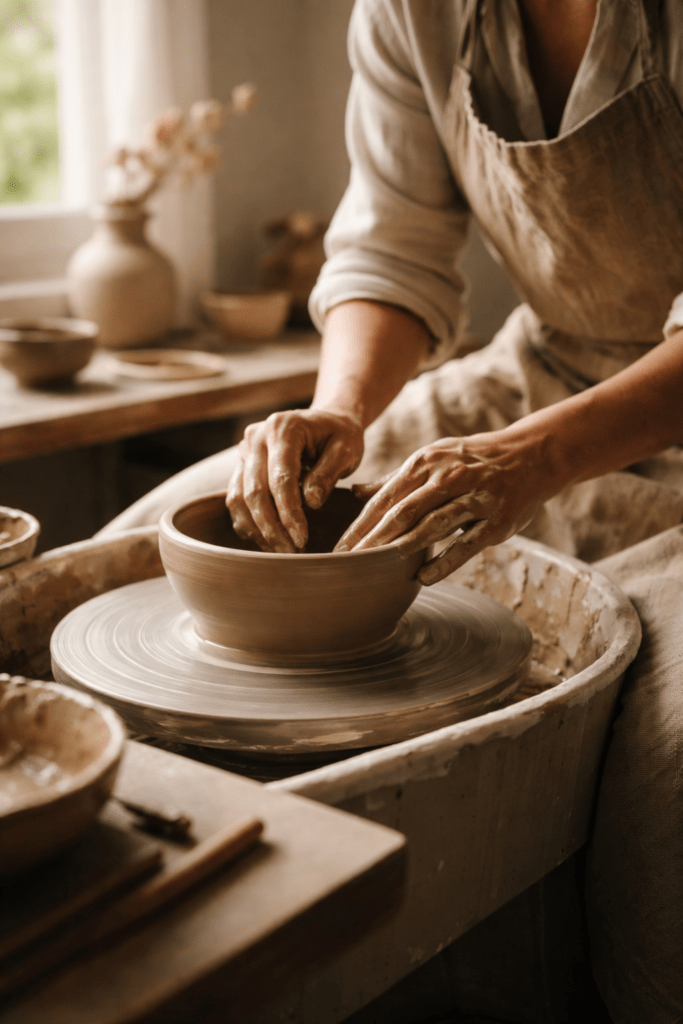
Craft Learning Path: A Clear Roadmap for Beginners to Improve Step by Step
Why Most People Feel Lost When Learning Craft
Many beginners don’t struggle because craft is difficult.
They struggle because they don’t know:
👉 What to do next
They try random tutorials.
They switch between projects.
They start and stop repeatedly.
There is no direction.
And without direction, even simple progress feels confusing.
The problem is not effort.
It’s lack of structure.
What you need is not more information.
You need a path.
What a Craft Learning Path Really Is
A learning path is not a strict plan.
It is a simple progression.
A way to move from:
- Unfamiliar → Comfortable
- Slow → Controlled
- Random → Intentional
It helps you:
- Focus on the right things
- Avoid unnecessary mistakes
- Build skill step by step
Instead of guessing, you follow a direction.
The Three Core Stages of Craft Learning
All craft learning can be simplified into three stages.
Understanding these stages gives you clarity.
Stage 1: Exploration
At the beginning, everything is new.
You are:
- Trying basic materials
- Learning simple movements
- Understanding how things work
Your focus is not quality.
It is exposure.
You are building familiarity.
Stage 2: Control
After some practice, things begin to change.
You start to:
- Move more precisely
- Make fewer mistakes
- Understand your material
This is where real learning happens.
You are no longer guessing.
You are adjusting.
Stage 3: Expression
Once you gain control, you begin to:
- Make intentional choices
- Develop your own style
- Create more freely
At this stage, craft becomes personal.
Not just technical.
Step-by-Step Beginner Learning Path
Here is a simple path you can follow.
No complexity.
Just clear steps.
Step 1: Choose One Craft
Do not try everything.
Pick one:
- Paper
- Clay
- Fabric
Stay with it.
This builds depth.
Step 2: Learn Basic Movements
Focus on simple actions:
- Cutting
- Shaping
- Joining
Do not rush into projects.
Learn how your hands move.
Step 3: Work With One Material
Stay with one material long enough to understand it.
Notice:
- How it responds
- Where it resists
- How it changes
This builds awareness.
Step 4: Complete Small Projects
Start finishing simple things.
Not perfect.
Just complete.
Completion builds:
- Confidence
- Momentum
- Satisfaction
Step 5: Repeat and Refine
Do similar projects again.
Not different ones.
Repetition improves:
- Control
- Speed
- Accuracy
Step 6: Add One New Element
Once comfortable, introduce one new thing:
- A new tool
- A new technique
- A small variation
Keep changes small.
This prevents overwhelm.
Step 7: Observe and Adjust
Pay attention to:
- What works
- What doesn’t
- What feels natural
Learning comes from observation.
Not just repetition.
Step 8: Build Consistency
Create a simple routine.
Short sessions.
Regular practice.
Consistency builds skill faster than intensity.
How Long Each Stage Takes
There is no fixed timeline.
But generally:
Exploration → Short phase
Control → Longest phase
Expression → Gradual development
Do not rush.
Each stage supports the next.
What to Focus on at Each Stage
In Exploration:
- Curiosity
- Trying
- Learning basics
In Control:
- Precision
- Consistency
- Awareness
In Expression:
- Creativity
- Personal style
- Intentional design
Knowing your focus keeps you grounded.
Common Learning Path Mistakes
Skipping basics
Switching crafts too often
Avoiding repetition
Expecting fast results
Comparing your progress to others
These slow you down.
Stay simple.
Stay focused.
How to Know You Are Improving
Progress is not always obvious.
But you will notice:
- Better control
- Fewer mistakes
- Increased confidence
- More comfort with materials
These are real signs of growth.
The Role of Mistakes in Learning
Mistakes are not failures.
They are feedback.
They show you:
- What needs adjustment
- Where your limits are
- What to improve next
Without mistakes, there is no learning.
How to Stay Motivated
Motivation comes from progress.
And progress comes from:
- Small wins
- Completed projects
- Consistent practice
Keep your goals simple.
Avoid pressure.
Let progress build naturally.
When to Move to the Next Level
Move forward when:
- You feel comfortable
- Your actions are more controlled
- You understand your material
Do not move forward because you are bored.
Move forward because you are ready.
The Long-Term View of Craft Learning
Craft is not something you finish learning.
It evolves.
Over time, you:
- Refine your skills
- Expand your tools
- Develop your style
Learning continues.
But it becomes more natural.
FAQ
What is the best way to learn crafting?
Follow a simple path: choose one craft, practice basics, complete small projects, and improve gradually.
How long does it take to learn crafting?
It depends on consistency, but steady practice leads to clear progress over time.
Should I learn multiple crafts at once?
No. Focus on one craft first to build a strong foundation.
Why do I feel stuck while learning?
Often because of lack of structure or inconsistent practice.
How do I improve faster?
Repeat simple tasks, stay consistent, and focus on control rather than complexity.
Final Reflection
Learning craft is not complicated.
But it requires direction.
Not more tools.
Not more ideas.
Just a path.
Start where you are.
Take one step.
Then another.
Slowly, steadily—
you move forward.
And over time—
what once felt uncertain
becomes familiar
and what once felt difficult
becomes natural.
