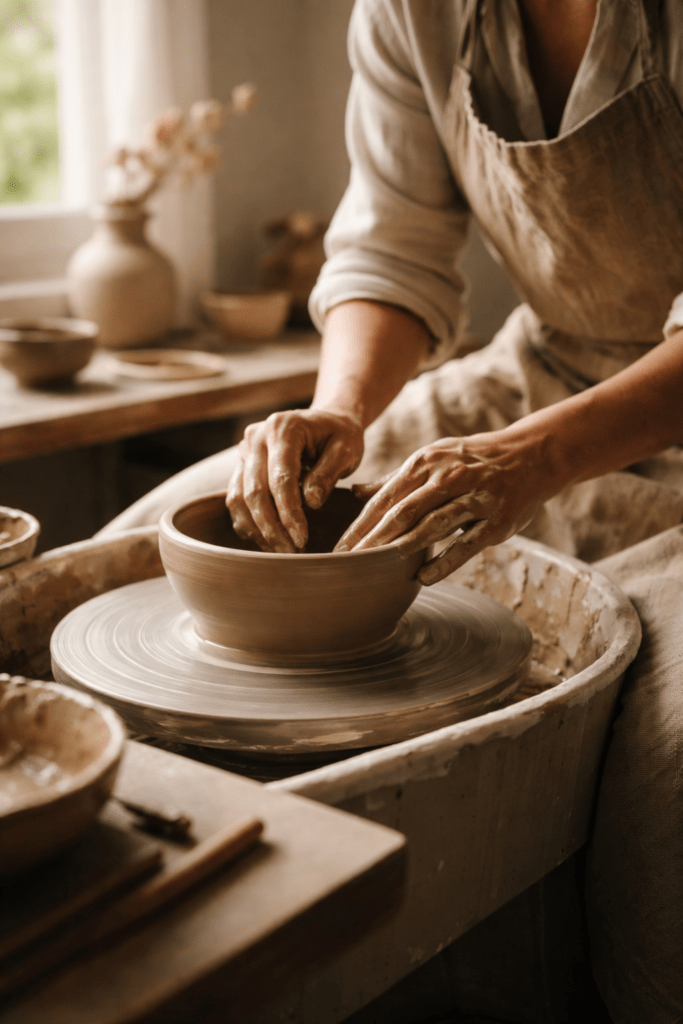
Craft Mistakes Beginners Make: Common Errors and How to Avoid Them
Why Most Beginners Struggle (And It’s Not What You Think)
When people start crafting, they often assume the problem is skill.
“I’m not good at this.”
“I don’t have talent.”
But in most cases, that’s not true.
The real issue is:
👉 Wrong approach, not lack of ability
Beginners make predictable mistakes.
Not because they’re careless—
but because they don’t yet understand the process.
The good news?
Once you see these mistakes clearly, progress becomes much easier.
Mistake 1: Starting Too Complex
One of the most common mistakes is choosing something too difficult.
Beginners often try to:
- Follow advanced tutorials
- Create detailed projects
- Skip the basics
This leads to:
- Frustration
- Confusion
- Giving up early
The solution is simple:
Start small.
Choose something easy.
Build confidence first.
Mistake 2: Buying Too Many Tools
It’s easy to believe that more tools will help.
So beginners often:
- Buy full tool kits
- Collect unnecessary equipment
- Spend too much too early
But too many tools create:
- Distraction
- Overwhelm
- Decision fatigue
You don’t need everything.
You need only what you use.
Mistake 3: Using Too Many Materials
Similar to tools, beginners often try too many materials at once.
They switch between:
- Paper
- Clay
- Fabric
- Resin
Without understanding any of them deeply.
This prevents learning.
Stay with one material.
Learn how it behaves.
Then expand.
Mistake 4: Expecting Perfect Results
Beginners often expect their work to look good immediately.
When it doesn’t, they feel discouraged.
But early results are not supposed to be perfect.
They are supposed to teach you.
Shift your focus:
From “How does it look?”
To “What did I learn?”
This changes everything.
Mistake 5: Rushing the Process
Crafting requires time.
But beginners often rush:
- Cutting too quickly
- Skipping steps
- Ignoring details
This leads to mistakes.
Slowing down improves:
- Control
- Accuracy
- Results
Speed comes later.
Mistake 6: Ignoring the Material
Every material behaves differently.
Beginners often try to control materials instead of understanding them.
They force results.
Instead of observing.
Better approach:
Pay attention to how the material responds.
Adjust your actions.
Work with it—not against it.
Mistake 7: Poor Workspace Setup
A messy or uncomfortable workspace creates problems.
It leads to:
- Distraction
- Reduced focus
- Increased mistakes
Even a simple setup helps:
- Clean surface
- Good lighting
- Basic organization
Your space supports your process.
Mistake 8: Comparing Yourself to Others
Seeing advanced work can be discouraging.
Beginners often compare:
- Their first attempts
- To someone else’s experience
This creates unrealistic expectations.
Remember:
Everyone started at the beginning.
Focus on your own progress.
Mistake 9: Inconsistent Practice
Craft improves with repetition.
But beginners often:
- Practice once
- Then stop
- Then start again
This slows progress.
Consistency matters more than intensity.
Even short sessions help.
Mistake 10: Giving Up Too Early
This is the most important mistake.
Many beginners stop before they improve.
Because they:
- Feel frustrated
- Don’t see quick results
- Lose motivation
But improvement takes time.
If you continue, progress is inevitable.
Mistake 11: Overthinking Instead of Doing
Some beginners spend too much time:
- Watching tutorials
- Planning
- Thinking
But not enough time actually crafting.
Understanding comes from doing.
Not just observing.
Start.
Even if you feel unprepared.
Mistake 12: Ignoring Safety
Safety is often overlooked.
Beginners may:
- Use tools incorrectly
- Rush movements
- Ignore discomfort
This can lead to injury.
Stay aware.
Move carefully.
Safety is part of the process.
Mistake 13: Not Finishing Projects
Starting is easy.
Finishing is harder.
Beginners often leave projects incomplete.
This creates:
- Lack of satisfaction
- No sense of progress
Finishing—even simple projects—builds confidence.
Mistake 14: Changing Direction Too Often
Trying different crafts is good—
but too much switching slows learning.
Stay with one direction long enough to improve.
Then explore.
Mistake 15: Thinking Craft Is Only About Results
Craft is not just about what you make.
It is about:
- The process
- The experience
- The attention
If you focus only on results, you miss most of the value.
How to Avoid These Mistakes (Simple Strategy)
You don’t need to fix everything at once.
Focus on a few principles:
Start simple
Use fewer tools
Work with one material
Move slowly
Practice consistently
These alone solve most problems.
What Progress Actually Looks Like
Progress in craft is subtle.
At first, changes are small:
- Better control
- Fewer mistakes
- Increased comfort
Over time, these add up.
And suddenly—
what once felt difficult
becomes natural.
FAQ
What is the biggest mistake beginners make in crafting?
Starting too complex and expecting perfect results.
How can I improve faster in crafting?
Practice consistently, start simple, and focus on the process.
Do I need many tools to avoid mistakes?
No. Fewer tools often lead to better learning.
Why do I feel frustrated when crafting?
Because expectations are often too high at the beginning.
How long does it take to get good at crafting?
It depends on consistency, but steady practice always leads to improvement.
Final Reflection
Mistakes are not a problem.
They are part of the process.
They show you:
- What doesn’t work
- What to adjust
- Where to improve
You don’t need to avoid every mistake.
You only need to continue.
Start small.
Stay consistent.
And let each mistake become:
A step forward.
Not a reason to stop.
