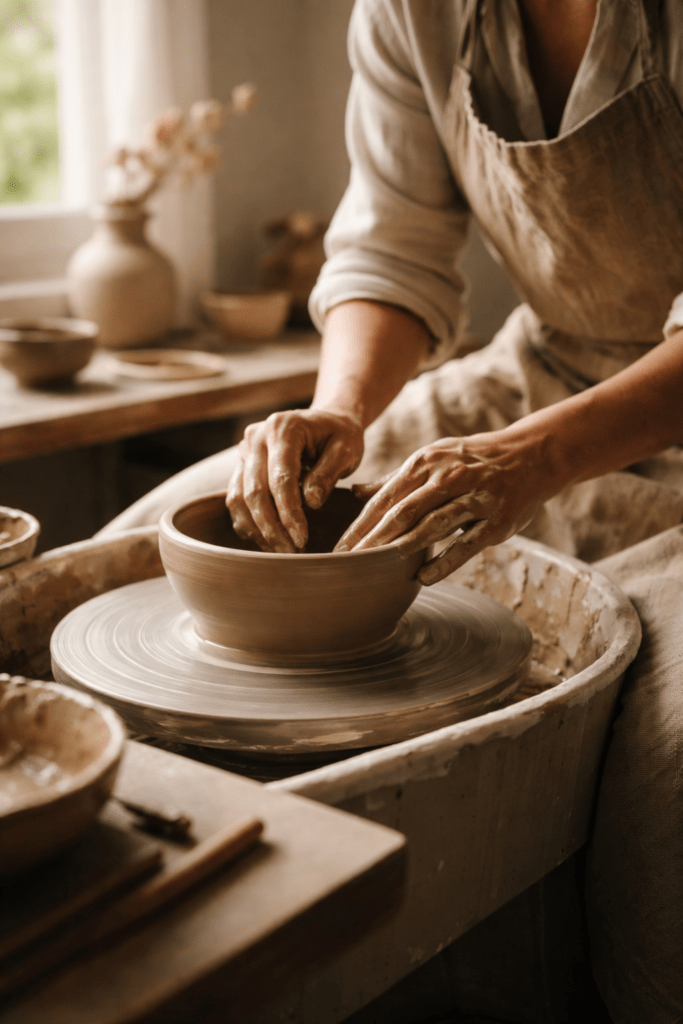
Craft Practice Routine: How to Build a Simple and Consistent Crafting Habit
Why Most People Don’t Improve in Craft
Most people don’t fail at crafting because they lack skill.
They fail because they lack consistency.
They:
- Start with motivation
- Practice once or twice
- Then stop
Days pass.
Then weeks.
And when they return, it feels like starting over.
The problem is not ability.
It’s the absence of a routine.
What a Craft Practice Routine Really Is
A craft routine is not a strict schedule.
It is:
👉 A simple, repeatable pattern of practice
Something you can do:
- Without thinking too much
- Without needing motivation
- Without pressure
A good routine makes starting easy.
And consistency natural.
The Most Important Rule: Keep It Small
Beginners often try to do too much.
Long sessions
Complex projects
High expectations
This leads to:
- Fatigue
- Frustration
- Inconsistency
Instead, start small.
Very small.
Even 10–20 minutes is enough.
The Structure of a Simple Craft Routine
A good routine has three parts:
Preparation
Practice
Closure
Each part is simple.
1. Preparation (2–3 minutes)
Keep this minimal.
- Clear your workspace
- Gather your tools
- Sit down
No complexity.
The goal is to begin.
2. Practice (10–20 minutes)
This is the core.
Focus on:
- One material
- One task
- One direction
Do not switch between activities.
Stay with one thing.
Move slowly.
Pay attention.
3. Closure (2–3 minutes)
End your session properly.
- Put tools away
- Clean your space
- Observe what you did
This creates a sense of completion.
How Often Should You Practice
Consistency matters more than duration.
Daily is ideal.
But if not possible:
3–5 times per week is enough.
The key is regularity.
Same time
Same place
This builds rhythm.
Choosing the Right Time
Your routine should fit your life.
Choose a time when:
- You are not rushed
- You can focus
- You feel relatively calm
Morning, evening, or any consistent time works.
What matters is repetition.
What to Practice Each Day
Do not overcomplicate.
You can:
Repeat the same task
Or make small variations
Focus on:
- Basic movements
- Simple projects
- Skill building
Avoid jumping between different crafts.
Depth is more important than variety.
How to Stay Consistent
Consistency is the hardest part.
To make it easier:
Keep your setup simple
Reduce preparation time
Lower expectations
Make starting easy
The easier it is to begin—
the more likely you are to continue.
The Role of Motivation
Motivation is unreliable.
Some days you feel inspired.
Some days you don’t.
A routine removes dependence on motivation.
You don’t ask:
“Do I feel like it?”
You simply begin.
What to Do on Low-Energy Days
Not every session will feel productive.
That’s okay.
On low-energy days:
Do something simple
Shorten your session
Focus on easy tasks
The goal is not perfection.
It is continuity.
Tracking Your Progress (Optional)
You don’t need detailed tracking.
But simple awareness helps.
You can notice:
- How often you practice
- What feels easier
- What improves over time
Progress becomes visible through attention.
Common Routine Mistakes
Trying to do too much
Practicing irregularly
Switching direction too often
Skipping closure
Expecting fast results
Keep it simple.
Stay consistent.
How Routine Builds Skill
Each session may feel small.
But over time:
- Movements improve
- Control increases
- Confidence grows
Routine turns effort into progress.
Without pressure.
When to Change Your Routine
Change only when necessary.
For example:
- You feel bored
- You stop improving
- Your schedule changes
Even then, make small adjustments.
Not complete changes.
The Relationship Between Routine and Enjoyment
At first, routine may feel repetitive.
But over time, it creates:
- Familiarity
- Comfort
- Flow
This is where enjoyment grows.
Not from novelty—
but from continuity.
Making Craft Part of Your Life
The goal is not just to practice.
It is to integrate crafting into your life.
A routine makes it:
- Natural
- Regular
- Sustainable
It becomes something you return to.
Without effort.
FAQ
How long should I practice crafting each day?
10–20 minutes is enough for consistent progress.
Do I need to practice every day?
Daily is ideal, but consistency matters more than frequency.
What if I don’t feel motivated?
Follow your routine anyway. Motivation is not required.
Can I practice different crafts in one routine?
It’s better to focus on one craft for faster improvement.
How do I know if my routine is working?
You will notice gradual improvement and increased comfort.
Final Reflection
A routine is simple.
It is not strict.
It is not demanding.
It is just a rhythm.
A small moment each day.
A quiet return.
You sit down.
You begin.
You continue.
And over time—
what once required effort
becomes natural
and what once felt difficult
becomes familiar.
That is how craft grows.
Not in intensity—
but in consistency.
