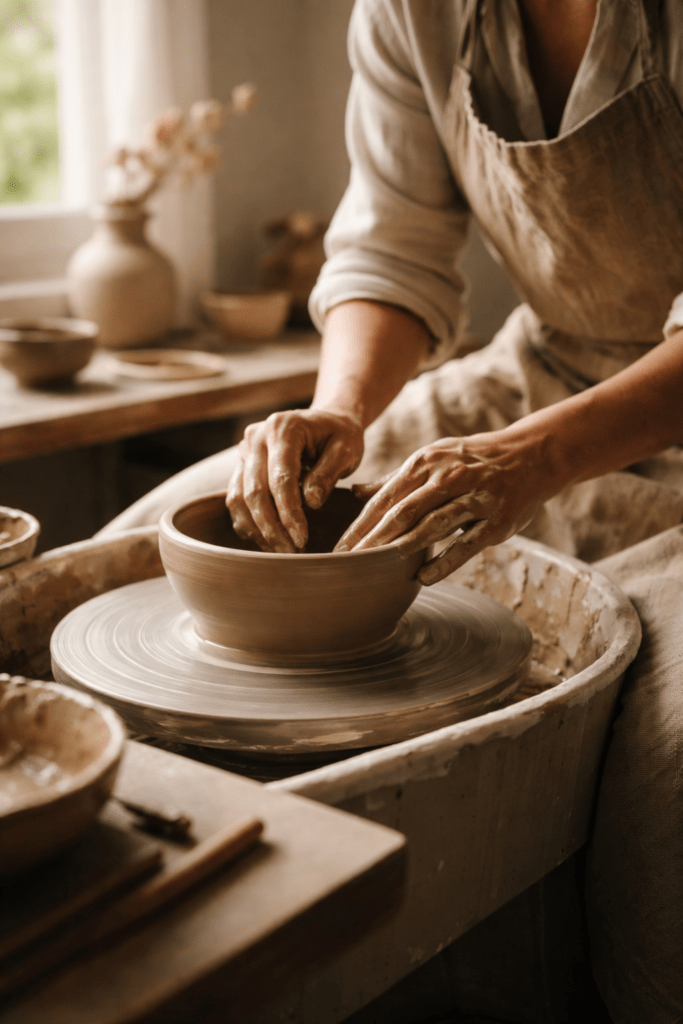
History of Craft: A Deep Exploration of How Craft Shaped Human Life and Meaning
Why the History of Craft Still Matters Today
Most people think of craft as a hobby.
Something optional.
Something you do in your free time.
But this is a modern misunderstanding.
Because for most of human history—
craft was not optional.
It was survival.
Everything around you today—your clothes, your furniture, your tools—once depended entirely on human hands.
No machines.
No factories.
No automation.
Only skill.
Only repetition.
Only attention.
So when you ask:
What is the history of craft?
You are really asking:
How did humans learn to shape the world—and themselves?
Understanding craft history is not about the past.
It is about rediscovering something we have slowly lost.
What Is Craft in Historical Context?
In its historical form, craft was the skilled making of objects by hand for practical or cultural use.
It included:
- Tool making
- Clothing production
- Shelter construction
- Decorative objects
- Ritual items
Craft was not separate from life.
It was life.
There was no division between work and craft, or between usefulness and beauty.
Everything made carried both function and meaning.
That separation only emerged much later.
The Earliest Craft: Prehistoric Beginnings
The story of craft begins long before written history.
In the Stone Age, over two million years ago, early humans began shaping stone into tools.
These tools were simple, but they required:
- Precision
- Repetition
- Observation
Even the act of shaping a stone edge required patience.
Over time, humans expanded into:
- Bone tools
- Wooden implements
- Primitive carvings
At first, these objects served only survival.
But gradually, something changed.
Humans began adding:
- Patterns
- Symbols
- Decoration
This marked a turning point.
Craft became not only functional—but expressive.
It became a way to leave meaning behind.
Ancient Civilizations: Craft Becomes Culture
As human societies grew, craft evolved beyond survival.
It became culture.
In Ancient Egypt, craft was closely tied to religion and the afterlife. Jewelry, carvings, and burial objects were created with deep symbolic meaning.
In Ancient China, craft became a form of refinement. Porcelain, silk, and brush tools reflected philosophical ideas such as harmony, balance, and discipline.
In Ancient India, craft was integrated into daily life and spiritual practice. Objects were not only useful—they were part of rituals, healing, and devotion.
In Ancient Greece and Rome, craft developed into structured skill systems. Architecture, sculpture, and functional design reached new levels of precision and beauty.
Across all these cultures, one thing remained constant:
Craft was not just making.
It was identity.
The Middle Ages: Craft as Mastery and Profession
During the medieval period, craft became organized.
Guild systems were established to regulate craftsmanship.
These guilds controlled:
- Training
- Standards
- Quality
- Trade
To become a skilled craftsperson, one had to follow a clear path:
Apprentice → Journeyman → Master
This system emphasized:
- Long-term learning
- Discipline
- Repetition
- Dedication
Craft was no longer only survival.
It became a respected profession.
It defined social roles and personal identity.
A master craftsperson was not just someone who made things well.
They embodied skill, patience, and mastery.
The Industrial Revolution: The Great Shift
The Industrial Revolution marked the most significant turning point in craft history.
Machines replaced hand production.
Factories introduced:
- Speed
- Efficiency
- Mass production
Objects that once took days or weeks to create could now be produced in minutes.
This changed everything.
Craft lost its central role in daily life.
People no longer needed to make their own tools, clothing, or household items.
At first, this seemed like progress.
But something was lost.
The connection between the maker and the object disappeared.
People became consumers instead of creators.
Work became fragmented.
Meaning became distant.
The Reaction: Rediscovering the Value of Craft
Not everyone accepted this shift.
In the 19th century, movements began to push back.
The Arts and Crafts Movement emphasized:
- Handmade quality
- Simplicity
- Natural materials
It rejected industrial excess.
It argued that craft was not outdated—
it was essential.
This movement influenced modern design, minimalism, and the appreciation of handmade work.
It reminded people that:
Craft is not just about objects.
It is about how we live.
Craft in the Modern World
Today, craft exists in a completely different context.
We no longer depend on it for survival.
Everything we need can be bought.
Yet craft is returning.
Not out of necessity—
but out of need.
Modern life is fast, digital, and often disconnected.
Craft offers the opposite:
- Slowness
- Physical engagement
- Direct experience
People return to craft because it gives them something they cannot find elsewhere.
The Psychological Role of Craft Today
In recent years, craft has been rediscovered as a powerful mental and emotional tool.
People use craft to:
- Reduce anxiety
- Improve focus
- Create a sense of calm
This is not new.
It is a rediscovery.
Historically, craft always required attention and presence.
Today, we call this mindfulness.
But in the past, it was simply how life was lived.
Craft naturally brings the mind into the present.
Not through effort—
but through action.
Craft vs Modern Consumption
Modern life is largely based on consumption.
We scroll, watch, buy, and move on.
Craft is different.
It is based on creation.
When you craft:
- You slow down
- You engage physically
- You focus deeply
This creates a different kind of experience.
One that is grounded and real.
Craft restores balance to a life that is often too fast and too abstract.
What We Can Learn from the History of Craft
The history of craft is not just a timeline.
It is a set of lessons.
Skill takes time.
There are no shortcuts to mastery.
Process matters more than outcome.
The act of making is where value is created.
Repetition builds depth.
Doing something again and again develops both skill and awareness.
Making shapes the mind.
Craft changes how you think, focus, and experience the world.
How to Apply This in Your Life
You do not need to return to ancient ways of living.
But you can bring elements of craft into your daily life.
Start simple.
Choose one material.
One small activity.
Focus on the process.
Let go of perfection.
Repeat regularly.
Over time, something shifts.
Not just in your skill—
but in your attention.
Common Misunderstandings About Craft History
Many people believe craft belongs to the past.
It does not.
It continues to evolve.
Some think craft is less valuable than technology.
In reality, it develops different and equally important skills.
Others assume craft is only for artists.
It is not.
Craft is for anyone willing to use their hands and attention.
FAQ
What is the history of craft?
The history of craft refers to how humans have created objects by hand throughout time, from prehistoric tools to modern handmade practices.
When did craft begin?
Craft began in prehistoric times, with early humans shaping stone tools over two million years ago.
Why was craft important in history?
Craft was essential for survival, providing tools, clothing, shelter, and cultural objects.
How did industrialization affect craft?
Industrialization replaced many handmade processes with machines, reducing the everyday role of traditional craft.
Why is craft still relevant today?
Craft provides mental, emotional, and creative benefits that modern life often lacks.
Final Reflection
Craft has never disappeared.
It has only changed form.
From survival
to profession
to forgotten practice
to rediscovered experience
And now—
it returns again.
Not because we need it to survive.
But because we need it to feel connected.
To slow down.
To focus.
To create something real.
When you make something with your hands—
you are not just creating an object.
You are reconnecting with something ancient.
Something human.
Something that has always been there.
Waiting quietly—
for your attention.
