Types of Incense Explained: A Complete Guide for Beginners
Why Understanding Incense Types Changes Everything
Most beginners make the same mistake.
They try incense once—and never come back.
Why?
Because they picked the wrong type.
Too strong.
Too artificial.
Too overwhelming.
And they assume:
👉 “Incense just isn’t for me.”
But the truth is—
they didn’t choose incense.
They chose one type of incense.
And that makes all the difference.
If you don’t understand the types, you’re guessing.
If you do—
you can shape your entire experience.
If you’re completely new, start here → what is incense
What Are the Different Types of Incense?
Incense comes in many forms.
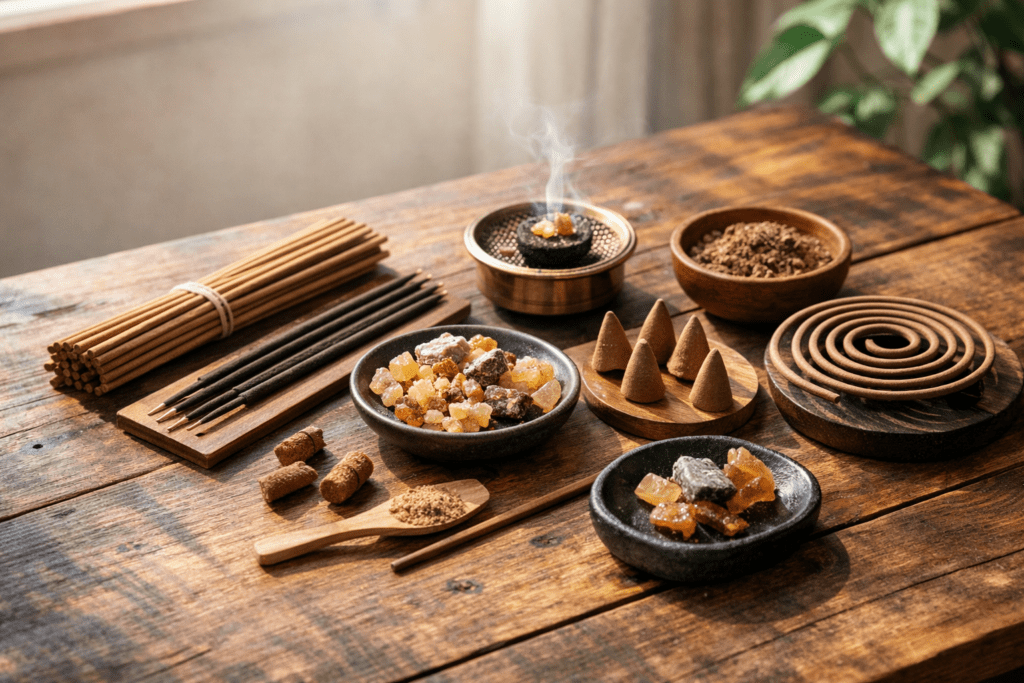
But most fall into a few core categories:
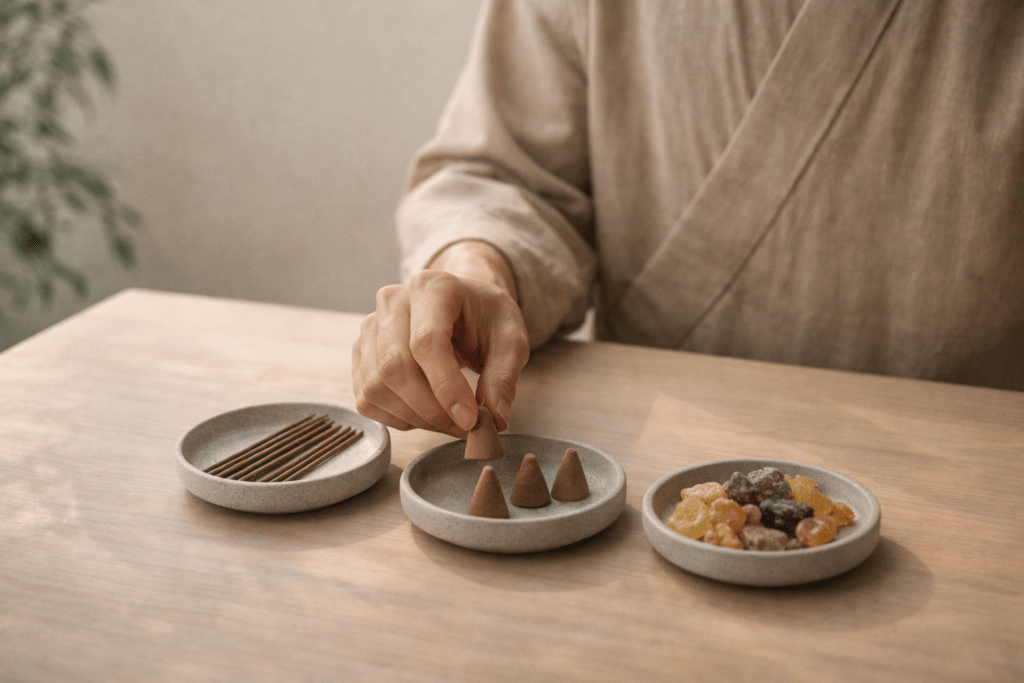
- Stick incense
- Cone incense
- Coil incense
- Resin incense
- Loose / powder incense
Each type differs in:
- How it burns
- How strong it smells
- How long it lasts
- How easy it is to use
Understanding this is the key to choosing correctly.
Stick Incense (Most Popular & Beginner-Friendly)
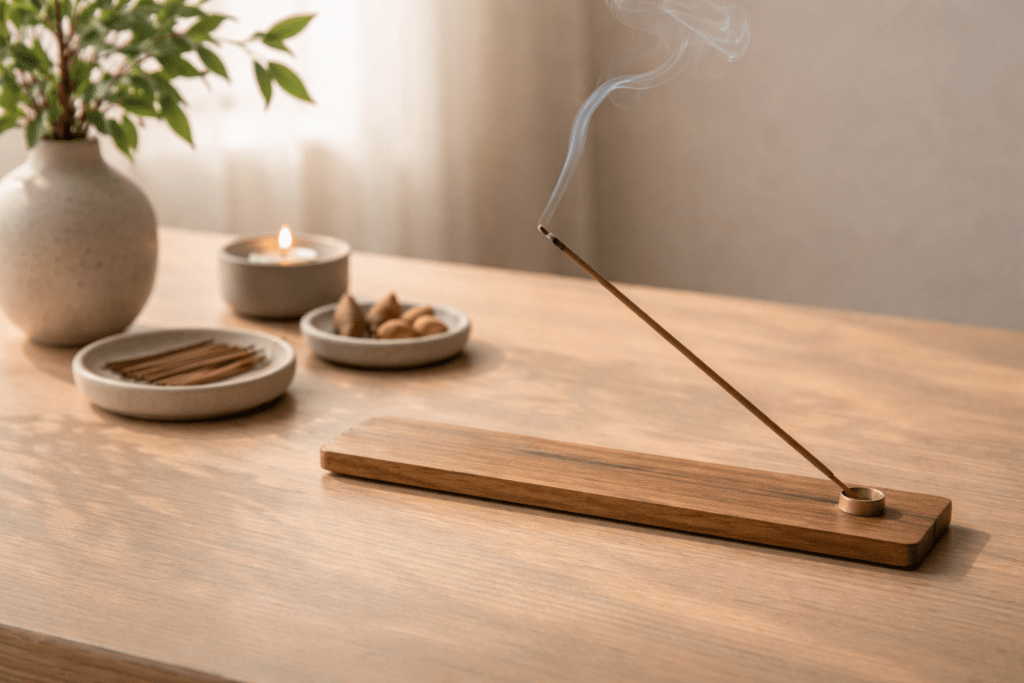
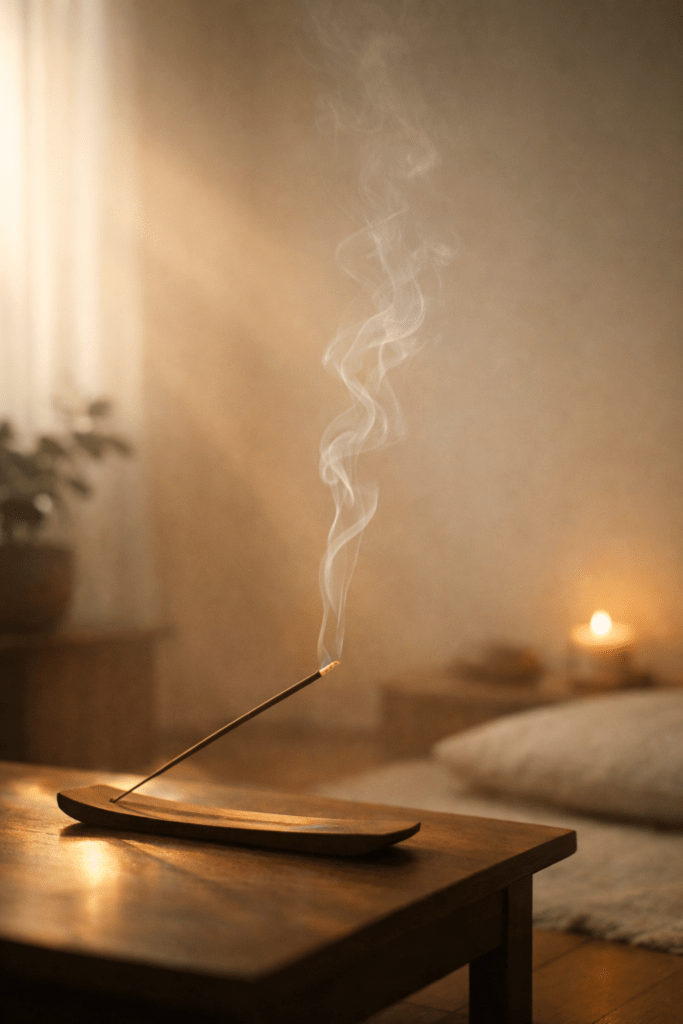
Stick incense is the most widely used type.
You’ve probably seen it before.
What It Is
A thin stick coated with aromatic material.
Sometimes with:
- A bamboo core (common in India/China)
- No core (solid Japanese incense)
Why People Choose It
- Easy to light
- Burns evenly
- Widely available
Best For
- Beginners
- Daily use
- Relaxation routines
Things to Watch
Lower-quality sticks can:
- Smell synthetic
- Produce too much smoke
👉 If you’re starting → choose natural sticks
Cone Incense (Stronger & Shorter Experience)
Cone incense is compact and powerful.
What It Is
A small cone-shaped piece of incense.
Characteristics
- Burns faster (10–20 minutes)
- Produces stronger scent
- More concentrated
Best For
- Short sessions
- Quick relaxation
- Small spaces
Things to Watch
- Can be too strong in small rooms
- Requires a stable burner
Coil Incense (Long Burning & Traditional)
Coil incense is designed for duration.
What It Is
A spiral-shaped incense that burns slowly.
Characteristics
- Can burn for hours
- Often used in temples
- Consistent scent over time
Best For
- Large spaces
- Long meditation sessions
- Ambient background scent
Things to Watch
- Not beginner-friendly to set up
- Can be excessive for daily home use
Resin Incense (Most Natural & Traditional)
This is where incense becomes deeper.
What It Is
Raw natural materials like:
- Frankincense
- Myrrh
- Copal
Burned on charcoal.
Characteristics
- Pure scent
- No artificial binders
- Strong, rich aroma
Best For
- Ritual use
- Deep meditation
- Traditional experience
Things to Watch
- Requires charcoal
- More complex setup
- More smoke
👉 Learn how to use it → how to burn resin incense
Loose / Powder Incense (Advanced & Ceremonial)
Less common—but deeply traditional.
What It Is
Finely ground incense materials.
Burned on:
- Ash beds
- Special tools
Characteristics
- Very controlled burning
- Subtle scent
- Used in ceremonies
Best For
- Experienced users
- Rituals
- Incense ceremonies
👉 Explore deeper → incense ceremony guide
Backflow Incense (Visual Experience)
A modern type gaining popularity.
What It Is
Special cones that create downward-flowing smoke.
Why People Like It
- Visually striking
- Creates “waterfall smoke” effect
Best For
- Decorative use
- Relaxation visuals
Important Note
Many backflow incense products are:
- Synthetic
- Focused on visuals over scent
👉 Choose carefully
Natural vs Synthetic Incense Types
This distinction matters more than type.
Natural Incense
- Made from real materials
- Softer, more complex scent
- Better for long-term use
Synthetic Incense
- Artificial fragrance
- Strong, immediate smell
- Often cheaper
👉 Full breakdown → natural vs synthetic incense
How to Choose the Right Type (Beginner Guide)
If you’re unsure, follow this:
Step 1: Choose Based on Experience Level
Beginner → Stick incense
Intermediate → Cone / Resin
Advanced → Loose incense
Step 2: Choose Based on Purpose
Relaxation → Stick / Sandalwood
Short session → Cone
Long session → Coil
Deep ritual → Resin
Step 3: Choose Based on Space
Small room → Light sticks
Large space → Coil or resin
👉 More guidance → how to choose incense
Common Mistakes When Choosing Incense
1. Buying Based on Price Only
Cheap incense = often poor experience
2. Ignoring Smoke Level
Some types produce much more smoke
3. Choosing Strong Scents First
Start mild. Always.
4. Not Matching Type to Environment
Small room + strong cone = overwhelming
Which Incense Type Is Best?
There is no “best.”
Only:
👉 What fits your moment
If you want:
- Simplicity → Stick
- Intensity → Cone
- Duration → Coil
- Depth → Resin
FAQ
What are the main types of incense?
Stick, cone, coil, resin, and loose incense are the main types.
Which incense type is best for beginners?
Stick incense is the easiest and most beginner-friendly.
Is resin incense better than stick incense?
Resin is more natural but requires more setup. Stick incense is more convenient.
What incense lasts the longest?
Coil incense burns the longest—often several hours.
Are all incense types safe?
Yes, if used properly with ventilation and natural materials.
Final Reflection
Choosing incense is not about finding the “best type.”
It’s about understanding:
👉 What kind of experience you want
Some moments need:
- Simplicity
- Softness
- Quiet
Others need:
- Depth
- Intensity
- Presence
Incense gives you that choice.
So don’t rush.
Try slowly.
Notice what changes.
And let your experience guide you.
Continue the Journey
Best Incense for Anxiety: A Complete Guide to Calm Your Mind Naturally
Why Anxiety Feels So Hard to Escape Anxiety doesn’t always come from...
Best Incense for Sleep: A Complete Guide to Deep Rest and Calm Nights
Why Falling Asleep Feels Harder Than It Should You turn off the...
Best Incense for Relaxation: A Complete Guide to Calm Your Mind
Why Relaxation Feels So Hard Today You sit down to relax. But...