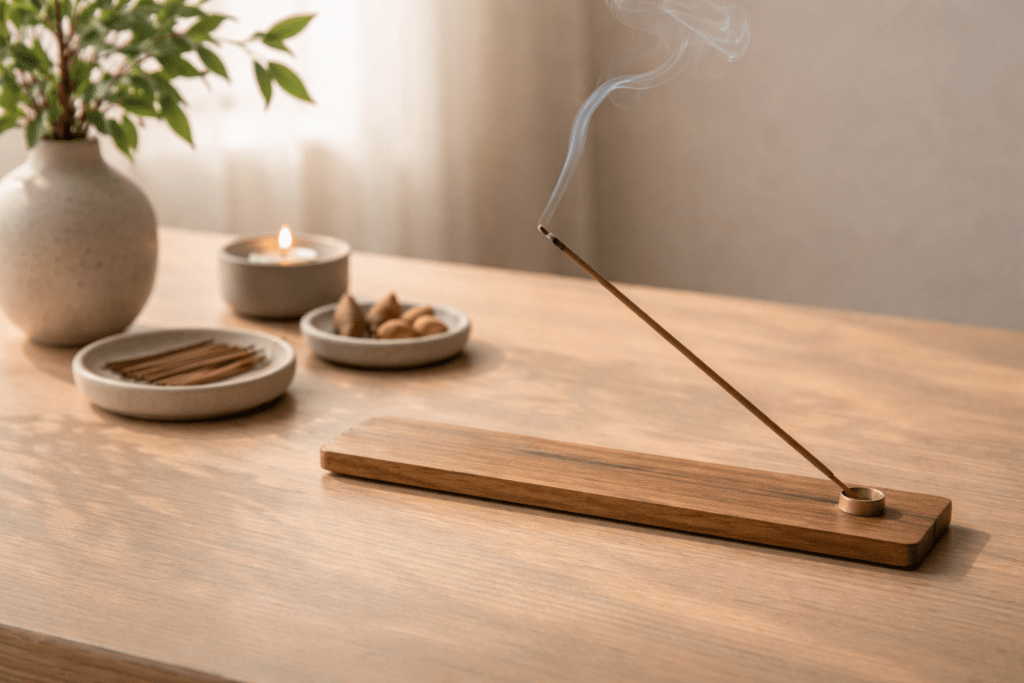
What Is Incense: A Complete Beginner’s Guide to Meaning, Types, Uses, and Benefits
Why This Question Matters More Than You Think
At some point, you notice it.
Not loudly. Not dramatically.
Just a subtle shift.
You light something small—a thin stick, a quiet ember—and suddenly the space feels different.
Softer.
Slower.
More… present.
It’s not just the smell.
It’s the atmosphere.
It’s the way your mind responds.
And that’s when the question naturally arises:
👉 What is incense, really?
Is it just fragrance?
A tradition?
A tool?
Or something deeper?
If you’ve ever felt the subtle calm that incense creates—but couldn’t explain why—
this guide will take you all the way in.
If you’re completely new, start here → beginner guide to incense
What Is Incense? (Simple Explanation)
At its most basic level, incense is:
👉 A material that releases fragrant smoke when burned
But that definition is only the surface.
Incense is actually a combination of:
- Natural aromatic materials (wood, herbs, resins, flowers)
- Binding ingredients (to hold shape)
- Sometimes essential oils
When lit, it slowly smolders—releasing scent into the air.
But unlike candles or sprays, incense is not just about “smelling good.”
It creates:
- A shift in atmosphere
- A change in mental state
- A sense of presence
Incense is less about fragrance—
and more about experience.
If you want to understand the materials behind it → how incense is made
《配图》
关键词:soft incense smoke rising minimal room warm sunlight calm zen atmosphere cinematic
Incense Is Not Just Smell — It’s Atmosphere
Here’s something most beginners don’t realize:
Incense doesn’t hit you instantly.
It unfolds.
Slowly.
Gently.
Almost like:
- The room is breathing
- The air is softening
- Time is stretching
This is why incense feels different from:
- Candles (steady but static)
- Diffusers (clean but passive)
Incense is alive in motion.
It transforms space moment by moment.
And that’s why people keep coming back to it.
A Brief History of Incense (Across Civilizations)
Incense is not a trend.
It’s ancient.
Over 5,000 years old.
China
Incense was part of:
- Daily life
- Meditation
- Scholar culture
It was used to measure time, focus the mind, and cultivate awareness.
India
Deeply tied to:
- Spiritual rituals
- Ayurveda
- Temple practices
Used for purification and devotion.
Japan
Elevated into an art:
👉 “Kōdō” — The Way of Incense
People don’t “smell” incense.
They listen to it.
Middle East & Egypt
Used in:
- Religious ceremonies
- Healing
- Burial rites
Materials like frankincense and myrrh were once more valuable than gold.
If you want deeper cultural context → history of incense
Why People Burn Incense (Real Reasons)
Most people assume incense is just for scent.
But the real reasons are deeper—and practical.
1. To Change the Feeling of a Space
A room with incense feels:
- Warmer
- Quieter
- More intentional
2. To Support Mental States
Different scents can:
- Calm anxiety
- Improve focus
- Reduce stress
3. To Create a Ritual Moment
Lighting incense marks a transition:
Before → After
It signals:
👉 “Now, we slow down.”
4. To Support Meditation or Awareness
Incense gives your attention something soft to rest on:
- The smoke
- The scent
- The rhythm of burning
If you’re curious about deeper effects → benefits of burning incense
Types of Incense (Beginner Overview)
Not all incense is the same.
Choosing the right type changes everything.
Stick Incense
- Most common
- Easy to use
- Burns evenly
👉 Best for beginners
Cone Incense
- Small and concentrated
- Stronger scent
- Shorter burn time
Coil Incense
- Long-lasting (hours)
- Used in temples
Resin Incense
- Raw materials (like frankincense)
- Burned on charcoal
- More natural, more intense
Powder / Loose Incense
- Traditional
- Requires technique
- Used in ceremonies
If you want a full breakdown → types of incense explained
《配图》
关键词:various incense types sticks cones resin wooden table natural light minimal aesthetic
What Is Incense Made Of?
High-quality incense uses natural ingredients.
Core Materials
- Woods (sandalwood, agarwood)
- Resins (frankincense, myrrh)
- Herbs & flowers
- Natural oils
Binding Agents
- Plant-based powders
- Natural gums
Synthetic Additives (Lower Quality)
Some incense includes:
- Artificial fragrance
- Chemical binders
These often feel:
- Too strong
- Less natural
- More irritating
👉 A deeper comparison here → natural vs synthetic incense
How Incense Affects Your Mind
This is where incense becomes interesting.
When incense burns:
- Heat releases aromatic compounds
- Smoke carries them into the air
- Your brain processes scent instantly
Scent connects directly to:
- Memory
- Emotion
- Nervous system
That’s why incense can:
- Calm you quickly
- Shift your mood
- Ground your attention
The Real Experience of Incense (What Most Guides Miss)
Most guides explain:
- Types
- Materials
- Usage
But they miss the core:
👉 Incense changes how you experience the present moment
It’s not about:
“this smells good”
It’s about:
- Your breath slowing
- Your thoughts softening
- Your awareness expanding
Incense is subtle.
But powerful.
Common Beginner Mistakes
If incense didn’t work for you before—
it’s probably one of these:
1. Cheap Incense
Leads to:
- Harsh smell
- Headaches
- Bad first impression
2. Burning Too Much
You don’t need multiple sticks.
One is enough.
3. No Airflow
Incense needs space.
4. Expecting Instant Impact
Incense works gradually.
Not instantly.
How to Choose Your First Incense
Start simple.
Good Beginner Choices
- Sandalwood
- Light floral
- Mild herbal blends
Avoid
- Strong synthetic scents
- Very cheap products
👉 Practical guide here → how to choose incense
How to Use Incense (Simple Guide)
- Light the tip
- Let it catch flame
- Blow it out
- Place in holder
- Let it burn slowly
That’s it.
👉 Full step-by-step → how to burn incense
《配图》
关键词:person lighting incense calm room soft sunlight peaceful minimal zen atmosphere
Is Incense Safe?
Yes—when used properly.
Safety Basics
- Use a proper holder
- Keep away from flammable objects
- Don’t leave unattended
- Ensure ventilation
If you’re concerned → incense safety guide
Incense vs Essential Oils
Both are popular—but different.
Incense
- Uses smoke
- More traditional
- Creates atmosphere
Essential Oils
- Uses diffusion
- Cleaner air
- More controlled
👉 Compare deeper → incense vs essential oils
The Deeper Meaning of Incense
In many traditions, incense represents:
- Impermanence (it burns away)
- Presence (only exists now)
- Transformation (solid → smoke → air)
Even if you’re not spiritual—
you can feel this.
Watching incense burn is a reminder:
👉 This moment is passing
👉 And that’s what makes it real
FAQ
What is incense used for?
Incense is used to create atmosphere, support relaxation, improve focus, and enhance meditation or daily rituals.
Is incense safe to breathe?
Yes, when used in moderation with proper ventilation—especially natural incense.
What is the best incense for beginners?
Sandalwood or mild natural blends are the best starting point.
How long does incense burn?
- Stick: 30–60 minutes
- Cone: 10–20 minutes
- Coil: several hours
Does incense help with anxiety?
It can support calmness and relaxation, especially when combined with mindful breathing.
Final Reflection
Incense is simple.
A small stick.
A quiet flame.
A thin line of smoke.
But within that simplicity—
there’s space.
Space to slow down.
Space to breathe.
Space to notice.
You don’t need to understand everything.
Just light it.
Sit with it.
And for a moment—
let life move without resistance.
Continue the Journey
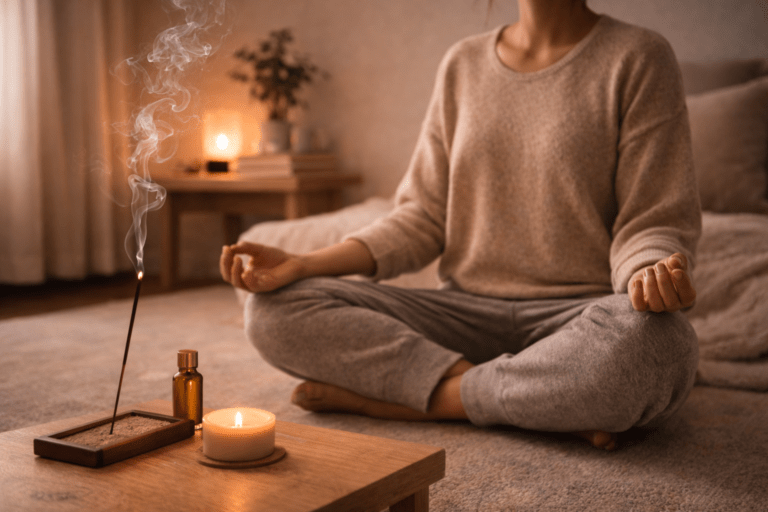
Best Incense for Anxiety: A Complete Guide to Calm Your Mind Naturally
Why Anxiety Feels So Hard to Escape Anxiety doesn’t always come from...
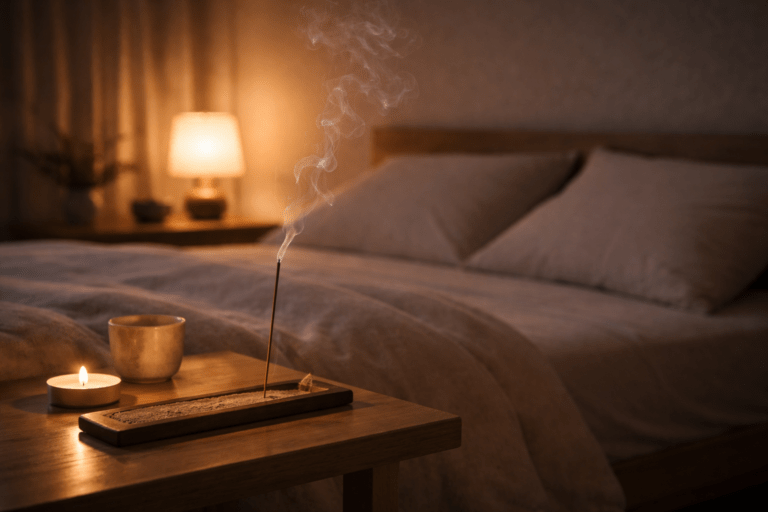
Best Incense for Sleep: A Complete Guide to Deep Rest and Calm Nights
Why Falling Asleep Feels Harder Than It Should You turn off the...
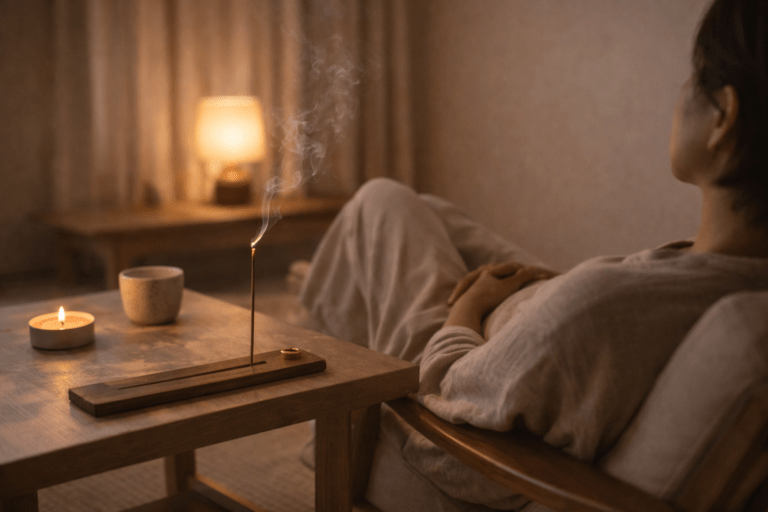
Best Incense for Relaxation: A Complete Guide to Calm Your Mind
Why Relaxation Feels So Hard Today You sit down to relax. But...