What Is Traditional Chinese Medicine | Complete Guide to TCM
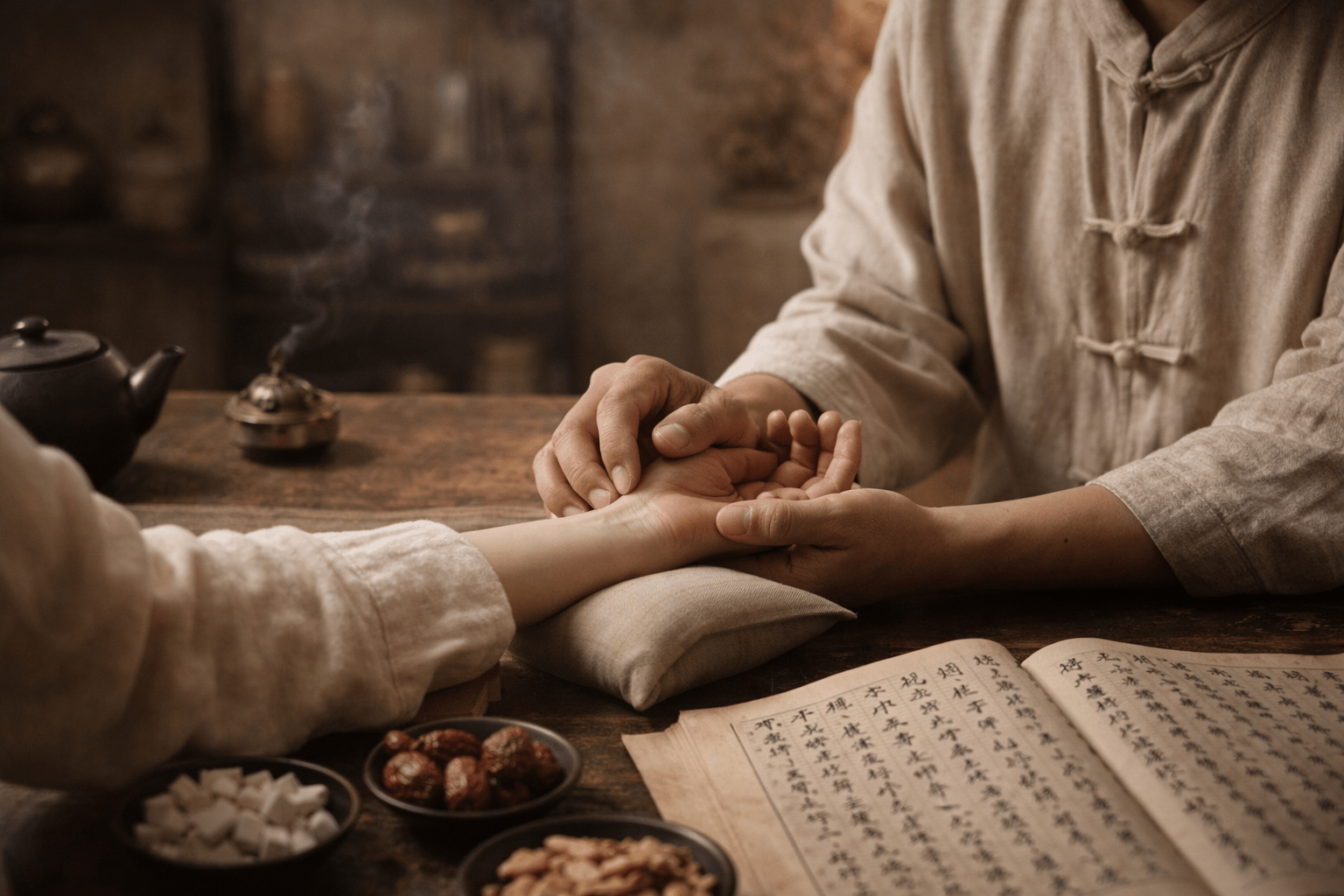
The Moment You Realize Your Body Is Not a Machine
Most people grow up believing the body works like a machine.
Something breaks—you fix it.
Something hurts—you remove the problem.
Something feels wrong—you look for a cause.
It feels logical. Predictable. Clear.
But over time, many people notice something different.
You can feel tired even when nothing is clearly wrong.
You can feel heavy even when everything appears normal.
You can feel disconnected without knowing why.
There is no obvious issue—but something is off.
This is where another way of understanding the body begins.
Not as a machine.
But as a living system.
Not as separate parts.
But as a connected whole.
Traditional Chinese Medicine begins here.
Not with problems.
But with awareness.
What Is Traditional Chinese Medicine
Traditional Chinese Medicine is not simply a method.
It is a way of seeing.
A way of understanding:
- The human body
- The relationship between mind and body
- The connection between humans and nature
At its core, it is:
A system of observing patterns, relationships, and balance.
It does not isolate problems.
Instead, it observes:
- How different aspects interact
- How patterns develop over time
- Whether balance is present or shifting
In this perspective:
Health is not the absence of issues.
Health is a state of harmony.
A Different Way of Seeing the Body
In modern thinking, the body is divided.
Each part has a role. Each issue has a location.
But in Traditional Chinese Medicine, the body is not divided in this way.
It is understood as a network.
Everything is connected.
Nothing exists alone.
This means:
- Emotional state influences physical state
- Environment influences internal condition
- Daily habits shape long-term patterns
There is no separation between:
- Mind and body
- Emotion and physical experience
- Lifestyle and overall state
Everything is part of one continuous system.
The Core Idea: Balance
If there is one idea that defines Traditional Chinese Medicine, it is balance.
Not fixed balance.
Not perfect balance.
But living balance.
A dynamic equilibrium that is always changing.
Your body is constantly:
- Adjusting
- Responding
- Adapting
Health is the ability to stay balanced within change.
Balance Is Not Stillness
Balance does not mean staying the same.
It means movement.
It means rhythm.
Like breathing.
Like day turning into night.
Like activity followed by rest.
Everything flows.
Everything adjusts.
Yin and Yang
To describe this balance, Traditional Chinese Medicine uses Yin and Yang.
These are not objects.
They are ways of understanding contrast and relationship.
Yin represents:
- Stillness
- Coolness
- Rest
- Internal
Yang represents:
- Movement
- Warmth
- Activity
- External
Everything contains both.
Balance comes from their interaction.
Not from removing one side.
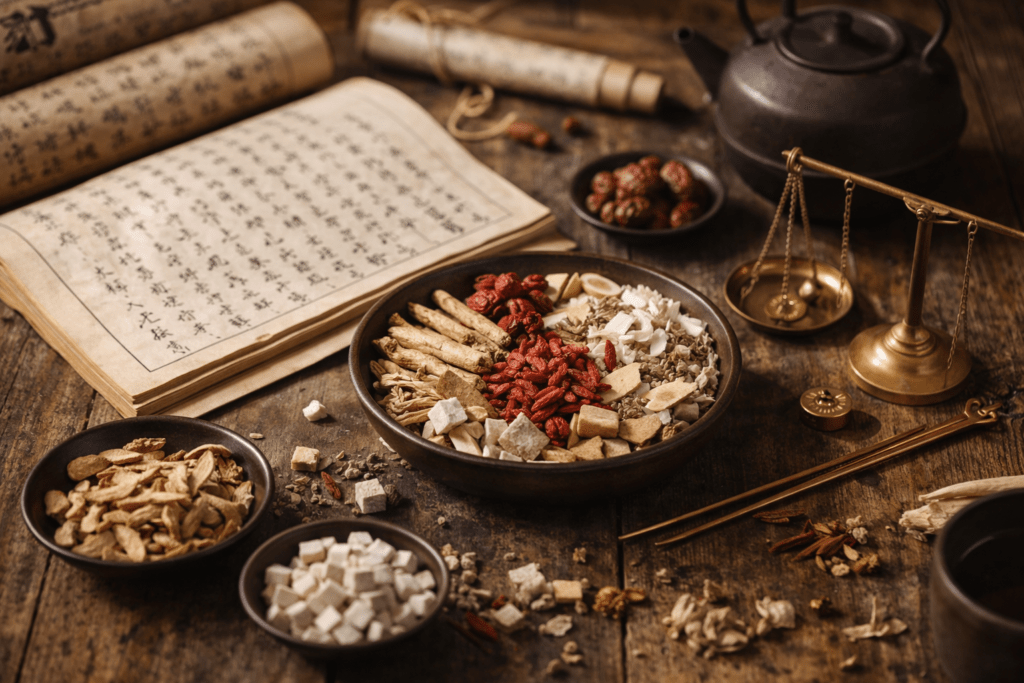
Yin and Yang Explained
Qi: The Flow That Connects Everything
Another central idea is Qi.
Qi is often translated as energy, but it is better understood as movement.
It is the flow that connects everything.
You experience it constantly:
- The calm after deep breathing
- The heaviness of a cluttered space
- The clarity after rest
- The tension during stress
All of these reflect how Qi is moving.
Where there is smooth flow, there is ease.
Where flow becomes blocked, discomfort appears.
Qi allows:
- Movement
- Transformation
- Connection
What Is Qi in Chinese Medicine
The Body as a System, Not Parts
Traditional Chinese Medicine does not look at isolated parts.
It looks at relationships.
The body is a system.
Functions are interconnected.
Changes in one area influence others.
Instead of asking:
What is broken?
It asks:
What pattern is forming?
What relationship is out of balance?
This creates a deeper understanding of how the body functions as a whole.
The Role of the Environment
The body does not exist separately from the world.
Environment plays a role.
Seasons play a role.
Daily surroundings influence internal state.
You already experience this:
- Slower energy in winter
- Increased activity in summer
- Reflection in autumn
These are natural patterns.
Traditional Chinese Medicine works with them—not against them.
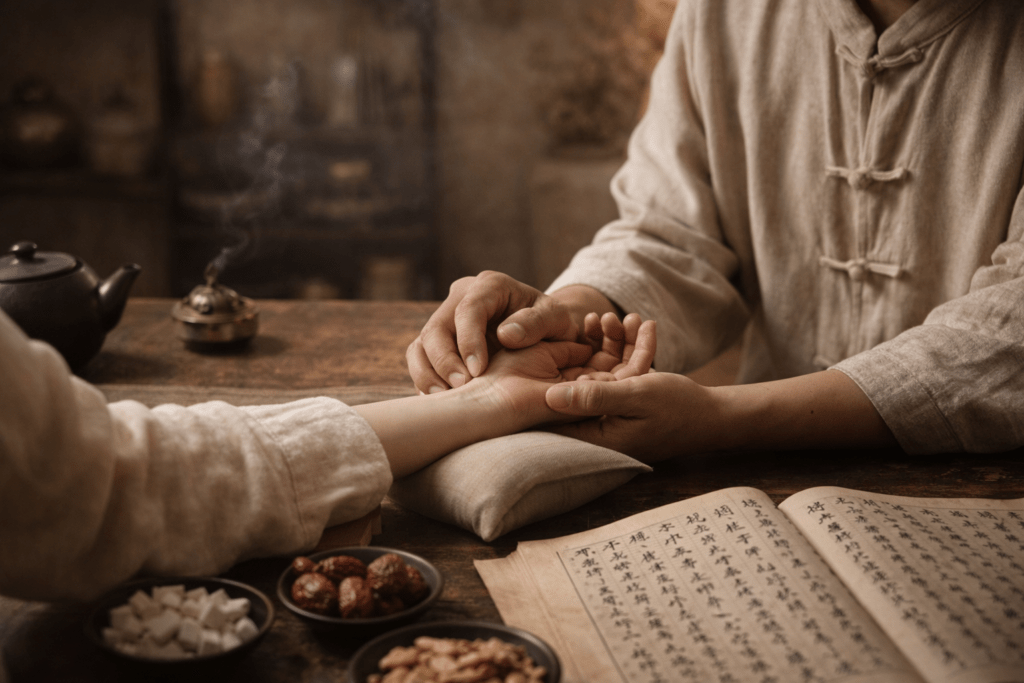
Seasonal Living in TCM
Awareness Before Problems
One of the most important ideas is awareness.
Noticing small changes before they become larger imbalances.
This includes:
- Shifts in energy
- Changes in mood
- Changes in rhythm
Instead of reacting to problems, attention is placed on patterns.
This is not about control.
It is about sensitivity.
Lifestyle as the Foundation
Daily life shapes your state.
What you repeat becomes your condition.
This includes:
- How you begin your day
- How you rest
- How you eat
- How you respond to pressure
Small habits form patterns.
Patterns shape your experience.
TCM Daily Routine
Cultural Depth
Traditional Chinese Medicine is part of a larger philosophical system.
It developed through:
- Observation of nature
- Daily life
- Long-term experience
It is connected with philosophy, awareness, and lifestyle.
This gives it depth beyond technique.
What It Is Not
It is not a quick solution.
It is not focused on isolated problems.
It is not about rigid rules.
It is a way of understanding patterns and relationships.
How to Begin
You can begin simply.
Notice how you feel.
Observe patterns.
Make small adjustments.
Add rest where there is too much activity.
Add movement where there is stagnation.
Create space where there is pressure.
This is enough.
FAQ
What is Traditional Chinese Medicine
Traditional Chinese Medicine is a system that understands the body through balance, patterns, and relationships rather than isolated issues.
Is TCM only about herbs
No. Herbs are only one part. It also includes philosophy, lifestyle, and awareness.
What is the main idea of TCM
The main idea is balance—maintaining harmony within the body and with the environment.
How is TCM different
It focuses on patterns and connections instead of isolated parts.
Do you need strict rules
No. It emphasizes awareness and gradual adjustment.
Closing
Your body is not something to control.
It is something to understand.
Your environment is not separate.
It is part of your experience.
Your state reflects patterns.
When you begin to notice these patterns, something quietly changes.
Pause.
Take a breath.
Notice how you feel.
That is where everything begins.
