Best Teaware for Chinese Tea Ceremony: A Complete Guide to Traditional Tea Tools
Chinese tea culture is not only about tea itself. The tools used to prepare and serve tea are also an important part of the experience. These tools, often referred to as teaware, help control the brewing process while also expressing aesthetic values such as simplicity, balance, and harmony.
In the traditional Chinese tea ceremony, especially in gongfu tea brewing, the choice of teaware plays a significant role in how the tea tastes and how the ceremony unfolds. Different vessels can influence heat retention, aroma development, and the rhythm of the brewing process.
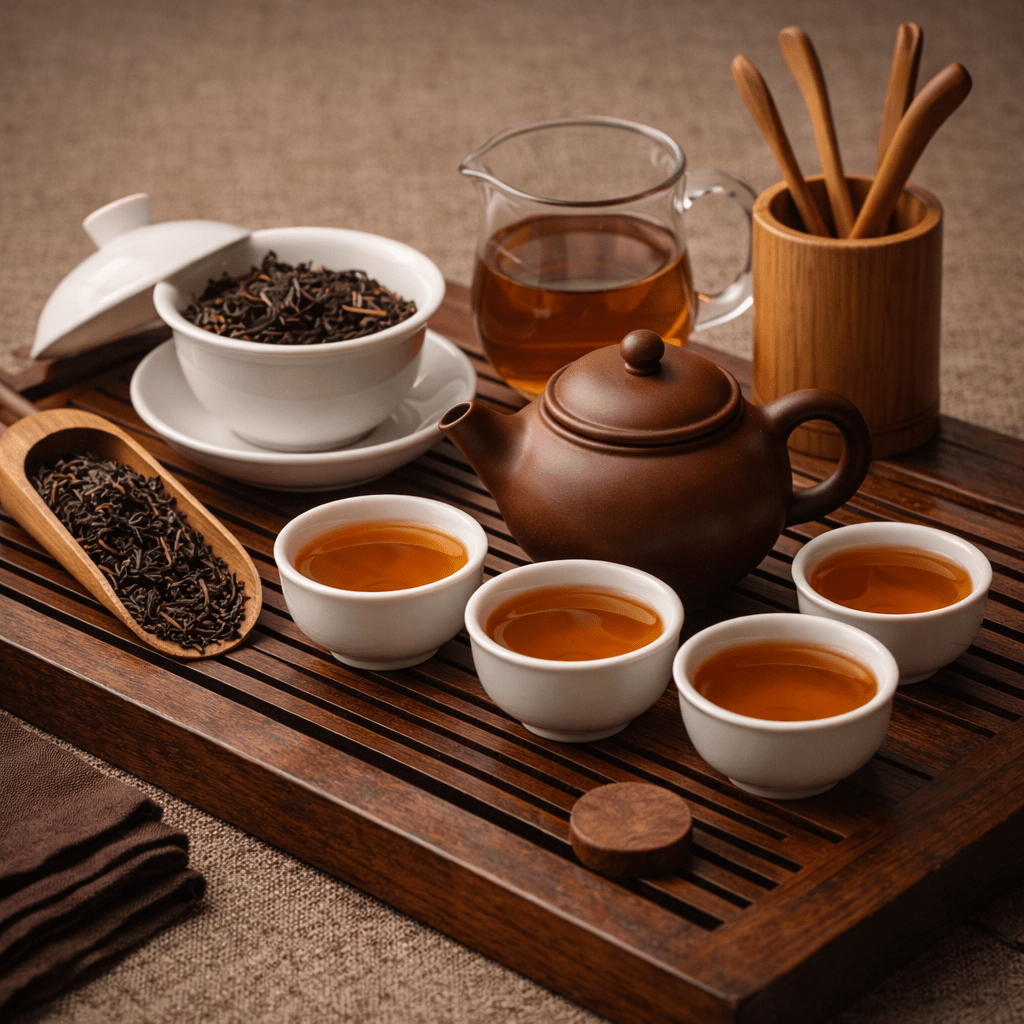
For beginners, the variety of tea tools may seem overwhelming. A typical tea table may include teapots, gaiwans, pitchers, cups, trays, and several smaller accessories.
However, each tool has a clear purpose.
Understanding these tools allows tea drinkers to appreciate tea on a deeper level and to brew tea more skillfully.
In this guide, we will explore the most important types of Chinese teaware, how they are used, and how beginners can build a simple tea setup.
Why Teaware Matters in Chinese Tea Culture
Tea brewing is influenced by several factors, including water temperature, tea quantity, and steeping time. The design of the brewing vessel affects all of these elements.
For example, the material of a teapot influences how well it retains heat. Porcelain vessels tend to highlight aroma, while clay teapots may soften the taste of certain teas.
In addition, the size of the brewing vessel affects the brewing technique. Small teapots and gaiwans are commonly used in gongfu brewing, which involves short infusions and multiple brews.
The use of specialized teaware also reflects the philosophy of Chinese tea culture. Many tools are designed to encourage patience and attention to detail.
Each step of preparing tea—from warming the cups to pouring the tea—becomes part of a quiet and deliberate ritual.
The Essential Teaware for Chinese Tea Ceremony
Although there are many tea tools available, only a few are truly essential.
A beginner can prepare excellent tea with just a small number of items.
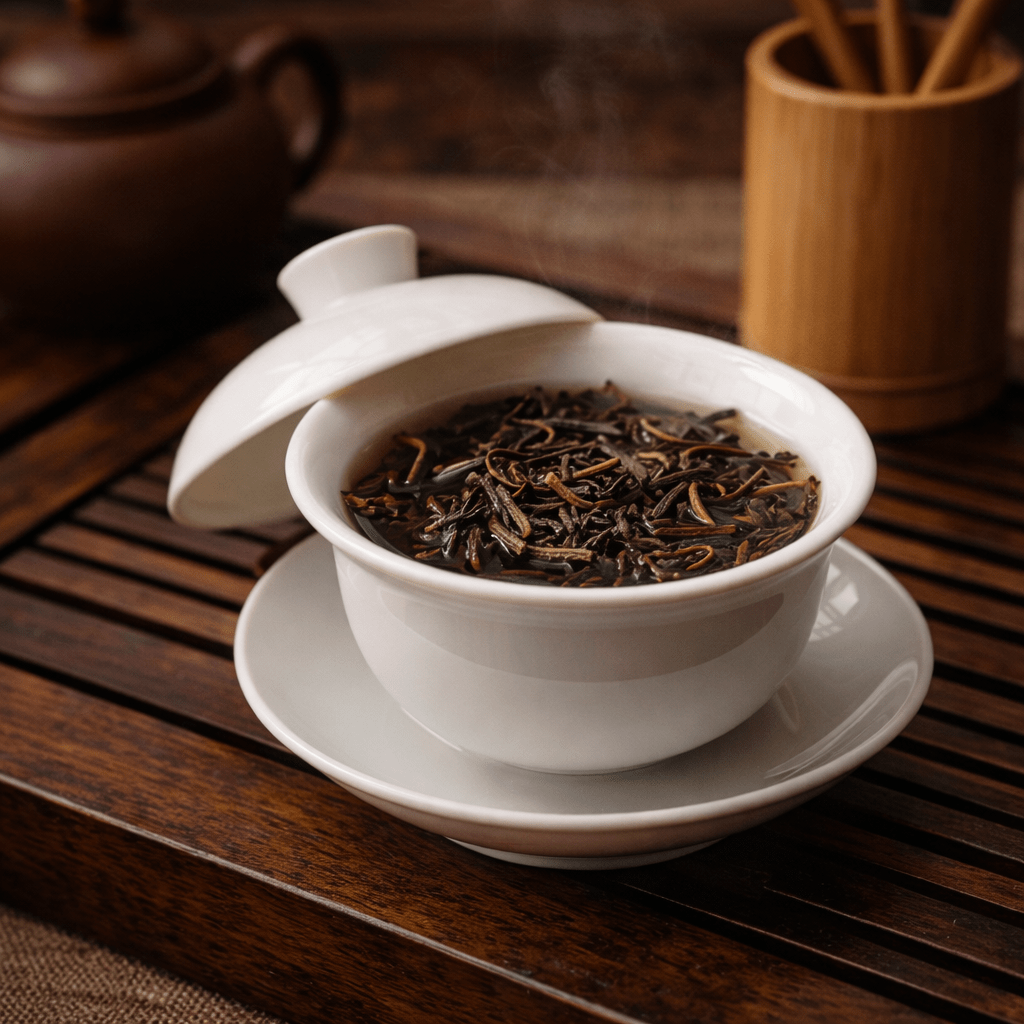
Gaiwan
The gaiwan is one of the most versatile pieces of Chinese teaware.
It consists of three parts:
- a bowl
- a lid
- a saucer
The gaiwan is used as a brewing vessel, allowing tea leaves to expand freely in hot water.
Because the bowl is open and wide, it allows the drinker to observe the tea leaves as they unfold. The lid can also be used to smell the aroma of the tea before pouring.
Many experienced tea drinkers prefer the gaiwan because it allows precise control of brewing time.
The gaiwan is especially suitable for:
- green tea
- white tea
- oolong tea
- pu-erh tea
Its simplicity makes it one of the most fundamental tools in Chinese tea culture.
Yixing Teapot
The Yixing teapot is one of the most famous types of Chinese teaware.
These teapots are made from special clay found in Yixing, a region in Jiangsu Province.
Unlike glazed porcelain teapots, Yixing clay is porous. Over time, the clay absorbs the aroma and oils of the tea.
Because of this property, tea drinkers often dedicate a single Yixing teapot to one type of tea.
For example:
- one teapot for oolong tea
- another for pu-erh tea
Many collectors appreciate Yixing teapots not only for their function but also for their artistic craftsmanship.
Some teapots are carefully shaped and decorated, making them valuable works of art.
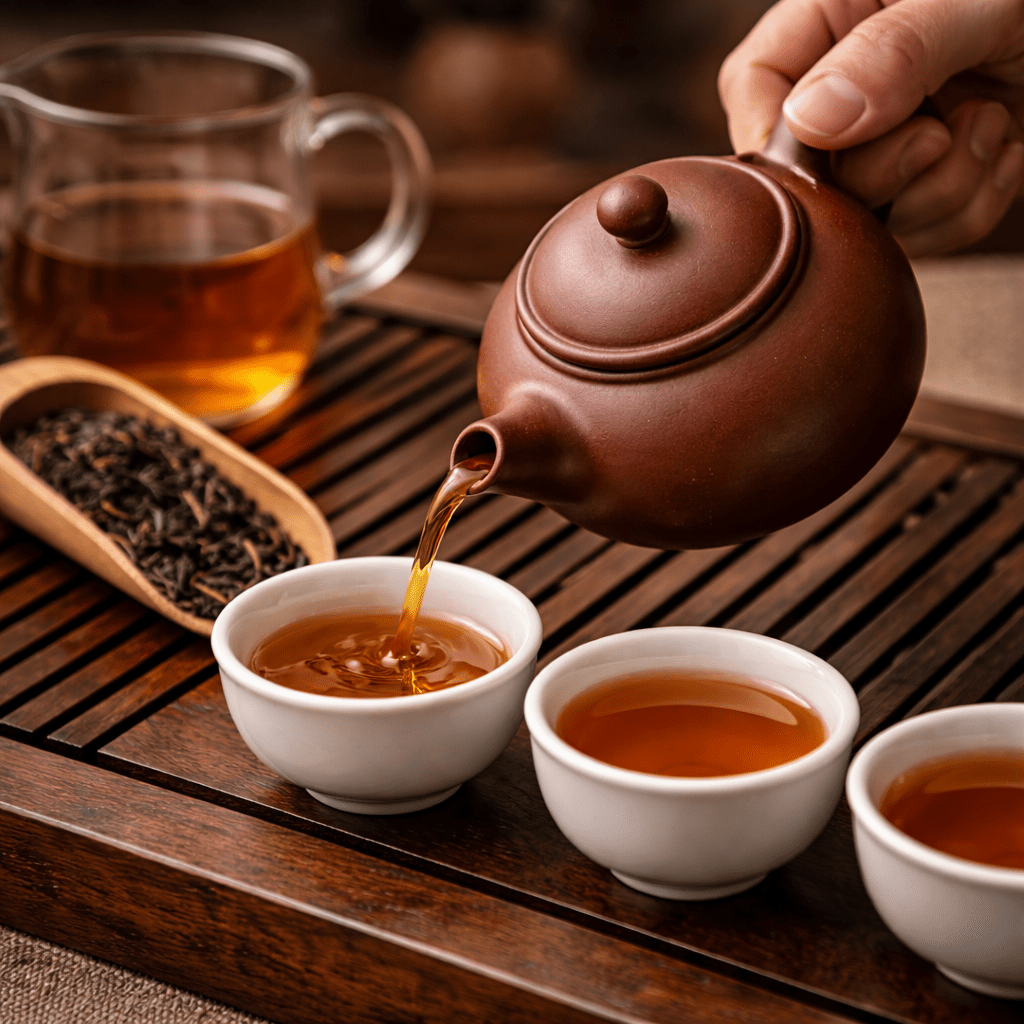
Fairness Pitcher (Cha Hai)
The fairness pitcher, also known as cha hai, plays an important role in gongfu brewing.
After tea is brewed in the gaiwan or teapot, it is poured into this pitcher before being served to guests.
This step ensures that the tea is evenly mixed.
Without the pitcher, the first cup poured may be weaker while the last cup may be stronger. The fairness pitcher helps distribute the tea evenly so that every guest receives the same flavor.
Tea Cups
Chinese tea cups are usually small and simple.
Unlike large mugs used for Western tea, these cups are designed for small, concentrated servings.
Because gongfu tea involves multiple infusions, tea is served in several small cups rather than one large cup.
Small cups also allow drinkers to focus on the aroma and flavor of the tea.
The thin porcelain walls help release the tea’s fragrance, enhancing the sensory experience.
Tea Tray (Cha Pan)
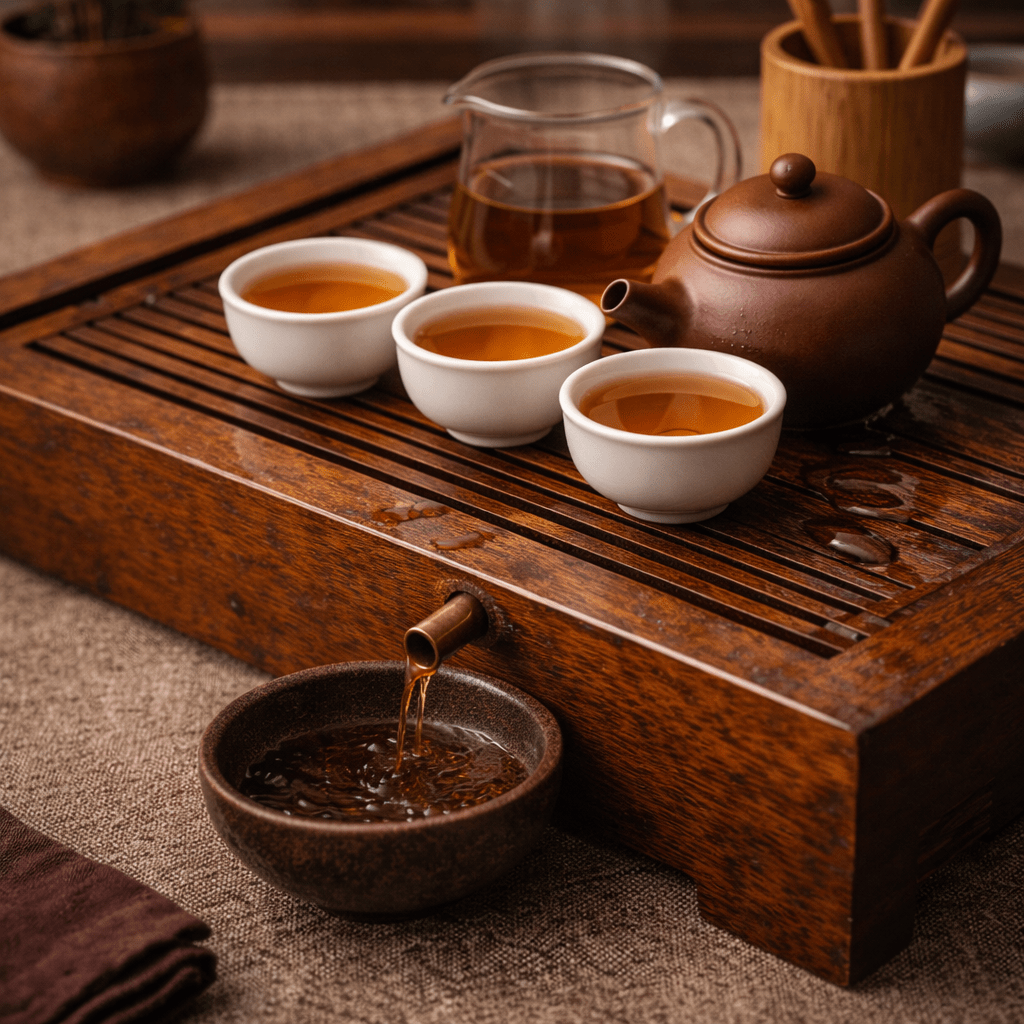
The tea tray is another essential tool in traditional tea preparation.
During gongfu brewing, water is often poured over teaware to warm it. Excess water must be collected somewhere.
The tea tray usually contains a drainage system that collects the water poured during the brewing process.
Beyond its practical function, the tea tray also provides an organized space for arranging tea tools.
Many tea trays are made from bamboo, wood, or stone.
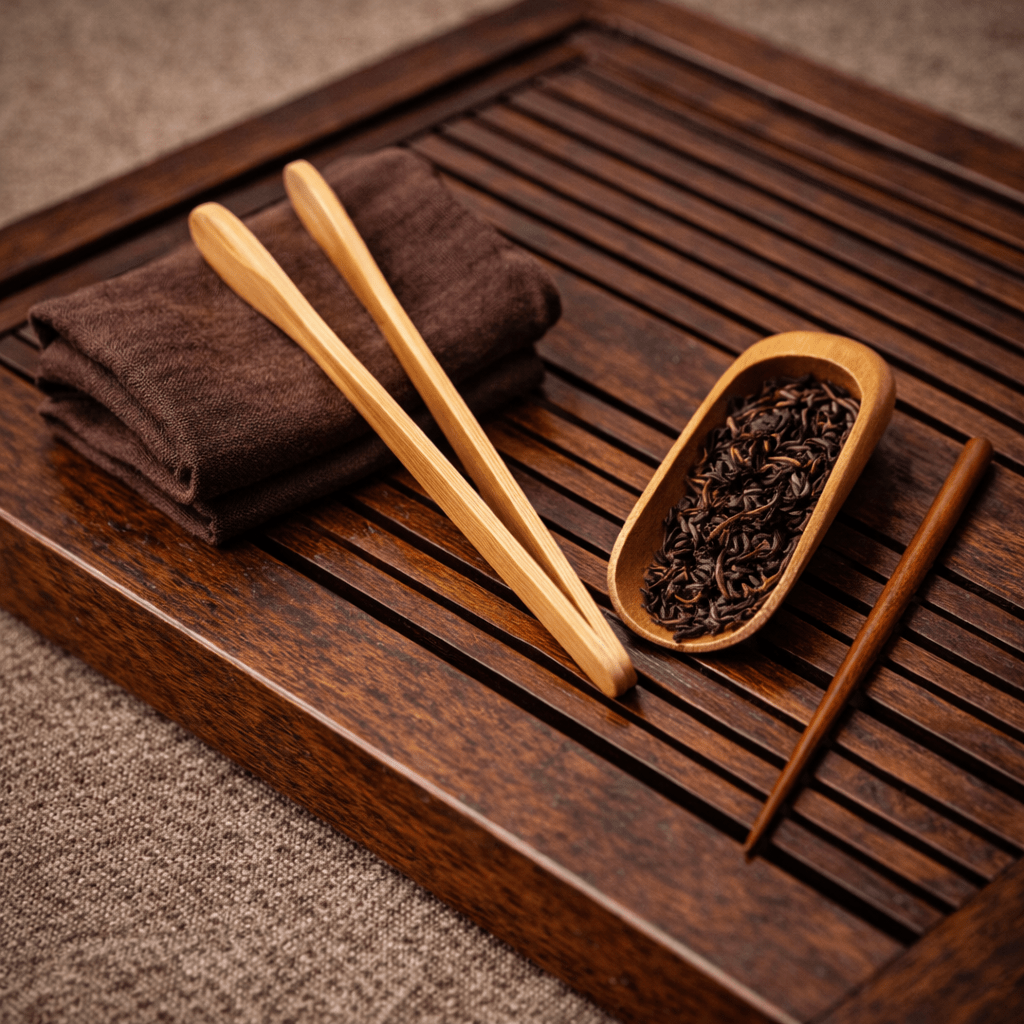
Tea Tongs
Tea tongs are small tools used to handle tea cups without touching them directly.
This tool helps maintain cleanliness and prevents fingerprints from appearing on cups during formal tea gatherings.
Although tea tongs are not absolutely necessary for everyday brewing, they are commonly used in traditional tea ceremonies.
Tea Scoop and Tea Pick
Several small tools are often used when handling loose tea leaves.
The tea scoop is used to transfer tea leaves from the container to the teapot.
The tea pick is used to loosen compressed teas such as pu-erh tea cakes.
These tools help keep the tea preparation process clean and organized.
Tea Towel
A tea towel is often placed near the tea tray to wipe away excess water.
Since gongfu brewing involves frequent pouring and rinsing, the towel helps maintain a neat tea table.
Choosing Teaware for Beginners
For beginners, purchasing a complete tea ceremony set may not be necessary.
A simple setup can include just a few items:
- a gaiwan
- a fairness pitcher
- two or three small tea cups
This minimal setup allows beginners to practice gongfu brewing while keeping the process simple.
As interest grows, additional tools such as a tea tray or Yixing teapot can be added gradually.
Materials Used in Chinese Teaware
Chinese teaware can be made from several different materials.
Each material influences the tea experience in a unique way.
Porcelain
Porcelain teaware is widely used because it is neutral and does not absorb flavors.
This makes porcelain ideal for tasting many different types of tea.
Clay
Clay teapots, especially Yixing teapots, are valued for their ability to enhance certain teas over time.
The clay retains heat well and gradually absorbs tea oils.
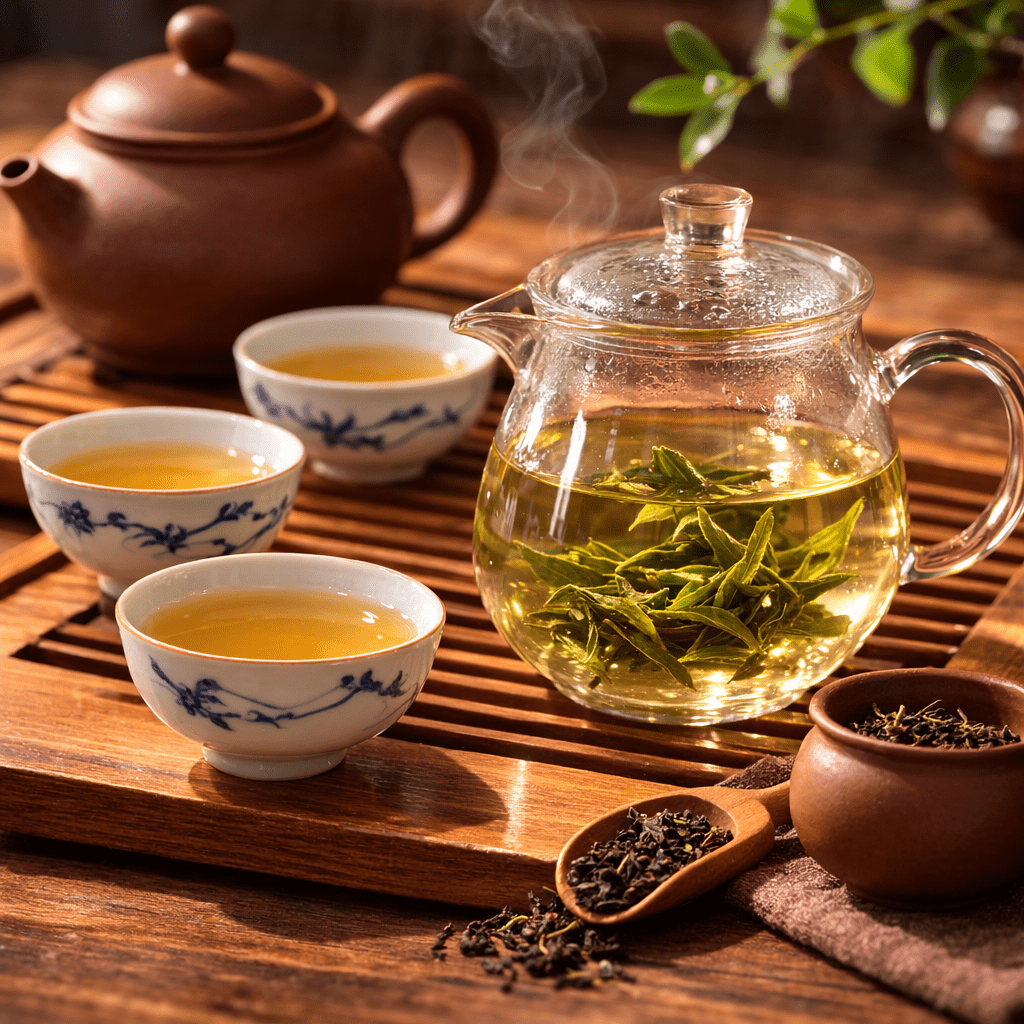
Glass
Glass teaware is often used for green tea.
Because the vessel is transparent, it allows drinkers to watch the tea leaves open and move in the water.
The Aesthetic of Chinese Teaware
Chinese tea tools are not only functional. They are also designed to reflect a sense of beauty and balance.
Many tea sets feature simple shapes and natural materials.
This aesthetic reflects traditional Chinese values such as:
- simplicity
- harmony with nature
- quiet elegance
A well-arranged tea table creates an atmosphere that encourages calm and focus.
How Teaware Shapes the Tea Experience
Different tea tools can subtly influence the flavor of tea.
For example:
A small teapot allows stronger flavor extraction because the leaves are concentrated in a smaller space.
Porcelain vessels emphasize fragrance.
Clay teapots may soften bitterness and produce a smoother taste.
Understanding these differences allows tea drinkers to experiment and discover which tools work best for different teas.
Building Your First Tea Setup
For those new to Chinese tea culture, the goal is not to collect many tools but to understand how each tool contributes to the brewing process.
A beginner tea setup might include:
- gaiwan
- fairness pitcher
- three small cups
- simple tea tray
This small collection is enough to explore the world of gongfu tea.
As experience grows, additional tools can be added gradually.
Why Teaware Is Part of Tea Culture
In Chinese tradition, tea preparation is not rushed. The tools used in the process help create a rhythm that encourages mindfulness.
Each step—warming the cups, rinsing the leaves, pouring the tea—becomes part of a quiet sequence of actions.
The presence of well-crafted tea tools adds a sense of care and intention to the experience.
For many tea lovers, this ritual is just as meaningful as the tea itself.
Final Thoughts
Chinese teaware reflects centuries of craftsmanship, cultural values, and appreciation for tea.
From the humble gaiwan to the elegant Yixing teapot, each tool plays a role in shaping how tea is brewed and enjoyed.
For beginners, the most important step is simply to start brewing tea with a few basic tools.
Over time, learning about teaware can deepen one’s understanding of tea and bring greater enjoyment to every cup.
Through these tools and traditions, Chinese tea culture continues to connect people with the quiet pleasure of preparing and sharing tea.
Continue the Journey
Tea Infuser Guide: How to Choose the Best Infuser for Loose Leaf Tea
Loose leaf tea has become increasingly popular among tea drinkers around the...
Tea Tray Guide: What Is a Gongfu Tea Tray and How to Choose the Right One
In traditional Chinese tea culture, the tools used to prepare tea are...
Chinese Tea Cups Guide: Understanding Traditional Cups for Gongfu Tea
Tea cups are one of the most important elements of traditional Chinese...