Black Tea Explained: Taste, Types, Benefits, and Brewing Guide
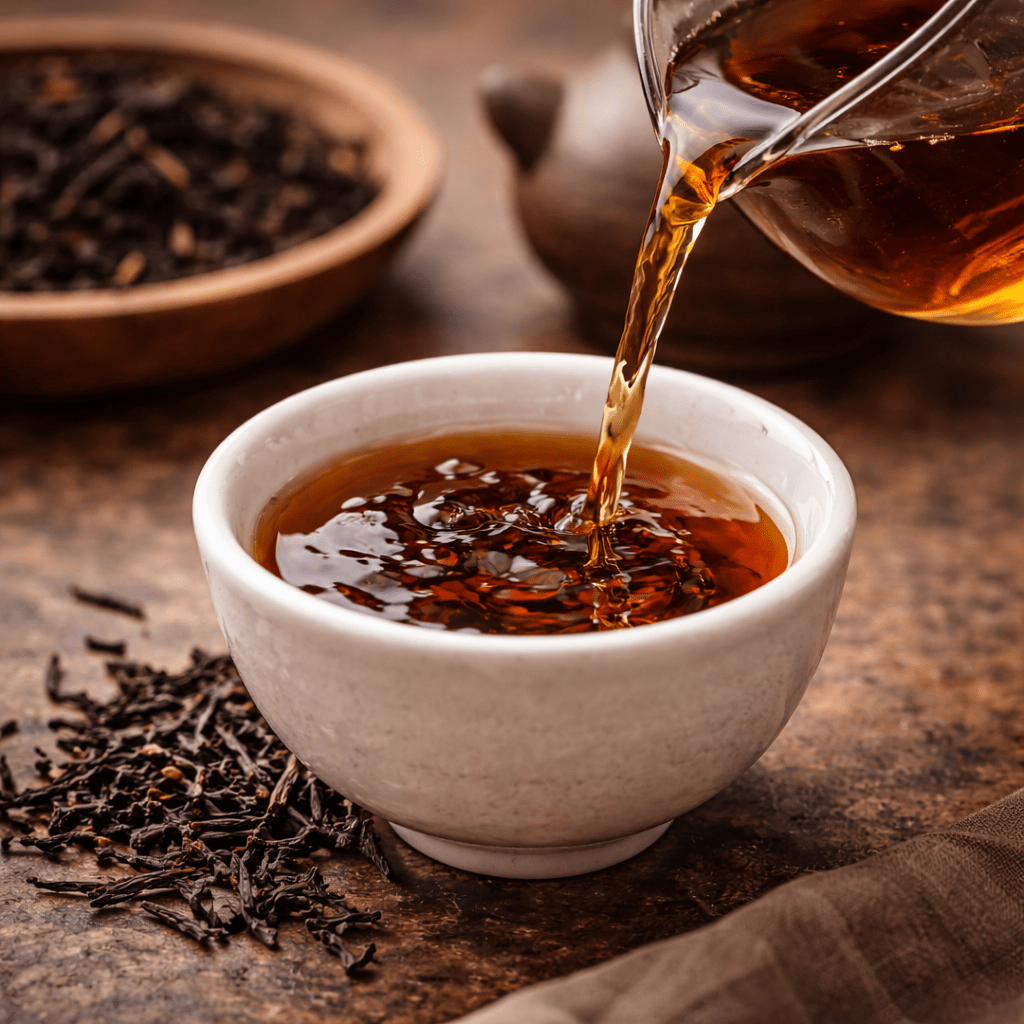
Black tea is one of the most widely consumed teas in the world. Known for its rich flavor, deep color, and comforting aroma, black tea has played an important role in global tea culture for centuries.
Although black tea is enjoyed worldwide, its origins trace back to China, where tea producers first developed the techniques required to fully oxidize tea leaves. This process creates the bold flavor and dark color that define black tea.
Interestingly, what the West calls “black tea” is known in China as red tea, referring to the reddish color of the brewed tea rather than the color of the dry leaves.
Compared with green tea, white tea, or oolong tea, black tea undergoes the most extensive oxidation during processing. This oxidation transforms the chemical composition of the tea leaves, producing a stronger flavor and a darker infusion.
Because of its robust character, black tea pairs well with many drinking traditions around the world. Some people drink it plain, others enjoy it with milk or sugar, and in some cultures it forms the base of popular drinks such as chai or milk tea.
In this guide, we will explore everything you need to know about black tea, including what black tea is, how it is produced, the most famous Chinese black teas, the taste and aroma of black tea, potential health benefits, and how to brew black tea properly.
By the end of this article, you will have a deeper understanding of black tea and why it continues to be one of the most beloved beverages in the world.
What Is Black Tea
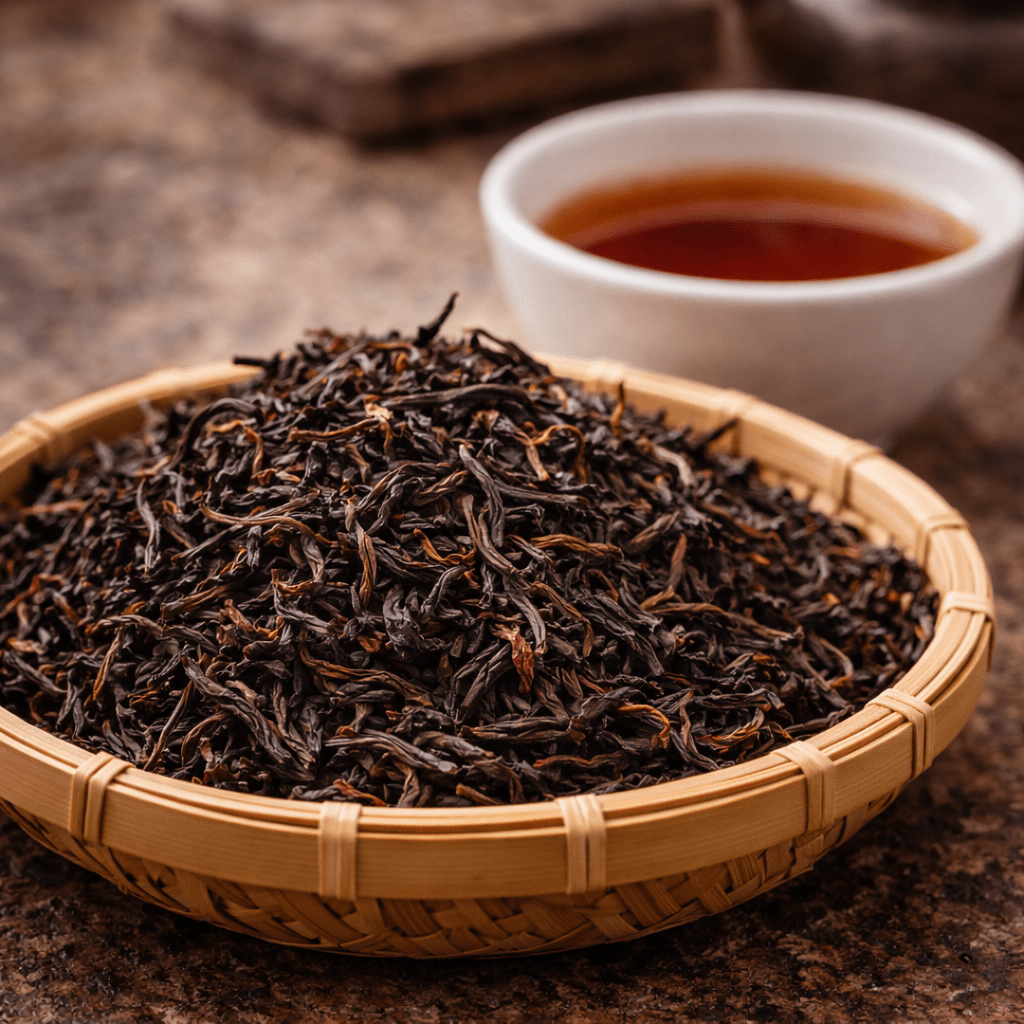
Black tea is a type of tea made from the leaves of the Camellia sinensis plant. This is the same plant used to produce green tea, white tea, oolong tea, and pu-erh tea.
The key difference lies in the level of oxidation.
Black tea is fully oxidized, meaning the tea leaves are allowed to react with oxygen for a longer period during processing. This oxidation darkens the leaves and develops the strong flavor associated with black tea.
During oxidation, natural compounds in the tea leaves change. The catechins found in fresh leaves transform into compounds known as theaflavins and thearubigins. These compounds contribute to the color, body, and taste of black tea.
As a result, black tea typically has:
- a darker color
- a fuller body
- a stronger flavor
In Chinese tea classification, black tea is called hong cha, which translates to “red tea.” This name refers to the reddish color of the brewed tea.
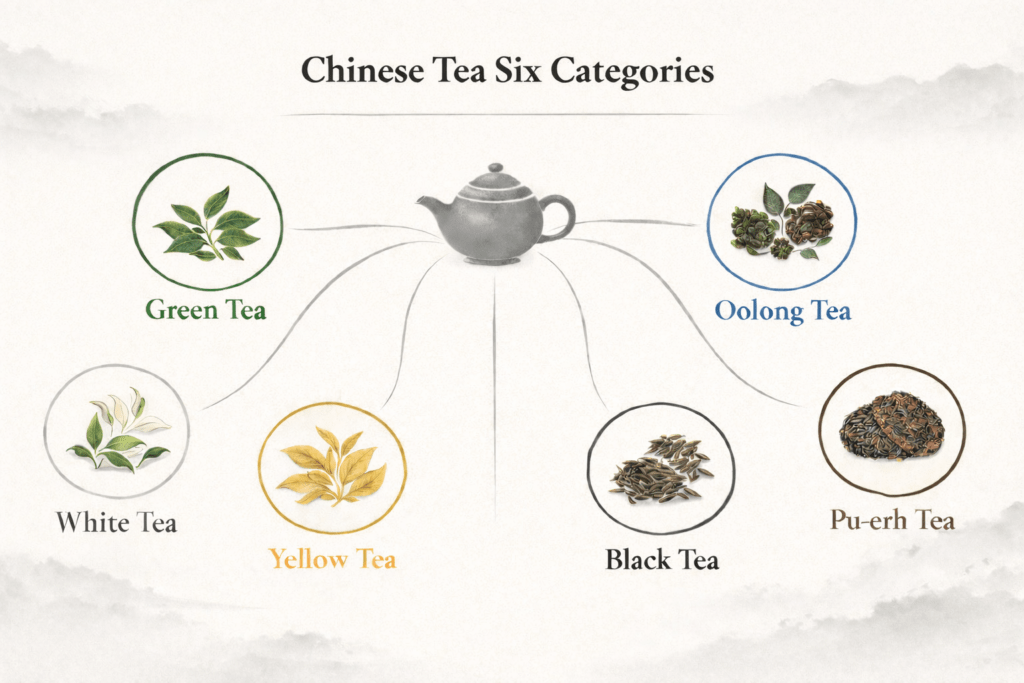
Black tea is one of the six major categories of Chinese tea, which include:
- green tea
- white tea
- yellow tea
- oolong tea
- black tea
- dark tea
Each category is defined by the way the tea leaves are processed.
How Black Tea Is Made
Black tea production involves several carefully controlled steps. These steps allow tea makers to fully oxidize the leaves while preserving desirable flavors and aromas.
Although techniques vary between regions, traditional black tea production usually includes four main stages.
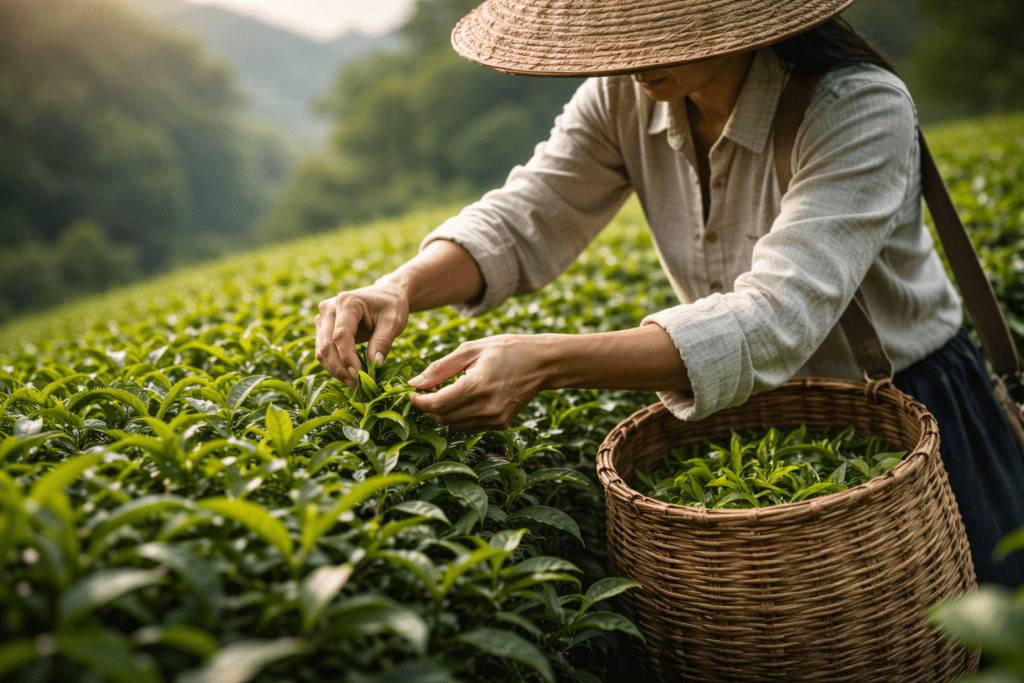
Harvesting
The process begins with harvesting fresh tea leaves.
Tea pickers usually collect:
- one bud and two leaves
- or two young leaves
These tender leaves contain the best balance of flavor compounds.
Harvest timing is important. Leaves picked too late may produce tea that tastes coarse or bitter.
Withering
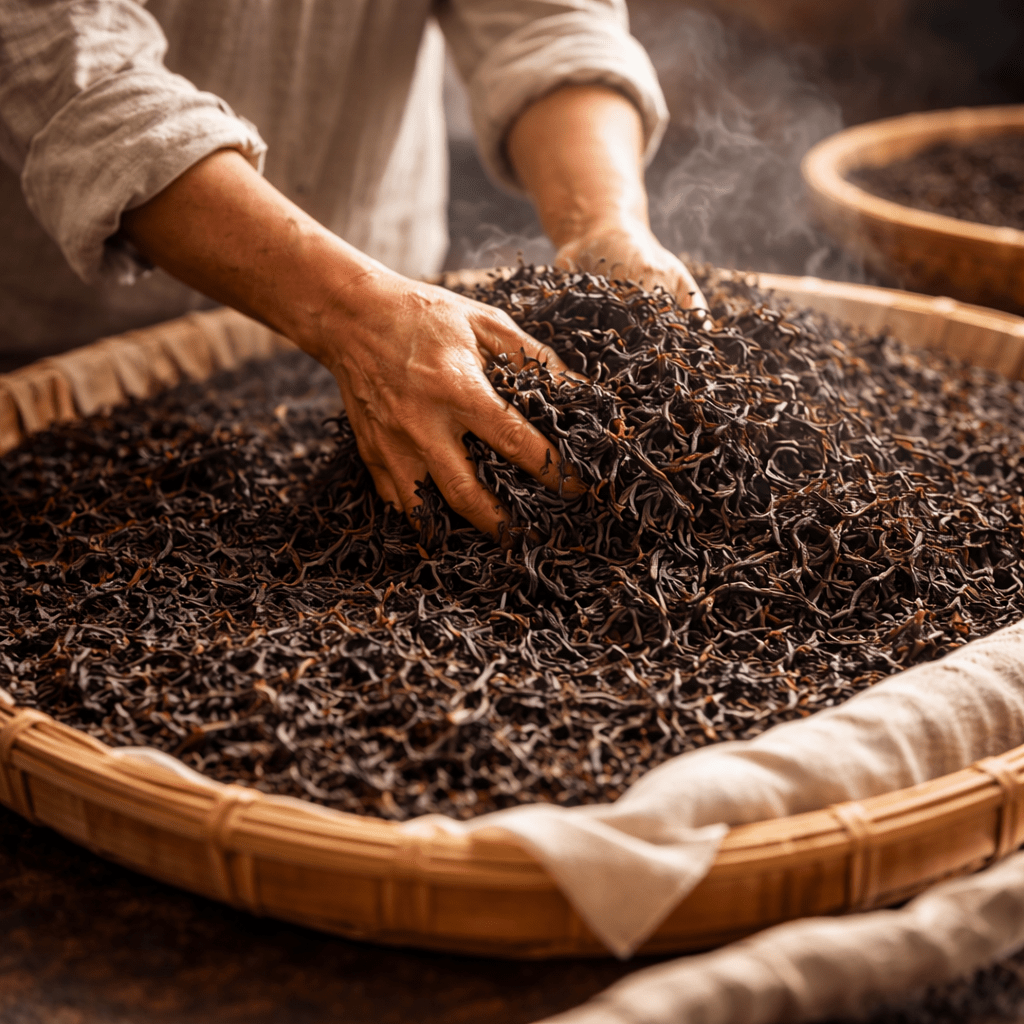
After harvesting, the leaves are spread out in thin layers and allowed to wither.
During withering:
- moisture evaporates from the leaves
- the leaf structure softens
- aromatic compounds begin to develop
This stage makes the leaves flexible enough for the next step of processing.
Rolling
The leaves are then rolled or twisted.
Rolling breaks the cell walls of the tea leaves and exposes the enzymes inside the leaves to oxygen.
This step is essential for starting the oxidation process.
Oxidation
Oxidation is the stage that defines black tea.
The rolled leaves are left in a warm, humid environment where they gradually darken.
During oxidation:
- the leaves change from green to reddish brown
- new flavor compounds form
- the aroma becomes richer
Tea masters carefully monitor this process to achieve the desired flavor.
Drying
Finally, the leaves are heated to stop oxidation.
This drying step stabilizes the tea so it can be stored and transported.
After drying, the tea becomes the finished black tea that people brew and drink.
Famous Chinese Black Teas
China produces many famous black teas, each with its own distinctive character. The flavor of black tea is influenced by climate, soil, altitude, and traditional processing methods.
Below are some of the most well-known Chinese black teas.
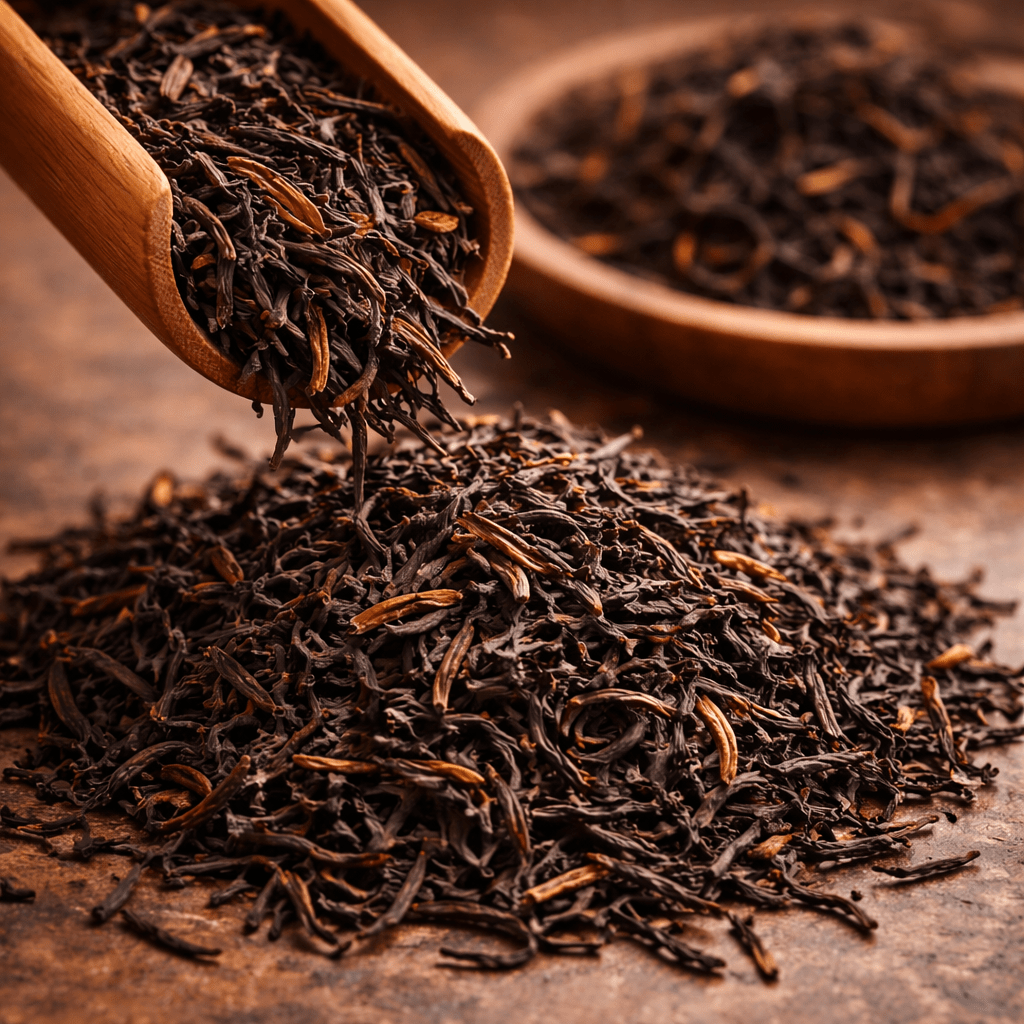
Keemun (Qimen Black Tea)
Keemun is one of the most famous Chinese black teas.
It comes from Qimen County in Anhui Province.
Keemun tea is known for its elegant aroma and smooth taste.
Typical characteristics include:
- floral fragrance
- light smoky notes
- hints of cocoa or fruit
Because of its refined flavor, Keemun tea has long been used in traditional English breakfast tea blends.
Dian Hong (Yunnan Black Tea)
Dian Hong comes from Yunnan Province in southwestern China.
This tea is famous for its golden buds and rich flavor.
Dian Hong often has notes of:
- honey
- caramel
- malt
The presence of golden buds gives the tea a smooth and naturally sweet taste.
Lapsang Souchong
Lapsang Souchong is one of the most distinctive black teas in the world.
This tea originates from the Wuyi Mountains in Fujian Province.
Traditionally, the tea leaves are dried over pinewood fires, giving the tea its famous smoky aroma.
Some people find this flavor bold and unique, while others consider it an acquired taste.
What Does Black Tea Taste Like
Black tea has a stronger flavor than most other teas.
However, the taste can vary widely depending on the region and production method.
Common flavor characteristics include the following.
Malty and Rich
Many black teas have a malty flavor similar to warm bread or grains.
This flavor is especially common in teas grown in warmer climates.
Sweet and Fruity
Some black teas develop subtle sweetness during oxidation.
Flavor notes may include:
- dried fruit
- honey
- chocolate
Full Body
Compared with green tea or white tea, black tea usually has a fuller body.
This makes it satisfying as a morning or afternoon drink.
Black Tea Benefits
Black tea contains many natural compounds that may support general well-being.
While tea should not be considered a medical treatment, researchers have studied several components found in black tea.
Antioxidants
Black tea contains antioxidants that help protect the body from oxidative stress.
These antioxidants may support overall health.
Natural Energy
Black tea contains caffeine, which can provide gentle stimulation and improved alertness.
For many people, black tea provides a balanced source of energy without the intensity often associated with coffee.
Digestive Comfort
In many cultures, black tea is traditionally consumed after meals.
Some people believe it may support digestion and relaxation.
How to Brew Black Tea
Brewing black tea correctly helps bring out its full flavor.
Because black tea leaves are fully oxidized, they can tolerate hotter water than more delicate teas.
Water Temperature
Recommended brewing temperature:
90°C – 100°C
Hot water helps extract the rich flavor of black tea.
Tea Quantity
A common ratio is:
3 grams of tea
per 200 ml of water
Brewing Time
Typical steeping time:
3 – 5 minutes
Shorter brewing produces a lighter flavor, while longer brewing creates a stronger cup.
Multiple Infusions
Some high-quality Chinese black teas can be brewed multiple times.
Each infusion may reveal slightly different aromas.
Black Tea vs Other Types of Tea
All traditional teas come from the same plant, yet processing methods create very different flavor experiences.
Green tea is minimally oxidized and has a fresh, vegetal flavor.
White tea is lightly processed and offers a delicate and subtle taste.
Oolong tea is partially oxidized and can range from floral to roasted.
Black tea is fully oxidized and develops a deeper, stronger flavor.
Each tea type reflects a different approach to tea craftsmanship.
Why Black Tea Became So Popular Worldwide
Black tea spread from China to Europe in the 17th century and quickly became popular.
Its strong flavor made it easier to transport and store compared with other teas.
Over time, black tea became central to many tea traditions around the world.
In Britain, black tea became part of the famous afternoon tea ritual.
In India and the Middle East, black tea is often brewed with spices and milk.
In many countries, it remains a daily beverage enjoyed by millions of people.
Final Thoughts
Black tea represents an important chapter in the history of tea.
Its bold flavor, comforting warmth, and long cultural tradition have made it one of the most widely enjoyed teas in the world.
From the mountains of China to tea cups across the globe, black tea continues to bring people together through the simple ritual of brewing and sharing tea.
For those who appreciate strong flavor and rich aroma, black tea offers a timeless and satisfying experience.
Continue the Journey
No Image
Keemun Black Tea Explained: Flavor, History, and Brewing Guide
Introduction Keemun tea is one of the most celebrated black teas in...
Lapsang Souchong Black Tea Guide: Flavor, History, and Brewing
Introduction Lapsang Souchong is one of the most distinctive teas in the...
Huangshan Maofeng Tea Guide: Flavor, History, and Brewing
Introduction Among the many famous Chinese green teas, Huangshan Maofeng tea stands...