Chinese Tea Culture: History, Philosophy, and Tradition
Tea has been an essential part of Chinese civilization for thousands of years. More than just a beverage, tea represents a way of life that reflects philosophy, social customs, and aesthetic values. In China, tea is closely connected to ideas of harmony, respect, and balance.
Over centuries, tea evolved from a medicinal plant into one of the most important cultural symbols in Chinese society. It became part of daily routines, religious practices, artistic traditions, and social interactions.
Today, Chinese tea culture continues to influence the world. From traditional tea ceremonies to modern tea houses, the spirit of tea remains deeply rooted in the rhythm of everyday life.
Understanding Chinese tea culture helps reveal why tea holds such a special place in Chinese history and why it continues to inspire tea lovers across different cultures.
The Origins of Tea in China
The story of tea in China begins with legend. According to Chinese tradition, tea was discovered by Emperor Shennong, a mythical ruler known for his knowledge of herbs and medicine.
The legend says that around 2737 BCE, Shennong was boiling water when leaves from a nearby tree drifted into his pot. Curious about the aroma, he tasted the infusion and discovered that it was refreshing and energizing. This accidental discovery is said to be the beginning of tea drinking.
Although the legend is symbolic, historical evidence shows that tea plants have been used in China for thousands of years. Early records suggest that tea was originally consumed for medicinal purposes. It was valued for its ability to aid digestion, refresh the mind, and promote general well-being.
Over time, tea gradually transformed from a medicinal herb into a daily beverage enjoyed by people from all walks of life.
Tea in Ancient Chinese History
Tea became widely popular during the Tang Dynasty (618–907). During this period, tea drinking spread throughout Chinese society and became an important cultural activity.
One of the most influential figures in tea history was Lu Yu, often called the “Sage of Tea.” In the 8th century, Lu Yu wrote The Classic of Tea (Cha Jing), the first book entirely dedicated to tea.
The book described:
- the cultivation of tea plants
- the tools used for preparing tea
- the methods of brewing and drinking tea
- the philosophy behind tea appreciation
Lu Yu’s work elevated tea from a simple drink to an art form. His writings helped shape the way tea was understood and practiced throughout Chinese history.
During the Song Dynasty (960–1279), tea culture became even more refined. Scholars and artists gathered to drink tea, compose poetry, and discuss philosophy. Tea preparation during this period often involved powdered tea whisked into bowls.
Later, during the Ming Dynasty (1368–1644), loose-leaf tea brewing became more common. This shift led to the brewing styles that are still widely used today.
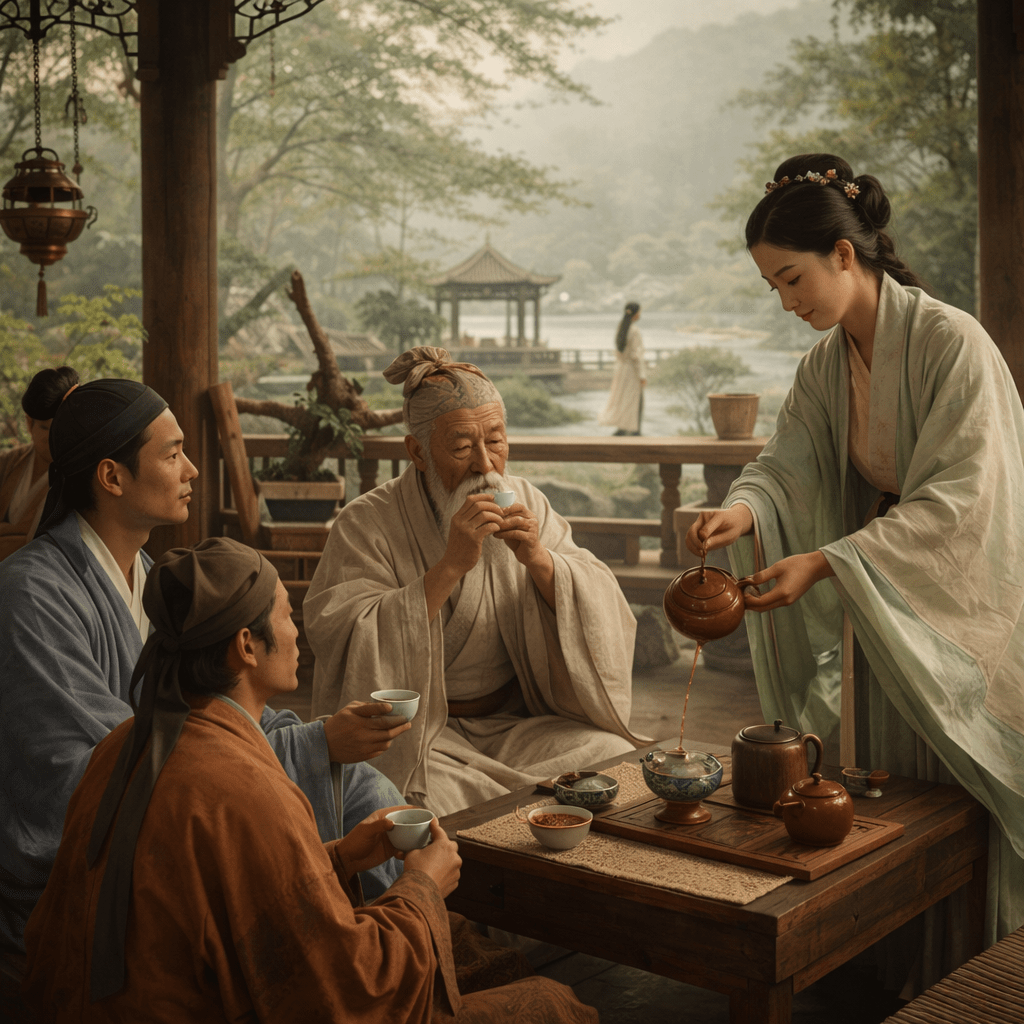
Tea and Chinese Philosophy
One of the reasons tea culture became so deeply embedded in Chinese society is its connection to traditional Chinese philosophies.
Tea reflects many of the values found in Daoism, Buddhism, and Confucianism.
Tea and Daoism
Daoist philosophy emphasizes harmony with nature and simplicity in everyday life.
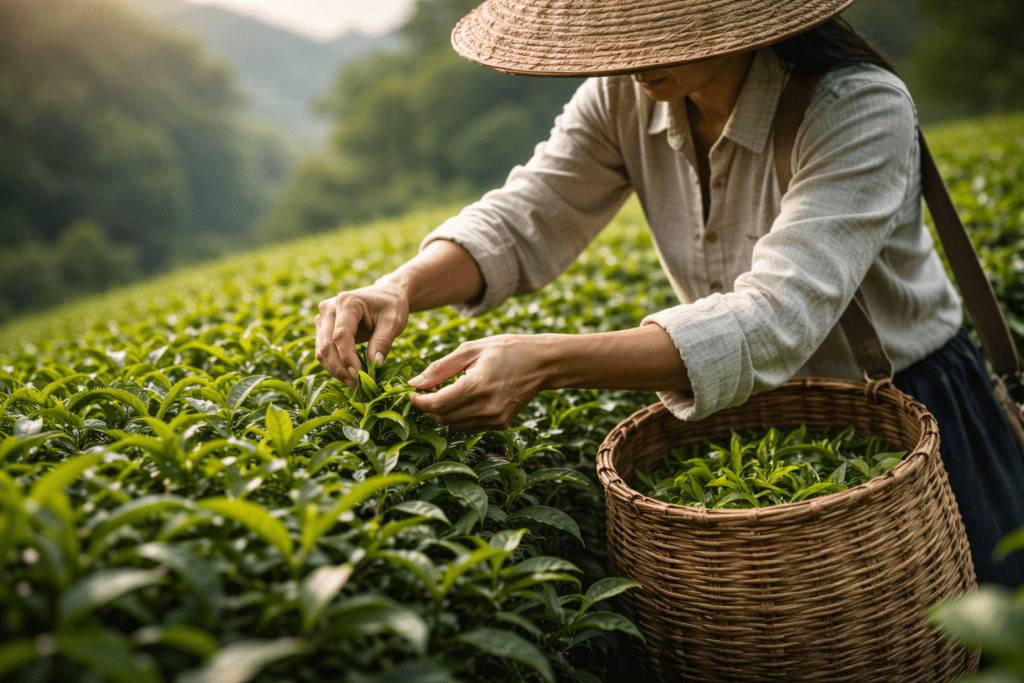
Tea embodies these ideas naturally. The process of growing tea plants, harvesting leaves, and brewing tea requires patience and respect for natural rhythms.
Drinking tea slowly encourages people to become more aware of the present moment and appreciate simple experiences.
In this way, tea can be seen as an expression of the Daoist concept of living in balance with nature.
Tea and Buddhism
Tea also became closely associated with Buddhism.
In many Buddhist monasteries, tea was used to help monks stay alert during long hours of meditation. The mild stimulation provided by tea helped maintain focus without disrupting calmness.
Over time, tea drinking became integrated into monastic routines. Monks developed quiet rituals around preparing and sharing tea.
These traditions influenced the development of tea ceremonies, which emphasize mindfulness and peaceful attention.
Tea and Confucian Values
Confucian philosophy places great importance on respect, etiquette, and harmonious relationships.
Tea plays a role in many traditional social customs that reflect these values.
Serving tea to guests is considered a gesture of hospitality and respect. In family gatherings, offering tea to elders symbolizes gratitude and appreciation.
Because of this cultural significance, tea is often present during important life events such as weddings and celebrations.
Tea in Everyday Chinese Life
Although tea has deep philosophical and historical meanings, it is also a simple part of daily life.
In many Chinese households, tea is prepared several times a day. People may drink tea while working, relaxing, or spending time with friends.
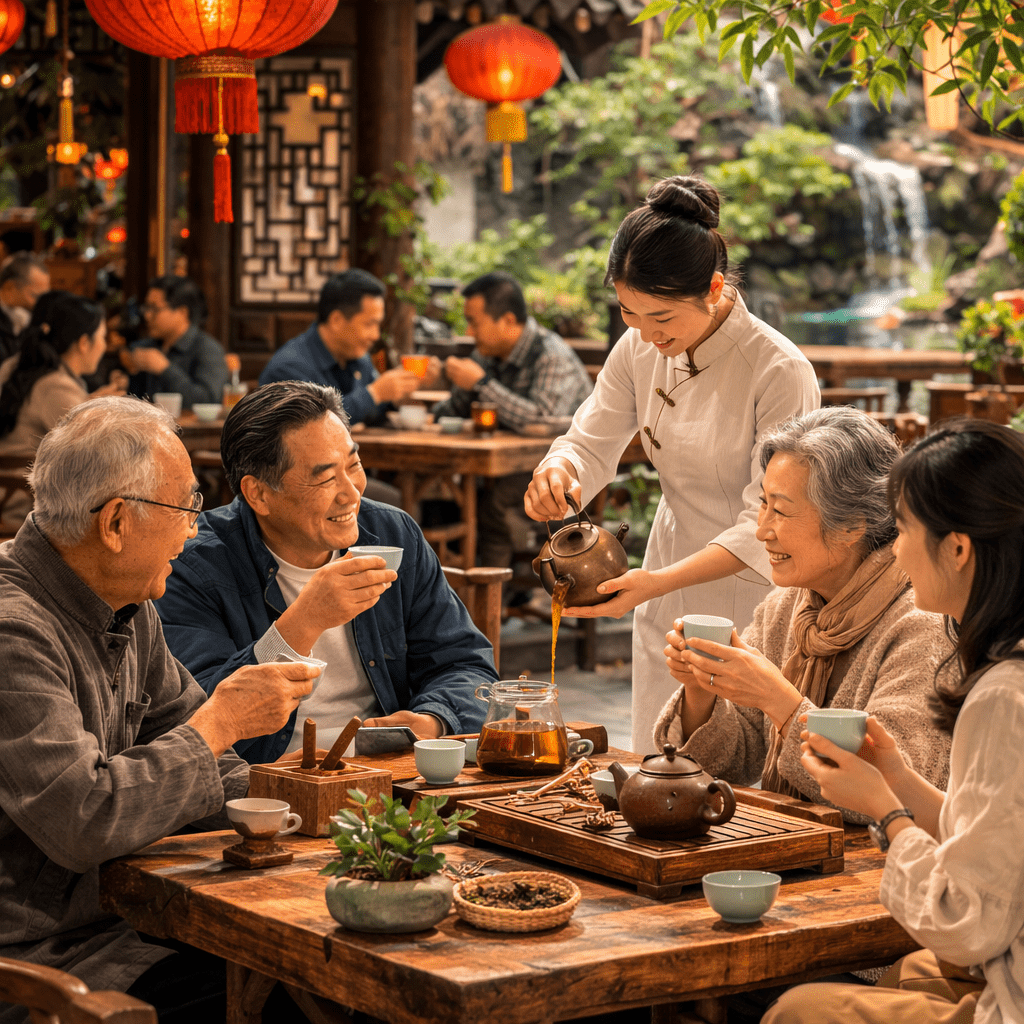
Tea is also commonly served in restaurants and homes when guests arrive. Offering tea is one of the first ways a host welcomes visitors.
Unlike formal ceremonies, everyday tea drinking is relaxed and informal. A simple glass cup or teapot may be enough to enjoy good tea.
This balance between simplicity and tradition is one of the defining characteristics of Chinese tea culture.
The Role of Tea Houses
Tea houses have long been important social spaces in Chinese cities and towns.
Historically, tea houses were places where people gathered to:
- meet friends
- discuss business
- listen to storytelling or music
- play traditional games
In some regions, tea houses became centers of community life.
For example, the tea houses of Chengdu in Sichuan Province are famous for their relaxed atmosphere. People often spend hours chatting, drinking tea, and enjoying a slow pace of life.
Tea houses continue to exist today, both in traditional forms and modern interpretations.
Tea as Hospitality and Respect
In Chinese culture, tea is closely connected to the idea of hospitality.
When guests visit a home, serving tea is one of the first gestures of welcome. This custom reflects the belief that tea creates a comfortable and respectful environment for conversation.
Tea also plays a role in ceremonies and traditions.
For example, during traditional Chinese weddings, the bride and groom may serve tea to their parents as a symbol of gratitude and respect.
These rituals show how tea can express social values and strengthen relationships.
Chinese Tea Culture in the Modern World
Today, Chinese tea culture continues to evolve.
Modern tea shops, specialty tea houses, and tea appreciation communities are becoming more popular, both in China and internationally.
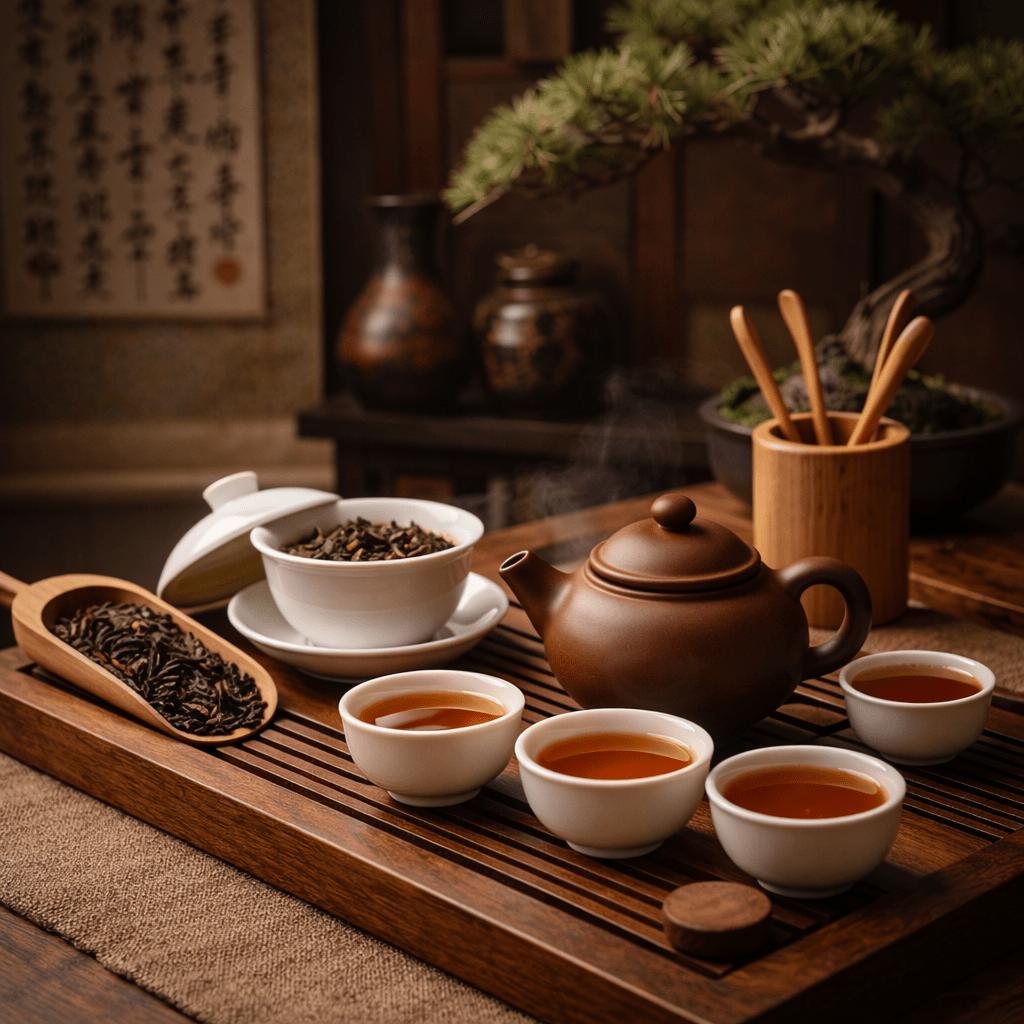
At the same time, traditional practices such as gongfu tea brewing remain an important part of tea culture.
Many tea enthusiasts around the world are learning about Chinese tea traditions and exploring different types of tea.
Through these exchanges, Chinese tea culture has become a global phenomenon that connects people across cultures.
Why Chinese Tea Culture Still Matters
In modern society, life often moves quickly. Many people feel overwhelmed by constant activity and distraction.
Tea offers a small but meaningful pause.
The act of brewing tea encourages people to slow down and pay attention to simple sensory experiences: the aroma of the leaves, the warmth of the cup, and the subtle changes in flavor.
These moments of stillness are part of what makes tea culture so enduring.
Final Thoughts
Chinese tea culture is more than a tradition built around a beverage. It is a reflection of centuries of history, philosophy, and social values.
From ancient legends to modern tea houses, tea has remained a symbol of harmony, respect, and quiet appreciation for life’s small moments.
Whether enjoyed alone or shared with others, tea continues to create a space where people can pause, connect, and experience the beauty of simplicity.
Through this enduring tradition, the humble tea leaf continues to carry the spirit of Chinese culture across generations.
Continue the Journey
History of Chinese Tea: The 4,000-Year Story of Tea in China
Tea is one of the oldest and most influential beverages in human...
Tea Drinking Etiquette: A Guide to Proper Tea Manners in Chinese Tea Culture
Tea drinking in Chinese culture is not only about taste. It is...
Tea and Zen Philosophy: How Tea Reflects Simplicity, Mindfulness, and Inner Peace
For centuries, tea and Zen philosophy have shared a deep connection. Both...