Oolong Tea Explained: Taste, Types, Benefits, and Brewing Guide
Oolong tea is one of the most fascinating and complex teas in the world. Originating in China centuries ago, it represents a unique category of tea that sits between green tea and black tea in terms of oxidation and flavor.
While green tea is known for its freshness and black tea for its strength, oolong tea offers something different — a wide spectrum of aromas, textures, and tastes. Depending on how it is processed, oolong tea can be light and floral or deep and roasted.
For many tea lovers, oolong tea is considered the most refined expression of traditional Chinese tea craftsmanship.
In this guide, we will explore everything you need to know about oolong tea, including:
- what oolong tea is
- how oolong tea is produced
- the different types of oolong tea
- famous oolong teas in China
- the taste and aroma of oolong tea
- the health benefits associated with oolong tea
- how to brew oolong tea properly
By the end of this article, you will understand why oolong tea has been treasured for generations and why it continues to attract tea enthusiasts around the world.
What Is Oolong Tea
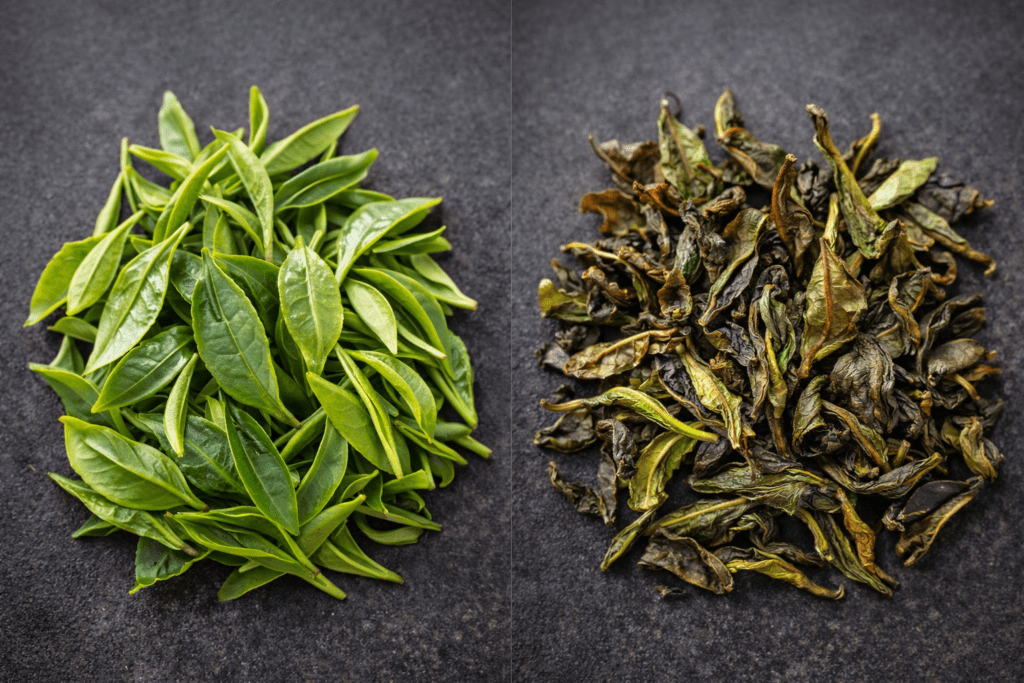
Oolong tea is a traditional Chinese tea made from the leaves of the Camellia sinensis plant — the same plant used to produce green tea, black tea, white tea, and pu-erh tea.
What makes oolong tea unique is its partial oxidation.
While green tea is minimally oxidized and black tea is fully oxidized, oolong tea falls somewhere in between. Its oxidation level typically ranges from 10% to 80%, depending on the style of tea being produced.
This wide oxidation range allows oolong tea to develop a remarkable diversity of flavors.
Some oolong teas taste light and floral, while others are rich, roasted, and complex.
Because of this flexibility, oolong tea is often considered one of the most technically sophisticated types of Chinese tea.
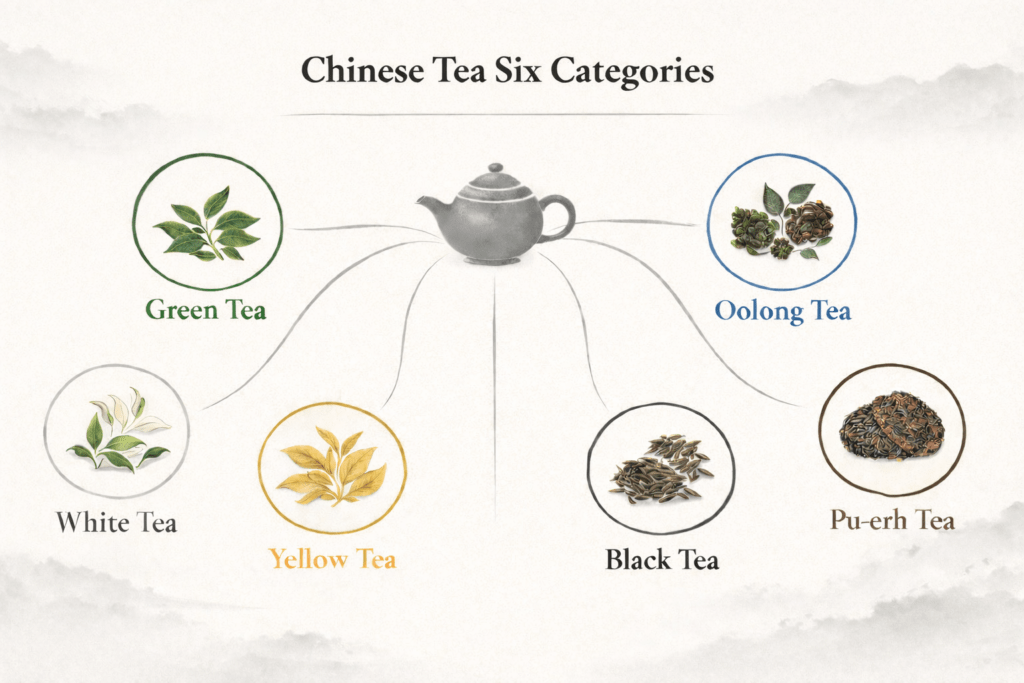
Oolong tea is one of the six major categories of Chinese tea, which also include:
- green tea
- white tea
- yellow tea
- black tea
- dark tea
Internal link suggestion:
Types of Chinese Tea
How Oolong Tea Is Made
Producing oolong tea is one of the most complex tea-making processes.
Unlike green tea, which is quickly heated to stop oxidation, oolong tea requires careful control of oxidation to achieve its characteristic flavor.
Traditional oolong tea production generally includes the following steps.
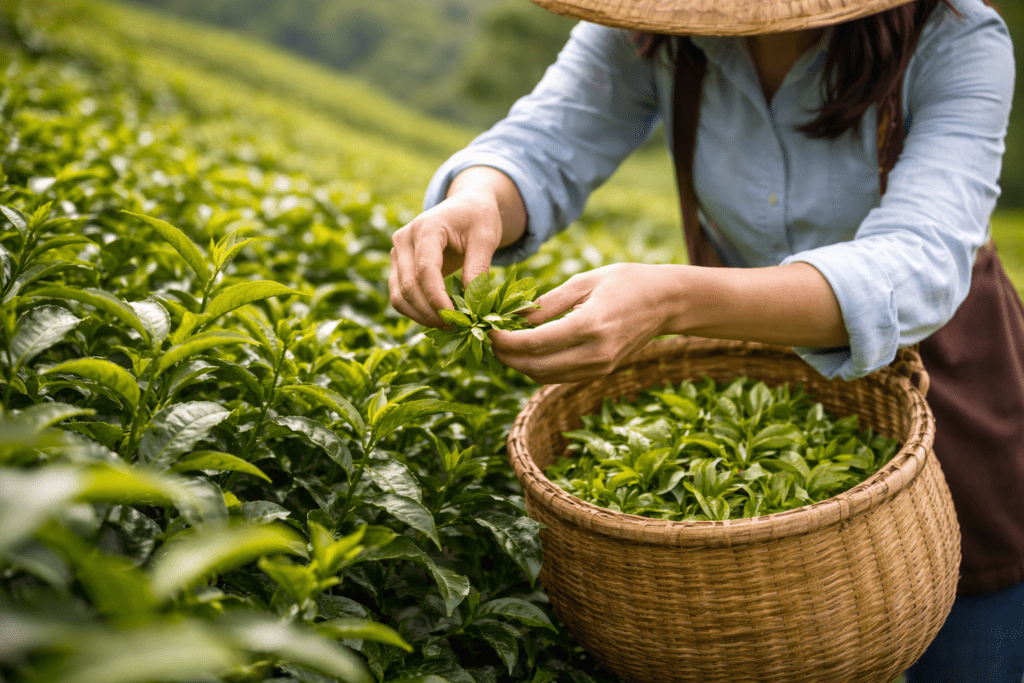
1 Harvesting
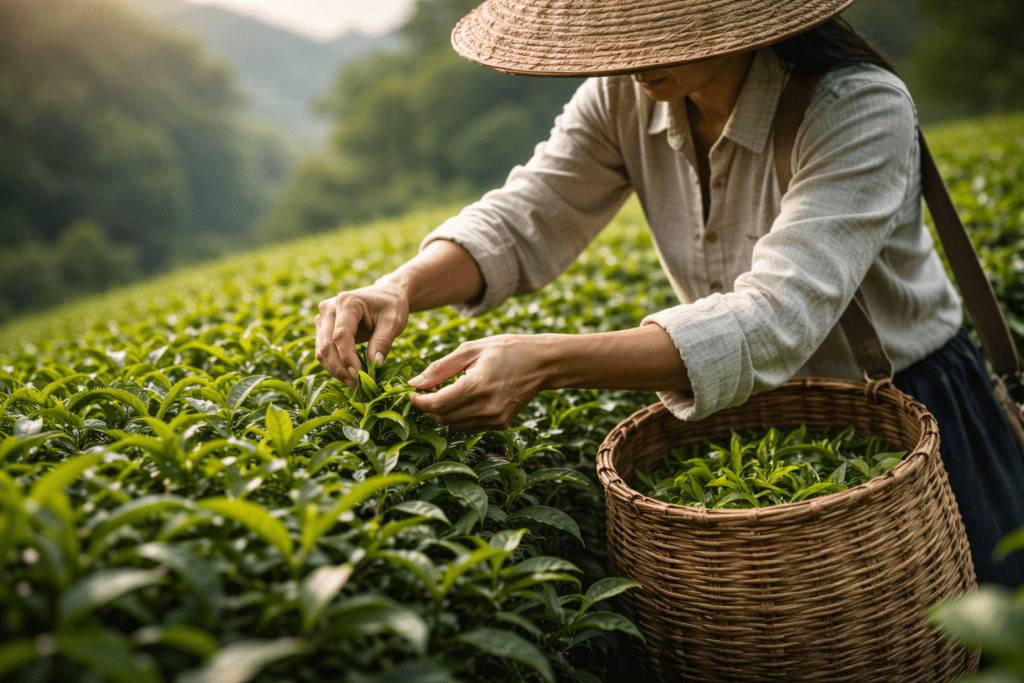
Oolong tea leaves are usually harvested when the leaves are mature but still tender.
Unlike some green teas that use very young buds, oolong tea often uses larger leaves, which help develop more complex flavors during oxidation.
Harvest timing can significantly influence the final taste of the tea.
2 Withering
After harvesting, the tea leaves are spread out under the sun or in a ventilated indoor environment.
This process is known as withering.
During withering:
- the leaves lose moisture
- the leaf structure softens
- aromatic compounds begin to develop
Sun withering is an important step that contributes to the floral fragrance often found in oolong tea.
3 Oxidation
The next stage involves gently bruising the leaves.
Tea makers traditionally shake or toss the leaves in bamboo trays.
This action damages the edges of the leaves and exposes them to oxygen.
As oxidation occurs, the edges of the leaves darken while the center remains green.
This characteristic appearance is often visible in finished oolong tea leaves.
The tea master carefully controls this stage to achieve the desired flavor profile.
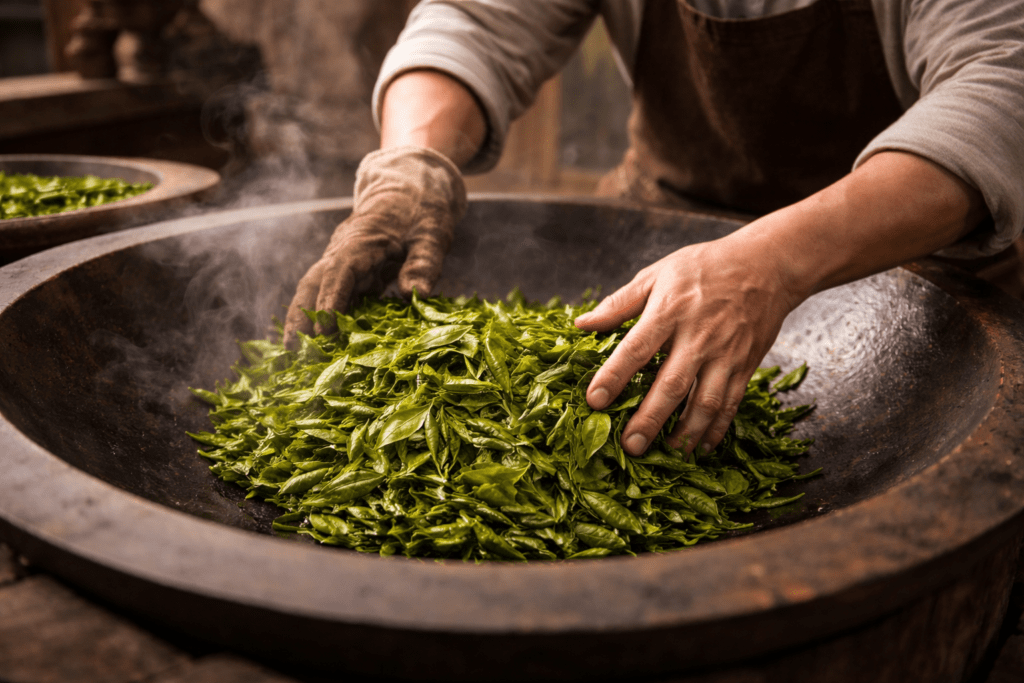
4 Fixation
Once the desired oxidation level is reached, the leaves are heated to stop further oxidation.
This step stabilizes the flavor and preserves the current chemical state of the leaves.
5 Rolling
The leaves are then rolled into different shapes.
Common shapes include:
- tightly rolled balls
- twisted strips
These shapes influence how the leaves expand during brewing.
6 Roasting or Drying
Finally, the tea leaves are dried or roasted.
Roasting is especially important for many traditional oolong teas, as it enhances depth, warmth, and complexity in the flavor.
Types of Oolong Tea
Oolong tea can vary greatly depending on where it is produced and how it is processed.
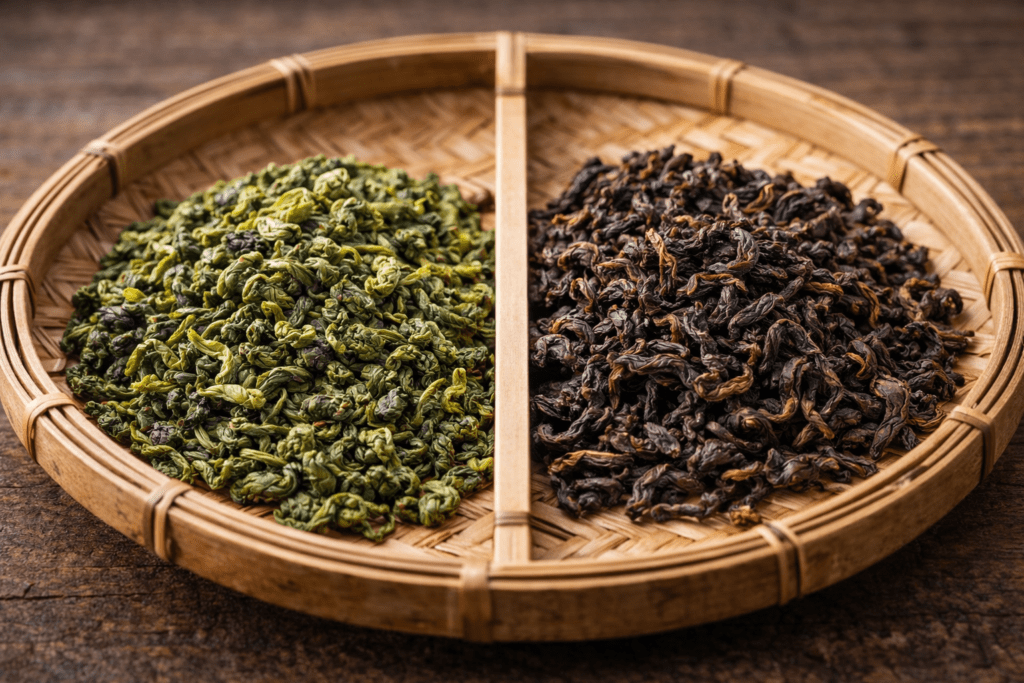
Generally, oolong tea can be divided into two broad styles.
Light Oolong
Light oolong teas are typically:
- lightly oxidized
- floral and aromatic
- bright and refreshing
These teas often have notes of:
- orchid
- honey
- fresh fruit
Many modern Taiwanese oolong teas belong to this category.
Dark Oolong
Dark oolong teas are more heavily oxidized and often roasted.
They tend to have:
- deeper flavors
- roasted aromas
- richer body
Flavor notes may include:
- toasted nuts
- caramel
- dried fruit
Many traditional Chinese oolong teas fall into this category.
Famous Oolong Teas
China produces many famous oolong teas, each with its own distinctive style.
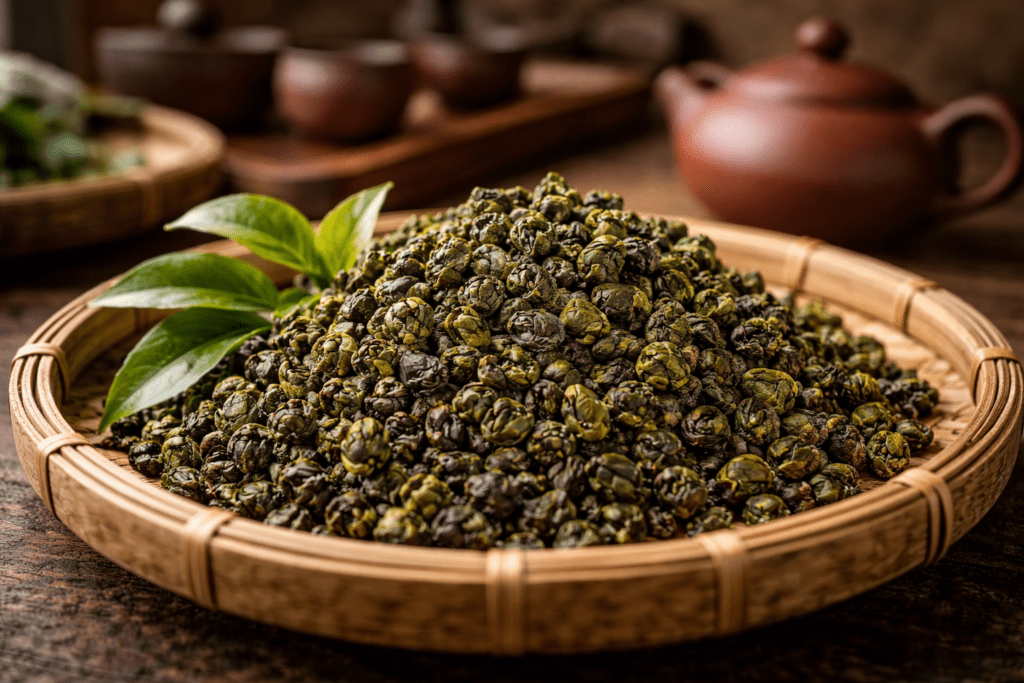
Tieguanyin (Iron Goddess of Mercy)
Tieguanyin is one of the most famous oolong teas in the world.
It originates from Anxi County in Fujian Province.
Characteristics include:
- floral aroma
- smooth texture
- lingering sweetness
Modern versions are often lightly oxidized and very aromatic.
Da Hong Pao (Big Red Robe)
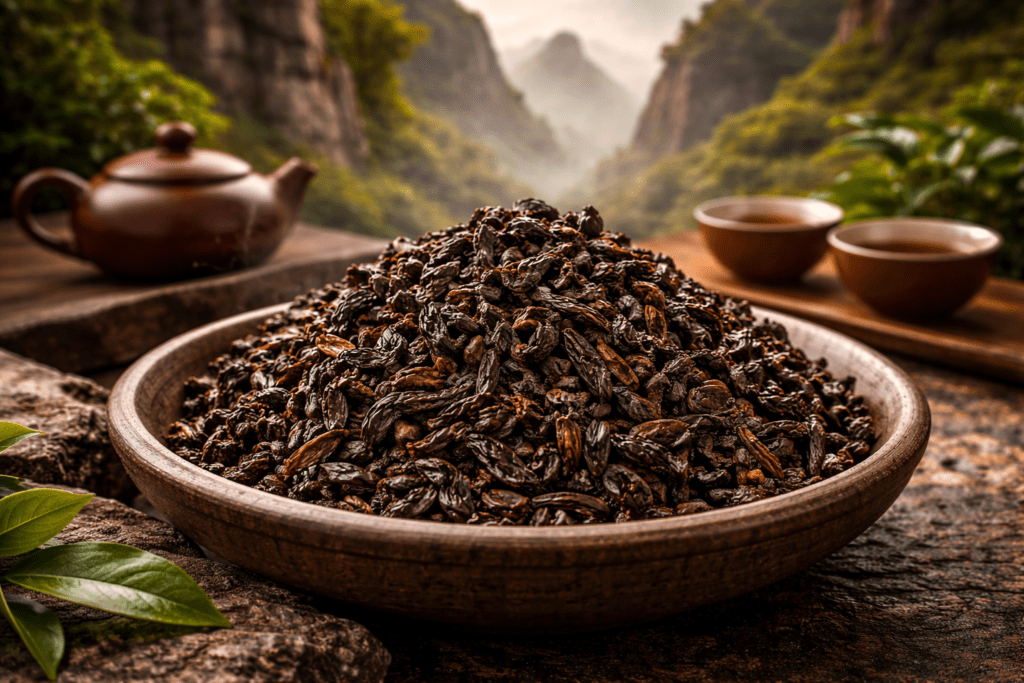
Da Hong Pao is a legendary oolong tea from the Wuyi Mountains in Fujian.
This tea is known for its:
- mineral character
- roasted aroma
- deep, complex flavor
It belongs to a style known as Wuyi rock tea.
These teas grow in rocky mountain environments, which contribute to their distinctive taste.
Dong Ding Oolong
Dong Ding is a famous Taiwanese oolong tea.
It is traditionally roasted and offers a balanced flavor combining floral sweetness and gentle roasted notes.
What Does Oolong Tea Taste Like
Oolong tea is known for its remarkable range of flavors.
Because oxidation levels vary, the taste of oolong tea can differ dramatically from one variety to another.
However, many oolong teas share several common characteristics.
Floral Aromas
Many oolong teas have natural floral fragrances.
These aromas may resemble:
- orchids
- garden flowers
- sweet blossoms
Smooth Texture
Oolong tea often has a rich, smooth mouthfeel.
Unlike some green teas that feel light, oolong tea can have a fuller body.
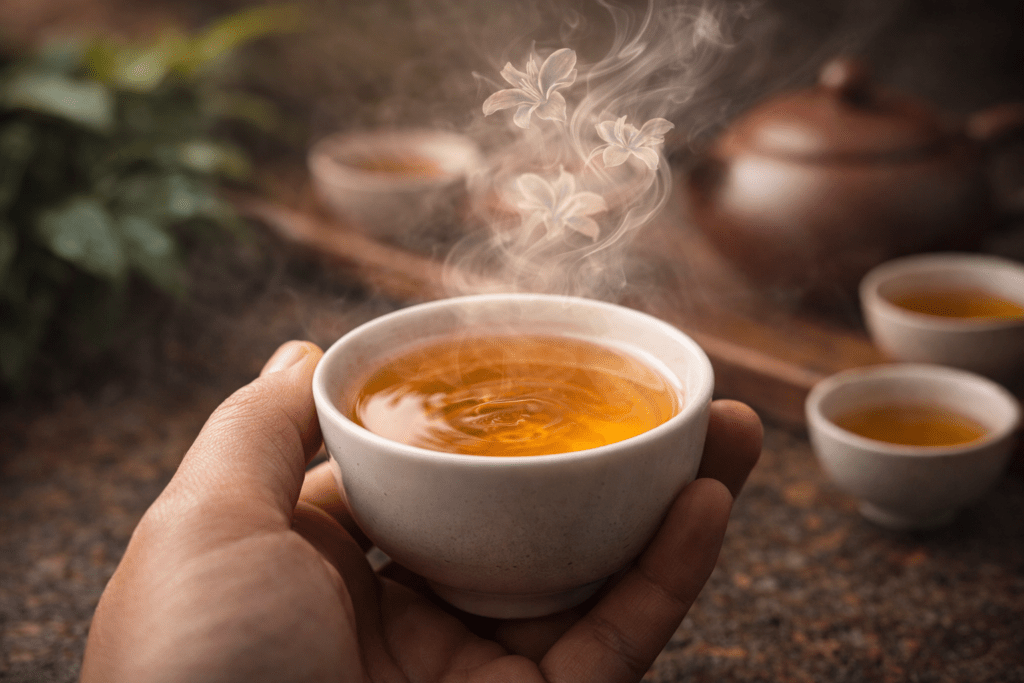
Lingering Aftertaste
One of the most admired qualities of oolong tea is its lingering aftertaste.
The flavor may continue to evolve in the mouth long after swallowing.
In Chinese tea culture, this pleasant returning sweetness is known as hui gan.
Oolong Tea Benefits
Oolong tea has long been associated with wellness and balance.
Although tea is not a medical treatment, it contains several naturally occurring compounds that may support general well-being.
Antioxidants
Like other teas, oolong tea contains polyphenols and antioxidants that help protect cells from oxidative stress.
Metabolic Support
Some studies suggest that compounds in oolong tea may help support metabolism and energy balance.
Mental Focus
Oolong tea contains moderate caffeine along with L-theanine.
This combination may support calm alertness and steady concentration.
How to Brew Oolong Tea
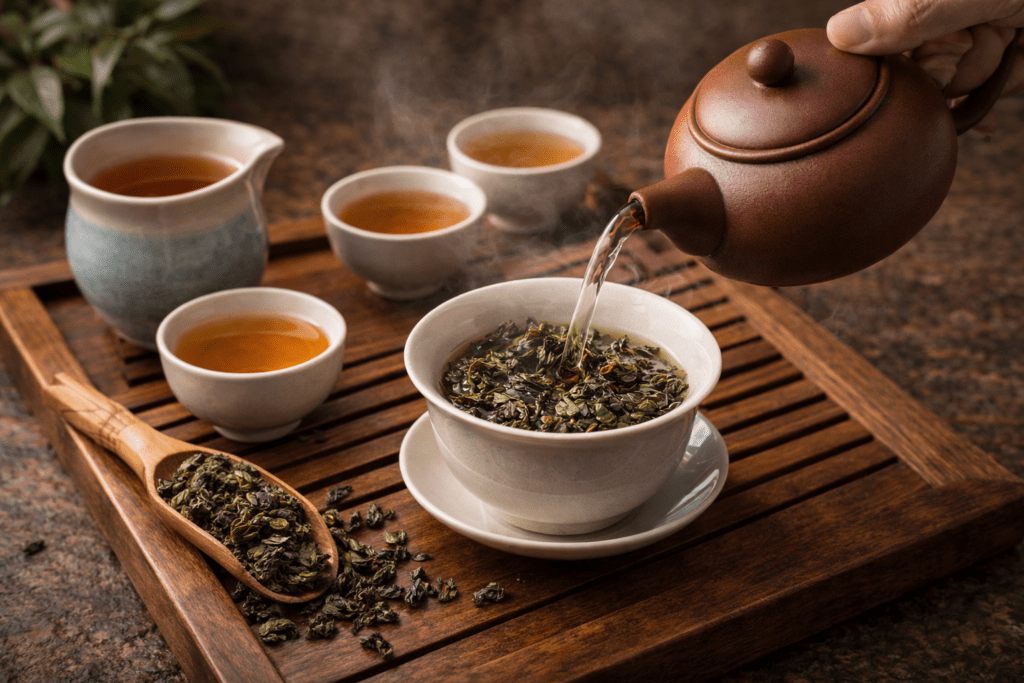
Brewing oolong tea properly can reveal its full range of flavors.
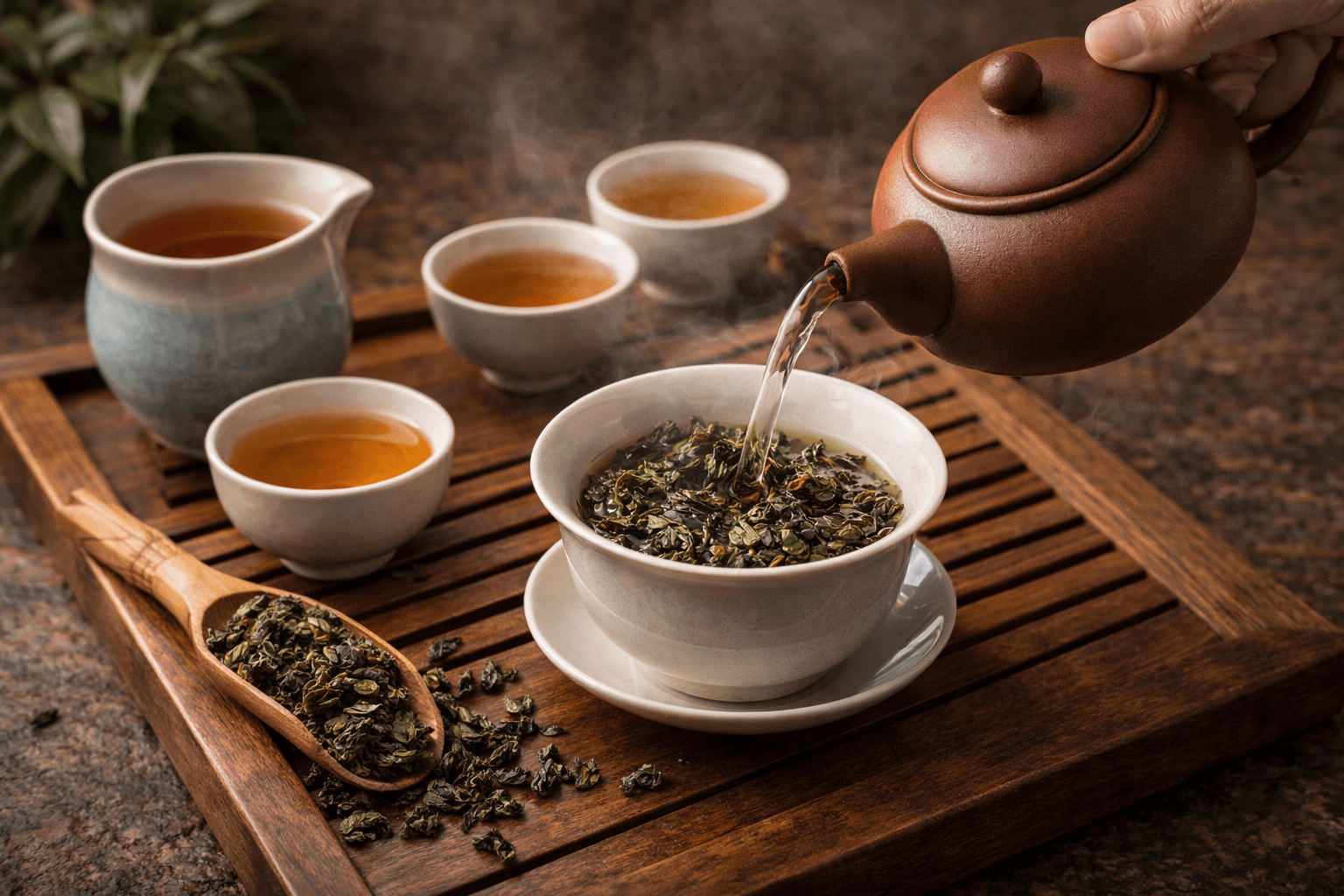
Many tea enthusiasts prefer to brew oolong tea using the gongfu method, which uses small teapots or gaiwans.
Water Temperature
Recommended temperature:
90°C – 95°C
Oolong tea generally requires hotter water than green tea.
Tea Quantity
Typical ratio:
5 grams of tea
per 100–150 ml water
Brewing Time
First infusion:
10 – 20 seconds
Subsequent infusions can gradually increase in time.
Multiple Infusions
High-quality oolong tea can often be brewed 5–8 times or more.
Each infusion reveals new layers of flavor.
Oolong Tea vs Green Tea
Although both teas come from the same plant, their processing methods create different flavor experiences.
Green tea:
- minimal oxidation
- fresh, grassy flavor
Oolong tea:
- partial oxidation
- complex floral or roasted flavors
Black tea:
- full oxidation
- bold and malty taste
Future internal links:
- Green Tea Explained
- Pu-erh Tea Explained
Why Oolong Tea Is So Special
Oolong tea occupies a unique position in the world of tea.
Its production requires careful craftsmanship and deep experience.
A small adjustment in oxidation or roasting can dramatically change the final flavor.
Because of this complexity, many tea experts consider oolong tea to be the most expressive category of Chinese tea.
For those who enjoy exploring subtle differences in aroma, texture, and aftertaste, oolong tea offers an endlessly fascinating journey.
Final Thoughts
Oolong tea is more than just a beverage.
It represents centuries of tea-making tradition, agricultural knowledge, and cultural refinement.
From the mountains of Fujian to the tea gardens of Taiwan, generations of tea masters have refined the techniques required to produce this remarkable tea.
Whether enjoyed for its flavor, its cultural heritage, or its calming ritual, oolong tea continues to captivate tea drinkers around the world.
And with every infusion, the leaves reveal yet another layer of their complexity.
Continue the Journey
Huangshan Maofeng Tea Guide: Flavor, History, and Brewing
Introduction Among the many famous Chinese green teas, Huangshan Maofeng tea stands...
Biluochun Tea Guide: Flavor, History, and Brewing
Introduction Chinese green tea is famous around the world for its delicate...
Da Hong Pao Tea Guide: Origin, Flavor, and Brewing the Famous Rock Oolong
Da Hong Pao tea, often translated as Big Red Robe tea, is...