How to Brew Oolong Tea Properly: Temperature, Timing, and Traditional Techniques
Introduction
Oolong tea is one of the most complex and rewarding teas to brew. Sitting between green tea and black tea in oxidation level, oolong tea offers an extraordinary range of flavors—from delicate floral aromas to deep roasted notes.
However, brewing oolong tea correctly requires understanding several important factors, including water temperature, steeping time, leaf quantity, and brewing technique. Unlike simpler teas, oolong leaves can reveal dramatically different flavor profiles depending on how they are brewed.
Many tea drinkers discover that the same oolong tea can taste completely different when brewed using Western-style brewing compared to the traditional Chinese Gongfu method.
In this comprehensive guide, we will explore how to brew oolong tea properly, including traditional techniques used by tea masters in China and Taiwan.
By understanding the principles behind oolong brewing, you will be able to unlock the full potential of these remarkable teas.
What Makes Oolong Tea Unique
Oolong tea is partially oxidized tea produced mainly in China and Taiwan. The oxidation level typically ranges from about 10% to 80%, which creates a wide variety of flavor styles.
Unlike green tea, which is unoxidized, and black tea, which is fully oxidized, oolong tea undergoes a complex process of withering, bruising, oxidation, and roasting.
This processing method allows tea producers to create incredibly diverse flavor profiles.
Some well-known oolong teas include:
- Tieguanyin (Iron Goddess of Mercy)
- Da Hong Pao (Big Red Robe)
- Phoenix Dan Cong
- Taiwanese High Mountain Oolong
- Dong Ding Oolong
Each of these teas responds differently to brewing conditions.
Understanding the style of oolong you are brewing is the first step to achieving the perfect cup.
Types of Oolong Tea
Oolong tea can generally be divided into two main categories.
Light Oolong
Lightly oxidized oolong teas are closer to green tea in character.
Typical characteristics include:
- floral aromas
- creamy texture
- fresh vegetal sweetness
- bright golden liquor
Examples include:
- modern Tieguanyin
- Taiwanese high mountain oolong
- Baozhong tea
These teas require slightly cooler water temperatures to preserve their delicate aromas.
Dark Oolong
Dark oolong teas are more oxidized and often roasted.
Typical characteristics include:
- roasted nuts
- caramel sweetness
- mineral complexity
- deeper amber liquor
Examples include:
- Da Hong Pao
- Wuyi rock tea
- traditional Tieguanyin
These teas tolerate hotter water and longer infusions.
Ideal Water Temperature for Oolong Tea
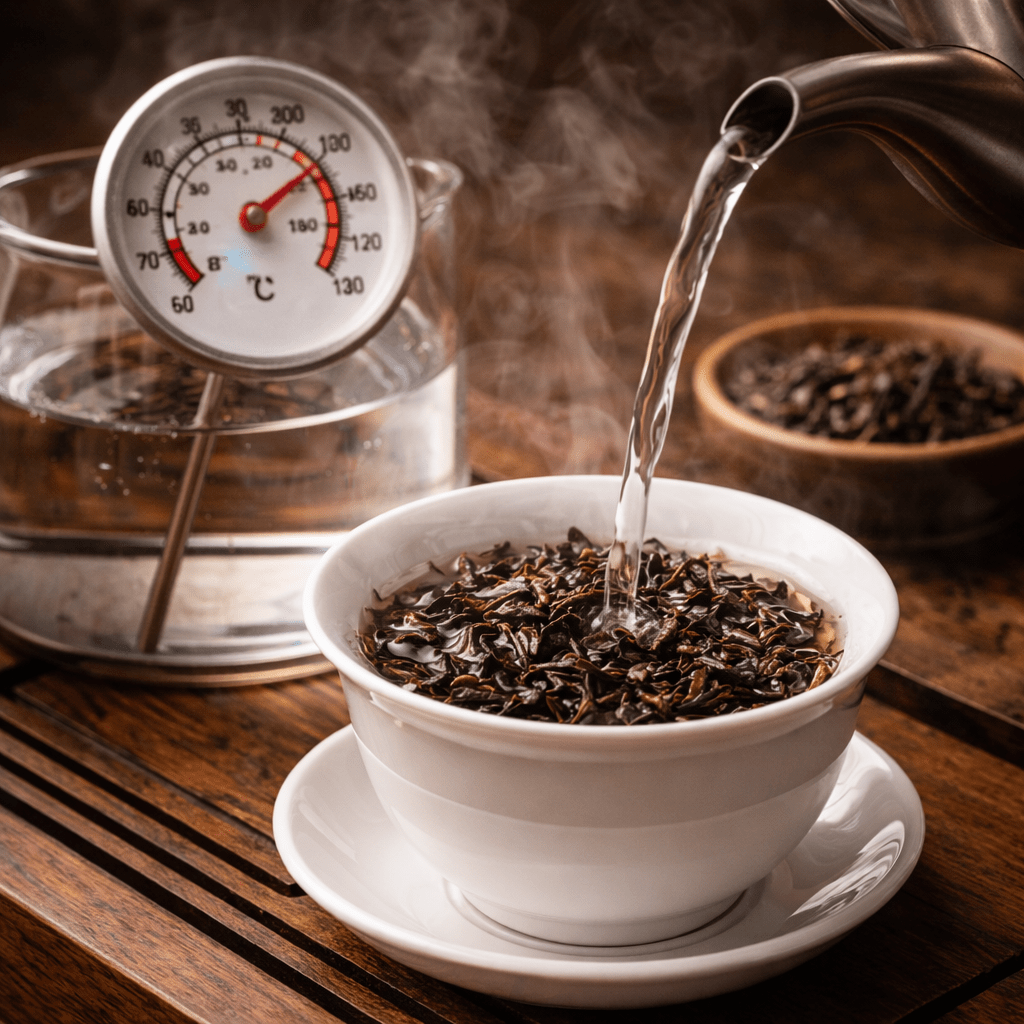
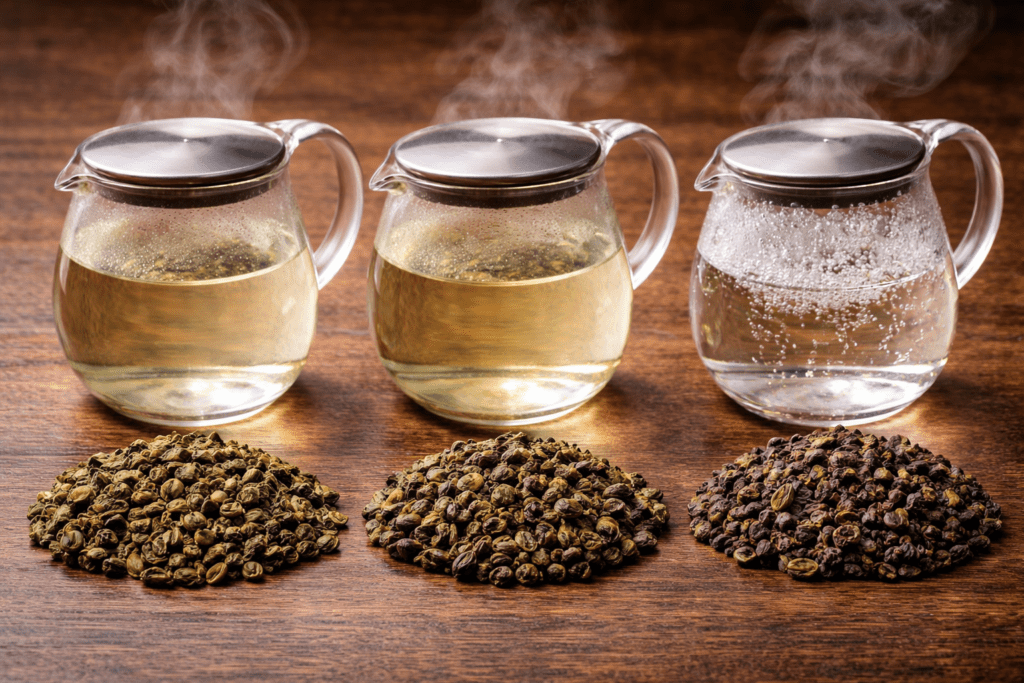
Water temperature plays a crucial role in extracting the correct balance of flavor compounds.
Oolong tea generally requires hotter water than green tea.
Recommended temperatures:
| Oolong Style | Temperature |
|---|---|
| Light oolong | 85–90°C |
| Medium oxidation | 90–95°C |
| Dark roasted oolong | 95–100°C |
Using water that is too cool may result in weak flavor and incomplete extraction.
On the other hand, extremely hot water can sometimes overwhelm delicate oolongs and produce bitterness.
Adjusting the water temperature based on the tea style helps bring out the best characteristics of the leaves.
Tea to Water Ratio
The correct tea-to-water ratio ensures balanced flavor extraction.
Western Brewing
Recommended ratio:
2–3 grams tea
per 200 ml water
This method produces a smooth and approachable cup suitable for daily drinking.
Gongfu Brewing
Traditional Chinese brewing uses a much higher leaf quantity.
Recommended ratio:
5–8 grams tea
per 100 ml water
This allows the tea to be brewed through multiple short infusions, revealing different layers of flavor.
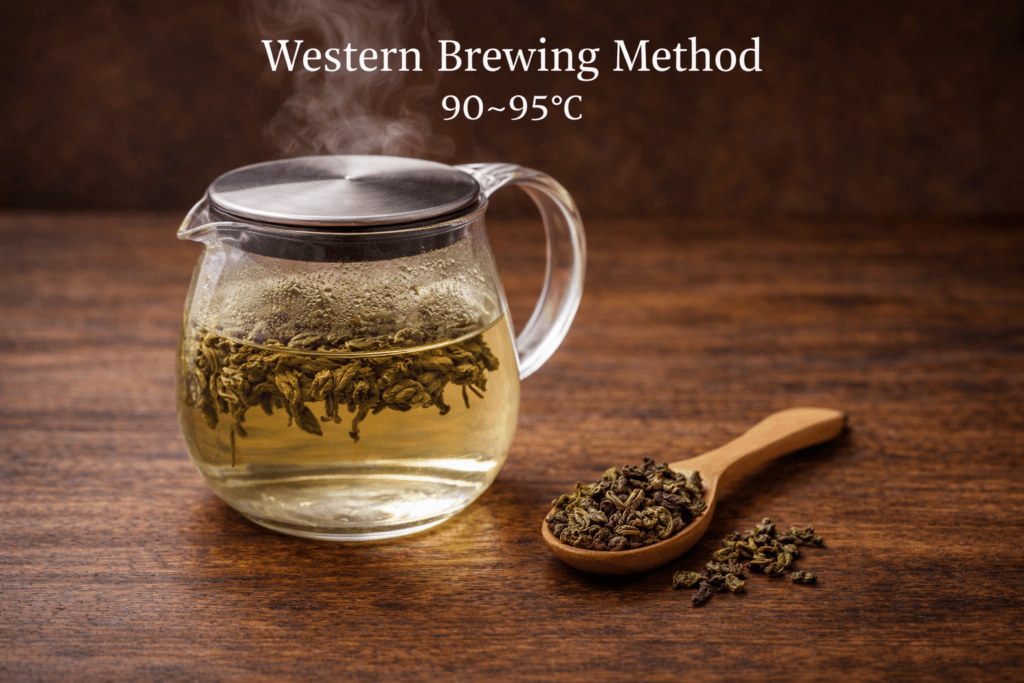
Western Brewing Method
Western brewing is simple and convenient.
Step 1: Heat the water
Heat water to approximately 90–95°C.
Step 2: Add tea leaves
Place 2–3 grams of tea in a teapot or infuser.
Step 3: First infusion
Steep for about:
2–3 minutesStep 4: Additional infusions
Oolong tea can usually be brewed 3–5 times.
Increase steeping time gradually:
1st infusion: 2 minutes
2nd infusion: 3 minutes
3rd infusion: 4 minutes
Each infusion reveals different flavor nuances.
Gongfu Brewing Method
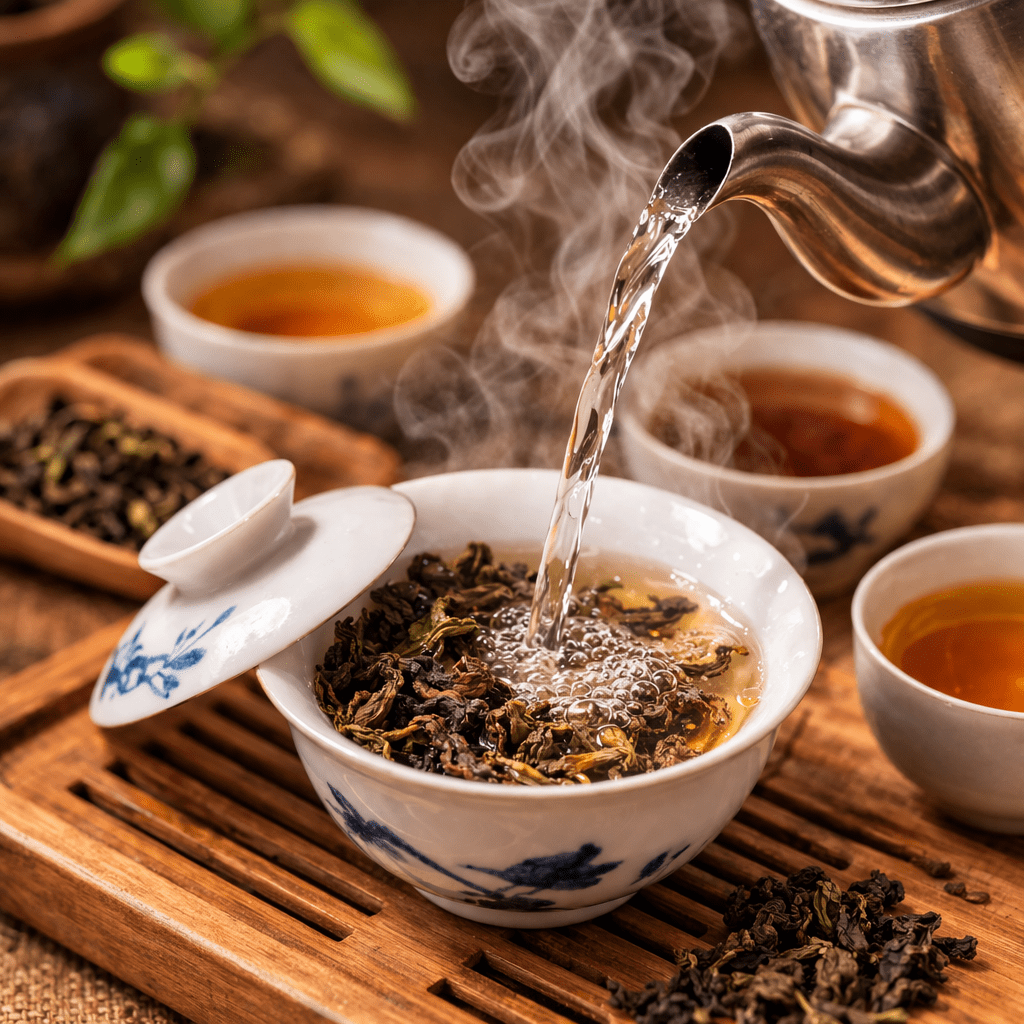
Gongfu brewing is the traditional Chinese way of preparing oolong tea.
This method emphasizes:
- high leaf quantity
- short infusions
- multiple brews
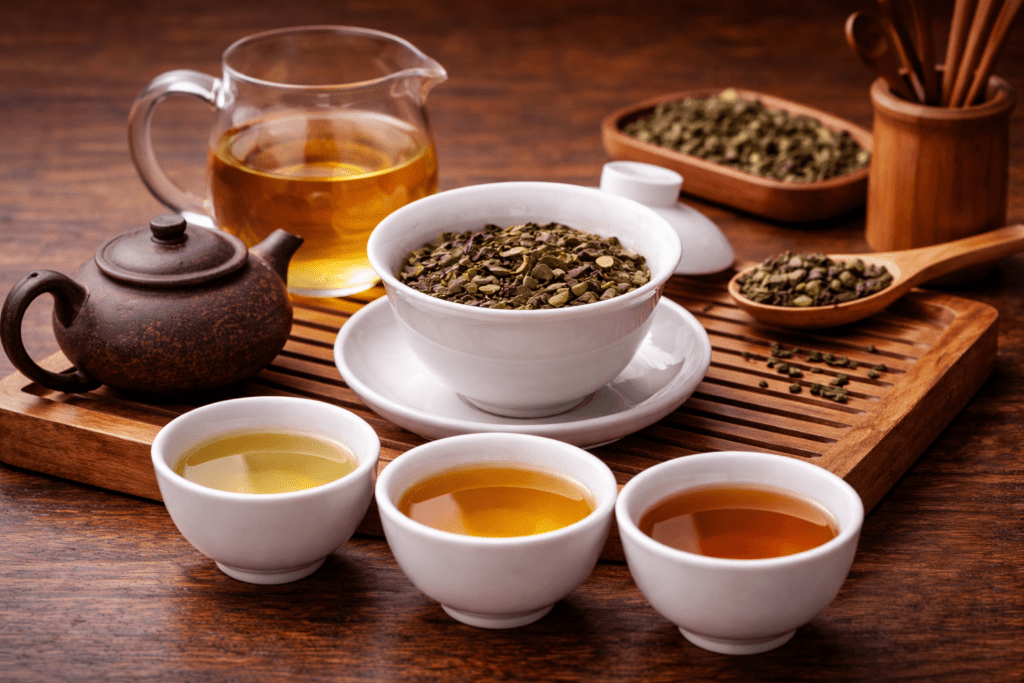
Equipment typically includes:
- gaiwan or small clay teapot
- tea pitcher
- small cups
- tea tray
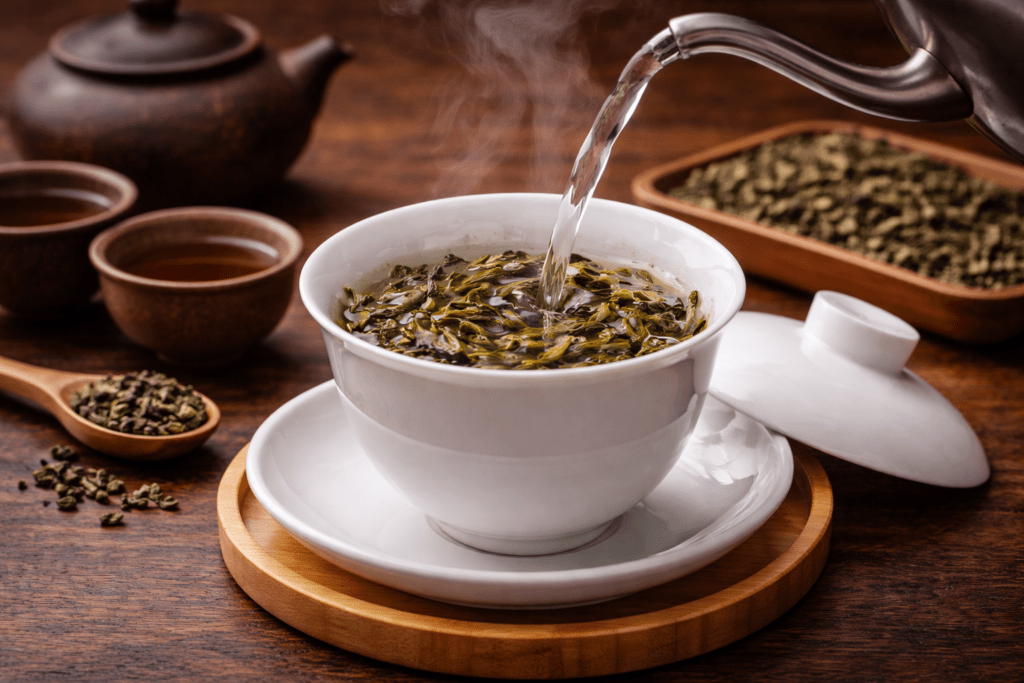
Step-by-Step Gongfu Brewing
- Warm the teaware with hot water
- Add 5–8 grams of tea
- Quickly rinse the leaves (optional)
- Pour hot water over the leaves
- First infusion: 10–15 seconds
Typical infusion sequence:
1st infusion: 10 seconds
2nd infusion: 15 seconds
3rd infusion: 20 seconds
4th infusion: 25 seconds
5th infusion: 30 seconds
High-quality oolong tea can produce 8–12 infusions.
Watching Oolong Leaves Unfurl
One of the most fascinating aspects of brewing oolong tea is observing the leaves expand during infusion.
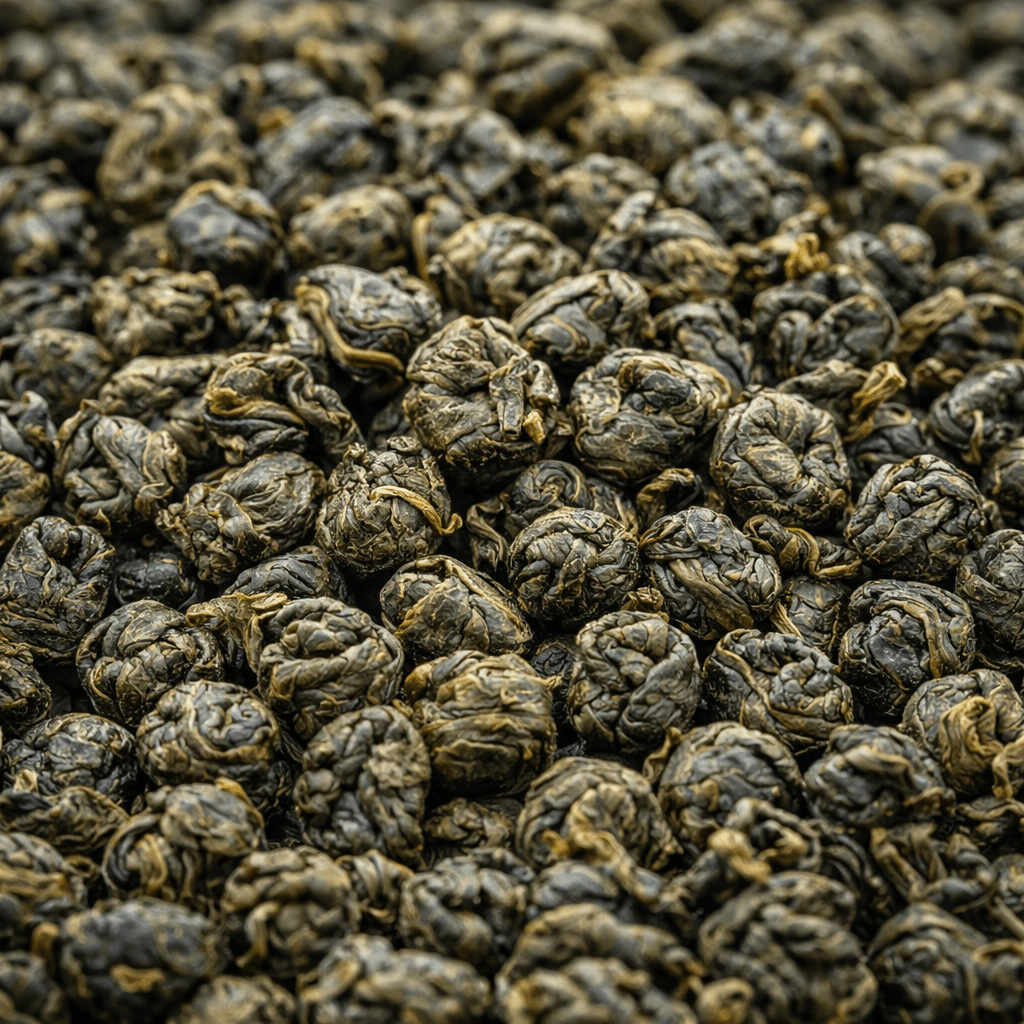
Many oolong teas are tightly rolled into pellets.
When hot water touches the leaves, they slowly unfurl into large whole leaves.
This gradual expansion releases aromatic compounds and flavor compounds over multiple infusions.
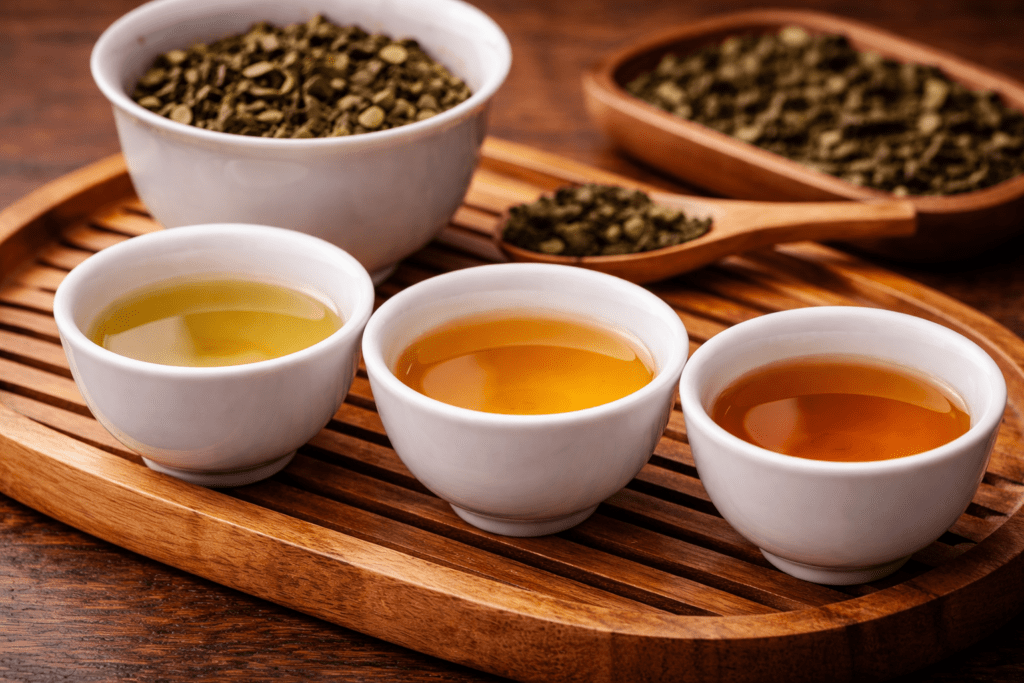
Flavor Evolution Across Infusions
Oolong tea changes significantly from one infusion to the next.
Early infusions emphasize aroma and sweetness.
Middle infusions highlight body and complexity.
Later infusions often become softer and more mineral.
This dynamic flavor evolution is one of the reasons oolong tea is highly valued by experienced tea drinkers.
Common Brewing Mistakes
Using too little tea
Oolong tea benefits from generous leaf quantity.
Over-steeping
Long steeping times may extract excessive bitterness.
Incorrect water temperature
Water that is too cool leads to weak flavor.
Discarding leaves too early
High-quality oolong tea is meant for multiple infusions.
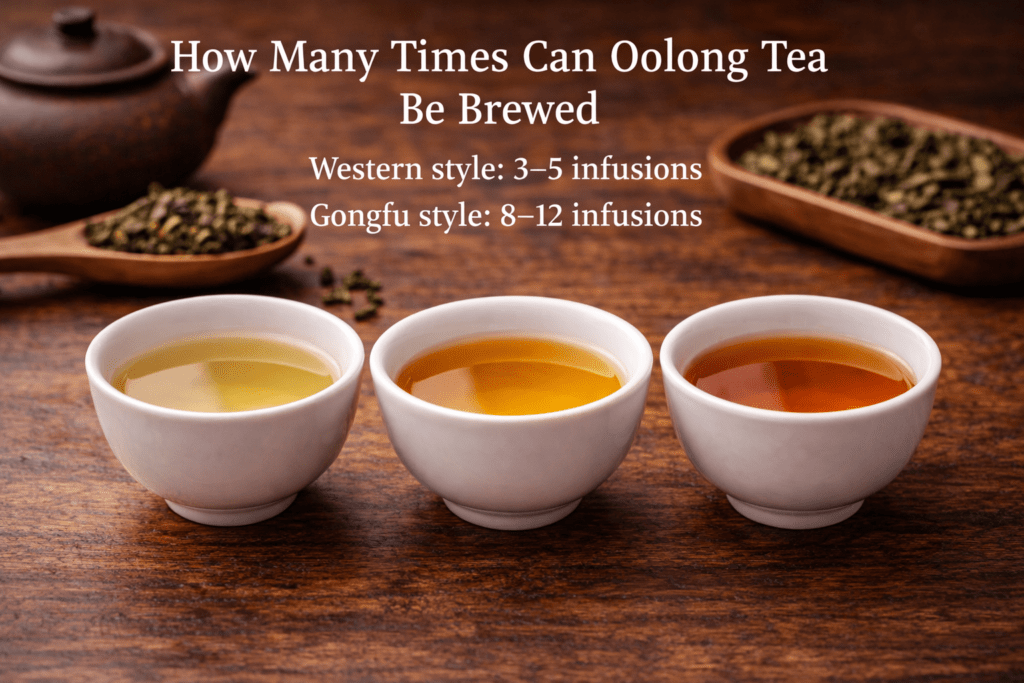
How Many Times Can Oolong Tea Be Brewed
Depending on the brewing method:
Western style:
3–5 infusionsGongfu style:
8–12 infusionsSome premium teas can produce even more.
Choosing the Right Teaware
Different teaware can influence the brewing result.
Common choices include:
- porcelain gaiwan
- Yixing clay teapot
- glass teapot
- ceramic teapot
Porcelain preserves pure flavor, while clay teapots can enhance body and texture.
Why Oolong Tea Is Perfect for Gongfu Brewing
Oolong tea is particularly suited to Gongfu brewing because its leaves release flavor gradually.
Multiple short infusions allow drinkers to experience the full spectrum of aromas and textures.
This brewing style also highlights the craftsmanship of traditional tea production.
Final Thoughts
Brewing oolong tea properly requires attention to detail, but the reward is extraordinary flavor complexity.
By controlling three essential variables—water temperature, leaf quantity, and steeping time—you can unlock the remarkable depth of oolong tea.
Whether you prefer the convenience of Western brewing or the ritual of Gongfu preparation, mastering the art of brewing oolong tea opens the door to one of the most fascinating traditions in the tea world.
Continue the Journey
Tea to Water Ratio Guide: How Much Tea to Use for Perfect Brewing
When brewing tea, many people focus on temperature or steeping time. However,...
Tea Steeping Time Guide: How Long to Steep Different Types of Tea
Brewing tea may seem simple, but one factor has an enormous impact...
No Image
Gongfu Tea Brewing Method Explained: The Traditional Chinese Way to Brew Tea
Tea is deeply woven into Chinese culture. For thousands of years, tea...