Cold Brew Tea Guide: How to Make Smooth and Refreshing Cold Brew Tea
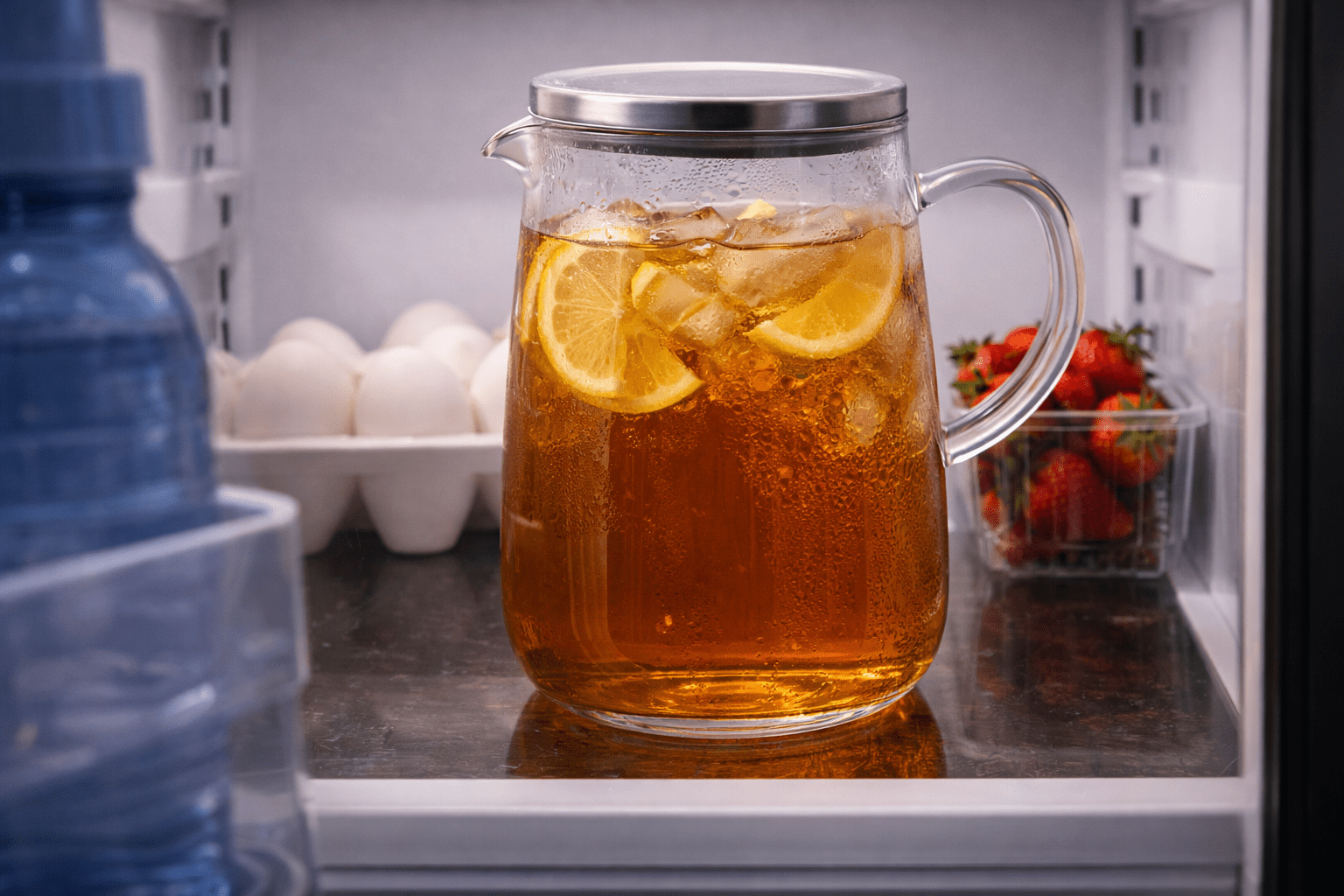
Tea has been enjoyed for thousands of years as a warm and comforting drink. However, in recent years, cold brew tea has become increasingly popular around the world. Instead of using hot water, cold brew tea is made by steeping tea leaves in cold or room-temperature water for several hours.
This slow brewing process produces a drink that is smooth, refreshing, naturally sweet, and much less bitter than traditional hot-brewed tea.
Cold brewing works especially well with many types of tea, including:
- green tea
- oolong tea
- white tea
- black tea
- pu-erh tea
In this complete guide, you will learn:
- what cold brew tea is
- why cold brewing changes tea flavor
- which teas work best for cold brewing
- the exact cold brew ratios and timing
- step-by-step instructions for making perfect cold brew tea
By the end of this guide, you will be able to prepare restaurant-quality cold brew tea at home with ease.
What Is Cold Brew Tea?
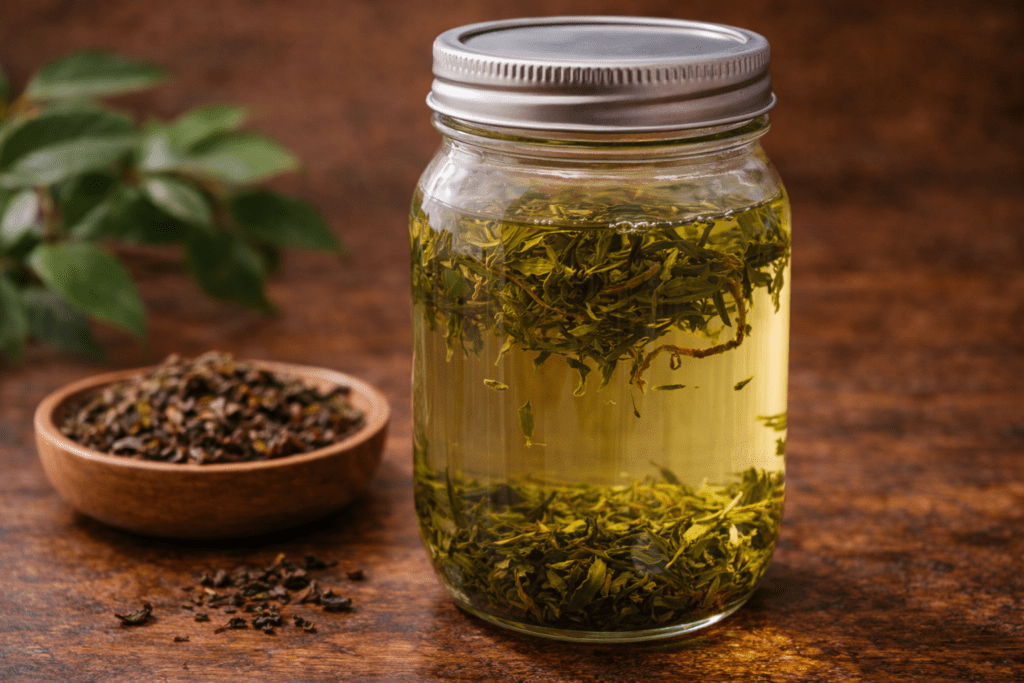
Cold brew tea is made by steeping tea leaves in cold water for an extended period of time, typically between 4 and 12 hours.
Unlike traditional brewing, cold brewing extracts tea compounds much more slowly.
This slow extraction produces several noticeable differences:
Lower bitterness
Cold water extracts fewer tannins, which are responsible for bitterness in tea.
Naturally sweeter flavor
Because bitterness is reduced, the natural sweetness of tea becomes more noticeable.
Smoother texture
Cold brew tea often has a silky, refreshing mouthfeel.
Lower caffeine
Cold water extracts caffeine more slowly than hot water, meaning cold brew tea usually contains slightly less caffeine.
These qualities make cold brew tea especially popular during warm weather or summer months, but many tea drinkers enjoy it year-round.
Why Cold Brew Tea Tastes Different
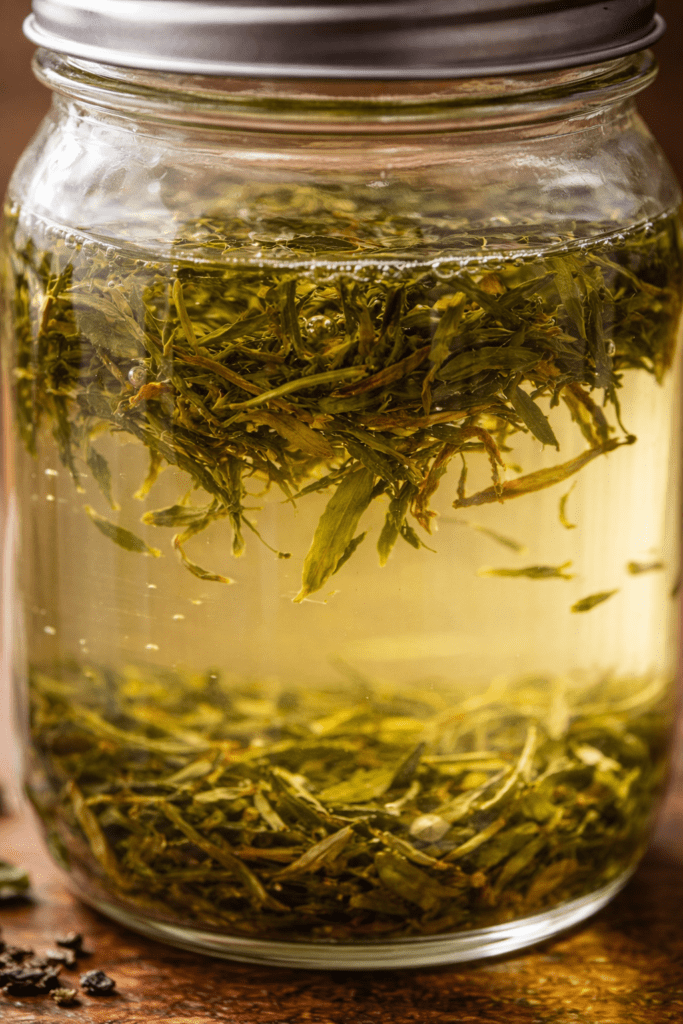
To understand cold brew tea, it helps to know how temperature affects tea extraction.
Tea leaves contain many compounds, including:
- caffeine
- polyphenols
- amino acids
- aromatic oils
- tannins
Hot water extracts these compounds very quickly, which is why traditional tea brewing takes only a few minutes.
Cold water extracts them much more slowly, and the extraction order changes.
Cold brewing tends to extract:
- amino acids (sweetness)
- aromatic compounds
- gentle flavor notes
while extracting fewer tannins and bitter polyphenols.
This is why cold brew tea often tastes:
- softer
- sweeter
- less astringent
compared to hot-brewed tea.
Best Types of Tea for Cold Brewing
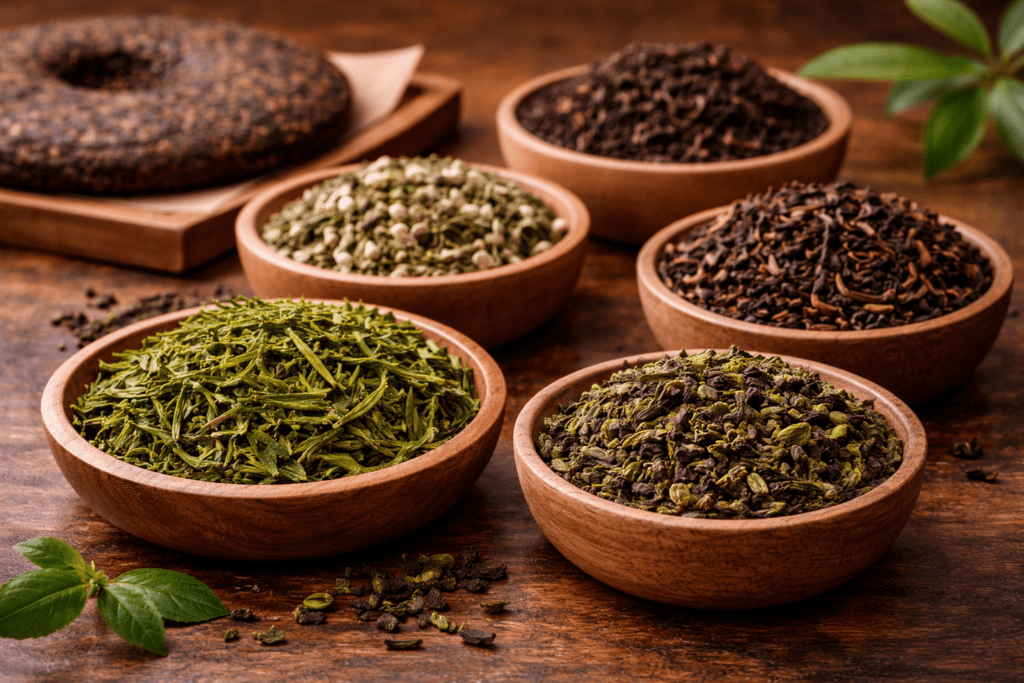
Although almost any tea can be cold brewed, some varieties perform especially well.
Green Tea
Green tea is one of the most popular choices for cold brewing.
Cold brewed green tea tastes:
- light
- sweet
- refreshing
- grassy or floral
Japanese sencha and Chinese green teas like Longjing are excellent options.
Oolong Tea
Oolong tea produces a very complex cold brew.
Depending on the variety, flavors may include:
- floral notes
- honey sweetness
- fruit aromas
Light oolongs and high-mountain oolongs work especially well.
White Tea
White tea is naturally delicate, making it ideal for cold brewing.
Cold brewed white tea often tastes:
- silky
- mildly sweet
- lightly floral
It is one of the most elegant cold brew teas.
Black Tea
Black tea creates a richer cold brew with deeper flavors.
Cold brewed black tea often has notes of:
- honey
- malt
- dried fruit
It also makes an excellent base for iced tea.
Pu-erh Tea
Cold brewed pu-erh produces a unique flavor profile.
The result is often:
- smooth
- earthy
- mellow
without the heavy intensity that hot brewing sometimes creates.
Step-by-Step: How to Make Cold Brew Tea
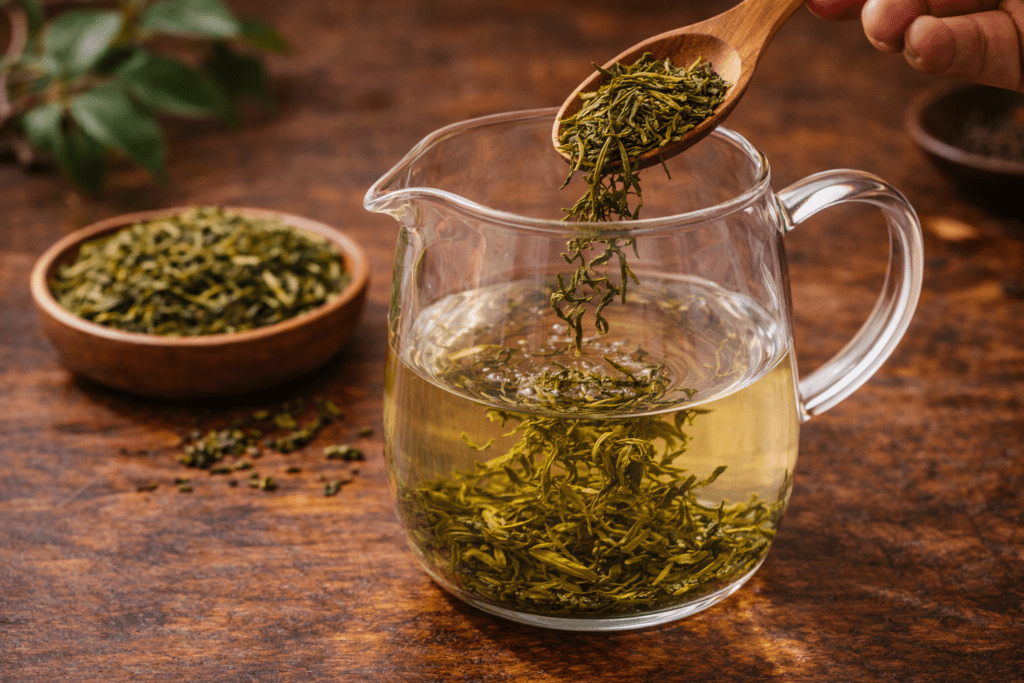
Cold brewing tea is extremely simple.
You only need:
- tea leaves
- cold water
- a container
- time
Step 1: Choose Your Tea
Start with high-quality loose leaf tea.
Loose leaves produce better flavor than tea bags.
Use approximately:
5–7 grams tea
per 500 ml water
Step 2: Add Cold Water
Place the tea leaves in a glass jar, pitcher, or bottle.
Add cold filtered water.
Avoid tap water with strong chlorine flavor.
Step 3: Steep Slowly
Cover the container and place it in the refrigerator.
Typical steeping times:
Green tea
4–6 hoursWhite tea
6–8 hoursOolong tea
6–8 hoursBlack tea
8–12 hoursPu-erh tea
8–12 hoursStep 4: Strain the Tea
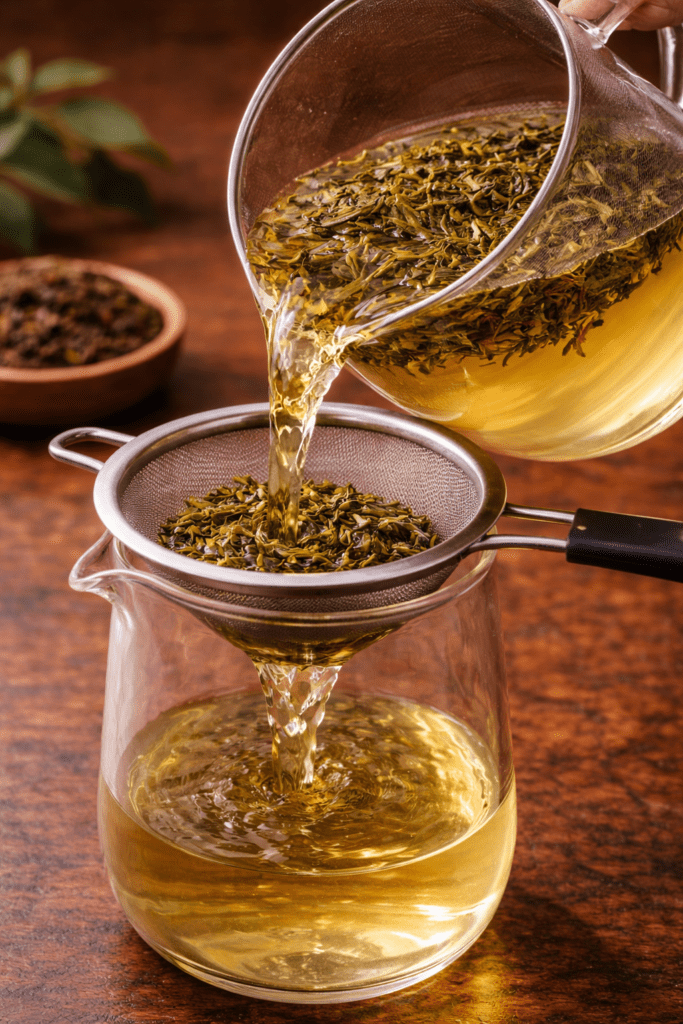
After steeping, strain the tea leaves using:
- a fine strainer
- a tea filter
- a tea infuser
This removes all leaves from the liquid.
Step 5: Serve and Enjoy
Cold brew tea can be served:
- plain
- over ice
- with lemon
- with fresh fruit
Some people also add:
- mint leaves
- honey
- citrus peel
However, high-quality tea often tastes best without any additions.
Cold Brew Tea Ratio Guide
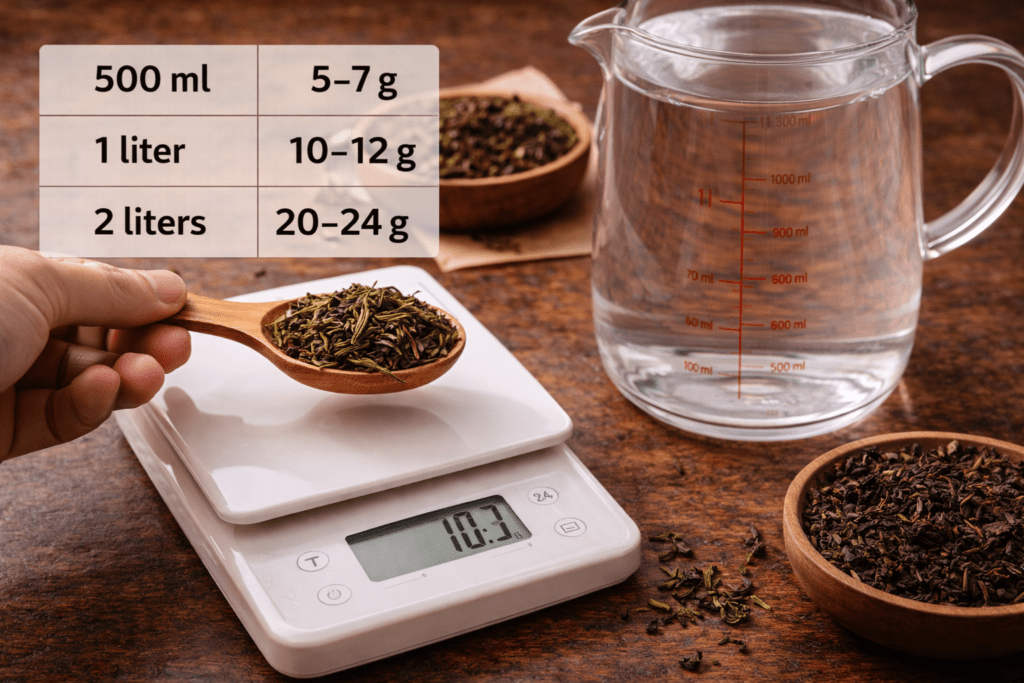
Here is a simple ratio table.
| Water | Tea |
|---|---|
| 500 ml | 5–7 g |
| 1 liter | 10–12 g |
| 2 liters | 20–24 g |
If you prefer stronger tea, increase the tea leaves slightly.
Cold Brew vs Hot Brew Tea
Cold brew tea and hot brew tea offer different experiences.
Hot brewing produces:
- stronger aroma
- fuller body
- faster preparation
Cold brewing produces:
- smoother taste
- less bitterness
- refreshing texture
Both methods are excellent depending on the situation.
Many tea drinkers enjoy hot tea in winter and cold brew tea in summer.
Tips for Perfect Cold Brew Tea

Here are some expert tips for improving your cold brew tea.
Use high-quality tea
Better leaves produce dramatically better flavor.
Use filtered water
Water quality has a huge impact on taste.
Avoid over-steeping
Very long brewing times can eventually cause bitterness.
Experiment with ratios
Every tea behaves slightly differently.
How Long Cold Brew Tea Lasts
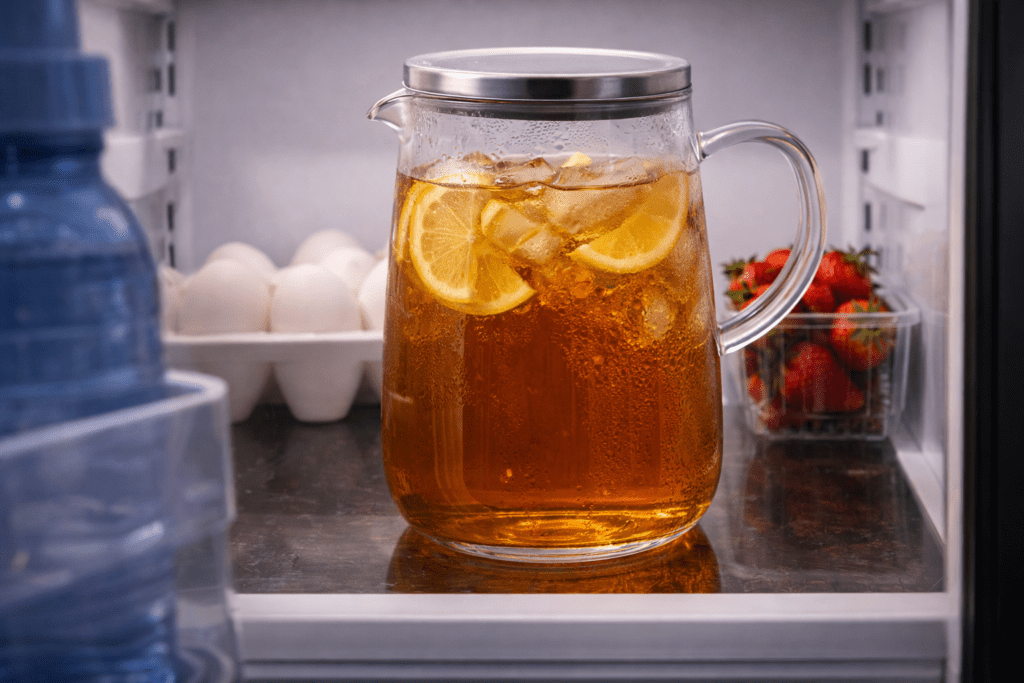
Cold brew tea can be stored in the refrigerator for about:
24–48 hoursAfter this time the flavor begins to fade.
For the best taste, drink cold brew tea within one day.
Final Thoughts
Cold brew tea is one of the simplest and most enjoyable ways to experience tea.
Because the brewing process is slow and gentle, the result is a drink that is:
- smooth
- naturally sweet
- refreshing
- easy to prepare
Whether you prefer green tea, oolong tea, white tea, black tea, or pu-erh tea, cold brewing allows you to discover a completely different side of tea flavor.
With just tea leaves, water, and time, you can create a drink that is both refreshing and deeply satisfying.
Continue the Journey
Tea to Water Ratio Guide: How Much Tea to Use for Perfect Brewing
When brewing tea, many people focus on temperature or steeping time. However,...
Tea Steeping Time Guide: How Long to Steep Different Types of Tea
Brewing tea may seem simple, but one factor has an enormous impact...
No Image
Gongfu Tea Brewing Method Explained: The Traditional Chinese Way to Brew Tea
Tea is deeply woven into Chinese culture. For thousands of years, tea...