How Many Times Can You Rebrew Tea? A Guide to Multiple Tea Infusions
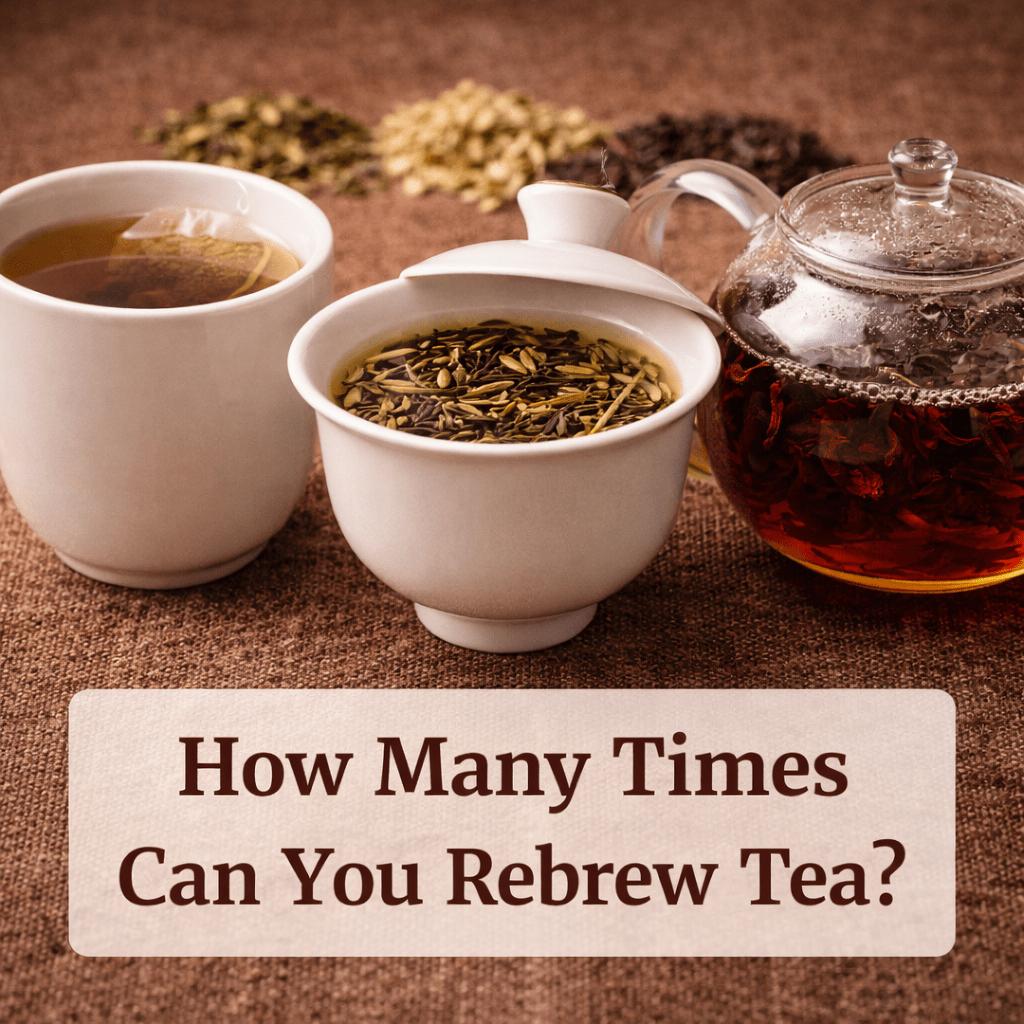
One of the unique characteristics of high-quality tea is that the leaves can often be brewed multiple times. Unlike many beverages that are used only once, tea leaves continue to release flavor through several infusions.
For people who are new to loose leaf tea, this idea may feel surprising. Many beginners assume that tea leaves can only be steeped once, especially if they are familiar with tea bags.
However, traditional tea culture—particularly in China—often involves brewing the same leaves several times. Each infusion reveals slightly different flavors and aromas.
Understanding how many times tea can be brewed helps tea drinkers enjoy their tea more fully while also appreciating the subtle changes that occur with each infusion.
In this guide, we will explore why tea can be brewed multiple times, how the flavor changes across infusions, and how many brews you can expect from different types of tea.
Why Tea Leaves Can Be Brewed Multiple Times
Tea leaves contain many layers of compounds that dissolve gradually in hot water.
During the first infusion, the most easily dissolved compounds are released. These include many aromatic oils that contribute to the tea’s fragrance.
Later infusions extract deeper flavor compounds from the leaf structure. This means that each brew may highlight different aspects of the tea.
Because of this layered extraction, multiple infusions can provide a more complete tasting experience.
This brewing style is especially common in traditional gongfu tea preparation, where smaller teapots and shorter brewing times are used.
How the Flavor Changes With Each Infusion
One of the pleasures of brewing tea multiple times is experiencing how the flavor evolves.
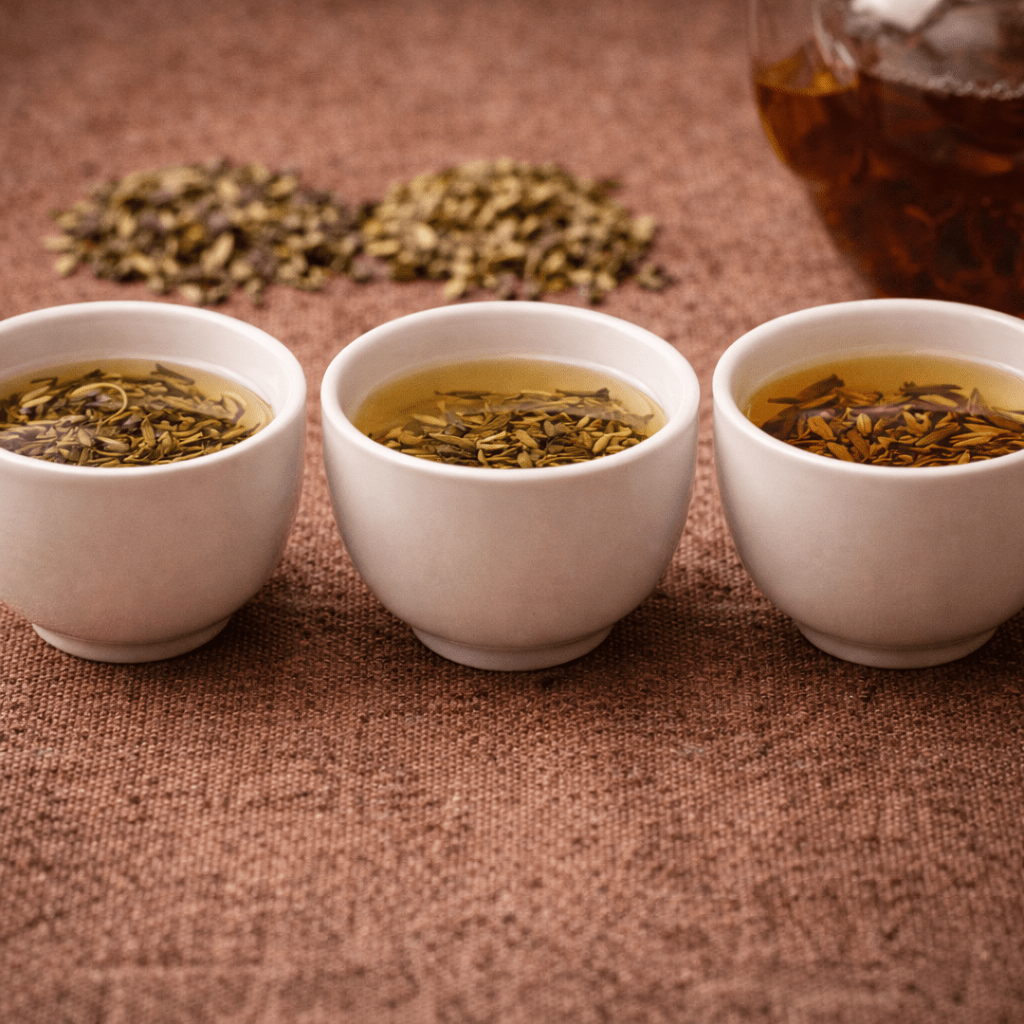
The first infusion is often light and aromatic.
The second infusion usually has the strongest flavor, as the leaves have fully opened.
Later infusions may become smoother and softer, revealing subtle sweetness or mineral notes.
Instead of thinking of each infusion as weaker tea, many tea drinkers think of it as a different expression of the same tea.
How Many Times Different Teas Can Be Brewed
The number of infusions depends on several factors, including tea type, leaf quality, and brewing method.
Below are general guidelines.
Green Tea
Typical infusions:
2–3 brews
Green tea leaves are delicate and release flavor relatively quickly. After a few infusions, the leaves usually become mild.
High-quality green teas such as Longjing or Biluochun may produce three pleasant brews.
White Tea
Typical infusions:
3–5 brews
White tea is often made from whole buds and larger leaves, which allows it to be steeped several times.
The flavor may gradually become sweeter and smoother across later infusions.
Oolong Tea
Typical infusions:
5–8 brews
Oolong tea is well known for its ability to produce many infusions.
High-quality oolong teas such as Tieguanyin or Da Hong Pao may reveal complex aromas that evolve across several brews.
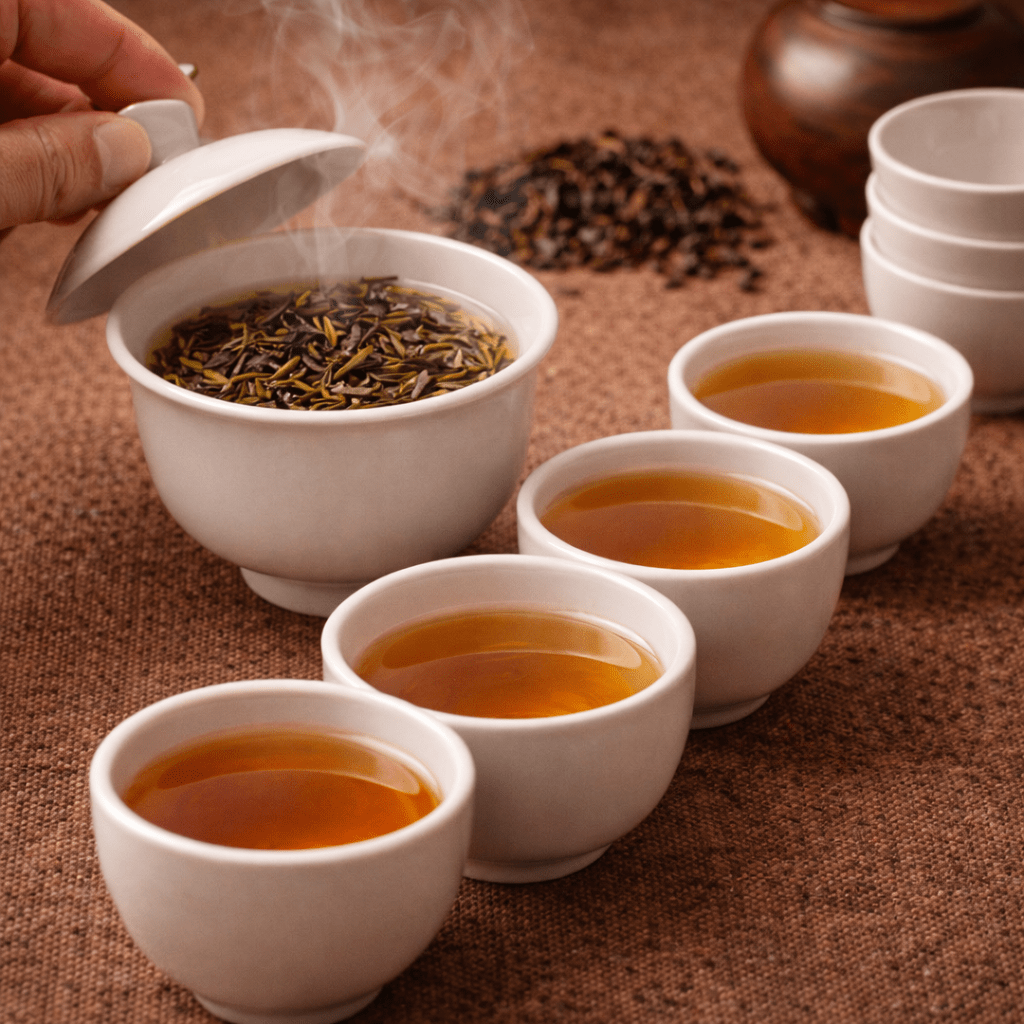
Black Tea
Typical infusions:
2–3 brews
Black tea is fully oxidized and often produces a strong first infusion.
While some black teas can be brewed several times, the flavor usually fades faster than oolong or pu-erh.
Pu-erh Tea
Typical infusions:
6–10 brews or more
Pu-erh tea is particularly suited for repeated brewing.
Both raw and ripe pu-erh teas can produce many infusions, especially when prepared using traditional gongfu methods.
Some aged pu-erh teas may even produce more than ten brews.
Factors That Affect Rebrewing
Several factors influence how many times tea can be brewed.
Leaf size is important. Whole leaves typically last longer than broken leaves.
Tea quality also matters. Higher-quality teas tend to maintain flavor across more infusions.
Brewing method plays a role as well. Shorter steeping times often allow more total infusions.
Finally, personal taste determines when to stop brewing. When the tea begins to taste too light, it may be time to replace the leaves.
Tips for Brewing Tea Multiple Times
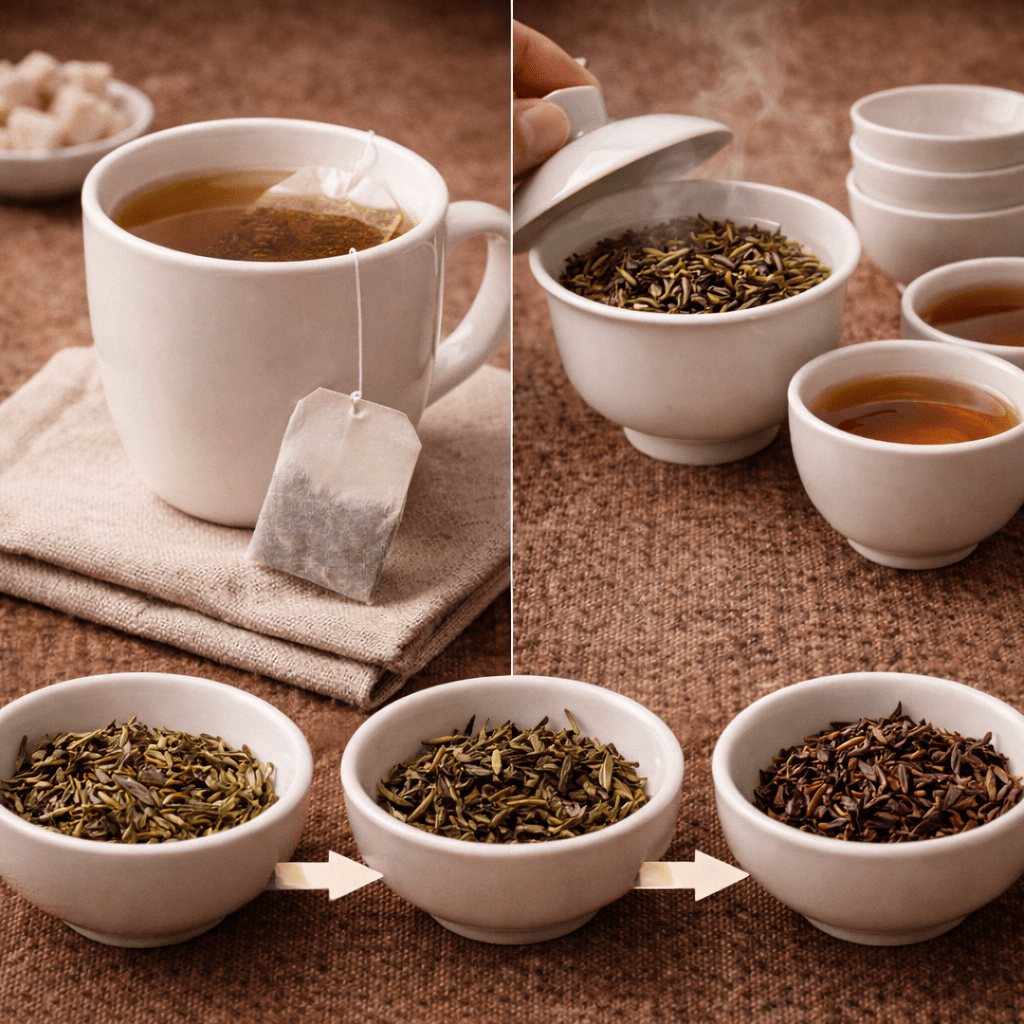
If you want to enjoy multiple infusions, a few simple tips can help.
Use loose leaf tea instead of tea bags.
Use smaller teapots or gaiwan to control infusion time.
Increase the steeping time slightly with each infusion.
Pay attention to how the flavor evolves.
These practices allow the tea to gradually reveal its full character.
The Tradition of Multiple Infusions
In traditional Chinese tea culture, brewing tea several times is considered normal.
Rather than preparing a large pot of tea once, smaller infusions are brewed repeatedly.
This method encourages slower tea drinking and allows people to appreciate the subtle changes in aroma and flavor.
Many tea drinkers find that this style of brewing transforms tea from a simple drink into a more thoughtful experience.
Final Thoughts
High-quality tea leaves are capable of producing multiple infusions, each offering its own flavor and character.
Green tea may provide a few brews, while oolong and pu-erh teas can produce many more.
By learning how to rebrew tea properly, tea drinkers can fully appreciate the depth and complexity hidden within each leaf.
Rather than rushing through a single cup, multiple infusions invite a slower and more rewarding way to enjoy tea.
Continue the Journey
Tea to Water Ratio Guide: How Much Tea to Use for Perfect Brewing
When brewing tea, many people focus on temperature or steeping time. However,...
Tea Steeping Time Guide: How Long to Steep Different Types of Tea
Brewing tea may seem simple, but one factor has an enormous impact...
No Image
Gongfu Tea Brewing Method Explained: The Traditional Chinese Way to Brew Tea
Tea is deeply woven into Chinese culture. For thousands of years, tea...