Tea Steeping Time Guide: How Long to Steep Different Types of Tea
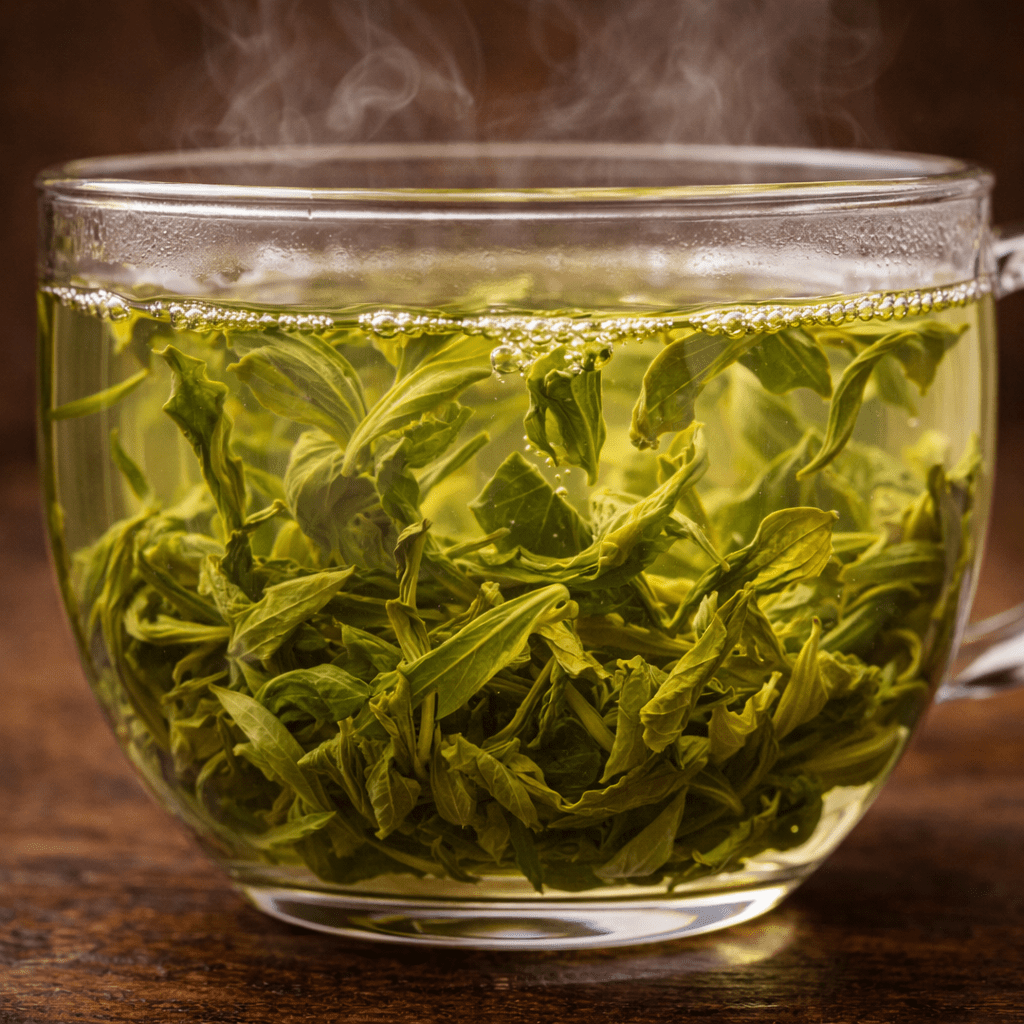
Brewing tea may seem simple, but one factor has an enormous impact on the final flavor of your cup: steeping time.
Steeping time determines how much flavor, aroma, caffeine, and tannins are extracted from tea leaves. If tea is steeped for too short a time, the flavor will be weak and underdeveloped. If steeped too long, the tea may become bitter or overly strong.
Finding the correct steeping time allows tea leaves to release their balanced sweetness, aroma, and body.
However, different types of tea require different brewing times. The ideal steeping time depends on several factors, including:
- the type of tea
- the size of the tea leaves
- the water temperature
- the brewing method
In this complete guide, you will learn:
- the ideal steeping time for every major tea type
- how steeping time affects flavor
- how to adjust steeping time for different brewing styles
- practical tips for brewing perfect tea every time
Once you understand how steeping time works, you will be able to consistently brew better tea.
Why Steeping Time Matters
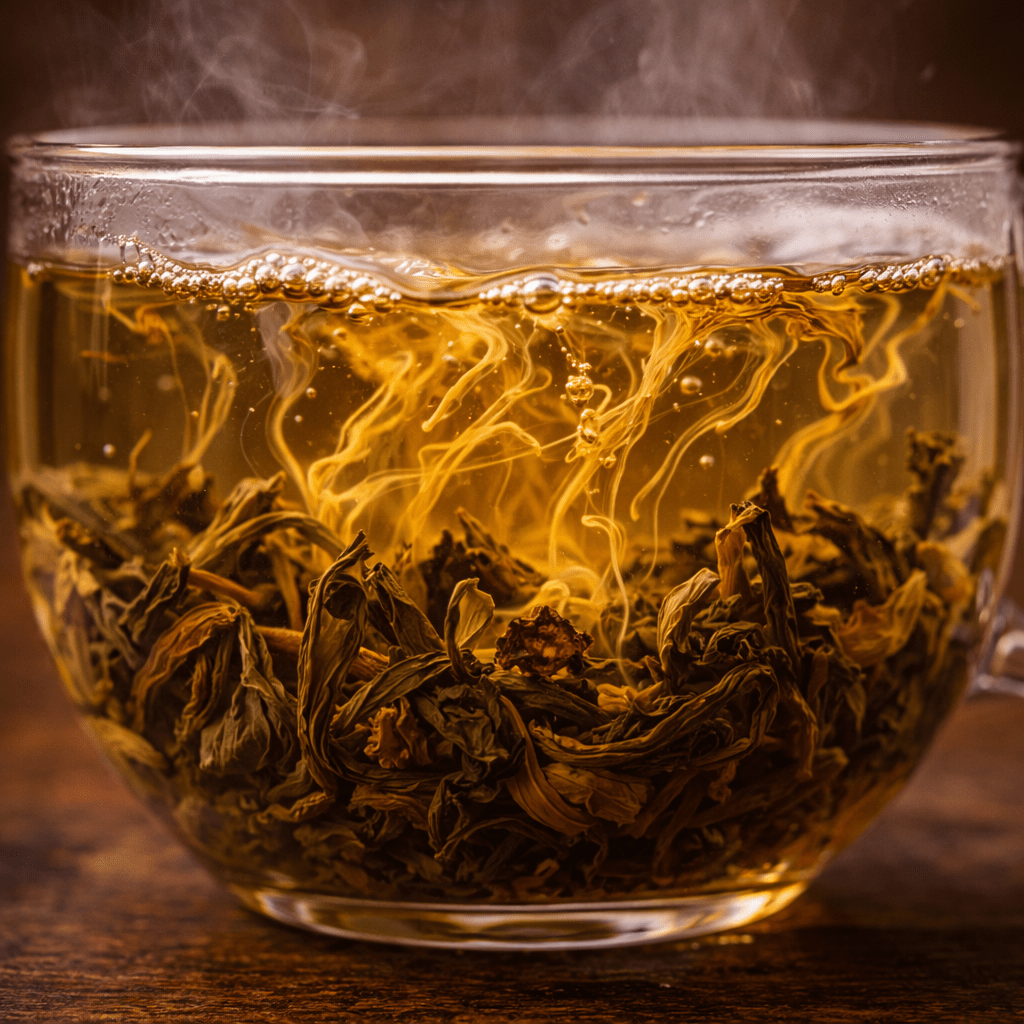
Tea leaves contain many natural compounds that dissolve into water during brewing.
Some of the most important compounds include:
- amino acids → sweetness and umami
- aromatic oils → fragrance
- polyphenols → body and structure
- tannins → bitterness and astringency
These compounds dissolve at different speeds.
The first few seconds of brewing usually extract aroma and sweetness, while longer steeping begins to release stronger tannins.
This is why steeping tea too long can create bitterness.
The goal of proper steeping time is to balance these compounds so the tea tastes smooth and complex.
General Tea Steeping Time Chart
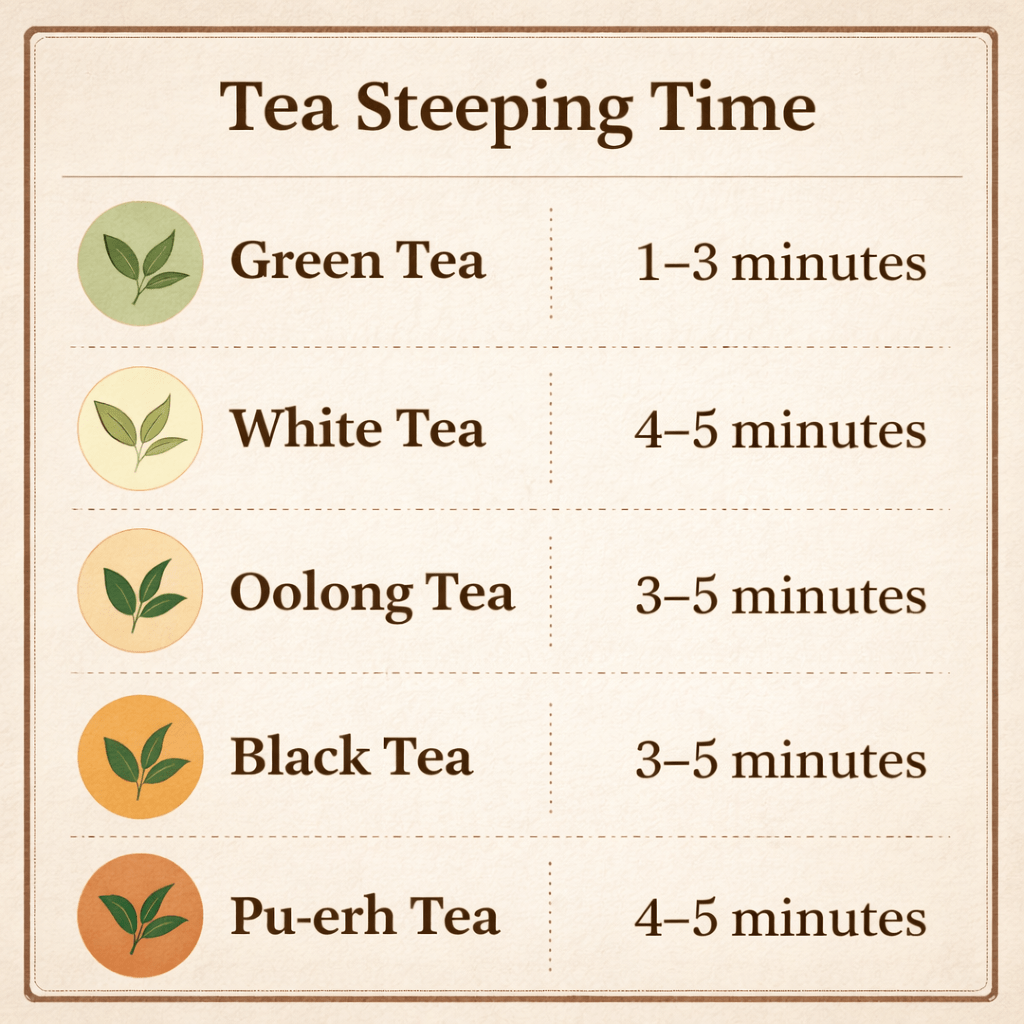
Below is a general steeping guide for the most common tea types.
| Tea Type | Temperature | Steeping Time |
|---|---|---|
| Green Tea | 70–80°C | 1–3 minutes |
| White Tea | 75–85°C | 2–4 minutes |
| Oolong Tea | 85–95°C | 2–5 minutes |
| Black Tea | 90–100°C | 3–5 minutes |
| Pu-erh Tea | 95–100°C | 2–4 minutes |
| Herbal Tea | 95–100°C | 5–7 minutes |
These times are general recommendations. Individual teas may require slight adjustments.
Steeping Time for Green Tea
Green tea is delicate and requires careful brewing.
Because green tea leaves are minimally oxidized, they contain compounds that can easily become bitter if brewed too long.
Recommended steeping time:
1–3 minutesWater temperature:
70–80°CShorter steeping highlights the tea’s fresh vegetal notes and sweetness.
Longer steeping increases bitterness and astringency.
High-quality green teas such as Longjing and Biluochun often taste best with shorter brewing times.
Steeping Time for White Tea
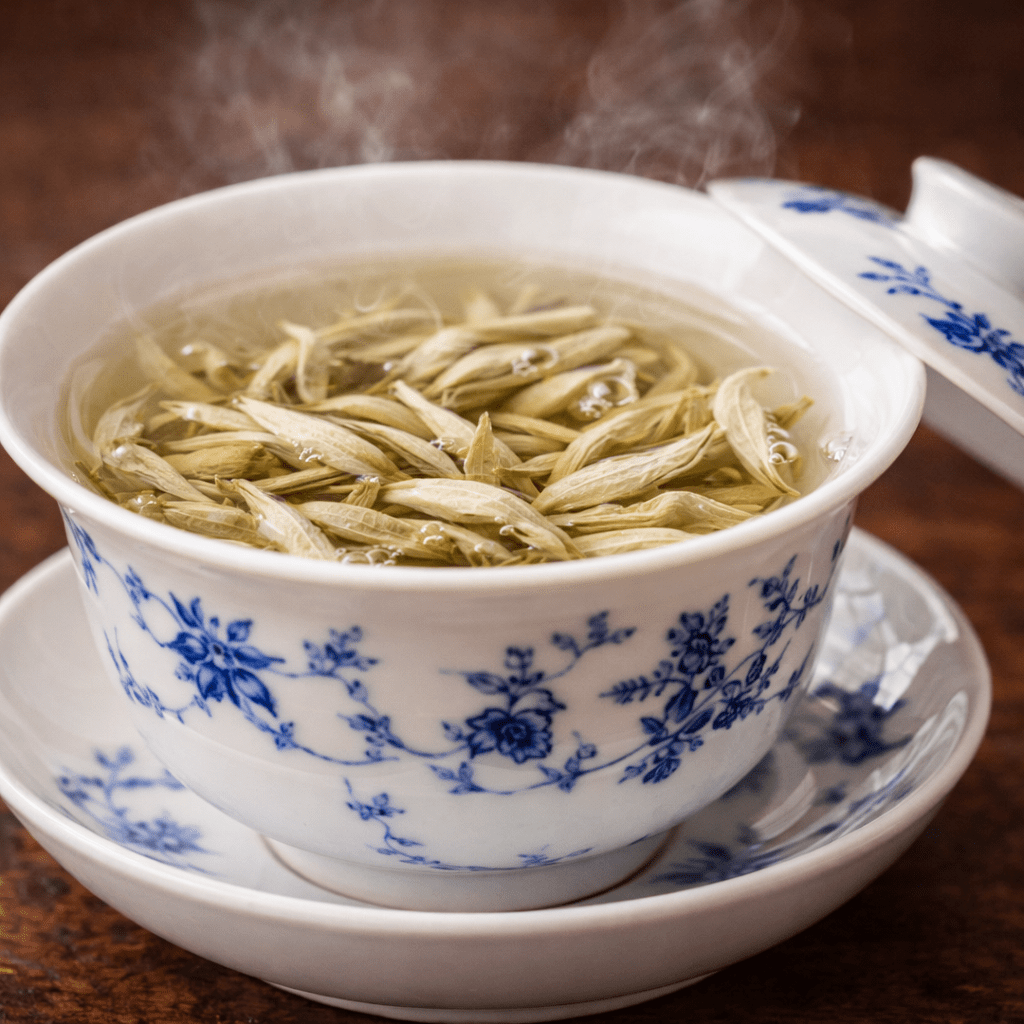
White tea consists of young tea buds and leaves that are gently processed.
Because of this minimal processing, white tea releases flavor more slowly.
Recommended steeping time:
2–4 minutesWater temperature:
75–85°CWhite tea produces a smooth and delicate flavor with subtle floral notes.
Longer steeping is generally acceptable because white tea contains fewer bitter compounds.
Steeping Time for Oolong Tea
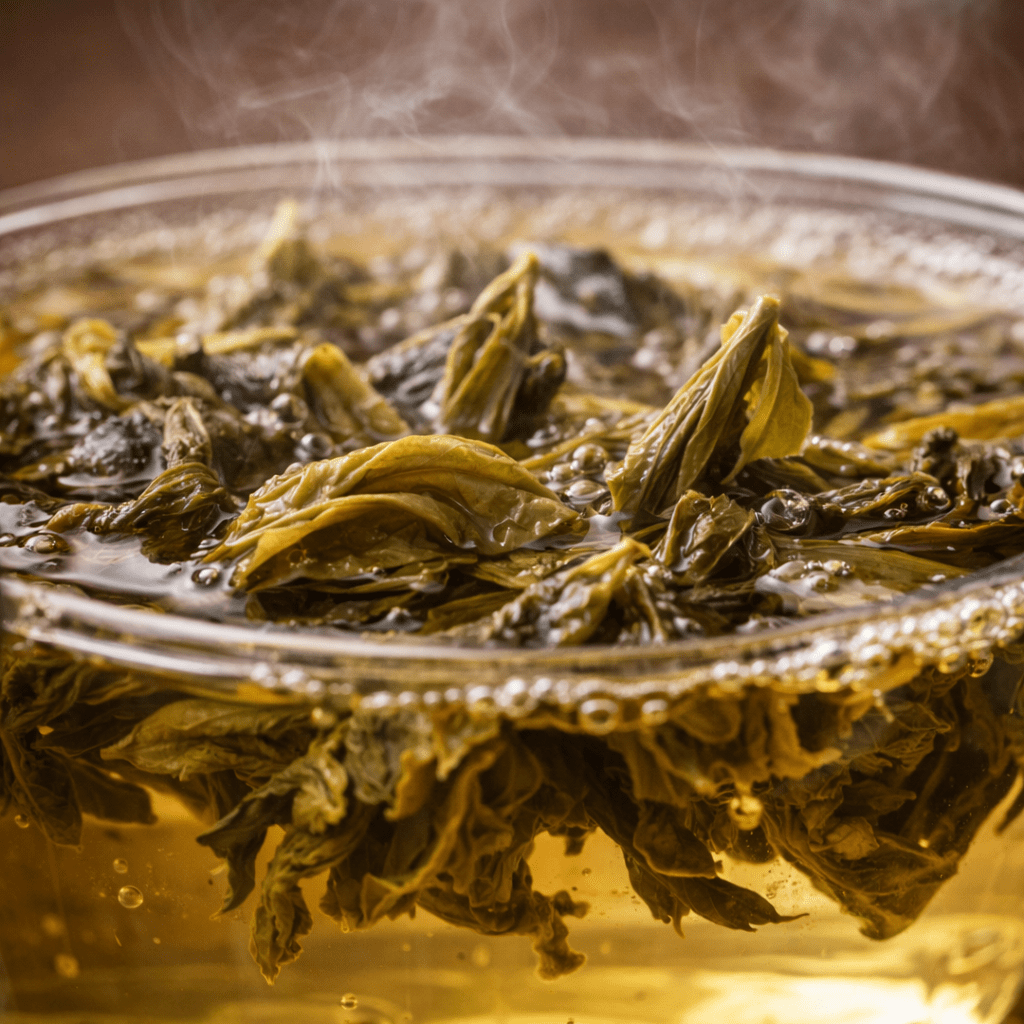
Oolong tea is partially oxidized and offers a wide range of flavors.
Light oolong teas may be floral and fresh, while darker oolongs can be rich and roasted.
Recommended steeping time:
2–5 minutesWater temperature:
85–95°CBecause oolong tea leaves are often tightly rolled, they require a little more time to open and release flavor.
Oolong tea also performs very well with multiple infusions.
Steeping Time for Black Tea
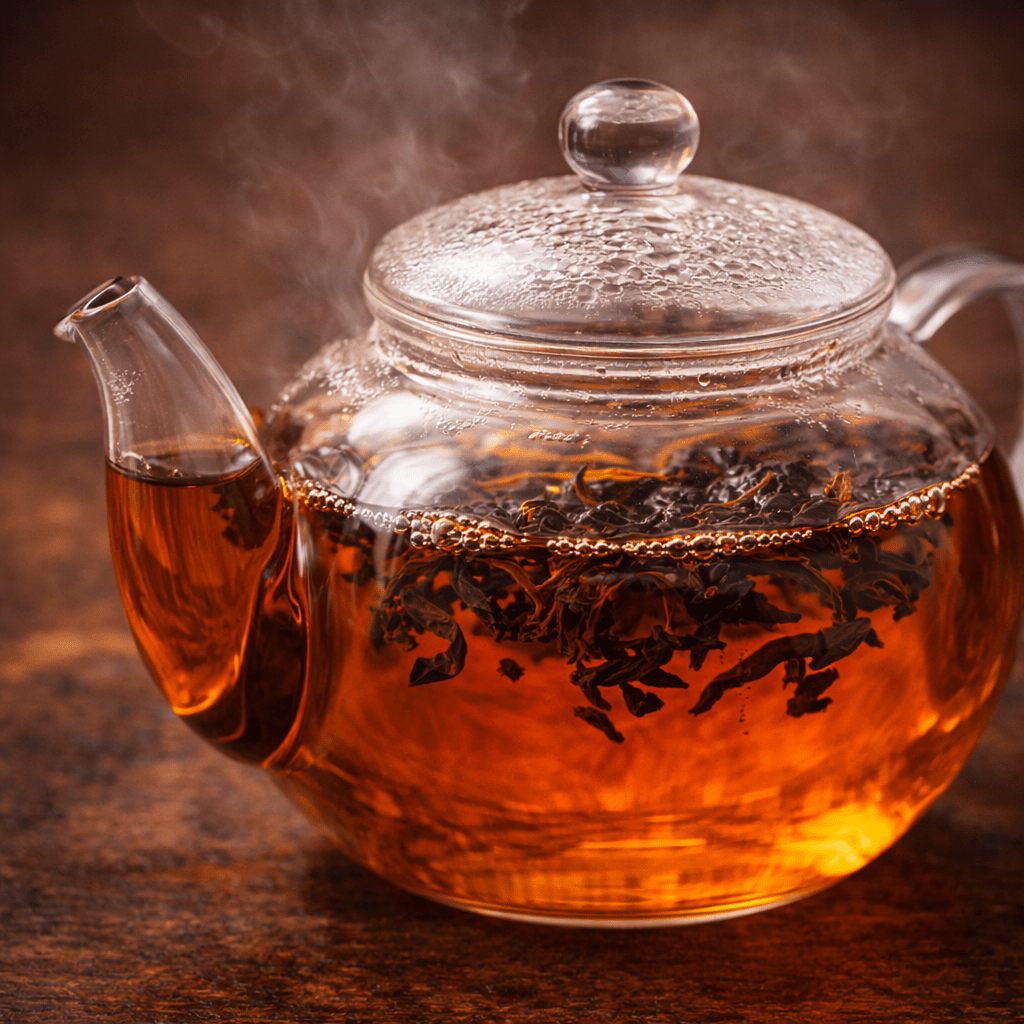
Black tea is fully oxidized and generally stronger than other teas.
Recommended steeping time:
3–5 minutesWater temperature:
90–100°CBlack tea produces a bold flavor and dark amber color.
Shorter steeping emphasizes sweetness, while longer steeping creates a stronger body.
Steeping Time for Pu-erh Tea
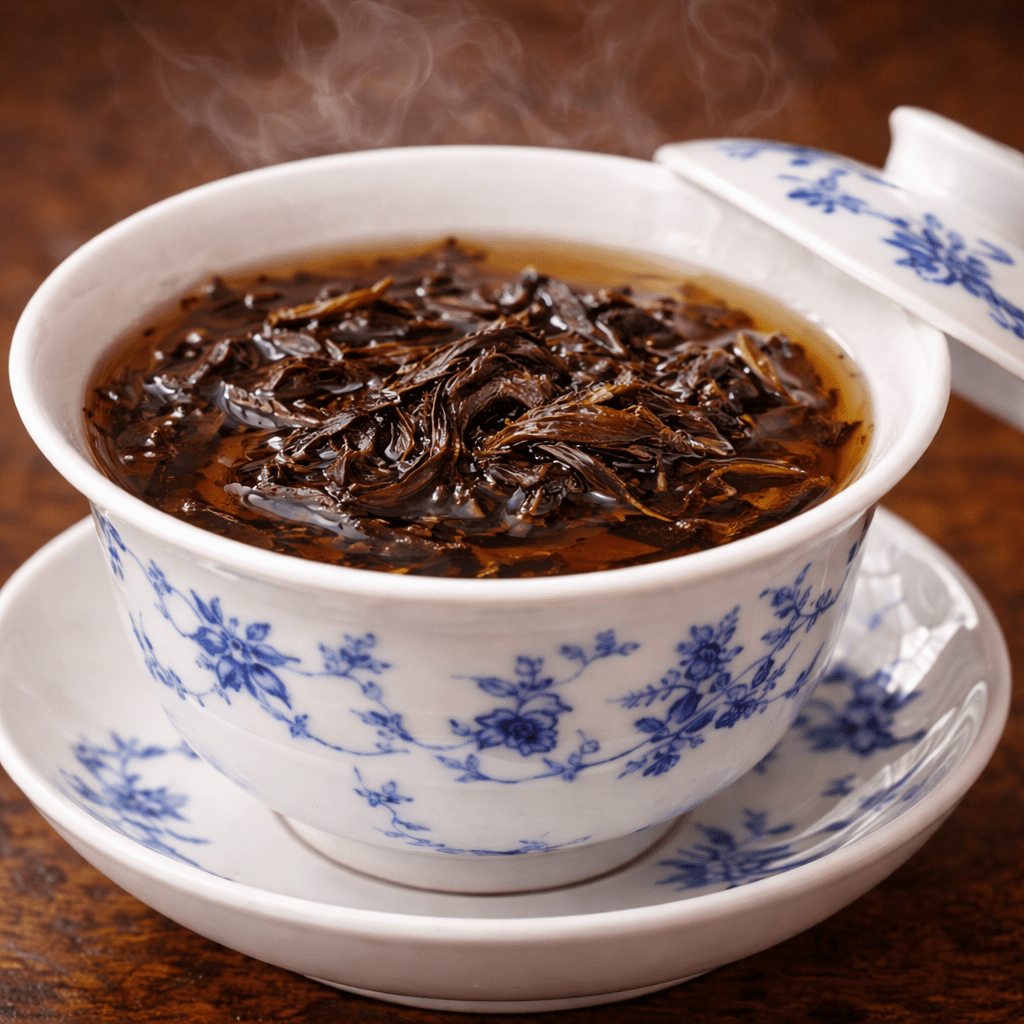
Pu-erh tea is a fermented tea that often benefits from multiple infusions.
Recommended steeping time:
2–4 minutesWater temperature:
95–100°CHowever, in Gongfu brewing, steeping times are much shorter, often only 10–20 seconds per infusion.
Pu-erh tea develops deeper earthy flavors over multiple brews.
Factors That Affect Steeping Time
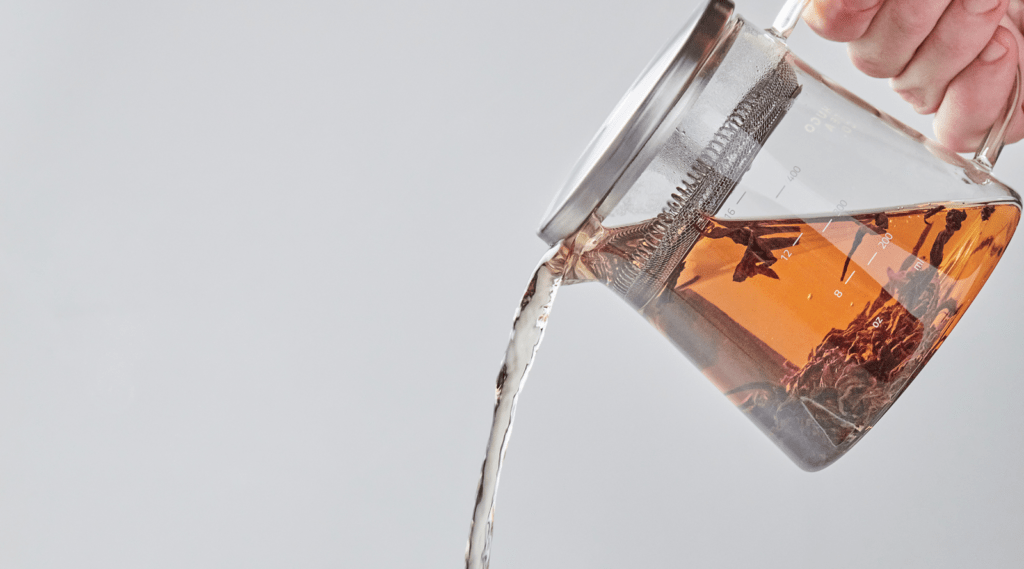
Several variables influence how long tea should steep.
Understanding these factors helps you adjust brewing time more accurately.
Leaf Size
Large whole leaves release flavor more slowly.
Broken leaves release flavor faster.
Tea bags often require shorter steeping times because the leaves are finely cut.
Water Temperature
Hotter water extracts compounds more quickly.
Lower temperature requires longer steeping.
Tea Quantity
More tea leaves increase extraction speed.
If using more tea, steeping time may need to be shortened.
Brewing Method
Gongfu brewing uses short steeping times and many infusions, while Western brewing uses longer single infusions.
How to Adjust Steeping Time
Brewing tea perfectly often requires small adjustments.
If your tea tastes:
Too weak → increase steeping time slightly
Too bitter → reduce steeping time
Too strong → reduce tea quantity
These small changes can significantly improve flavor.
Common Tea Brewing Mistakes
Many tea drinkers accidentally ruin tea flavor through incorrect steeping.
Common mistakes include:
- steeping tea too long
- using water that is too hot
- using too many tea leaves
Learning the correct steeping time prevents these problems.
Conclusion
Steeping time is one of the most important factors in brewing tea properly.
Each type of tea requires its own brewing time to bring out the best flavor.
By understanding the relationship between steeping time, temperature, and leaf quantity, you can consistently brew tea that is balanced, aromatic, and enjoyable.
With practice, adjusting steeping time becomes intuitive, allowing you to explore the full character of different teas.
Continue the Journey
Tea to Water Ratio Guide: How Much Tea to Use for Perfect Brewing
When brewing tea, many people focus on temperature or steeping time. However,...
No Image
Gongfu Tea Brewing Method Explained: The Traditional Chinese Way to Brew Tea
Tea is deeply woven into Chinese culture. For thousands of years, tea...
Gongfu Tea Brewing Method Explained: The Traditional Chinese Way to Brew Tea
Tea is one of the most ancient and refined beverages in the...