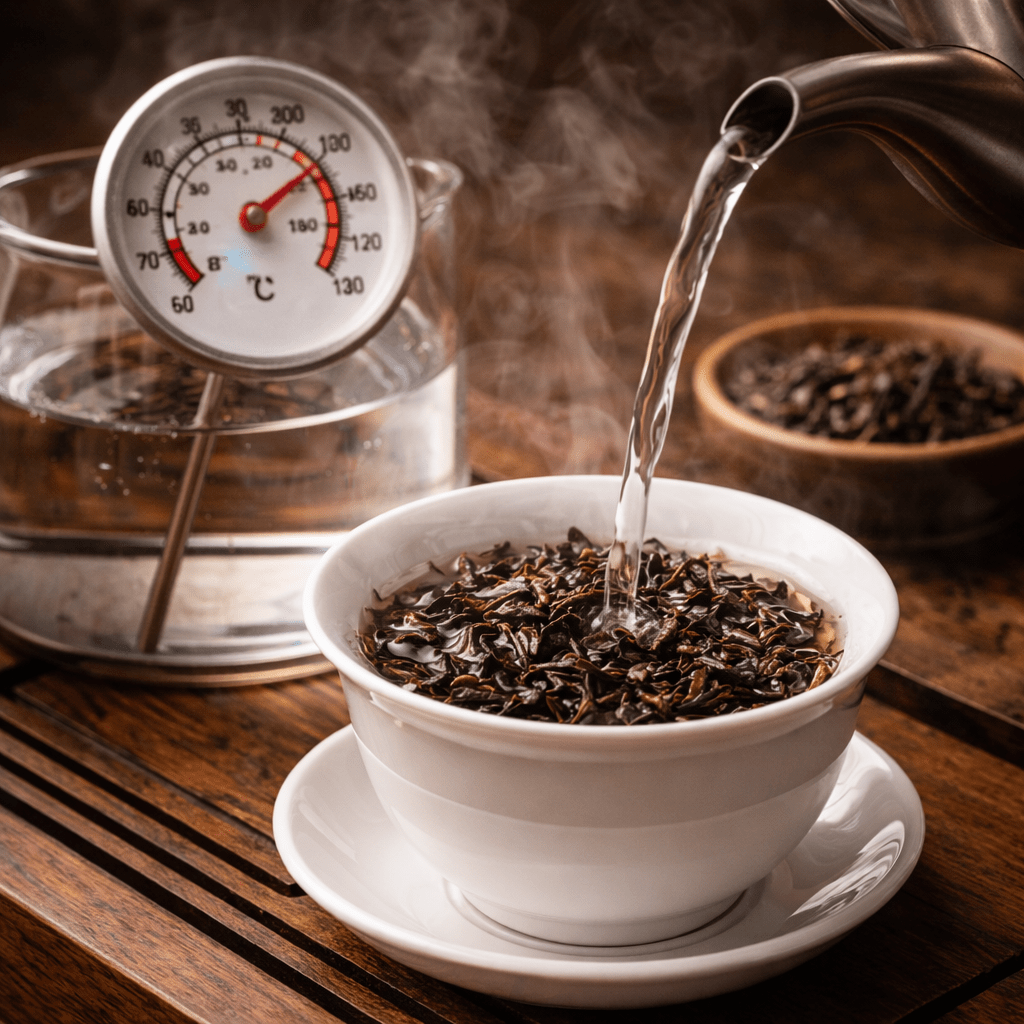
Best Water Temperature for Different Types of Tea
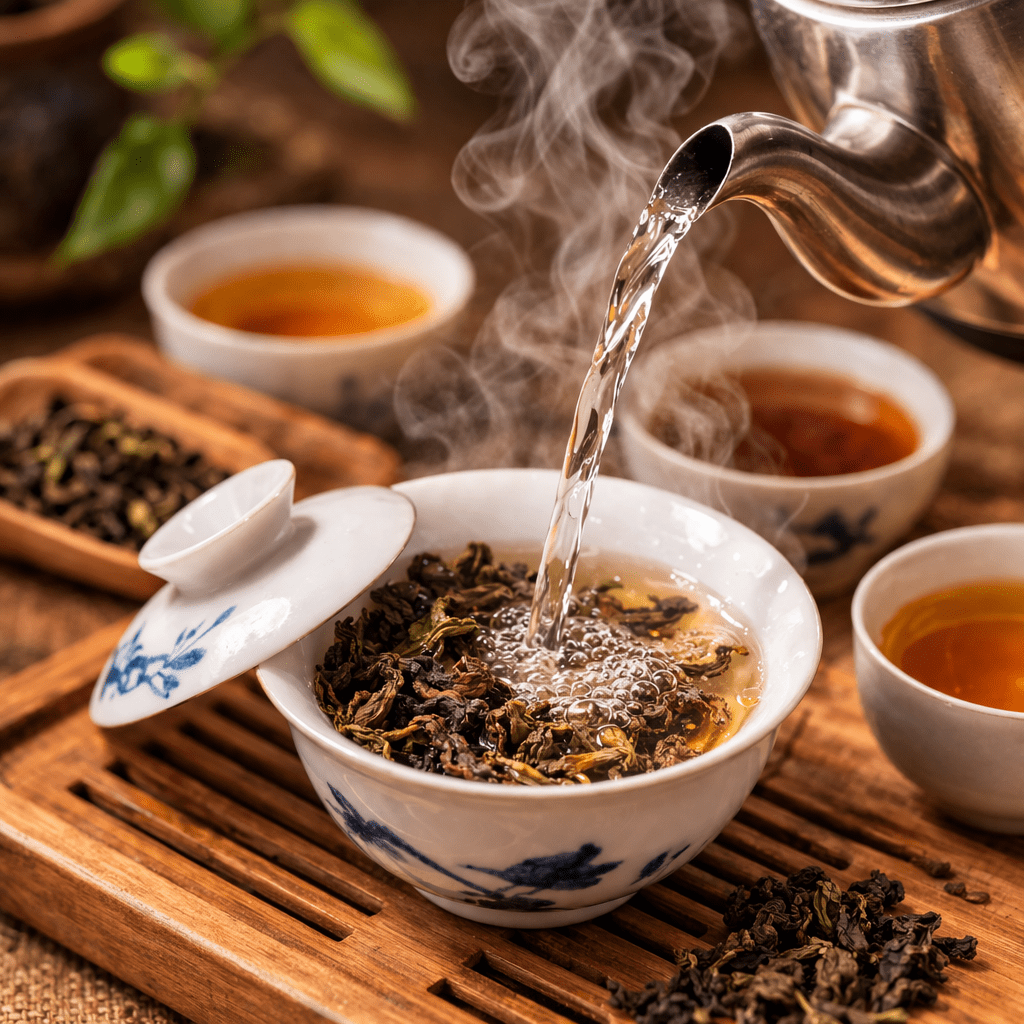
Best Water Temperature for Different Types of Tea: A Complete Brewing Guide
Water temperature is one of the most important factors in brewing tea. Even the highest quality tea leaves can produce poor flavor if the water temperature is incorrect.
Different types of tea require different brewing temperatures because of the way the leaves are processed. Delicate teas such as green tea contain compounds that are easily damaged by boiling water, while darker teas like black tea and pu-erh require higher temperatures to fully release their flavor.
Understanding the relationship between tea and water temperature allows tea drinkers to extract the best flavor, aroma, and texture from each type of tea.
In this guide, we will explore the ideal brewing temperatures for different types of tea, why temperature matters, and how to control water temperature when preparing tea at home.
Why Water Temperature Matters
Tea leaves contain many natural compounds including amino acids, polyphenols, and essential oils. These compounds dissolve at different rates depending on the temperature of the water.
When water is too hot, delicate compounds may break down quickly, producing bitterness or harsh flavors. When water is too cool, the tea may taste weak because the desirable compounds are not fully extracted.
The goal of proper tea brewing is to balance these extractions so that the tea produces a smooth, well-rounded flavor.
Water temperature therefore plays a central role in determining how a tea will taste.
The Ideal Temperature for Different Types of Tea
Each category of tea has its own optimal brewing temperature. These temperatures are influenced by the level of oxidation and processing used during production.
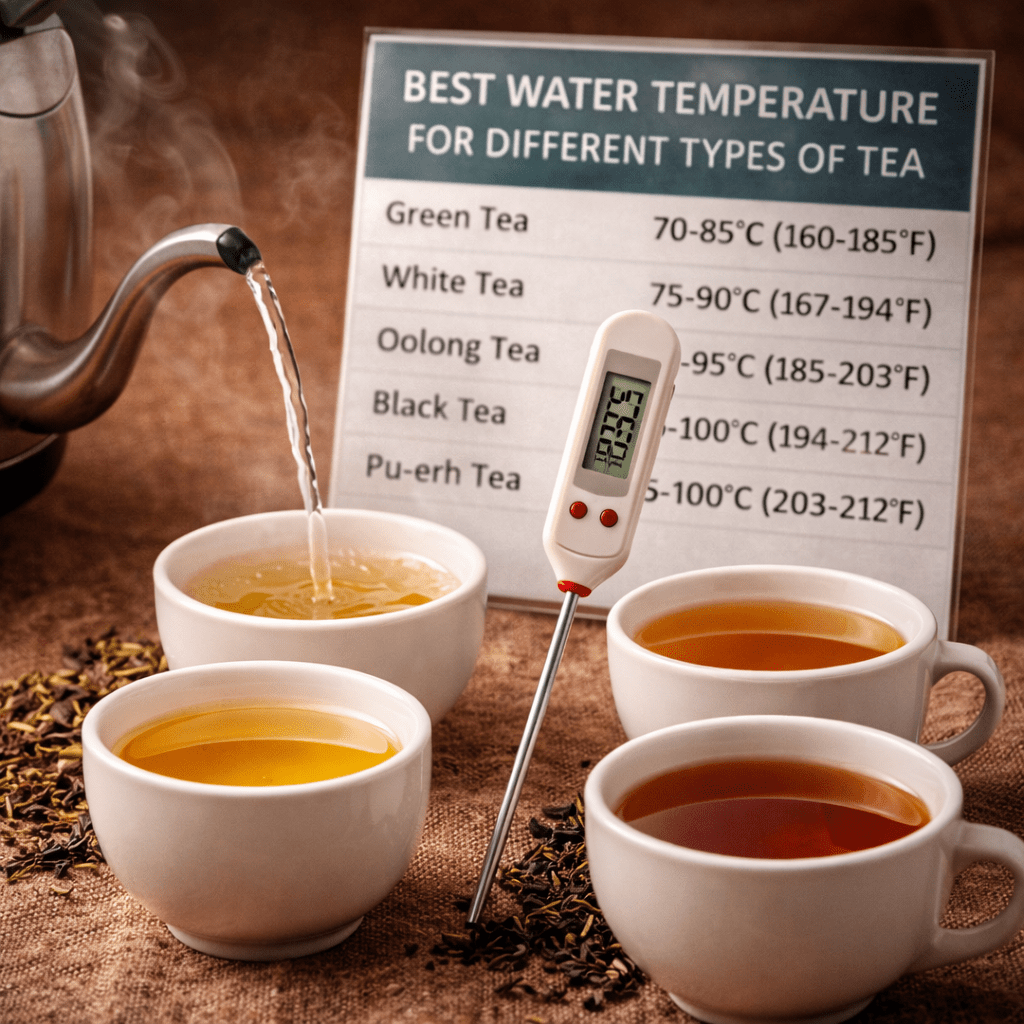
Below are general temperature guidelines used by many tea drinkers.
Green Tea
Recommended temperature:
70–85°C (160–185°F)
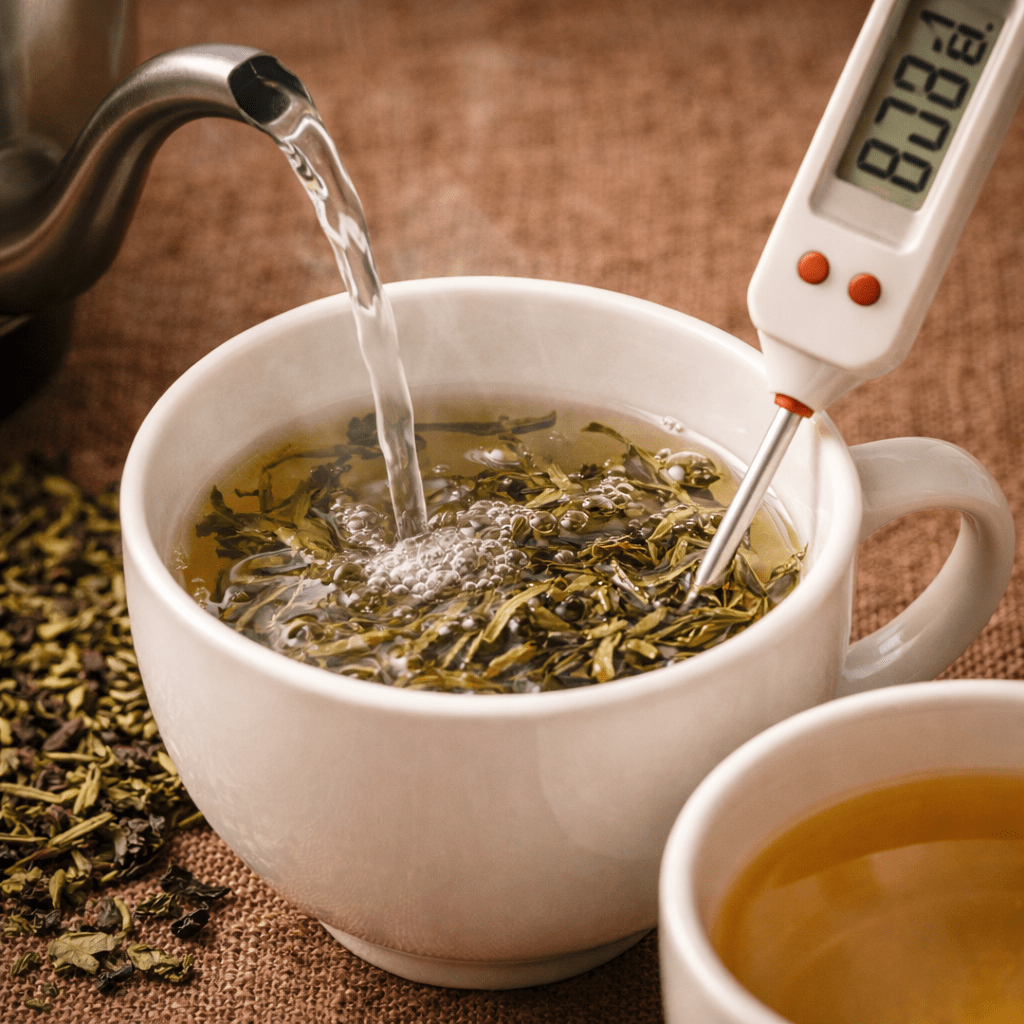
Green tea is one of the most delicate types of tea. Its leaves are minimally oxidized, which helps preserve their fresh vegetal flavor.
Using boiling water can easily make green tea taste bitter. Lower temperatures allow the natural sweetness and gentle aromas to emerge.
Popular green teas that benefit from lower temperatures include:
Longjing (Dragon Well)
Biluochun
Huangshan Maofeng
White Tea
Recommended temperature:
75–90°C (167–194°F)
White tea is lightly processed and contains delicate buds and leaves.
Although white tea is gentle in flavor, it can tolerate slightly higher temperatures than green tea because the leaves are thicker and less sensitive to heat.
Brewing white tea with moderately hot water allows the tea to release its soft floral and honey-like notes.
Oolong Tea
Recommended temperature:
85–95°C (185–203°F)
Oolong tea varies widely depending on its oxidation level.
Lightly oxidized oolongs such as Tieguanyin may benefit from slightly lower temperatures, while darker roasted oolongs such as Da Hong Pao can handle hotter water.
Higher temperatures help release the complex aromas that oolong tea is known for.
Black Tea
Recommended temperature:
90–100°C (194–212°F)
Black tea is fully oxidized and generally requires hotter water to extract its full flavor.
Boiling water helps release the deep, rich characteristics often described as:
malty
smooth
robust
Chinese black teas such as Keemun and Dian Hong respond well to higher brewing temperatures.
Pu-erh Tea
Recommended temperature:
95–100°C (203–212°F)
Pu-erh tea is one of the most resilient types of tea and benefits from very hot water.
Both raw and ripe pu-erh teas often require near-boiling water to fully release their earthy and complex flavors.
In traditional gongfu brewing, pu-erh tea may be infused many times using water close to boiling temperature.
How to Control Water Temperature
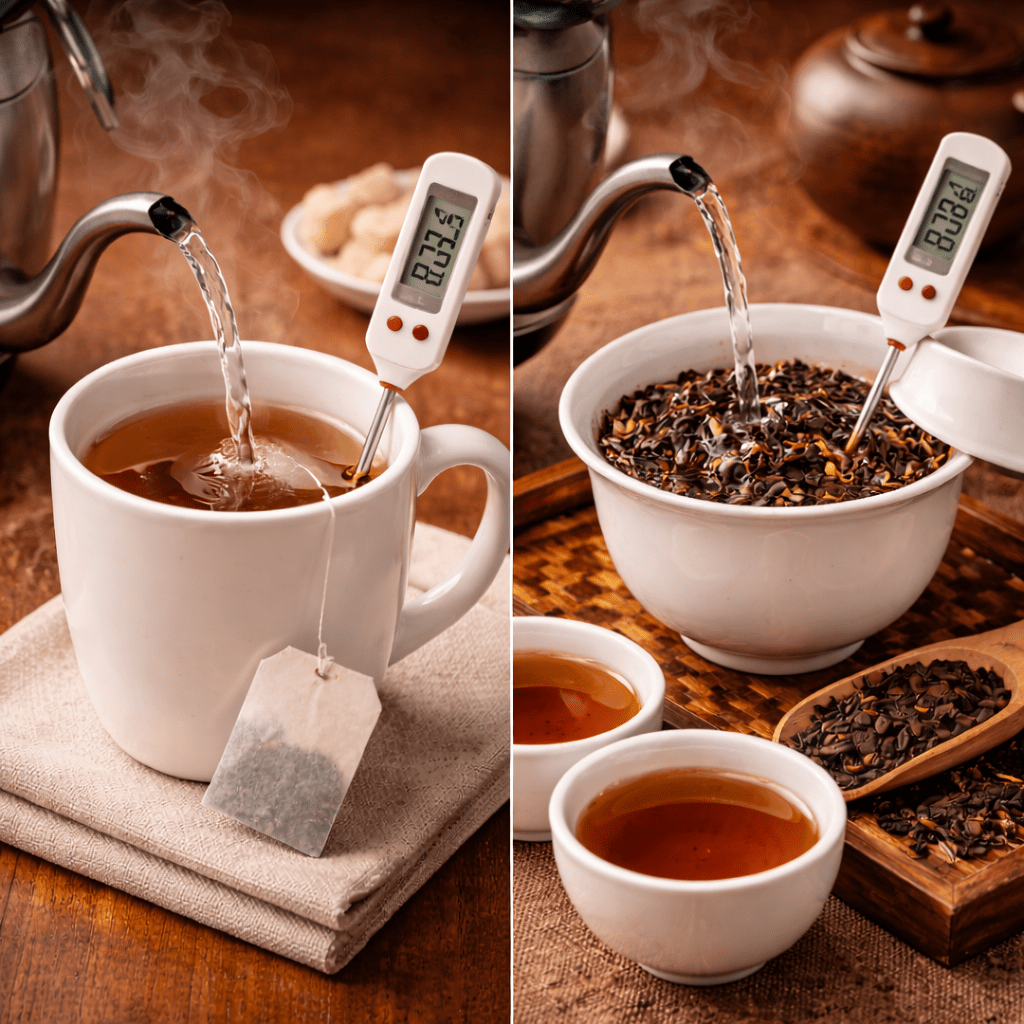
Many people assume they need specialized equipment to control water temperature, but simple methods work well.
One common approach is to allow boiling water to cool for a short period before brewing.
Approximate cooling times:
Boiling water cooled for 1–2 minutes
about 90°C
Boiling water cooled for 3–5 minutes
about 80°C
These simple adjustments allow tea drinkers to reach suitable brewing temperatures without a thermometer.
Electric kettles with temperature control can also make the process easier.
Common Temperature Mistakes
Beginners often make several mistakes when brewing tea.
One common mistake is using boiling water for every type of tea. While this may work for black tea, it can easily damage delicate teas such as green tea.
Another mistake is using water that is too cool. This prevents the tea from releasing its full flavor.
Learning the appropriate temperature range for each tea type helps avoid these problems.
The Role of Water Quality
Water temperature is not the only factor influencing tea flavor. The quality of the water itself also matters.
Clean, fresh water generally produces better results than heavily mineralized or chlorinated water.
Many tea drinkers prefer filtered water because it allows the natural flavor of the tea to stand out more clearly.
Developing Your Brewing Skill
As tea drinkers gain experience, they often adjust brewing temperature based on personal preference.
Some people enjoy slightly stronger flavors and use hotter water, while others prefer smoother tea and use cooler temperatures.
Experimenting with different temperatures can help reveal new characteristics in the same tea.
This experimentation is part of the enjoyment of tea preparation.
Final Thoughts
Water temperature is one of the most important elements in brewing tea successfully.
Different teas require different temperatures to fully reveal their flavor, aroma, and character.
By learning the basic temperature ranges for green tea, white tea, oolong tea, black tea, and pu-erh tea, tea drinkers can greatly improve their brewing results.
With a little practice, adjusting water temperature becomes second nature, allowing every cup of tea to reach its full potential.
Continue the Journey
Tea to Water Ratio Guide: How Much Tea to Use for Perfect Brewing
When brewing tea, many people focus on temperature or steeping time. However,...
Tea Steeping Time Guide: How Long to Steep Different Types of Tea
Brewing tea may seem simple, but one factor has an enormous impact...
No Image
Gongfu Tea Brewing Method Explained: The Traditional Chinese Way to Brew Tea
Tea is deeply woven into Chinese culture. For thousands of years, tea...