Pu-erh Tea vs Black Tea: What’s the Difference and Which One Should You Drink?
Pu-erh tea and black tea are two types of dark-colored tea that are often confused by new tea drinkers. Both produce deep amber infusions and bold flavors, but their origins, processing methods, and taste profiles are very different.
Pu-erh tea comes from Yunnan Province in China and is famous for its aging process. Black tea, on the other hand, is fully oxidized tea that is widely produced around the world.
People often ask questions such as:
- Is pu-erh tea the same as black tea?
- Which tea has more caffeine?
- Which tea is healthier?
- Which one tastes better?
Although these teas may look similar in the cup, they belong to completely different tea categories.
In this guide, we will explore the key differences between pu-erh tea and black tea, including flavor, caffeine levels, health properties, and brewing styles.
What Is Pu-erh Tea?
Pu-erh tea is a unique category of tea that undergoes post-fermentation, a microbial aging process that changes the tea over time.
This fermentation process gives pu-erh tea its distinctive flavor and aroma.
Pu-erh tea is traditionally produced in Yunnan Province, where large-leaf tea varieties are used.
There are two main types of pu-erh tea:
Raw Pu-erh (Sheng Pu-erh)
Raw pu-erh is naturally aged over many years. As it matures, its flavor gradually becomes smoother and more complex.
Young raw pu-erh can taste:
- slightly bitter
- floral
- grassy
Aged raw pu-erh develops notes such as:
- honey
- dried fruit
- wood
- medicinal herbs
Ripe Pu-erh (Shou Pu-erh)
Ripe pu-erh is produced using an accelerated fermentation process developed in the 1970s.
Its flavor is typically:
- earthy
- smooth
- mellow
- woody
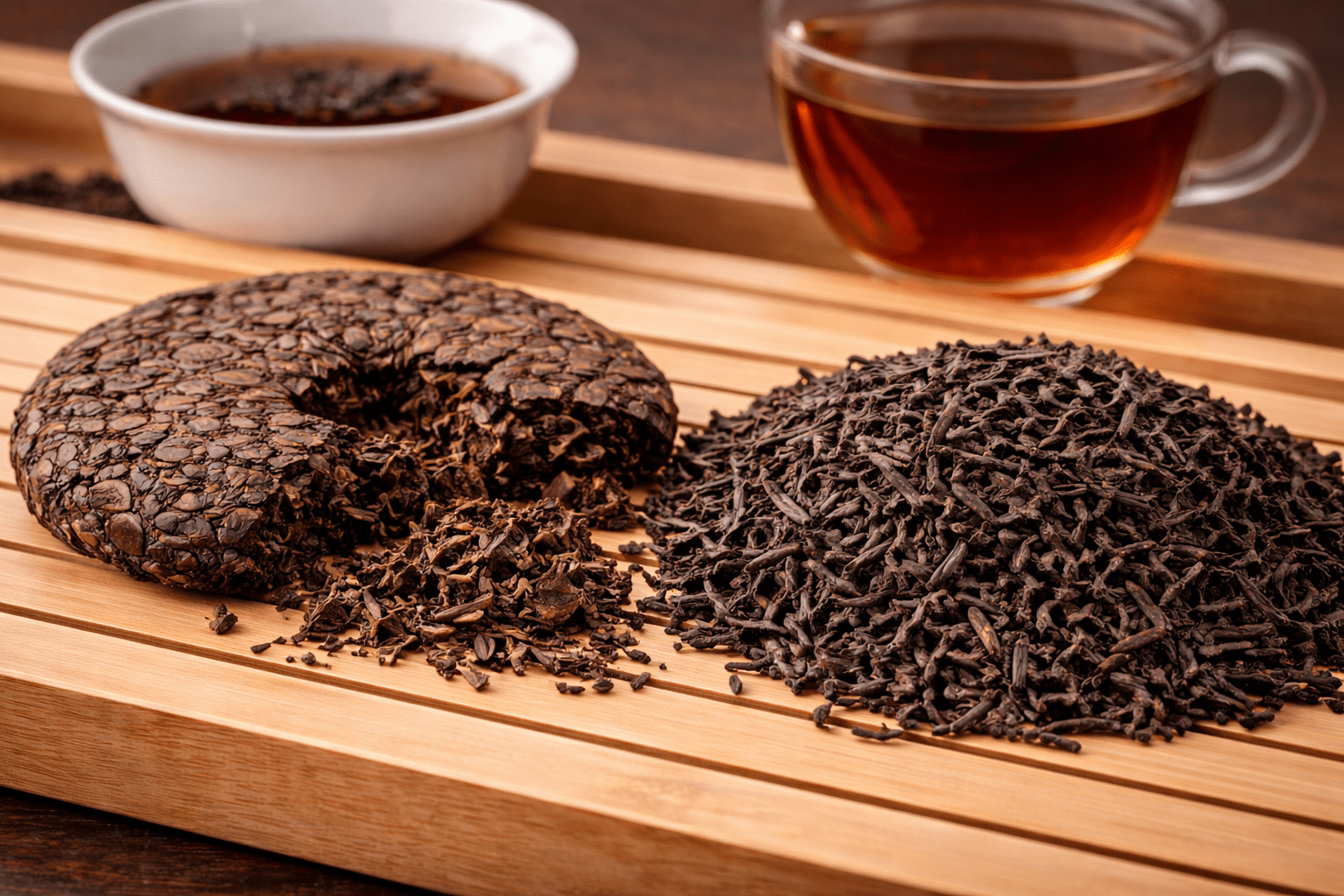
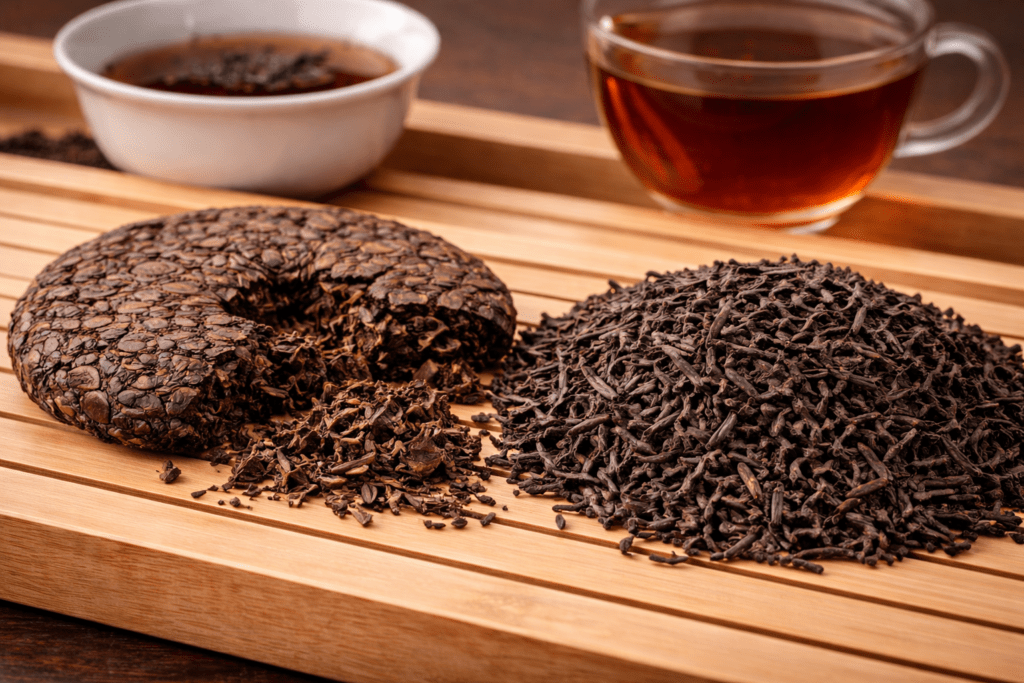
Pu-erh tea is often compressed into forms such as:
- tea cakes
- bricks
- tuo cha (bowl shapes)
What Is Black Tea?
Black tea is fully oxidized tea. The oxidation process darkens the leaves and creates bold flavors.
Unlike pu-erh tea, black tea does not undergo microbial fermentation after processing.
Typical black tea processing includes:
- Withering
- Rolling
- Oxidation
- Drying
This oxidation produces the rich flavors that black tea is known for.
Black tea flavors often include:
- malt
- caramel
- dried fruit
- chocolate
Popular black teas include:
- Keemun
- Assam
- Darjeeling
- Lapsang Souchong
Black tea is one of the most widely consumed teas globally.
Pu-erh vs Black Tea: Key Differences
Although both teas produce dark infusions, their production methods are fundamentally different.
| Feature | Pu-erh Tea | Black Tea |
|---|---|---|
| Oxidation | Light oxidation | Full oxidation |
| Fermentation | Microbial fermentation | No fermentation |
| Aging | Often aged for years | Usually consumed fresh |
| Flavor | Earthy and mellow | Bold and malty |
| Origin | Yunnan, China | Worldwide |
Pu-erh tea is known for its aging potential, while black tea is usually enjoyed soon after production.
Flavor Comparison
The flavor profiles of pu-erh tea and black tea are very different.
Pu-erh tea flavor
Pu-erh tea is often described as:
- earthy
- woody
- mellow
- smooth
- sometimes sweet
Aged pu-erh teas can develop very complex flavors over time.
Black tea flavor
Black tea is usually:
- stronger
- brighter
- more astringent
Its taste often includes:
- malt
- cocoa
- dried fruit
Compared with black tea, pu-erh tea tends to feel smoother and less sharp.
Caffeine Content
Both teas contain caffeine, but their levels vary.
| Tea Type | Average Caffeine |
|---|---|
| Pu-erh Tea | 30–60 mg |
| Black Tea | 40–70 mg |
In general, black tea may contain slightly more caffeine, but brewing style also affects caffeine extraction.
For example:
- gongfu brewing often produces less caffeine per cup
- longer steeping times increase caffeine levels
Brewing Differences
Pu-erh tea and black tea require slightly different brewing approaches.
Pu-erh tea brewing
Water temperature:
95–100°CSteeping time:
10–30 seconds (gongfu style)Pu-erh tea is commonly brewed using gongfu brewing, allowing many infusions.
Black tea brewing
Water temperature:
95–100°CSteeping time:
2–4 minutesBlack tea is usually brewed in larger teapots or cups.
Which Tea Should You Choose?
Both teas offer unique experiences.
Choose pu-erh tea if you enjoy:
- earthy flavors
- aged teas
- gongfu tea brewing
- complex aging characteristics
Choose black tea if you prefer:
- stronger flavor
- simple brewing
- breakfast teas
- milk tea options
Many tea drinkers enjoy both depending on the situation.
Final Thoughts
Pu-erh tea and black tea represent two very different traditions within the tea world.
Pu-erh tea is famous for its fermentation and aging, while black tea is known for its full oxidation and bold flavor.
Both teas have centuries of history and offer distinct drinking experiences.
Exploring both styles is an excellent way to deepen your appreciation for tea.
Continue the Journey
Matcha vs Green Tea: What’s the Difference and Which One Is Healthier?
Matcha and green tea are often mentioned together, and many people assume...
Tea vs Coffee: Which Drink Is Healthier, Better for Energy, and Right for You?
Tea and coffee are two of the most popular beverages in the...
Oolong Tea vs Black Tea: What’s the Difference and Which Tea Should You Choose?
Oolong tea and black tea are two of the most popular traditional...