Chinese Tea Ceremony Guide: The Traditional Art of Chinese Tea Ritual
The Chinese tea ceremony is more than simply brewing tea. It is a refined cultural practice that reflects respect, harmony, patience, and mindfulness.
Unlike some formal tea traditions that follow rigid rules, the Chinese tea ceremony focuses on balance between technique and atmosphere. The goal is not perfection, but creating a calm and meaningful experience for both the host and the guests.
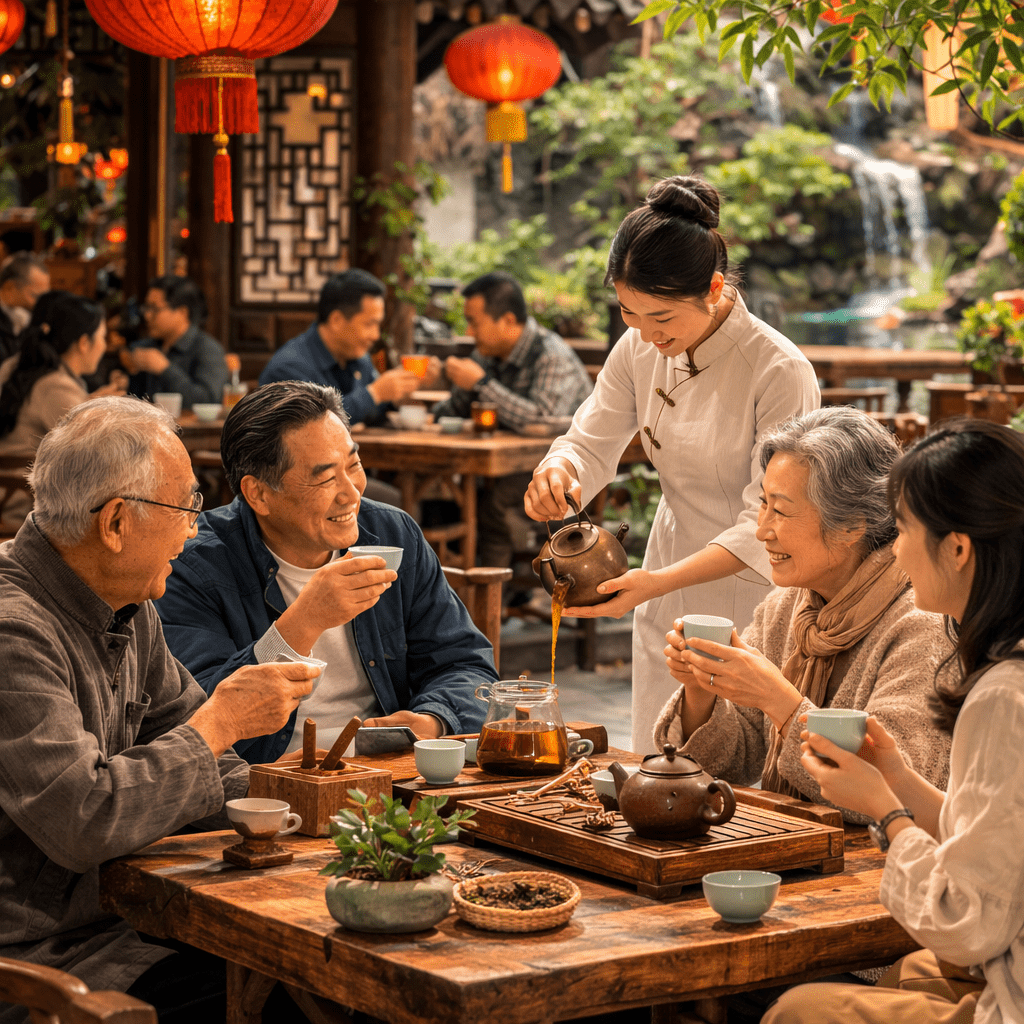
In Chinese culture, preparing tea for others is a gesture of hospitality and respect. Through tea, people connect, share conversations, and slow down from the pace of everyday life.
What Is a Chinese Tea Ceremony?
A Chinese tea ceremony refers to the traditional way of preparing and serving tea with attention, intention, and etiquette.
It usually involves:
- specialized tea ware
- high-quality loose leaf tea
- careful brewing techniques
- a calm and respectful atmosphere
The ceremony focuses on appreciating tea through all senses — sight, smell, taste, and feeling.
Tea ceremonies can be simple and informal or elaborate and ceremonial depending on the situation.
The Origins of the Chinese Tea Ceremony
The roots of the Chinese tea ceremony go back more than a thousand years.
During the Tang Dynasty, tea drinking became popular among scholars, monks, and artists. Tea was valued not only for its taste but also for its calming effects and spiritual meaning.
Later during the Song Dynasty, tea culture developed into more sophisticated forms, with greater attention to tea preparation, tea ware, and aesthetics.
Over time, the Chinese tea ceremony evolved into what is known today as gongfu tea, a brewing style that emphasizes precision and appreciation of flavor.
The Philosophy Behind the Tea Ceremony
The Chinese tea ceremony reflects important cultural values.
Harmony
Tea ceremonies aim to create harmony between:
- people
- nature
- environment
Everything from the tea table to the lighting contributes to a peaceful atmosphere.
Respect
Serving tea demonstrates respect for guests and elders.
The host prepares tea carefully and presents it with humility and attention.
Simplicity
The beauty of the tea ceremony lies in simplicity.
Natural materials such as wood, clay, and porcelain are often used to create an authentic and calm environment.
Essential Tea Ware for a Chinese Tea Ceremony
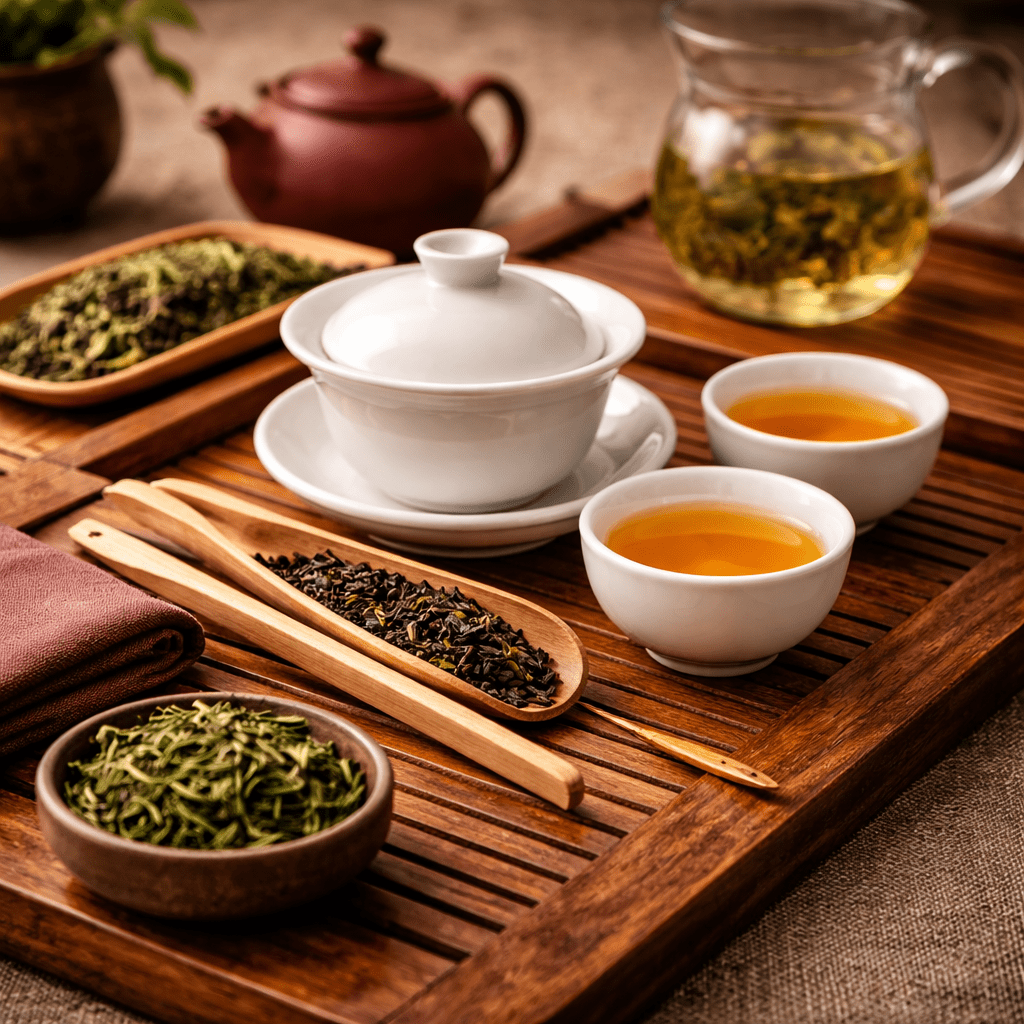
A traditional Chinese tea ceremony uses several important tools.
Gaiwan
A gaiwan is a lidded bowl used for brewing tea. It allows the tea leaves to expand and release their aroma.
Yixing Teapot
A Yixing clay teapot is often used for oolong and pu-erh teas. The porous clay absorbs tea flavor over time.
Fairness Pitcher
Also called a cha hai, this pitcher ensures that tea is evenly distributed before serving guests.
Tea Cups
Small tea cups allow drinkers to appreciate aroma and flavor more carefully.
Types of Tea Used in Chinese Tea Ceremonies
Many types of tea can be used in Chinese tea ceremonies.
However, some teas are particularly well suited.
Oolong Tea
Oolong tea is the most commonly used tea in gongfu ceremonies because its complex flavor evolves across multiple infusions.
Pu-erh Tea
Pu-erh tea is also popular because of its rich taste and ability to handle repeated brewing.
Black Tea
Certain Chinese black teas are used when a smoother and sweeter tea experience is desired.
The Steps of a Chinese Tea Ceremony
Although variations exist, a typical ceremony follows several steps.
Step 1: Preparing the Tea Table
The tea tray, tea ware, and tea leaves are arranged neatly.
The environment should be quiet and calm.
Step 2: Warming the Tea Ware
Hot water is poured into the teapot and cups to warm them.
This step prepares the tea ware and improves brewing temperature.
Step 3: Adding Tea Leaves
Loose leaf tea is placed into the gaiwan or teapot.
The host may show the leaves to guests so they can observe their appearance and aroma.
Step 4: Rinsing the Tea
The first infusion is sometimes poured quickly over the leaves and discarded.
This step awakens the tea leaves and removes dust.
Step 5: Brewing the Tea
Hot water is poured over the tea leaves and steeped briefly.
The host carefully controls brewing time to achieve balanced flavor.
Step 6: Serving the Tea
The brewed tea is poured into the fairness pitcher and then into small tea cups.
Guests are invited to smell the aroma before tasting.
Etiquette During a Chinese Tea Ceremony
Guests should follow certain etiquette when participating in a tea ceremony.
Accepting Tea
Tea cups should be received with both hands as a sign of respect.
Expressing Gratitude
In many regions of China, guests gently tap the table with their fingers to thank the host for pouring tea.
Drinking Slowly
Tea should be enjoyed slowly to appreciate aroma and flavor.
Why Chinese Tea Ceremonies Are Still Popular Today
The Chinese tea ceremony continues to attract tea lovers worldwide.
In modern society, people often feel rushed and overwhelmed. The tea ceremony offers a moment of calm and reflection.
It encourages:
- mindfulness
- connection with others
- appreciation of tradition
For many tea enthusiasts, practicing the tea ceremony is a way to reconnect with culture and simplicity.
Conclusion
The Chinese tea ceremony is a timeless tradition that combines culture, philosophy, and craftsmanship.
It transforms a simple cup of tea into an experience of mindfulness and hospitality.
Whether practiced formally or casually, the ceremony reminds us to slow down, appreciate the present moment, and share tea with others.
Continue the Journey
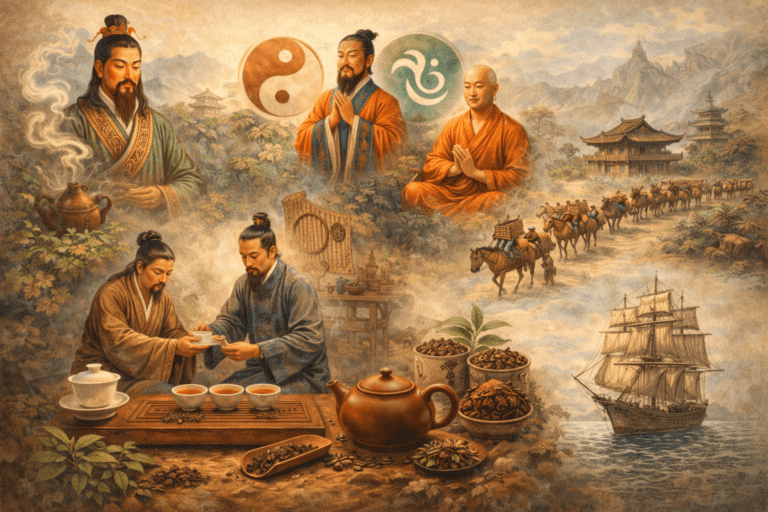
History of Chinese Tea: The 4,000-Year Story of Tea in China
Tea is one of the oldest and most influential beverages in human...
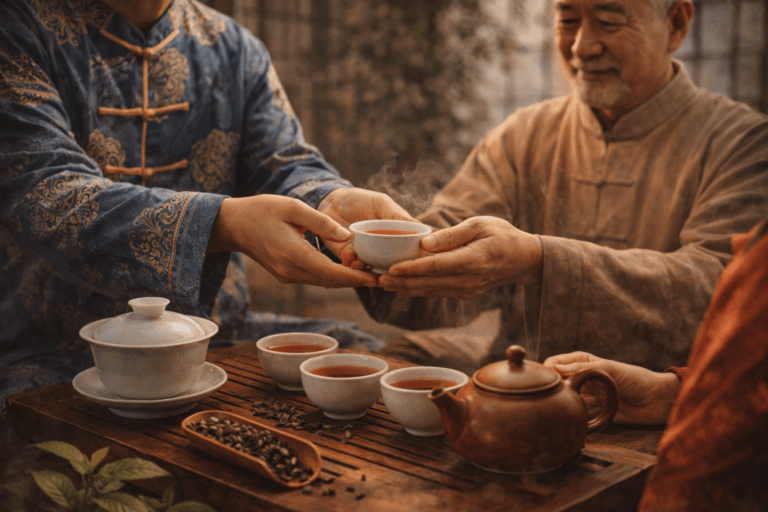
Tea Drinking Etiquette: A Guide to Proper Tea Manners in Chinese Tea Culture
Tea drinking in Chinese culture is not only about taste. It is...
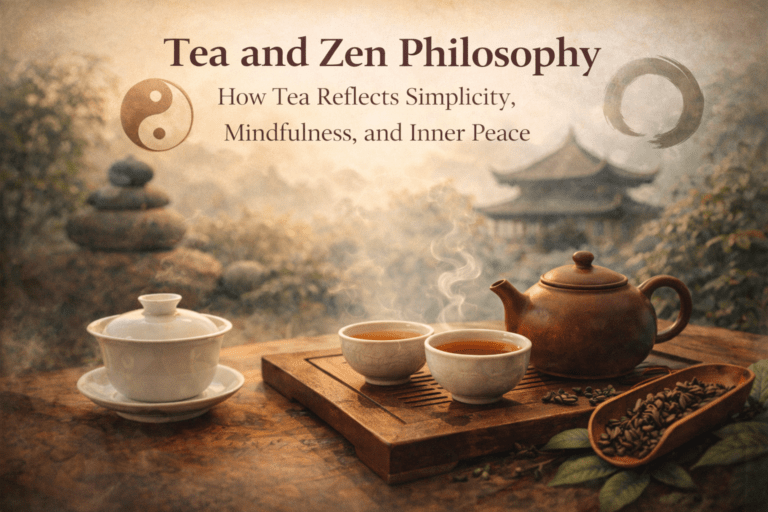
Tea and Zen Philosophy: How Tea Reflects Simplicity, Mindfulness, and Inner Peace
For centuries, tea and Zen philosophy have shared a deep connection. Both...