Loose Leaf Tea vs Tea Bags: Which Is Better?
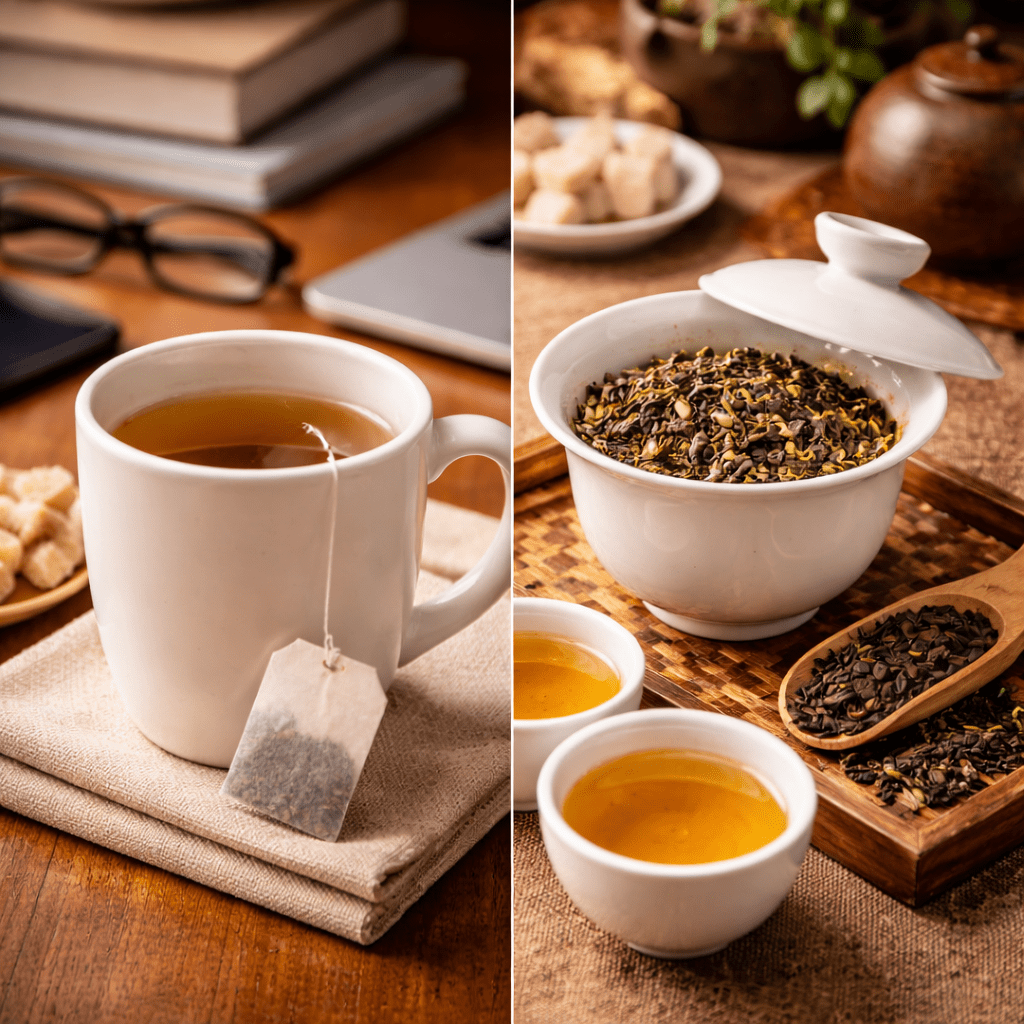
Tea is one of the most widely consumed beverages in the world. For many people, the daily habit of drinking tea begins with a simple tea bag placed in a cup of hot water. Tea bags are convenient, quick, and easy to use.
However, as people begin exploring higher quality teas, they often encounter another option: loose leaf tea.
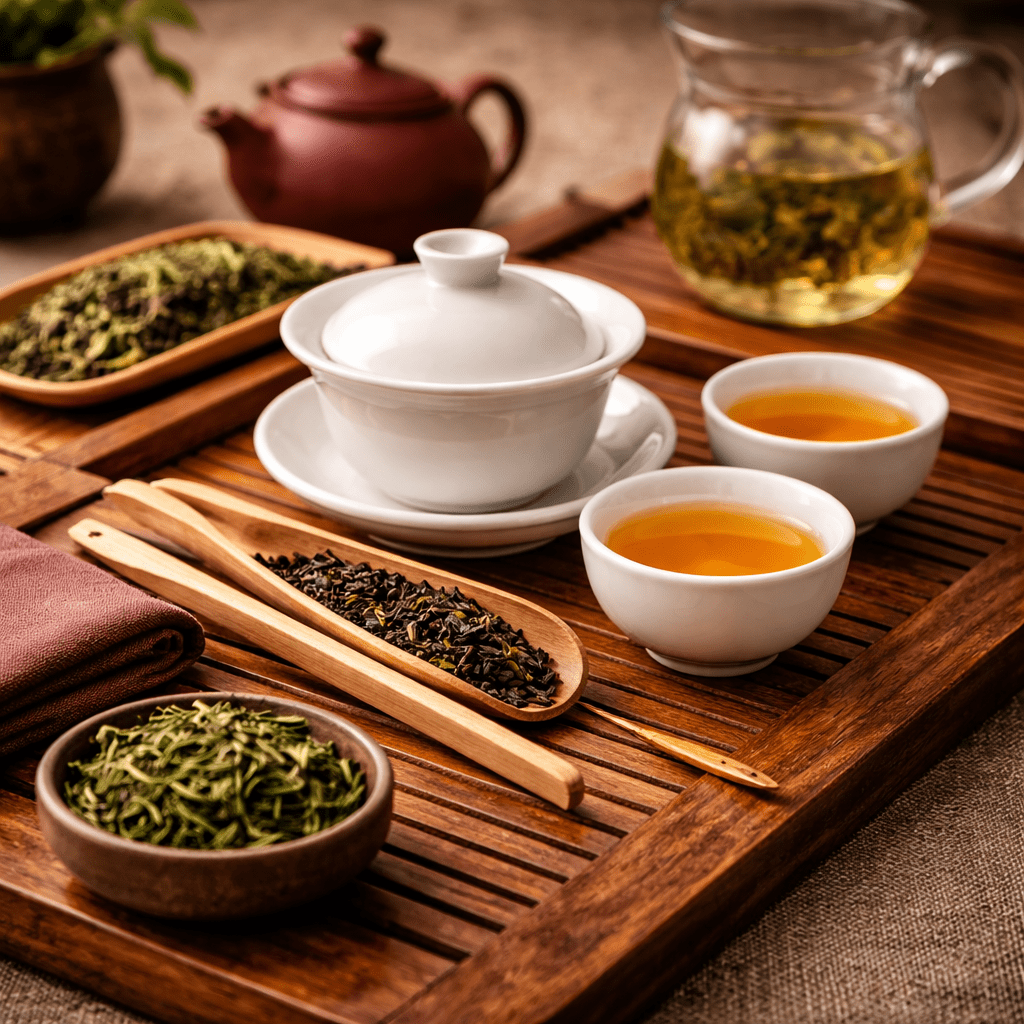
Loose leaf tea has been the traditional way of drinking tea in China for centuries. Instead of small paper bags filled with crushed leaves, loose tea consists of whole or partially whole tea leaves that are brewed freely in water.
This difference may seem small at first, but it significantly affects the flavor, aroma, and overall tea experience.
Many tea drinkers eventually wonder which option is better: loose leaf tea or tea bags.
The answer depends on several factors including quality, convenience, brewing style, and personal preference.
In this guide, we will explore the differences between loose leaf tea and tea bags, how they are produced, and which option may be best for different situations.
What Is Loose Leaf Tea?
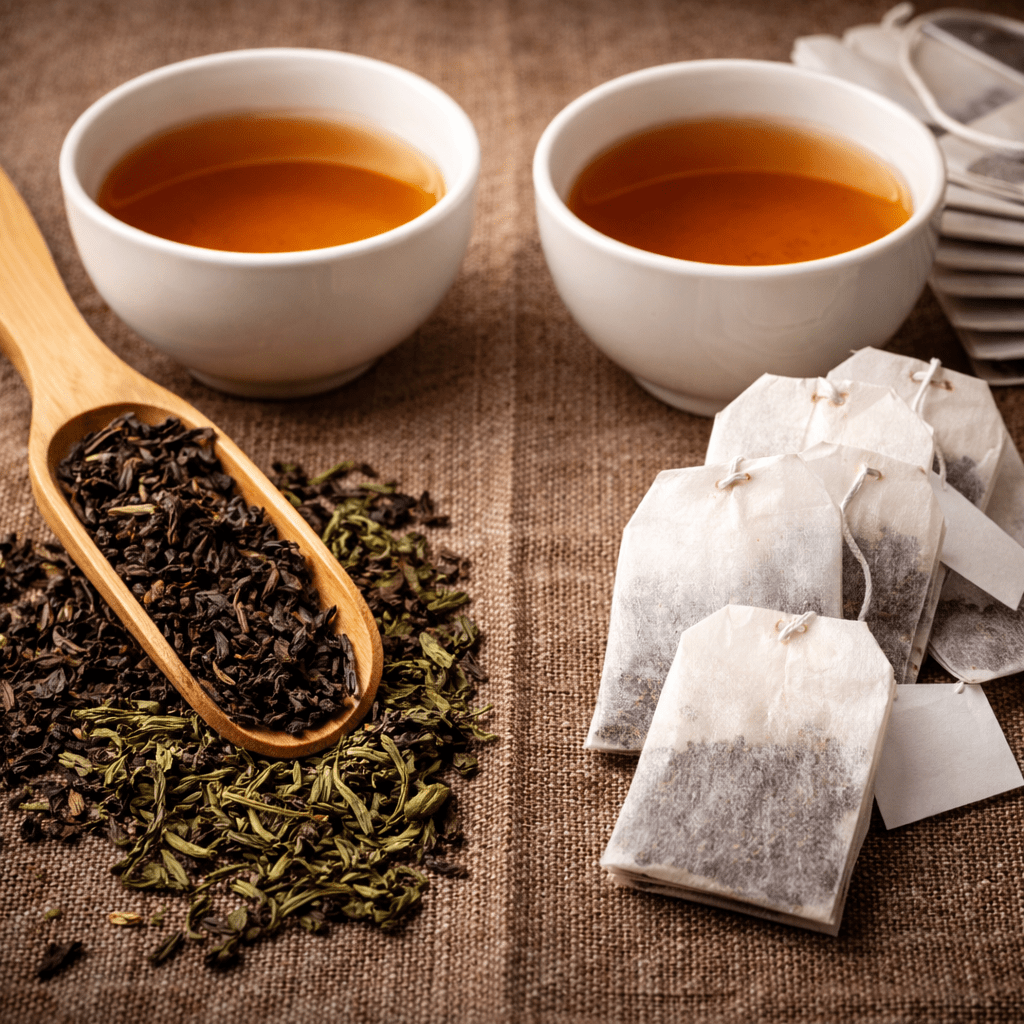
Loose leaf tea refers to tea leaves that are not packaged in tea bags. Instead, the leaves are stored in containers and measured directly when brewing tea.
These leaves are often larger and less broken than the tea used in most tea bags.
Because the leaves remain relatively intact, they retain more of their natural oils and aromatic compounds. These compounds are responsible for the complex flavors and fragrances that tea drinkers appreciate.
Loose leaf tea is commonly used in traditional Chinese tea preparation methods such as gongfu brewing, where the leaves are steeped multiple times to reveal different layers of flavor.
Many types of Chinese tea—including green tea, oolong tea, white tea, and pu-erh tea—are traditionally brewed using loose leaves.
What Are Tea Bags?
Tea bags were introduced in the early 20th century as a convenient way to brew tea quickly.
A tea bag typically contains small pieces of tea leaves enclosed in a paper or fabric pouch. The bag is placed in hot water and removed after a short steeping time.
Tea bags are widely used because they are easy to prepare and require minimal equipment.
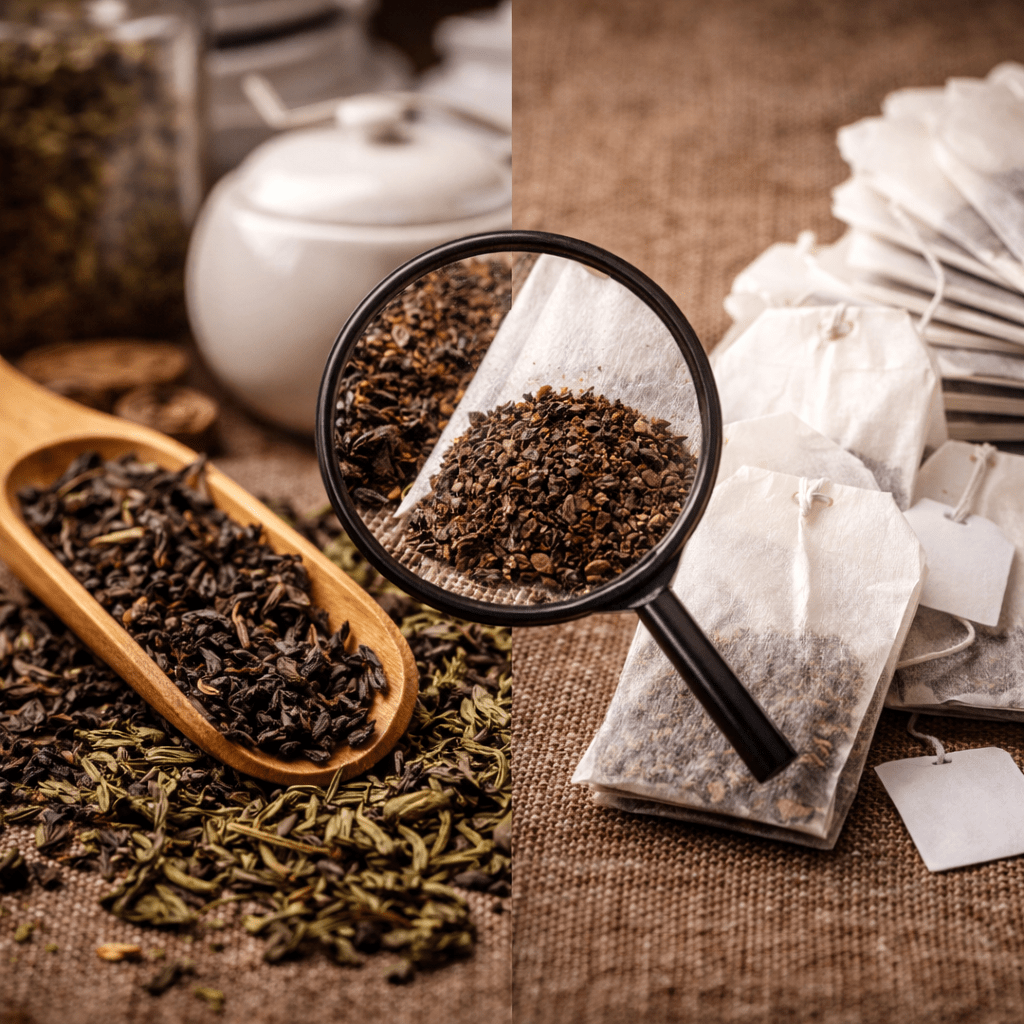
However, the tea inside most tea bags is often made from very small leaf fragments known as tea dust or fannings.
These smaller particles release flavor quickly, which makes tea bags convenient but sometimes limits the complexity of the flavor.
Differences in Tea Leaf Quality
One of the most important differences between loose leaf tea and tea bags is the quality of the tea leaves.
Loose leaf tea usually contains larger pieces of leaves that are carefully processed to preserve their shape.
Whole leaves contain more natural oils and aromatic compounds, which contribute to richer flavor and aroma.
Tea bags, on the other hand, often contain smaller fragments of leaves produced during the processing of larger teas.
Because these fragments have more exposed surface area, they release flavor quickly but may also lose aroma more rapidly during storage.
This is one reason why loose leaf tea often tastes more complex and nuanced.
Flavor and Aroma
When tea leaves are allowed to expand freely in water, they release their flavors gradually.
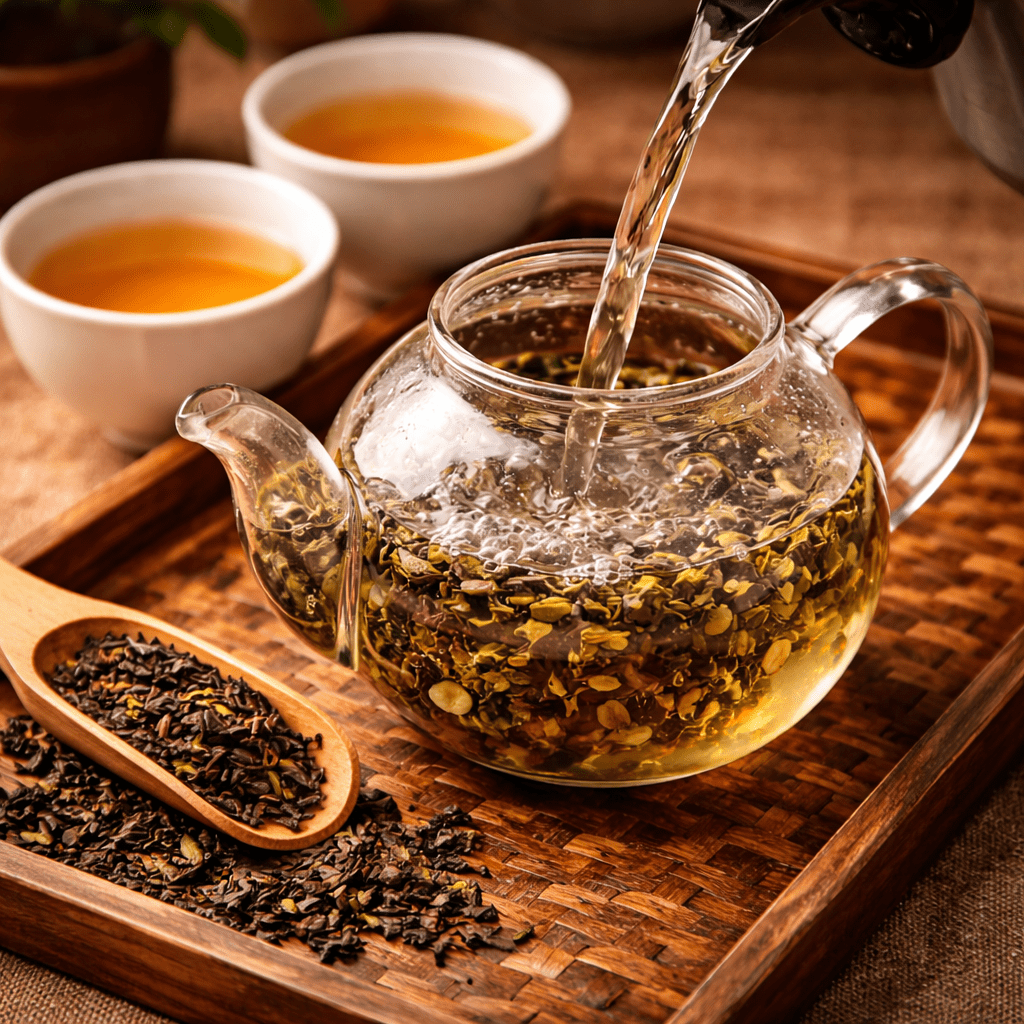
Loose leaf tea leaves can fully unfurl during brewing, allowing water to circulate around the leaves and extract a wider range of flavors.
This often results in a more layered taste experience.
Tea bags restrict the movement of the leaves inside the bag. Because the leaves are tightly packed, they cannot expand as fully as loose leaves.
As a result, the flavor of tea bags may be stronger initially but sometimes lacks the depth found in loose leaf tea.
Brewing Flexibility
Loose leaf tea offers more flexibility when brewing.
The amount of tea leaves, water temperature, and steeping time can all be adjusted to create different flavor profiles.
Many high-quality teas can also be brewed multiple times. Each infusion may reveal slightly different aromas and textures.
Tea bags are designed primarily for single-use brewing. Once the flavor is extracted, the tea bag is typically discarded.
While this makes tea bags convenient, it also limits the range of brewing possibilities.
Convenience and Ease of Use
One clear advantage of tea bags is convenience.
Tea bags are easy to carry, quick to prepare, and require minimal equipment. They are particularly useful in situations where brewing tools are not available.
For example, tea bags are common in offices, travel situations, and restaurants.
Loose leaf tea requires slightly more preparation. A teapot, gaiwan, or tea infuser is usually needed to brew the leaves properly.
However, many tea drinkers find that the extra effort is worthwhile because of the improved flavor and experience.
Environmental Considerations
Another factor to consider is environmental impact.
Some tea bags contain plastic fibers that help maintain the structure of the bag. These materials may not fully decompose after disposal.
Loose leaf tea generally produces less packaging waste because the leaves can be stored in reusable containers.
For people who prefer environmentally conscious choices, loose leaf tea may be a more sustainable option.
Cost Differences
The cost of tea varies depending on quality rather than format alone.
Some premium tea bags contain high-quality tea, while some inexpensive loose leaf teas may be of lower quality.
However, loose leaf tea often provides better value over time because the same leaves can be brewed multiple times.
This means a small amount of loose tea can produce several cups of tea.
Which Option Is Better for Beginners?
For beginners, both loose leaf tea and tea bags can be good starting points.
Tea bags offer simplicity and convenience. They are a quick way to explore different tea flavors.
Loose leaf tea offers a richer and more authentic tea experience. Beginners who are curious about traditional tea culture may find loose leaf tea especially rewarding.
Many people start with tea bags and gradually transition to loose leaf tea as they become more interested in tea.
How to Start Brewing Loose Leaf Tea
Starting with loose leaf tea does not require complicated equipment.
A simple setup might include:
a gaiwan or small teapot
loose tea leaves
a cup or small tea cups
The process of brewing loose leaf tea is simple. Tea leaves are placed in the brewing vessel, hot water is added, and the tea is poured after a short steeping time.
With practice, tea drinkers can adjust brewing variables such as leaf quantity and steeping time to find their preferred flavor.
The Experience of Drinking Tea
Beyond flavor differences, loose leaf tea and tea bags also create different experiences.
Tea bags emphasize speed and convenience.
Loose leaf tea often encourages a slower approach to tea preparation. Watching the leaves open in hot water and pouring tea into small cups can transform tea drinking into a calm and mindful ritual.
Many tea enthusiasts find that this slower process adds another layer of enjoyment to the act of drinking tea.
Final Thoughts
Both loose leaf tea and tea bags have their place in the world of tea.
Tea bags provide convenience and simplicity, making them useful for quick everyday tea drinking.
Loose leaf tea offers greater complexity, flexibility, and connection to traditional tea culture.
For those interested in exploring the full depth of tea flavor, loose leaf tea often provides a richer experience.
Ultimately, the best choice depends on personal preference. Whether enjoyed in a simple cup or prepared through a traditional brewing method, tea remains a timeless beverage that brings warmth and comfort to daily life.
Continue the Journey
History of Chinese Tea: The 4,000-Year Story of Tea in China
Tea is one of the oldest and most influential beverages in human...
Tea Drinking Etiquette: A Guide to Proper Tea Manners in Chinese Tea Culture
Tea drinking in Chinese culture is not only about taste. It is...

Tea and Zen Philosophy: How Tea Reflects Simplicity, Mindfulness, and Inner Peace
For centuries, tea and Zen philosophy have shared a deep connection. Both...