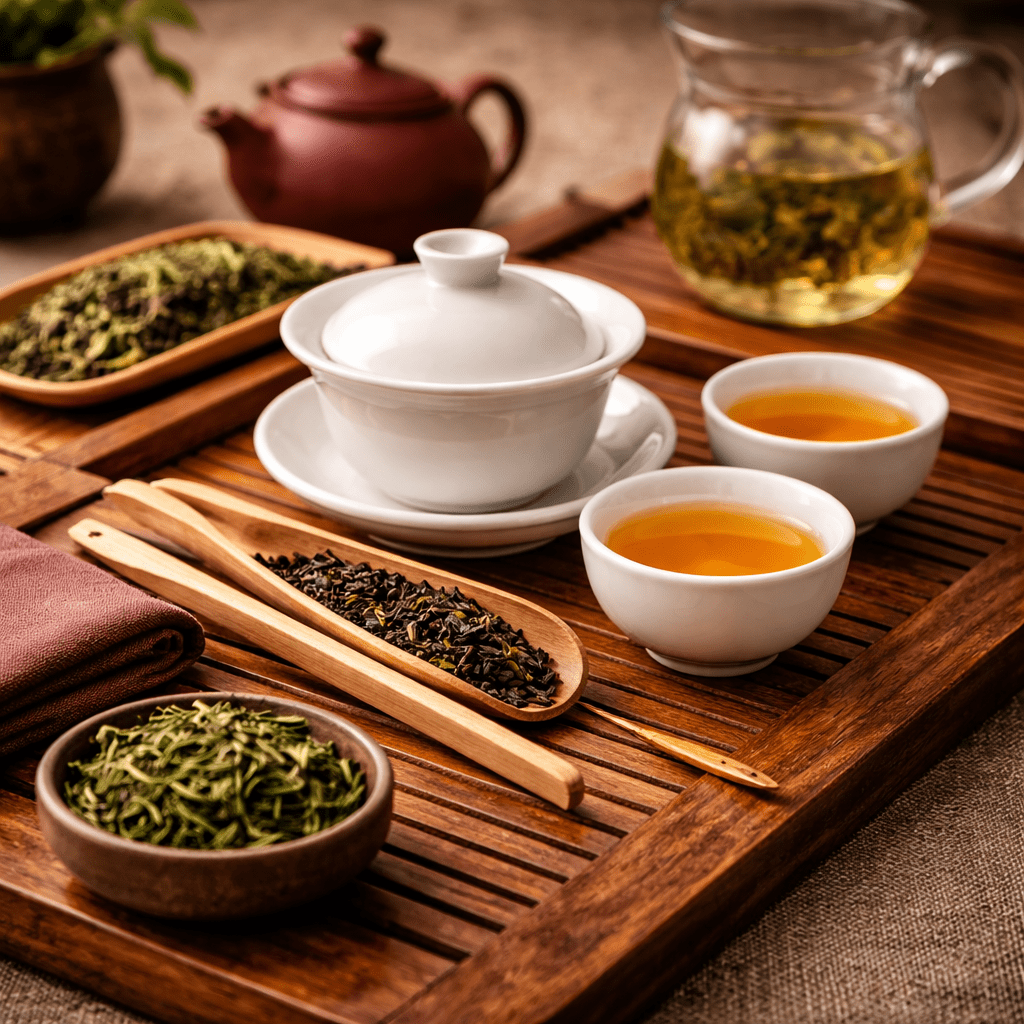
Tea and Mindfulness: How Drinking Tea Can Improve Focus, Awareness, and Inner Calm

Modern life is built on speed.
Notifications, deadlines, constant input, endless information.
Most people don’t lack time—they lack presence.
Even when sitting still, the mind is moving rapidly:
- thinking about the past
- worrying about the future
- reacting to stimuli
This creates mental noise, fatigue, and emotional instability.
Mindfulness is the ability to bring attention back to the present moment.
And tea—simple, slow, sensory tea—may be one of the easiest ways to practice it.
This is why for centuries, tea has been connected with:
- Zen
- meditation
- awareness
- calm focus
Tea is not just a drink.
It is a tool for attention.

What Is Mindfulness (Without the Complicated Definition)
Mindfulness is simple.
It means:
Being fully aware of what is happening right now.
Not thinking about it.
Not judging it.
Not escaping it.
Just noticing.
For example:
- noticing your breath
- noticing the taste of tea
- noticing your thoughts
Most people rarely experience this state.
They are either:
- distracted
- reacting
- thinking
Tea creates a natural doorway back into awareness.
Why Tea Naturally Creates Mindfulness
Tea forces you to slow down.
You cannot rush tea without ruining it.
To drink tea properly, you must:
- wait for water
- observe the leaves
- notice aroma
- sip slowly
Each step anchors your attention.
Unlike many modern activities, tea has:
- no urgency
- no distraction
- no stimulation overload
This is why tea and mindfulness are deeply connected.
The 5-Step Mindful Tea Practice (Simple but Powerful)
You don’t need a complex meditation system.
Just follow this.
1. Stop Everything for a Moment
Sit down.
No phone.
No noise.
Just pause.
This is already mindfulness.
2. Prepare Tea Slowly
Notice:
- the texture of the leaves
- the sound of water
- the movement of your hands
Your attention is now anchored.
3. Observe Without Thinking
Look at the tea.
Smell it.
Watch the steam.
Don’t analyze.
Just observe.
This is awareness without judgment.
4. Drink with Full Attention
When you sip:
- feel the temperature
- notice the taste
- observe the aftertaste
No distraction.
Just experience.
5. Notice Your Thoughts
Your mind will wander.
That’s normal.
Just notice it.
And gently return to the tea.
That’s mindfulness.
Tea vs Meditation (Why Tea Is Easier for Beginners)
Many people struggle with meditation because:
- it feels abstract
- there is no anchor
- the mind resists stillness
Tea solves this.
Tea gives you:
- a physical object
- a sensory experience
- a structured process
This makes mindfulness more natural.
Tea is meditation with support.
The Psychological Benefits of Tea Mindfulness
Practicing mindful tea drinking regularly may help improve:
Focus
You train your brain to stay present.
This improves attention in work and daily life.
Emotional Stability
When you observe instead of react, emotions lose intensity.
Stress Reduction
Slowing down reduces nervous system overload.
Mental Clarity
Less noise → clearer thinking.
Tea as a Reset Button
Think of tea as a reset.
During the day, your mind accumulates:
- stress
- noise
- pressure
A simple tea session can reset your state.
Even 5 minutes can:
- calm your mind
- restore focus
- improve emotional balance
Best Teas for Mindfulness Practice
Green Tea (Clarity + Lightness)
- clean taste
- refreshing
- supports focus
White Tea (Calm + Soft Awareness)
- gentle
- quiet
- ideal for slow sessions
Oolong Tea (Depth + Observation)
- complex flavor
- multiple infusions
- encourages deeper attention
Pu-erh Tea (Grounding + Stillness)
- earthy
- grounding
- stabilizing
The Deeper Layer: Awareness Changes Identity
Here is where this becomes powerful.
If you practice mindfulness daily:
You stop being someone who reacts.
You become someone who observes.
This changes:
- decisions
- emotions
- behavior
- life direction
Tea becomes more than a drink.
It becomes a training system for awareness.
Common Mistakes
Treating It Like a Task
Mindfulness is not something to “complete”
Drinking While Distracted
No phone. No scrolling.
Expecting Instant Calm
Awareness builds over time
Simple Daily Practice (Do This)
Start with this:
- 1 cup of tea
- 5 minutes
- no distractions
That’s enough.
Consistency > intensity.
Final Thoughts
Mindfulness doesn’t require a retreat, a system, or hours of meditation.
It can start with something simple.
A cup of tea.
Tea slows you down.
Tea brings you back.
Tea reconnects you to the present moment.
In a world full of noise, tea offers something rare:
Silence you can feel.
Continue the Journey

Morning Tea Ritual Guide: How to Start Your Day with Tea for Energy, Clarity, and Calm
Morning sets the tone for the entire day. The way you begin...
History of Chinese Tea: The 4,000-Year Story of Tea in China
Tea is one of the oldest and most influential beverages in human...
Tea Drinking Etiquette: A Guide to Proper Tea Manners in Chinese Tea Culture
Tea drinking in Chinese culture is not only about taste. It is...