Tea Fermentation Explained: Understanding Fermented Teas and Their Unique Flavor
Fermentation is one of the most misunderstood processes in tea production. Many people assume that all teas are fermented, but in reality, true fermentation occurs only in certain types of tea.
Most teas undergo oxidation, a chemical reaction with oxygen. Fermentation, however, involves microorganisms such as bacteria and fungi that transform the tea over time.
This microbial process gives fermented teas their distinctive characteristics, including earthy aromas, deep flavors, and long aging potential.
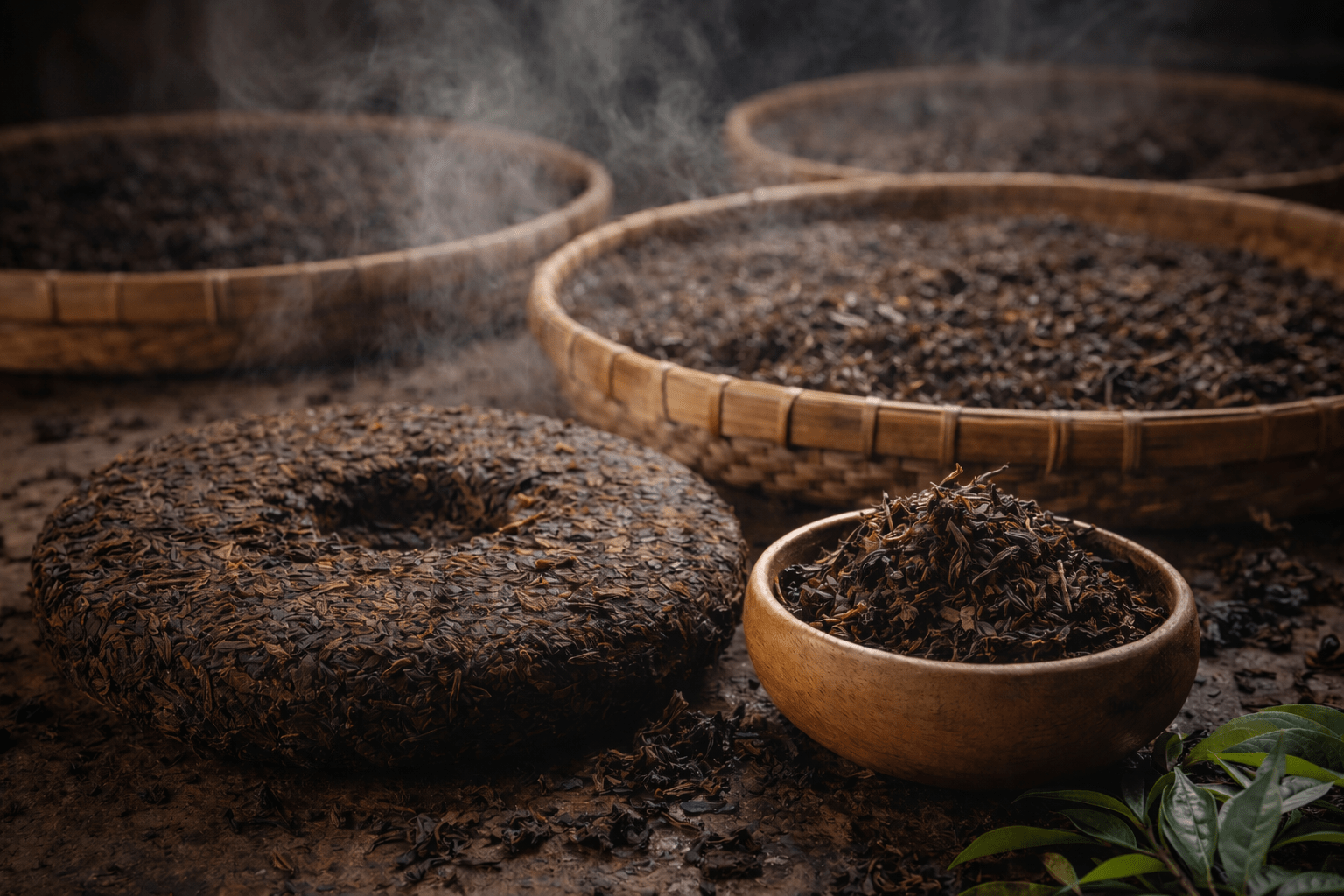
The most famous fermented tea in the world is Pu-erh tea, produced in Yunnan Province in China.
Understanding tea fermentation helps explain why some teas can be aged for decades while others are best consumed fresh.
What Is Fermentation in Tea?
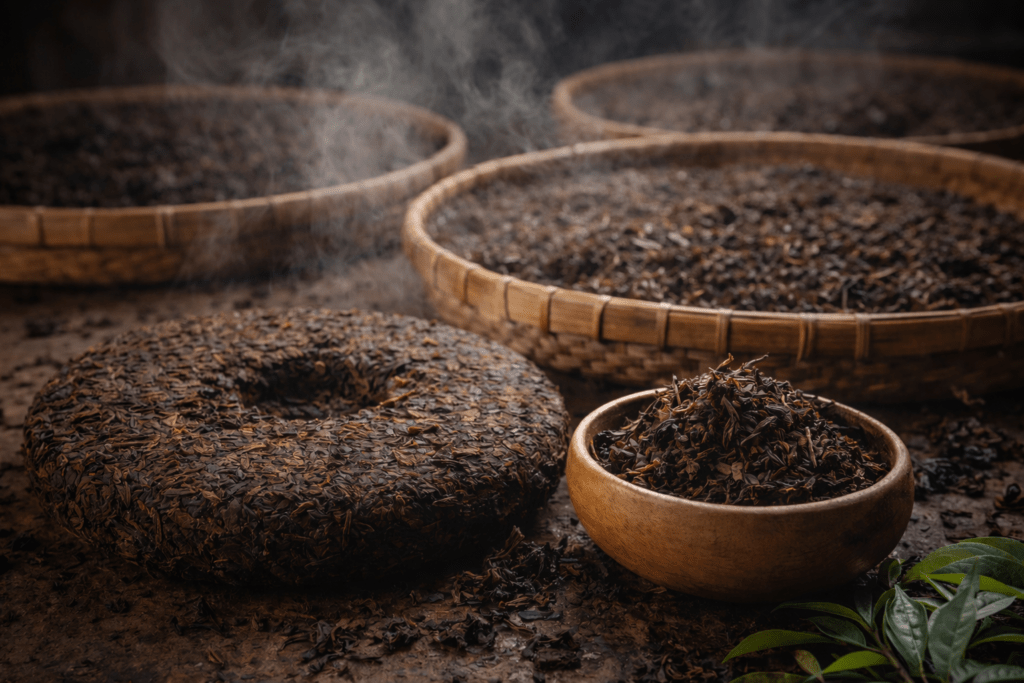
Fermentation in tea refers to a microbial transformation process that occurs after the tea leaves have been processed.
During fermentation, microorganisms interact with compounds in the tea leaves and gradually change their chemical composition.
This process can alter:
- flavor
- aroma
- texture
- color
Unlike oxidation, which occurs quickly during tea processing, fermentation may continue for months or even years.
Fermentation is responsible for the distinctive earthy taste of certain teas.
Fermented Tea vs Oxidized Tea
Fermentation and oxidation are often confused, but they are completely different processes.
| Process | Oxidation | Fermentation |
|---|---|---|
| Reaction type | Chemical reaction with oxygen | Microbial transformation |
| Time scale | Minutes to hours | Months to years |
| Occurs in | Green, oolong, black tea | Pu-erh and dark teas |
| Main effect | Flavor development | Aging and microbial changes |
Oxidation happens during the early stages of tea production, while fermentation often occurs after the tea has been processed.
The Most Famous Fermented Tea: Pu-erh
Pu-erh tea is the best-known example of fermented tea.
It originates from Yunnan Province in China and has been produced for centuries.
Pu-erh tea is unique because it can improve with age, similar to wine.
There are two main types of pu-erh tea.
Raw Pu-erh (Sheng Pu-erh)
Raw pu-erh is naturally fermented over many years.
Young raw pu-erh may taste:
- bitter
- grassy
- floral
As it ages, the flavor becomes smoother and more complex.
Ripe Pu-erh (Shou Pu-erh)
Ripe pu-erh undergoes an accelerated fermentation process developed in the 1970s.
This method creates earthy flavors more quickly.
Typical tasting notes include:
- wood
- soil
- cocoa
- dried fruit
How Tea Fermentation Happens
Tea fermentation usually occurs after the tea leaves have been processed and compressed.
Microorganisms naturally present in the environment interact with the tea leaves.
Over time, these microbes break down compounds in the leaves and produce new flavor molecules.
Important factors that influence fermentation include:
- temperature
- humidity
- oxygen
- microbial activity
These conditions determine how quickly the tea ages and how its flavor develops.
Aging and Storage of Fermented Tea
Fermented teas are often aged for long periods.
Pu-erh tea is commonly stored in compressed forms such as:
- tea cakes
- tea bricks
- tuo cha
During aging, the tea continues to slowly transform.
Over time, fermented tea may develop flavors such as:
- earth
- wood
- dried fruit
- medicinal herbs
Some collectors store pu-erh tea for decades to develop rare flavor profiles.
Health Aspects of Fermented Tea
Fermented teas contain unique compounds produced during microbial transformation.
Some studies suggest fermented teas may support:
- digestion
- gut microbiome health
- metabolism
- cholesterol balance
However, the health effects of fermented tea continue to be studied.
Like all tea, fermented tea should be enjoyed as part of a balanced lifestyle.
Why Fermented Tea Tastes Different
Fermentation creates complex chemical changes inside the tea leaves.
Microbes transform polyphenols and other compounds into new molecules.
These transformations create the distinctive characteristics of fermented tea.
Compared with other teas, fermented teas often taste:
- smoother
- less astringent
- more earthy
- deeper in body
This flavor profile makes fermented teas especially popular among experienced tea drinkers.
Final Thoughts
Tea fermentation is a fascinating process that distinguishes certain teas from the rest of the tea world.
While most teas rely on oxidation to develop flavor, fermented teas undergo microbial transformation that continues even after production.
This process creates unique teas that can age and evolve over time.
Understanding fermentation reveals why teas like pu-erh are so different from other types of tea and why they are treasured by tea enthusiasts.
Continue the Journey
Why Tea Tastes Bitter Sometimes: Causes and How to Fix It
Tea is often described as smooth, refreshing, and complex. However, many tea...
Caffeine in Tea Guide: How Much Caffeine Is in Different Types of Tea?
Tea is widely appreciated for its gentle energy and balanced stimulation. One...
L-Theanine in Tea: Why Tea Creates Calm and Focused Energy
Tea has a unique effect on the mind. Unlike coffee, which often...