Why Tea Tastes Bitter Sometimes: Causes and How to Fix It
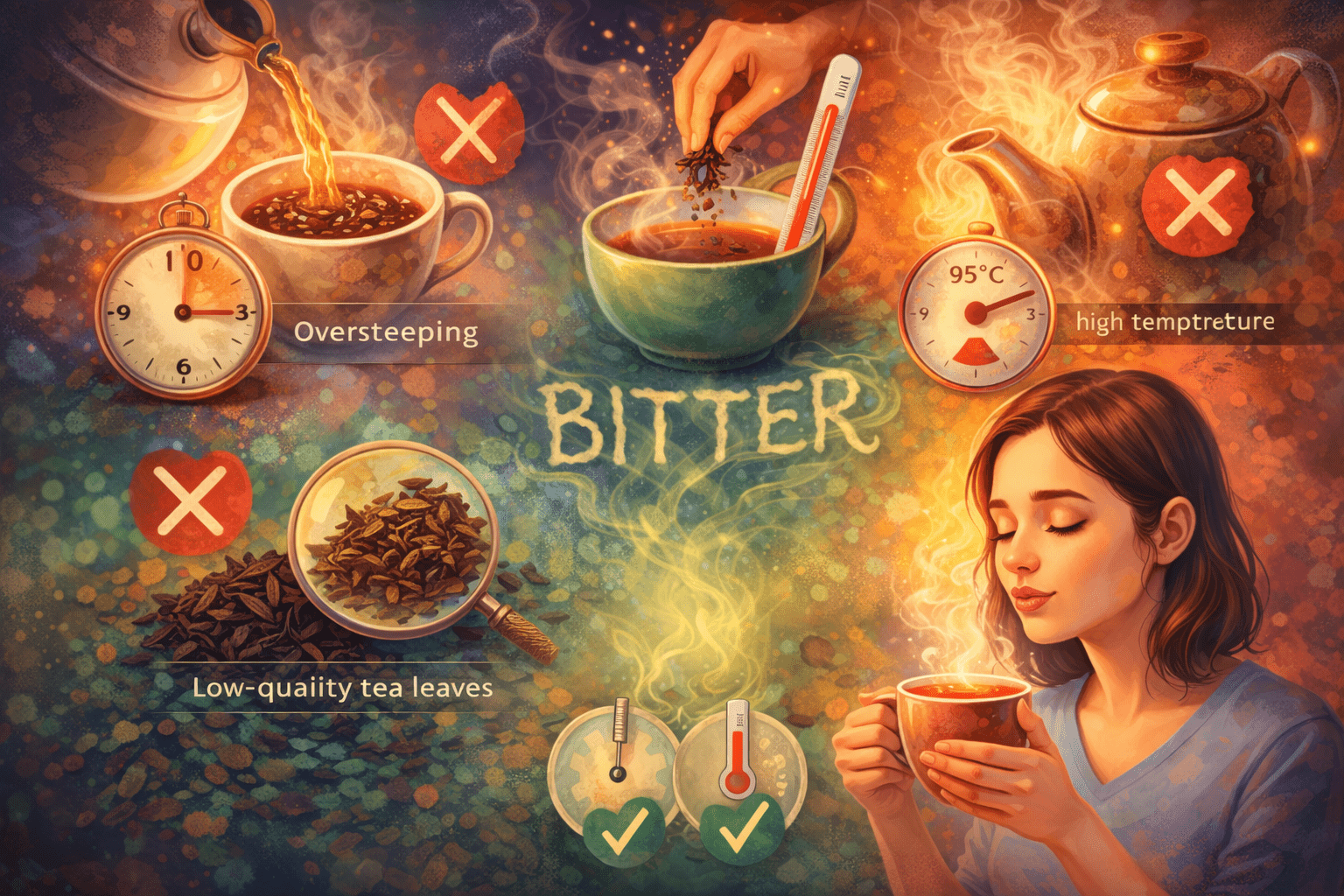
Tea is often described as smooth, refreshing, and complex. However, many tea drinkers occasionally experience a cup of tea that tastes unexpectedly bitter.
This can be confusing, especially for beginners who expect tea to be mild and pleasant.
In most cases, bitterness in tea is not a sign of poor quality. Instead, it usually results from brewing conditions or chemical compounds naturally present in tea leaves.
Understanding why tea becomes bitter can help you brew better tea and enjoy a smoother drinking experience.
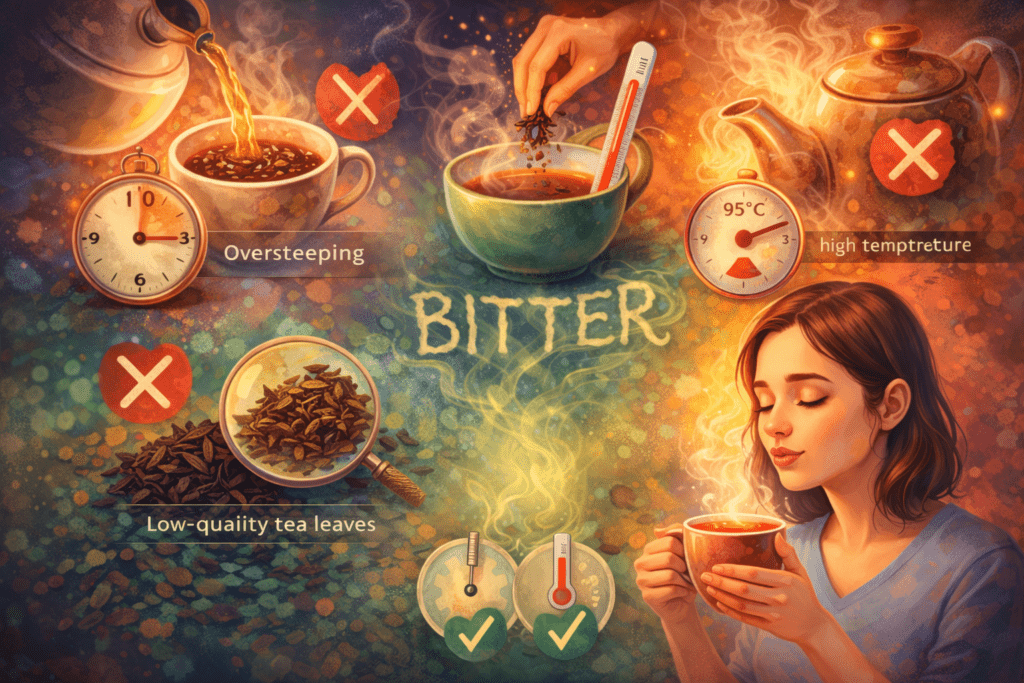
Natural Compounds That Cause Bitterness
Tea leaves naturally contain compounds that influence flavor.
Two important compounds responsible for bitterness are:
Catechins
Catechins are natural antioxidants found in tea. They contribute to tea’s health properties but also produce mild bitterness when extracted in large amounts.
Caffeine
Caffeine also has a naturally bitter taste. When tea is brewed too strongly, more caffeine dissolves into the water and increases bitterness.
These compounds are present in all tea types, but their concentration varies depending on the tea.
Over-Steeping Tea
One of the most common reasons tea becomes bitter is steeping the leaves for too long.
When tea leaves remain in hot water for extended periods, more bitter compounds are extracted.
For example:
- green tea usually requires 1–3 minutes
- black tea typically requires 3–5 minutes
Steeping tea much longer than recommended can make the flavor overly strong and bitter.
Proper timing helps maintain balance in the cup.
Water Temperature That Is Too Hot
Another common cause of bitter tea is using water that is too hot.
Different teas require different brewing temperatures.
For example:
| Tea Type | Recommended Temperature |
|---|---|
| Green tea | 70–80°C |
| White tea | 75–85°C |
| Oolong tea | 85–95°C |
| Black tea | 95–100°C |
If delicate teas such as green tea are brewed with boiling water, bitter compounds may be extracted too quickly.
Lower temperatures allow the tea’s natural sweetness and aroma to emerge.
Using Too Many Tea Leaves
Adding too many tea leaves can also create an overly bitter cup.
When the leaf-to-water ratio is too high, the concentration of extracted compounds increases dramatically.
For most teas, a typical guideline is:
2–3 grams of tea per 200 ml of waterAdjusting the amount of tea leaves can significantly improve flavor balance.
Tea Quality and Leaf Structure
Tea quality also influences bitterness.
Lower-quality tea may contain:
- broken leaves
- tea dust
- small leaf fragments
These small particles extract very quickly, which can produce stronger and harsher flavors.
High-quality whole leaf teas tend to brew more smoothly because they release flavor gradually.
Bitterness vs Astringency
Many people confuse bitterness with another tea sensation known as astringency.
Although they are related, they are different experiences.
Bitterness
Bitterness is a taste sensation detected by taste receptors on the tongue.
Astringency
Astringency creates a drying sensation in the mouth.
This feeling occurs when tea compounds interact with proteins in saliva.
Some level of astringency is normal in tea and can add complexity to the flavor.
How to Make Tea Less Bitter
Fortunately, there are several easy ways to reduce bitterness when brewing tea.
Use lower water temperature
Delicate teas benefit from cooler water.
Shorten steeping time
Reducing brewing time limits the extraction of bitter compounds.
Adjust leaf quantity
Use an appropriate tea-to-water ratio.
Choose high-quality tea
Whole-leaf teas often produce smoother infusions.
Small changes in brewing technique can dramatically improve the taste of tea.
Final Thoughts
Bitterness in tea is usually not a problem with the tea itself but rather the result of brewing conditions.
Tea naturally contains compounds such as catechins and caffeine that contribute to bitterness when extracted in large amounts.
By adjusting water temperature, steeping time, and leaf quantity, tea drinkers can achieve a balanced and enjoyable cup.
Understanding how brewing affects flavor allows tea enthusiasts to appreciate tea’s complexity and avoid common mistakes.
Continue the Journey
Caffeine in Tea Guide: How Much Caffeine Is in Different Types of Tea?
Tea is widely appreciated for its gentle energy and balanced stimulation. One...
L-Theanine in Tea: Why Tea Creates Calm and Focused Energy
Tea has a unique effect on the mind. Unlike coffee, which often...
Catechins in Green Tea: Understanding the Powerful Antioxidants in Tea
Green tea is often praised for its potential health benefits, and one...